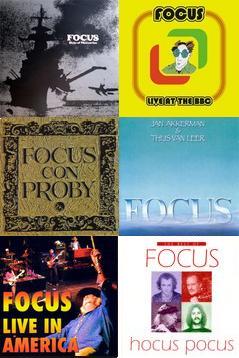
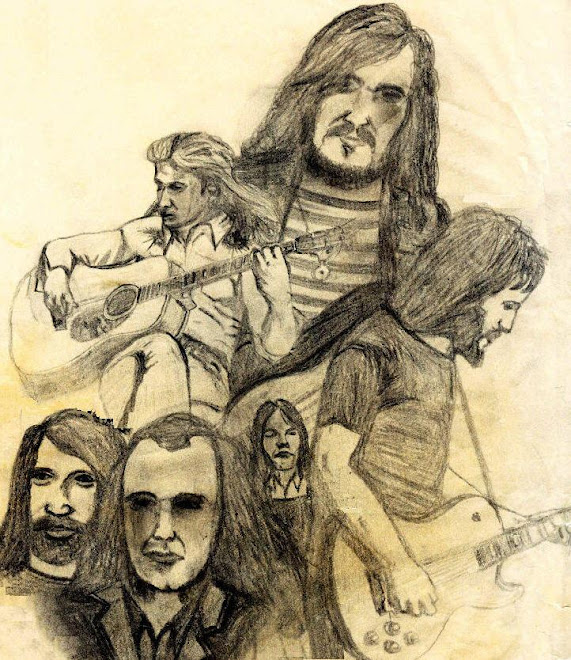
Looking at the music of Dutch rock band Focus, started in the late sixties by Thijs van Leer (b /31/03/48) with Jan Akkerman (b 24/12/46). Van Leer still performs and records under the name today (official site here). Akkerman's site here.

.

.
Showing posts with label Jazz Rock Instrumental. Show all posts

20230728

Track by track 169 Mazzel

Archive number: 169
Title: Mazzel
Main Album: Focus Family 11
Track number: 5
Genre: Jazz Rock Instrumental
Studio: WedgeView Studios, Netherlands
Length: 4:23
Composer: Thijs van Leer
Key: Em
Musicians: Thijs van Leer – Hammond organ; Menno Gootjes – Guitars; Udo Panekeet – Bass; Pierre van der Linden – Drums
Producer: Geert Scheigrond
Engineer: Geert Scheigrond
Label: In and Out of Focus Recordings
Date of recording/release: November 2018
Alternative recording: None
Notes: Mazzel is a Dutch slang word for luck (used in phrases for good luck, also so long or 'bye) taken from Yiddish (as in Mazzel tov, good luck)
The track is led in by the electric guitar before the whole band joins with choppy jazz type progressions. At 01:33-01:44 (and 03:28-03:42) the guitar becomes a little more mournful and then it is back to the jazz. Plenty of variation but no prgression. From 01:44 flute or synthesiser is introduced.

20230609

Track by track 167 Theodora Na na na

Archive number: 167
Title: Theodora Na na na
Main Album: Focus 11
Track number: 3
Genre: Jazz Rock Instrumental
Studio: WedgeView Studios, Netherlands
Length: 4:27
Composer: Thijs van Leer
Key: C#
Musicians: Thijs van Leer – Hammond organ, piano, synthesiser; Menno Gootjes – Guitars; Udo Panekeet – Bass; Pierre van der Linden – Drums
Producer: Geert Scheigrond
Engineer: Geert Scheigrond
Label: In and Out of Focus Recordings
Date of recording/release: November 2018
Alternative recording: None
Notes: The piano and guitar begin this laid back track with piano and guitar and some sort of synthesiser in the background. At 00:12 the drums and bass come in and then at aound 00:16 the flute too. As the track progresses there are more electric guitar licks and a regular return to the beginning. It is quite meandering on the whole and peters out rather than coming to any definite conclusion, although it does actually end.

20190510

Track by track 127 Focus 10

Archive number: 127
Title: Focus 10
Main Album: Focus X
Track number: 2
Genre: Jazz Rock Instrumental
Studio: Fieldwork Studios, Schoten, Belgium (Mixed at B-Spot Studio; mastered at Tube Mastering)
Length: 5' 28"
Composer: Thijs van Leer
Musicians: Thijs van Leer – Hammond organ, piano, flute; Menno Gootjes – Guitars, Vocals; Bobby Jacobs – Bass; Pierre van der Linden – Drums
Producer: Bobby Jacobs
Mastered: Andy Jackson
Mixed: Bram Bol
Label: Eastworld Recordings 
Date of recording/release: November 2012
Alternative version: None
Notes: This is the title track and the tenth in the eponymous series. The drums again briefly introduce the guitar led band. The tune is a playful jazzy, even at times a quirky and teasing, one. The tune has something of a French feel to it. Beginning at 00:02 it goes on to 02:28 before the flute joins in. This flute section then goes on until around 03:40 before being chiefly superseded by the guitar although it does make some brief comebacks. At 05:02 the piece breaks down and first only piano and organ play and then for the final 33 seconds just solo jazz piano to close the track.

20121124

Track by track 120 Focus 9

Archive number: 120
Title: Focus 9
Main Album: Focus 9 (New Skin)
Track number: 8
Genre: Jazz Rock Instrumental
Studio: Fieldwork Studios, Schoten, Belgium
Length: 07:53
Composer: Thijs van Leer
Musicians: Thijs van Leer – Hammond organ, piano, flute; Niels van der Steenhoven – Guitars; Bobby Jacobs – Bass; Pierre van der Linden – Drums
Producer: Bobby Jacobs and Thijs van Leer
Engineer: Han Nuijten
Label: Red Bullet
Date of recording/release: Summer 2006
Alternative version: None
Notes: The track begins with a rather simple, fairly halting and jazz style solo piano introduction (00:00-00:29). The organ, bass and brushed drums then join in with a staccato 4 or 5 note theme reminiscent of Focus 3 (00:30-00:55). The acoustic guitar and piano take up the halting jazz theme (00:56-01:24) before the organ, bass and drums return (01:25-01:49). The bulk of the track, all the way from 01:50 to 05:49, is taken up by the guitar and piano, with the theme growing slightly more melodic at times but remaining very much a jazz piece. At 03:15-03:49 and 04:19-04:50 the flute is dubbed in with the other two instruments. At around 05:53 the organ, bass and drums return with the Focus 3-style element. At 06:20 the acoustic jazz guitar starts to take the lead. From 07:14 it is the Hammond organ's turn. The track is almost done by 07:36 except for two piano trills and a final resounding bass note from the piano (7:37-07:53).

20090406

Track by track 87 Focus 2 Live (FLIA)

Archive number: 87
Title: Focus 2 (Live)
Main Album: Focus Live In America
Track number: 3
Genre: Jazz Rock Instrumental
Venue: Patriots Theater, 1 Memorial Drive, Trenton, New Jersey, USA
Length: 05' 18”
Composer: Thijs van Leer
Musicians: Thijs van Leer – Hammond organ; Jan Dumee – Gibson Marauder Guitar; Bobby Jacobs - Bass; Bert Smaak - Drums
Producer: Gavin Bott/Bob Carruthers Engineer: Mike Potter (Orion Sound) Mix (Total audio)
Label: Classical Rock Legends Limited
Date of recording/release: October 2002 (part of a two day Uriah Heep led classic rock legend festival that also featured Nektar, Mostly Autumn and Asia). Released on DVD and CD (edited) in 2003.
Alternative version: This is again a well covered early Focus track
Notes: We begin with the well known organ intro as featured on the Rainbow album. Dumee and the band then join in to execute the piece in fine but unremarkable style, ending at 4' 45” with applause and a thank you from van Leer and his next announcement - for which see the next track.

20081128

Track by track 76 Maximum

Archive number: 76
Title: Maximum
Main Album: Focus Con Proby
Track number: 8
Genre: Jazz Rock Instrumental
Studio: EMI Studios, Hilversum, The Netherlands
Length: 08' 38”
Composer: Thijs van Leer, Bert Ruiter
Musicians: Philip Catherine - Electric guitar; Thijs van Leer – Electric Piano, Hammond organ, Synthesisers; Voice; Bert Ruiter – Bass; Steve Smith - Drums
Producer: Yde de Jong
Engineer: Jan van Vrijaldenhoven/Mike Stavron
Label: LP – EMI
Date of recording/release: Recorded/released 1978 LP – 1978 CD – 1998
Alternative version: A longer slightly slower live version is found on Live at the BBC
Notes: The band begin together (00:00-00:17) with a laid back introduction soon supplemented by something more upbeat led by electric piano then guitar (00:18-00:29). The bass then takes us on with the band led sometimes by guitar, sometimes by electric piano (00:30-01:09). Two guitar-led crescendos that tail off (01:10-01:25) are followed by two successive choppy piano riffs (01:26-01:32 and 01:33-01:41). The second is then supplemented by a soaring guitar before reasserting itself (01:42-01:58). We then return to the beginning and a slower pace, occasionally lifted by the guitar (01:59-02:43) and getting a little more jaunty at times with some guitar runs (02:44-03:25). A dreamy and meandering middle section (03:26-04:09) comes to an end with the drums announcing a very long and earnest guitar break (03:26-07:12). This eventually comes to an end and we settle back into the original groove to close (07:13-08:38). There is some wonderful playing throughout but it gets lost in the mix and somehow never really gels making it inferior to the live version.

20080707

Track by track 66 Angel WIngs (Live)

Archive number: 66
Title: Angel wings (Live)
Main Album: Live at the BBC
Track number: 7
Genre: Live Jazz Rock Instrumental
Venue: New Victoria Theatre, 17 Wilton Road, London SW1V 1LL (now Apollo Victoria)
Length: 05' 38”
Composer: Philip Catherine
Musicians: Philip Catherine - Electric guitars; Thijs van Leer – Electric piano Bert Ruiter – Bass; David Kemper – Drums
Producer: BBC
Engineer: BBC
Label: Hux Records
Date of recording/release: Recorded March 21 1976 but only released (on CD) June 1 2004
Alternative versions: This track first appeared on Catherine's effort with Jasper Van't Hof and Charlie Mariano Transitory by Pork Pie. An acoustic version can be found on his Moods Vol 1. A live Focus version appears on a later greatest hits album.
Notes: All begin together (00:00-00:07) except the drums, which come in a little later, as a melodic atmosphere of mystery is created. This is very much Catherine's track. He breaks in with his guitar to take up the lead at 00:48 and we are then treated to a feast of jazz rock guitar mastery (00:49-05:32) as he rings the changes on his own composition, ably backed by the band. Applause follows (05:33-05:38).

20080313

Track by track 40 Harem Scarem

Archive number: 40
Title: Harem Scarem
Main Album: Hamburger Concerto. Also a single with Early Birth 1974.
Track number: 2
Genre: Jazz Rock Instrumental
Studio: Olympic Studios 'B', 117 Church Road, Barnes, London SW13 9HL
Length: 5' 50”
Composer: Anonymous
Musicians: Jan Akkerman – Electric Guitars (Fenders) and Talkbox?, Timpani; Thijs van Leer – Hammond organ, Grand piano, Voice, Flute, Accordion, Mellotron; Bert Ruiter - Bass; Colin Allen – Drums, Chinese Gong
Producer: Mike Vernon
Engineer: Bob Hall with David Hamilton-Smith and Rod Thear
Label: Polydor, Atco, EMI, Red Bullet, JVC, JVC Victor
Date of recording/release: January/March 1974; April 1974. CD – 1998, 2001, 2001, 2002, 2006
Notes: Van Leer says he wrote this one in a pub in Belgium about drinking and there is something quite rowdy about it, especially the way its beginning cuts in after the previous track. Harem Scarem means reckless, rash or wild. The duplicative rhyme echoes Hocus Pocus and the hope was for similar single success. Piano, guitar, bass and drums begin in unison with a strong beat. The latter three then alternate with an incredible jazzy guitar riff (00:00-00:12). The organ joins in next and the double tracked guitars really begin to rattle (00:13-01:27). The beat varies a little and at 01:07 van Leer attempts to move things along with some heavily reverbed Yeah, yeah, yeahs (01:07-01:27). Then, with a slight slowing of pace at 01:33-01:38, some reverbed Aahs follow and some timpani (01:39-01:59). A beautiful bridge follows, led first by guitar (02:00-02:11) then an electronically treated flute and accordion (02:12-02:25) with a Parisienne feel. The opening sequence is more or less repeated (but without the yeah, yeah section) and we come (03:30) to the bridge again. This time (03:41-03:53) the accordion is more prominent and the flute smoother. Just as things are about to get going again things slow once more and a very attractive jazz guitar break with piano, bass and drums, explores the theme further (04:00-05:05). Then it is back to the original jam (05:06) for a roaring finale that goes out on a glorious ascending note from van Leer that mingles with the final crash of a gong. The instruments are all carefully mixed and there is perhaps more evidence of production on this track than any previous one.

20080306

Track by track 37 Focus 5

Archive number: 37
Title: Focus 5
Main Album: Ship of Memories. Also a single in 1975 b/w P's March.
Track number: 3
Genre: Jazz Rock Instrumental
Studio: Chipping Norton Recording Studio, 26-32 New Street, Chipping Norton, Oxon, OX7 5LJ
Length: 2' 57”
Composer: Thijs van Leer
Musicians: Jan Akkerman - Electric guitars; Thijs van Leer – Mellotrons, Flute; Bert Ruiter – Bass; Pierre Van Der Linden – Drums
Producer: Mike Vernon
Engineer: Barry Hammond and Dave Grinsted
Label: LP – EMI, Harvest, Sire CD – EMI-Bovema, IRS, Red Bullet, JVC
Date of recording/release: Final weeks of May 1973. Not released until 1977 (LP). CD – 1988, 1993, 2001, 2006.
Notes: This fourth salvaged track is a slow, subtle, laid back 'Focus' number and is beautiful. It is chiefly led by a double tracked lounge jazz electric guitar, though there is an alto flute passage in the middle at 01:37-02:06. Classically composed it is really jazz rock. Apparently the basic track was laid down first and it was only days later that, late one night, Akkerman finally added the guitars. Although composed and recorded prior to Focus IV it gets the name Focus V as it was only published after Focus IV had been released. Van Leer has a classical version on Introspection 3. Comparisons have been drawn with Akkerman's Javeh (Tabernakel) and Beyond the Loneliest Sea performed with Peter Banks (Two Sides of Peter Banks).

20080104

Track by track 20 Focus 3

Archive number: 20
Title: Focus 3
Main Album: Focus 3
Track number: 5
Genre: Jazz Rock Instrumental
Studio: Olympic Studios 'B', 117 Church Road, Barnes, London SW13 9HL
Length: 06' 04"
Composer: Thijs van Leer
Musicians: Jan Akkerman – Electric guitars (Gibson Les Paul Customs?); Thijs van Leer – Hammond organ; Bert Ruiter - Bass; Pierre van der Linden – Drums (chiefly using brushes)
Producer: Mike Vernon
Engineer: George Chkiantz
Label: LP – Imperial, Polydor, Sire CD – Capitol, EMI-Bovema, IRS, Red Bullet, JVC Victor
Date of recording/release: July 1972/November 1972, 1975 CD - 1988, 1993, 2001, 2002, 2004
Alternative versions: A live version appears on Focus at the Rainbow. Van Leer also rearranged the track for the second Introspection album. Akkerman has featured it in his live act. All the Focus tracks were re-recorded for the fiftieth anniversary album. Outkast sampled the track for their Wheels of Steel track.
Notes: This, the third in the Focus series, begins with just organ (00:00-00:18) mainly repeating the notes B, C#, D, F# (a much loved sequence). At 00:19 the bass and guitar join the organ. At 00:40 the drums join in and soon the guitar is being 'violined'. This quiet, laid back style continues, repeating the earlier material, until at 02:05 the volume rises and at 02:18 a more swinging and intense style comes in, one often compared with part of Petula Clark's Don't sleep in the subway by Tony Hatch with Jackie Trent. (Cf 00:35-00:50 on that track, where she sings “I’ve heard it all a million times before; take off your coat, my love, and close the door” and 01:44-01:58 where she sings "Goodbye means nothing when it's all for show; so why pretend you've somewhere else to go"). This is repeated, bringing us to 03:10. The band then switch back to the earlier quieter style, 03:11-05:11. This slowly rises, especially from about 05:00, to something of a climax at 05:11. In 05:12-05:41 high notes on the guitar play against the bass and drums in that soaring Focus style to be followed by much lower notes (05:34-05:41). The higher part is then repeated (05:42-06:04) ending on a hanging guitar note ready for the immediate succession of the next track. Once again the feel is very much a live one.

20080103

Track by track 19 Carnival Fugue

Archive number: 19
Title: Carnival Fugue
Main Album: Focus 3
Track number: 4
Genre: Jazz Rock Instrumental
Studio: Olympic Studios 'B', 117 Church Road, Barnes, London SW13 9HL
Length: 06' 04"
Composer: Thijs van Leer
Musicians: Jan Akkerman – Electric guitars (Gibson Les Paul Customs?), acoustic guitar; Thijs van Leer – Hammond organ, piano, piccolo; Bert Ruiter - Bass; Pierre Van Der Linden – Drums
Producer: Mike Vernon
Engineer: George Chkiantz Label: LP – Imperial, Polydor, Sire CD – Capitol, EMI-Bovema, IRS, Red Bullet, JVC Victor
Date of recording/release: July 1972/November 1972, 1975 CD - 1988, 1993, 2001, 2002, 2004
Alternative version: There does not appear to be a different version of this anywhere but some sections were later used by van Leer in quite a different (more obviously fugal) way on the 1981 Pedal Point album Dona Nobis Pacem (in the first Sanctus).
Notes: The piece can be divided into four sections. The first (00:00-01:30) is slow and solemn and features piano, electric guitar and very sparing drum fills using floor toms and cymbals. The piece begins just with piano but is complimented by laid back, meandering guitar lines. The music evokes the lack of activity before a carnival march starts. There is a four second gap between the first and second section (00:31-00:34). The second section (01:35-02:55) features piano again but now with acoustic guitars from the start and (from 00:49) bass and drums. This brisker section features rising scales and evokes perhaps the readying of carnival marchers. This leads into a third even quicker, more jazzy (or contrapuntal) transitional section (02:56-03:29) on the same instruments. By now the whole troupe is more than ready for the off and the final section is a lively 'carnival' style one, Caribbean perhaps, in its feel (03:30-06:04). It features piccolo, organ, electric guitar, bass and drums. An infectious joy permeates as the music eventually fades, the revellers, as it were, passing into the distance. Overdubbing has been used to enhance the piccolo lines and contrasting guitar lines come from the two channels at certain points.
A note on the term fugue (from Wikipedia) The English term fugue originates in the 16th Century and is from French or Italian fuga, which itself is from Latin and is related to both fugere (to flee) and fugare (to chase). The adjectival form is fugal. Variants include fughetta (lit a small fugue) and fugato (passage in fugal style within another work that is not a fugue). In music, a fugue is a type of contrapuntal composition or technique of composition for a fixed number of parts, normally referred to as "voices", irrespective of whether the work is vocal or not. In the Middle Ages, the term was widely used to denote any works in canonic style; by the Renaissance, it came to denote specifically imitative works. Since the 17th Century the term has described what is commonly regarded as the most fully developed procedure of imitative counterpoint. A fugue opens with one main theme (subject) which then sounds successively in each voice in imitation; when each voice has entered, the exposition is complete; usually this is followed by a connecting passage (episode) developed from previously heard material; further "entries" of the subject then are heard in related keys. Episodes and entries are usually alternated until the "final entry" of the subject, by which point the music has returned to the opening key, or tonic, which is often followed by closing material, the coda. In this sense, fugue is a style of composition, rather than a fixed structure. Though there are certain established practices, in writing the exposition for example, composers approach the style with varying degrees of freedom and individuality. The form evolved from several earlier types of contrapuntal compositions, such as imitative ricercars, capriccios, canzonas and fantasias. Middle and late Baroque composers such as Buxtehude (1637–1707) and Pachelbel (1653–1706) contributed greatly to the development of the fugue, and the form reached ultimate maturity in the works of Bach (1685–1750). With the decline of sophisticated contrapuntal styles at the end of the baroque period, the fugue's popularity as a compositional style waned, eventually giving way to Sonata form. Nevertheless, composers from the 1750s to the present day continue to write and study fugue for various purposes; they appear in the works of Mozart (eg Kyrie Eleison, Requiem in D min) and Beethoven (eg end of Credo, Missa Solemnis) and composers such as Reicha (1770–1836) and Shostakovich (1906–1975) wrote cycles of fugues.

20071224

Track by track 16 Sylvia

Archive number: 16
Title: Sylvia
Main Album: Focus 3 (also a single in 1972 and 1973)
Track number: 3
Genre: Jazz Rock Instrumental
Studio: Olympic Studios 'B', 117 Church Road, Barnes, London SW13 9HL
Length: 03' 24"
Composer: Thijs van Leer
Musicians: Jan Akkerman – Electric guitars (Gibson Les Paul Customs?); Thijs van Leer – Hammond organ, Voice; Bert Ruiter - Bass; Pierre Van Der Linden – Drums
Producer: Mike Vernon
Engineer: George Chkiantz
Label: LP – Imperial, Polydor, Sire CD – Capitol, EMI-Bovema, IRS, Red Bullet, JVC Victor
Date of recording/release: July 1972/November 1972, 1975 CD - 1988, 1993, 2001, 2002, 2004
Alternative version: A live version appears on the Rainbow album. Van Leer has done acoustic versions (Hommage aan Rogier van Otterloo, etc). Akkerman likes to do what he calls Sylvia's grandmother emphasising his own contribution to the original hit. There have been some covers.
Notes: Apparently this was always intended as a single and so was probably recorded before the other material for Focus 3. One of Focus's most famous tracks, still played on the radio today, it was originally written by van Leer in the late sixties for Sylvia Alberts, when both were working as backing singers for Ramses Shaffy and Liesbeth List. The original piece used a lyric by Linda van Dijk, beginning "I thought I could do everything on my own, I was always stripping the town alone" (!). Alberts did not like the track and so it was shelved until being dusted down and used by Focus in its instrumental form. The Focus track begins with that famous jazz riff on guitars, reminiscent of the work of David T Walker, Louis Shelton and Don Peake on the 1969 Jackson 5 hit I want you back. The ambience is enhanced by heavy reverb from the one channel acting as a sort of drone against the chopped chords. (This is not found on live versions, of course). The organ and bass join in (00:09) then drums (00:15). The whole opening section lasts until 00:24, when the guitar leads the band into the main theme (00:25-00:42). The chopped chords then return (00:43-00:50) to be followed once again by the guitar-led theme (00:51-01:47). At 01:09-01:12 there is a brief bridge that features again at 01:48-02:00 where it is repeated three times, accompanied by van Leer's vibrato voice. In 02:01-02:45 we visit the main theme once again (note the distinctive variation around 02:18). This leads to a false ritartando ending when the chopped chords break in for the last time (02:46-02:54) again joined first by organ and bass (02:55-03:01) then drums (03:02-03:24) before the fade.