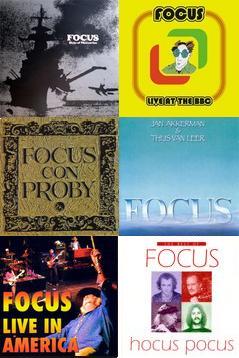
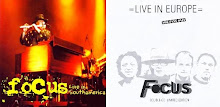
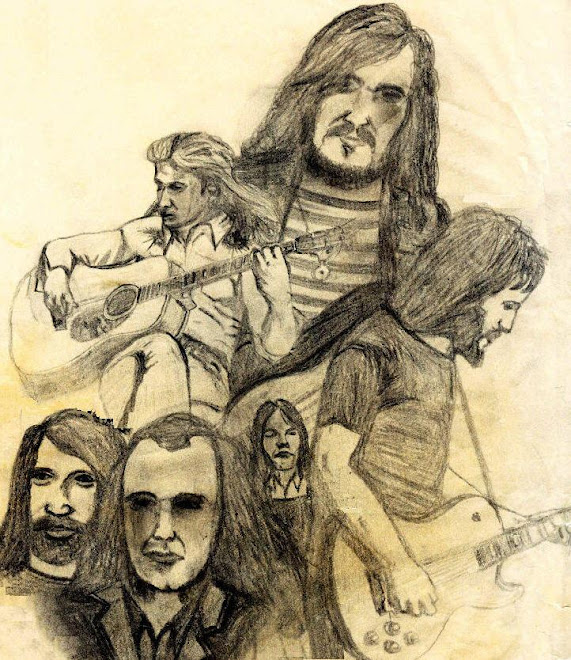
It's out at last. You can read the opening pages online at Amazon. Already my knowledge of the band has grown immensely. This is a real labour of love and the fruit of a lot of hard slog. Thanks for the mench too Peet - very kind. As so often with these books it is full of minor proofing errors and slightly expensive but it looks a fine production otherwise and is a must for anyone interested in a blog like this or a band like that. I am eagerly awaiting my copy. Not sure yet how many errors here on this blog will have to be changed or modified.
.

20130312

20130306
A rugby team out of Focus

There are actually now at least 15 men who have been part of the official Focus line up but are no longer in the band.
There are five guitarists and three bassists who can form the forwards, while the six drummers can be the backs with PJ Proby at full back.
There are five guitarists and three bassists who can form the forwards, while the six drummers can be the backs with PJ Proby at full back.
They are
Jan Akkerman – guitar (1969–1976, [1985, 1990])
Hans Cleuver – drums (1969–1970, 1999)
Martijn Dresden – bass (1969–1970)
Cyriel Havermans – bass (1970–1971)
Bert Ruiter – bass (1971–1978, 1990, 1999)
Hans Cleuver – drums (1969–1970, 1999)
Martijn Dresden – bass (1969–1970)
Cyriel Havermans – bass (1970–1971)
Bert Ruiter – bass (1971–1978, 1990, 1999)
Colin Allen – drums (1973–1975)
David Kemper – drums (1975–1978)
Philip Catherine – guitar (1977–1978)
Steve Smith – drums (1978)
Eef Albers – guitar (1978)
P J Proby – vocals (1978)
Jan Dumée – guitar (2001–2006)
Ruben van Roon – drums (2001)
Bert Smaak – drums (2001–2004)
Niels van der Steenhoven – guitar, vocals (2006–2010)
20130305
Track by track 125 It takes 2 2 tango
Archive number: 125
Title:
It takes 2 2 tango
Main
Album: Focus 9 (New Skin)
Track
number: 13
Genre:
Progressive Rock Instrumental
Studio:
Fieldwork Studios, Schoten, Belgium
Length:
07:57
Composer:
Thijs van Leer
Musicians:
Thijs van Leer – Hammond organ, piano, flute; Niels van der Steenhoven – Guitars; Bobby Jacobs – Bass; Pierre van der Linden
– Drums
Producer:
Bobby Jacobs and Thijs van Leer
Engineer:
Han Nuijten
Label:
Red Bullet
Date
of recording/release: Summer 2006
Alternative
version: None
Notes:
This further exploration of the tango form is quite slow for the most
part. The band handle the first five minutes or so like a jazz quartet but with the familiar Focus rises and falls. There are some
very attractive guitar phrases here as it somehow tells a story
without words. Just when you have forgotten the tango title, tango rhythms
break in first at 05:07-05:40 and then again at 06:08-06:42. In both
cases the piano leads, followed by organ, then drums and then flute. The old
theme soon reasserts itself (05:40-06:07 and 06:43-07:57), The whole
closes on a suitably dramatic and extended note.
Track by track 124 Pim
Archive number: 124
Title:
Pim
Main
Album: Focus 9 (New Skin)
Track
number: 12
Genre:
Progressive Rock Instrumental
Studio:
Fieldwork Studios, Schoten, Belgium
Length:
02:57
Composer:
Thijs van Leer
Musicians:
Thijs van Leer – Hammond organ, piano; Niels van der Steenhoven –
Guitars; Bobby Jacobs – Bass; Pierre van der Linden – Drums
Producer:
Bobby Jacobs and Thijs van Leer
Engineer:
Han Nuijten
Label:
Red Bullet
Date
of recording/release: Summer 2006
Alternative
version: None
Notes:
The guitar leads the band in a jaunty bit of rock with a bright and
pretty sound that celebrates the birth of van Leer's grandson. He
appropriately whistles (01:48-02:00) before the guitar takes over
with renewed strength and the band head for the simple close.
Track by track 123 European Rap(sody)
Archive number: 123
Title:
European Rap(sody)
Main
Album: Focus 9 (New Skin)
Track
number: 11
Genre:
Progressive Rock Instrumental
Studio:
Fieldwork Studios, Schoten, Belgium
Length:
10:19
Composer:
Thijs van Leer, Gordon Taylor
Musicians:
Thijs van Leer – Piano, voice, handclaps, synthesiser, organ,
flute; Niels van der Steenhoven – Guitars; Bobby Jacobs – Bass;
Pierre van der Linden – Drums
Producer:
Bobby Jacobs and Thijs van Leer
Engineer:
Han Nuijten
Label:
Red Bullet
Date
of recording/release: Summer 2006
Alternative
version: None (although there is a clip of a Focus jam in Kasteel Groeneveld on Youtube where they play something similar to one of the sections)
Notes:
This song is in several parts. First comes a slow, even halting part
led by the guitar backed by piano and keyboard set to choral
(00:00-00:42). It leads into a second slow part, backed by the organ
(00:43-01:07). We then turn east for an increasingly fast, Russian
style dance tune led by the flute with the guitar and backed by the
rhythm section (01:08-02:10). This is further developed from 02:11
with the use of the voice and handclaps, the guitar giving
balalaika-type riffs. At 02:37 a shout or laugh takes us back to the
flute-led tune, this being brought to an end by a couple of piano
arpeggios (02:38-02:59). The slow and introspective guitar then leads
off again followed by the cymbals, organ, bass and then piano too
(03:00-03:34). This segues into the next part, still slow, led first
by piano then with guitar and backing from the rhythm section and
organ (03:35-05:20).
A crash of cymbals abruptly announces a new and jaunty fast section,
which features a first litany of about 12 titles of previous Focus
tracks from van Leer (05:21-06:27). The list with the few additional
words is as follows:
Spoke the Lord Creator, Can't believe my eyes, Out of Vesuvius, Red
sky at night, Round goes the gossip, (of) Eruption, Well done,
Dayglow (to break), (Creating) Moving Waves (for how long?), Answers,
questions ..., (of) Love remembered, … Questions, Answers, Ship of
memories, ??? (06:28-06:13)
This is followed by an instrumental section in the same vein (06:14-06:28)
At 06:29 we come into a new section that begins slowly then becomes
jaunty again but this time we are looking west and the style is very
French, the keyboards in a very accordion-like mode. At 07:33 this
comes to an end with the same slow piano, cymbals and bass conclusion
as before, ending at 07:47.
A crash of cymbals announces the second part of the litany. This time
we have around 35 further tracks
Carnival Fugue, (on an) Endless Road, (it's an) Early birth, (like a
fugue of the) Sneezing Bull, Hocus Pocus (and) Birth (and Birth, and
Birth), No Hang ups, (with the) Russian Roulette, (surely) Harem
Scarem (dreams, dream), (and a) Cathedrale de Strasbourg, Anonymus
(it seems), Maximum, (or) Medium, (or) One for the Road (but)
Someone's Crying … what? (in the) House of the King, (it's a) Happy
nightmare, Altogether … Oh that!, (Let's) Focus (on) Who's
calling?, (Is it) Beethoven's Revenge, (or may be) Father Bach, (is
it) Tommy, Benny, Eddy (or) Judy or Sylvia, My Sweetheart (My
Sweetheart), It's an Indian Summer, (I'm the) Glider, The Tango,
(with) Tokyo Rose, Night flight (with a) Black Beauty, (such a)
Tropic Bird, (With movement, with movement, with movement; that's the
Lord, that's the Lord, that's the Lord) (07:48-09:15)
We then play out with the band led by van Leer's rocking flute
(09:16-10:10). The closing nine seconds are left to the solo flute.
20130206
Songs in different languages

Focus are not known for their vocals but the songs they have sung feature several languages.
1. English (Why dream, Happy nightmare, Black Beauty, etc, etc)
2. Dutch (O Avondrood, Hamburger Concerto, Flower Shower)
3. Latin (Round goes the gossip, Hoeratio)
4. French (La Cathedrale de Strasbourg)
5. Spanish (Santa Teresa)
20121127
Track by track 122 Ode to Venus
Archive number: 122
Title:
Ode to Venus
Main
Album: Focus 9 (New Skin)
Track
number: 10
Genre:
Jazz instrumental
Studio:
Fieldwork Studios, Schoten, Belgium
Length:
04:25
Composer:
Thijs van Leer
Musicians:
Thijs van Leer – Piano, Hammond organ; Niels van der Steenhoven –
Guitars; Bobby Jacobs – Bass; Pierre van der Linden – Drums
Producer:
Bobby Jacobs and Thijs van Leer
Engineer:
Han Nuijten
Label:
Red Bullet
Date
of recording/release: Summer 2006
Alternative
version: None
Notes:
This haunting slow jazz instrumental begins with a bass slide and the
briefest of caesuras before being led by the electric guitar backed
mainly by brushed drums, bass and piano but also featuring the
Hammond organ at certain points, which outlasts the final piano chord
by some seconds at the end.
20121126
Focus X Review

So amazingly Focus reach double figures with their tenth album. I have held back from writing about it until now as I know by experience that initial impressions can be wrong. Certainly the presence of familiar titles was offputting – a nod backwards in the opening title Father Bacchus (good joke though), yet another Focus track, Le Tango in its umpteenth incarnation, Message Maqique was on a solo album (that also featured Talk of the Clown, there called Pierrot). Van Leer insiders also know that the curiously titled Amok in Kindergarten was directly inspired by the Dunblane incident way back in 1996. Even the title All hens on deck made me nervous as I feared a re-hash of Hurkey Turkey. It turns out to be one of the most attractive numbers on the album.
In fact this is as good a post-Akkerman album as Focus have come up with so far. The only real problem is an over-dependence on Van Leer for the writing and performance, a Van Leer almost shorn of one of his attributes, his voice (his keyboard and flute work are better than ever). Van Der Linden's drumming is of a high order throughout but good drumming though important is a relatively small component in a rock album's make-up.
The opening track is a fine effort from the new guitarist Menno Gootjes, spoiled only by Van Leer announcing the band's name as if in a live setting. The track Focus 10 is fine, though since Focus 5 I feel that particular strand has not been working so well somehow. The third track is currently my favourite. Quite what inspired Victoria I don't know but the result is quintessential Focus. Superb! Amok in Kindergarten is contemplative and an adequate track for inclusion. After the up tempo All hens full of Van Leer scat we have an interesting version of Le Tango that justifies its inclusion by being re-titled Birds come fly over and featuring the veteran Brazilian musician Ivan Lins singing lyrics by Van Leer's ex-wife Roselie Peters (she also provides the spoken lyrics for Crossroads). The decision to hand over the mike to Lins was wise. Presumably there was a similar plan with Van Leer's daughter Berenice for the last track (she is credited but I do not hear her unless she is doing backing vocals). Hoeratio is better known as Horace in the English speaking world. Someone has spotted his reference to the flute in his ars poetica. Van Leer reads this in Latin over a slow Bobby Jacobs written piece that is again only adequate as far as I can see. May be it will grow on me. We then have the two tracks lifted from the 1986 solo album Renaissance. The use of acoustic guitar on the first of these tracks and on Le Tango is refreshing. So there it is a rock album with a lot of jazz or Latin influences but no obviously classical ones. Great guitar work from Gootjes and a solid rhythm section, Van Leer at the height of his powers for the most part.
The CD comes as a little book with artwork from Roger Dean, which adds to the overall enjoyment.
20121124
Track by track 121 Curtain Call
Archive number: 121
Title:
Curtain call
Main
Album: Focus 9 (New Skin)
Track
number: 9
Genre:
Progressive Rock Instrumental
Studio:
Fieldwork Studios, Schoten, Belgium
Length:
04:31
Composer:
Thijs van Leer
Musicians:
Thijs van Leer – Hammond organ, piano, flute; Niels van der Steenhoven –
Guitars; Bobby Jacobs – Bass; Pierre van der Linden – Drums
Producer:
Bobby Jacobs and Thijs van Leer
Engineer:
Han Nuijten
Label:
Red Bullet
Date
of recording/release: Summer 2006
Alternative
version: None
Notes: This rousing ensemble is counted in by the drums and soon the band
(organ, piano, flute, etc) are involved. There is a break down at
00:28 and a slower electric guitar-led theme. These slower themes break
in at 00:29-00:39, 00:43-00:53 and 01:09-01:19. At 01:24 the electric
guitar grows more wistful and jazzy. The flute leads with its own
style 01:52-02:13, that section ending with a swinging staccato
conclusion in 02:14-02:24 that includes a piano glissando at 02:23.
The flute then returns for a few more bars (02:25-02:37) before the
electric guitar leads again with some fine rock playing to take us
into the same conclusion just heard with the flute leading
(02:38-03:16). The flute leads with a slower section again at
03:17-03:27 before the band races off again with the main theme, the
drums growing quicker and more prominent all the while until ending at 04:21. This is followed by a 10 second ending in which the guitar
delivers one long note and the piano a series of trills.
Track by track 120 Focus 9
Archive number: 120
Title:
Focus 9
Main
Album: Focus 9 (New Skin)
Track
number: 8
Genre:
Jazz Rock Instrumental
Studio:
Fieldwork Studios, Schoten, Belgium
Length:
07:53
Composer:
Thijs van Leer
Musicians:
Thijs van Leer – Hammond organ, piano, flute; Niels van der Steenhoven – Guitars; Bobby Jacobs – Bass; Pierre van der Linden
– Drums
Producer:
Bobby Jacobs and Thijs van Leer
Engineer:
Han Nuijten
Label:
Red Bullet
Date
of recording/release: Summer 2006
Alternative
version: None
Notes: The track begins with a rather simple, fairly halting and jazz style
solo piano introduction (00:00-00:29). The organ, bass and brushed
drums then join in with a staccato 4 or 5 note theme reminiscent of
Focus 3 (00:30-00:55). The acoustic guitar and piano take up the
halting jazz theme (00:56-01:24) before the organ, bass and drums
return (01:25-01:49). The bulk of the track, all the way from 01:50
to 05:49, is taken up by the guitar and piano, with the theme growing
slightly more melodic at times but remaining very much a jazz piece.
At 03:15-03:49 and 04:19-04:50 the flute is dubbed in with the other
two instruments. At around 05:53 the organ, bass and drums return
with the Focus 3-style element. At 06:20 the acoustic jazz guitar
starts to take the lead. From 07:14 it is the Hammond organ's turn.
The track is almost done by 07:36 except for two piano trills and a
final resounding bass note from the piano (7:37-07:53).
20121112
Focus X

You will all know that Focus have a new album, Focus X. I am slowly digesting this mostly brand new material and will no doubt have something to say here in the near future. I am also hoping to see them on the last date of their current short tour of the UK.
20121011
20121010
20111203
Track by track 119 Aya-yuppie-hippie-hee
Archive number: 119
Title:
Aya-yuppie-hippie-hee
Main
Album: Focus 9 (New Skin)
Track
number: 7
Genre:
Progressive Rock Instrumental
Studio:
Fieldwork Studios, Schoten, Belgium
Length:
05:15
Composer:
Bobby Jacobs and
Thijs van Leer
Musicians:
Thijs van Leer – Hammond organ, flute, voice, bird whistle; Niels van der Steenhoven – Guitars; Bobby Jacobs – Bass; Pierre van der Linden – Drums
Producer:
Bobby Jacobs and Thijs van Leer
Engineer:
Han Nuijten
Label:
Red Bullet
Date
of recording/release: Summer 2006
Alternative
version: None
Notes:
A traditional clay bird whistle is heard at the beginning of this
track which typically alternates between first a yearning theme on
guitar backed by the band (00:00-00:29) and a contrasting rock theme
introduced the first time by drums and consisting mainly of a four
note riff from the guitar backed firstly by harmonics and organ with
some great drumming from van der Linden (00:30-01:16). When the high
soaring guitar returns at 01:15-17 it leads into a twofold repetition
of the title – Aya Yuppie Hippie Hee – the vocals having an
effect on them (01:18-01:26). We then slip back into the rock theme
with the second guitar wailing much more this time (01:27-02:10)
before a repeated “Aya Yuppie” section (02:11-02:22) and the rock
theme again (02:23-02:44). There is then a break down into a quieter
and slower guitar section (02:45-02:54) that gives way to a three
note riff (02:55, 56) followed by a jazzy flute-led part
(02:57-03:29), van Leer breaking out vocally at 03:14 and other
points, ending with some glossolalic scat. At 03:30 we begin on an
increasingly wild guitar-led lead up to first the rock and then the
yearning themes which come in at 04:14-04:35 then 04:36-04:59 (listen
out for the bird whistle), the whole closing on one more brief
rendition of the rock theme with a sudden, decisive and unified stop
at 05:12 (the reverb lasting just a few seconds more).
Track by track 118 Just Like Eddy
Archive number: 118
Title: Just like Eddy
Main Album: Focus 9 (New Skin)
Track number: 6
Genre: Progressive Rock Vocal
Studio: Fieldwork Studios, Schoten, Belgium
Length: 05:04
Composer: This van Leer/Roselie Peters
Musicians: Thijs van Leer – Hammond organ, piano; Niels van der Steenhoven – Guitars; Bobby Jacobs – Bass; Pierre van der Linden – Drums; Jan van der Roek - Vocal
Producer: Bobby Jacobs and Thijs van Leer
Engineer: Han Nuijten
Label: Red Bullet
Date of recording/release: Summer 2006
Alternative version: On Focus Con Proby with PJ Proby and on van Leer's solo album O my love!
Notes: This third version of Eddy is again unique. This time the band begins with a short introduction (00:00-00:21) before the vocal comes in at 00:22.
Just like Eddy in the morning
He never said, although he could
I know someone who would, but
He never woke to have an ear (00:22-01:00)
Yes I think of things unnoticed
Like what happens in the egg
As it lies without motion
Just like Eddie's sleeping head (01:01-01:40)
When I come home in the morning
Softly as I tread the dawn
I know things that are important
That have only just begun (01:41-02:22)
I'm gonna fly away
Here I go here I go here I go
I'm gonna fly away
Here I go here I go here I go (02:23-02:42)
Seeing you across the table
Smiles are dying on your face
Being here with my heart open
Seems a little out of place (02:43-03:41)
I'm gonna fly away
Here I go here I go here I go
I'm gonna fly away
Here I go here I go here I go (repeated twice) (03:42-04:18)
There is a break at 04:19-04:29 followed by another I'm gonna fly away (04:30-04:36) and a second break (04:37-04:46) and ending on the vocal (04:47-05:04).
Title: Just like Eddy
Main Album: Focus 9 (New Skin)
Track number: 6
Genre: Progressive Rock Vocal
Studio: Fieldwork Studios, Schoten, Belgium
Length: 05:04
Composer: This van Leer/Roselie Peters
Musicians: Thijs van Leer – Hammond organ, piano; Niels van der Steenhoven – Guitars; Bobby Jacobs – Bass; Pierre van der Linden – Drums; Jan van der Roek - Vocal
Producer: Bobby Jacobs and Thijs van Leer
Engineer: Han Nuijten
Label: Red Bullet
Date of recording/release: Summer 2006
Alternative version: On Focus Con Proby with PJ Proby and on van Leer's solo album O my love!
Notes: This third version of Eddy is again unique. This time the band begins with a short introduction (00:00-00:21) before the vocal comes in at 00:22.
Just like Eddy in the morning
He never said, although he could
I know someone who would, but
He never woke to have an ear (00:22-01:00)
Yes I think of things unnoticed
Like what happens in the egg
As it lies without motion
Just like Eddie's sleeping head (01:01-01:40)
When I come home in the morning
Softly as I tread the dawn
I know things that are important
That have only just begun (01:41-02:22)
I'm gonna fly away
Here I go here I go here I go
I'm gonna fly away
Here I go here I go here I go (02:23-02:42)
Seeing you across the table
Smiles are dying on your face
Being here with my heart open
Seems a little out of place (02:43-03:41)
I'm gonna fly away
Here I go here I go here I go
I'm gonna fly away
Here I go here I go here I go (repeated twice) (03:42-04:18)
There is a break at 04:19-04:29 followed by another I'm gonna fly away (04:30-04:36) and a second break (04:37-04:46) and ending on the vocal (04:47-05:04).
20111124
Chipping Norton and Decca Studios
Focus have used a limited number of recording studios over the years.
The
first two studio albums were recorded mostly at Sound Techniques
(Moving Waves partly at Morgan Studios) and the third and fourth at
Olympic B, both in London.
The core tracks that appear on the album Ship of Memories were recorded at Mike Vernon's studio in Chipping Norton. For Mother Focus
the band recorded in Los Angeles. Since that time studio recordings
have been made in Holland and Belgium at EMI Hilversum, Studio
Spitsbergen in Zuidbroek, Peptide Studio in Vuren and for the last two
albums at Fieldwork Studios at Schoten in Belgium.
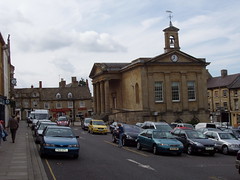
Chipping Norton Between 1972 and 1999, Chipping Norton Recording Studios existed in the old British School on New Street in the Oxfordshire market town. The studios were set up by Mike Vernon with his brother Richard and Dave Grinsted. Focus were one of the earliest bands to record there.
Los Angeles What became known as Studio 55 was originally Decca Studios (White Xmas was recorded there)
and was known in the sixties as Nashville West. It had two studios and was on the Paramount Studios lot. Owned by Howard Steele it was taken over in 1975 by Richard Perry. The
building is apparently long gone.
Olympic B Sound Studios
Focus have used a limited number of recording studios over the years.
The
first two studio albums were recorded mostly at Sound Techniques
(Moving Waves partly at Morgan Studios) and the third and fourth at
Olympic B, both in London.
The core tracks that appear on the album Ship of Memories were recorded at Mike Vernon's studio in Chipping Norton. For Mother Focus
the band recorded in Los Angeles. Since that time studio recordings
have been made in Holland and Belgium at EMI Hilversum, Studio
Spitsbergen in Zuidbroek, Peptide Studio in Vuren and for the last two
albums at Fieldwork Studios at Schoten in Belgium.
Olympic Studios was a renowned independent commercial recording studio located at 117 Church Road, Barnes, South West London. The studio is best known for the huge number of famous rock and pop recordings made there from the late 1960s onward.
The building which housed the studio was constructed in 1906 as a
theatre for the Barnes Repertory Company, and later became a cinema.
Guild TV purchased the building in the late 1950s and converted it into a
film studio. In 1965 it was purchased by Olympic Sound Studios. The
conversion from film to recording studio was undertaken by architect
Robertson Grant and the acoustics were completed by Keith Grant and
Russel Pettinger.
Olympic's sound mixing desks were a creation of the maintenance staff
and built specially for the studios. They became famous as Olympic desks and were developed by Dick Swettenham, Keith Grant and later, Jim McBride in conjunction with Jim Dowler.
Swettenham later started to manufacture the consoles commercially as
Helios desks.
Amongst other accolades, the studios won Music Week Magazine Best Recording Studio,
five times. However, after 40 years of renowned recording history
and a succession of owners, the studio facilities were closed down by
the merged EMI and Virign group
in 2009.
The original Olympic Sound Studios was established in central London in the late 1950s and was owned by Angus McKenzie who had bought Larry Lyons Olympia Studio in Fulham. McKenzie then took a lease on a derelict synagogue in London's West End.
In conjunction with Swettenham, McKenzie opened Olympic's Studio One with the tube desk from Olympia. Grant joined the company in 1958 as music engineer. Swettenham designed the first professional transsistorised desk in the world, which was installed into Studio One during 1960, along with the first four track recorder in England.
When the lease expired in 1965, the studio was bought from McKenzie by Cliff Adams and Keith Grant and they moved it to Barnes, a year later. Among artists who worked at the studio were the Rolling Stones, the Beatles, Jimi Hendrix, the Who, Traffic and Led Zeppelin. Procul Harum recorded Whiter Shade of Pale there.
Over the 1970s, Grant commissioned his father Robertson Grant to re-design Studio Two,
as the now working and successful studio was causing problems with
sound transmission to Studio One. Robertson Grant successfully innovated a completely floating space
weighing seventeen tonnes, which was supported by rubber pads.
At this time Mick Jagger
became involved with the charge of decor and furnishing and produced a
contemporary design. Later, Grant added probably the first Instant acoustic change
using rough sawn wooden slats, to cover or reveal absorptive panel
behind, thus changing the acoustics. This made the room suitable for the
recording of both rock and orchestral music, at the pull of a cord.
In 1987, Virgin Music bought the studios. Barbara Jefferies, then Studio manager for virgin at Olympic Studios, instructed that the master tapes of the studio's vast, historic library of recording sessions be discarded. The disposal of these tapes was unsecured as they were put into skips
outside the building, and left for days; they were subsequently
pillaged by hordes of freeloaders, and some are thought to have been
sold for large sums of money as bootlegs.
20111123
Sound Techniques
Focus have used a limited number of recording studios over the years.
The first two studio albums were recorded mostly at Sound Techniques (Moving Waves partly at Morgan Studios) and the third and fourth at Olympic B, both in London.
The core tracks that appear on the album Ship of Memories were recorded at Mike Vernon's studio in Chipping Norton. For Mother Focus the band recorded in Los Angeles. Since that time studio recordings have been made in Holland and Belgium at EMI Hilversum, Studio Spitsbergen in Zuidbroek, Peptide Studio in Vuren and for the last two albums at Fieldwork Studios at Schoten in Belgium.
Sound Techniques began its life as a recording studio at 46a Old Church Street, Chelsea, London, SW3 in December 1964, when it was set-up by Geoff Frost and John Wood as one of the early independent sound recording studios in the UK.
Previously a milking parlour, the Studio was on three floors. Entry was by a small door within a rusty steel roller shutter. At ground level was something resembling a garage with a cobbled floor. At the far end was a manually operated lift. To the right of this lift was a narrow entrance leading to a set of quite wide white concrete stairs. These led to a small, again, concrete landing, with an entrance to the studio on the first floor. The floor had a gentle slope towards the lift access at the far end. The slope was there so that when the cows were hosed down, the slope would drain off the water. There were two stairways up to the second floor.
One led to the control room, the other to the office. This, second staircase was handmade from Dexion angle iron.
Over the next decade some of the best UK folk and folk rock artists recorded at Sound Techniques, and undoubtedly produced some of the best records of the era. Artists that recorded there included: Pink Floyd, Fairport Convention, Jethro Tull, Steeleye Span, Incredible String Band, The Pentangle, Judy Collins, John Cale, The Yardbirds and The Who.
During the '60's and '70's, the Sound Techniques studio enjoyed unqualified success at the top-end of the music business as did STL's manufacturing division. The company produced a pioneering range of audio recording desks including the System 12 mixer which was one of the first ever compact desks in production, and was exported all over the world.
The studios closed their doors in 1976 and over the past 39 years, Sound Techniques has diversified into both Television Production and Information Technology.
20111122
Track by track 117 Niels Skin
Archive number: 117
Title: Niels' skin
Main Album: Focus 9 (New Skin)
Track number: 5
Genre: Progressive Rock Instrumental
Studio: Fieldwork Studios, Schoten, Belgium
Length: 06:02
Composer: Niels van der Steenhoven
Musicians: Thijs van Leer – Hammond organ, piano; Niels van der Steenhoven – Guitars; Bobby Jacobs – Bass; Pierre van der Linden - Drums
Producer: Bobby Jacobs and Thijs van Leer
Engineer: Han Nuijten
Label: Red Bullet
Date of recording/release: Summer 2006
Alternative version: None
Title: Niels' skin
Main Album: Focus 9 (New Skin)
Track number: 5
Genre: Progressive Rock Instrumental
Studio: Fieldwork Studios, Schoten, Belgium
Length: 06:02
Composer: Niels van der Steenhoven
Musicians: Thijs van Leer – Hammond organ, piano; Niels van der Steenhoven – Guitars; Bobby Jacobs – Bass; Pierre van der Linden - Drums
Producer: Bobby Jacobs and Thijs van Leer
Engineer: Han Nuijten
Label: Red Bullet
Date of recording/release: Summer 2006
Alternative version: None
Notes: The introduction is played on drums (00:00-00:18) and is followed by a series of alternating sections. The first is a choppy guitar riff led section backed by the organ and speeding up at the end (00:18-00:46 and 00:51-01:19). The second is a pleasant guitar led theme (00:46-00:51 and 01:20-01:44) that begins to yearn second time around. When the choppy riff comes in the third time it leads into an organ solo with the band still backing (01:45-02:58). This third time the guitar has a dreamy quality when the theme is played, 02:59-03:43. At 03:44 we return pronouncedly to the choppy section again beginning a little slower with lots of bass and leading into a heavy and fairly wild guitar-led segment. This goes on until 05:15 where the choppy section comes in seamlessly for the final time and the piece comes to a united close at 06:02.
20111117
Track by track 116 Sylvia's Stepson UbaTuba
Archive number: 116
Title: Sylvia's stepson Ubatuba
Main Album: Focus 9 (New Skin)
Track number: 4
Genre: Progressive Rock Instrumental
Studio: Fieldwork Studios, Schoten, Belgium
Length: 04:46
Composer: Bobby Jacobs
Musicians: Thijs van Leer – Hammond organ, voice; Niels van der Steenhoven – Guitars; Bobby Jacobs - Bass; Pierre van der Linden - Drums
Producer: Bobby Jacobs and Thijs van Leer
Engineer: Han Nuijten
Label: Red Bullet
Date of recording/release: Summer 2006
Alternative version: None
Notes: Organ and guitar begin together, backed by bass and cymbals, as this beautiful piece is introduced (00:00-00:31). The drums announce the main theme, a typical piece of Focus guitar - slow, yearning and thoughtful - with occasional volume swells or violining (00:32-02:00) before quiet (02:01-02:10) then louder (02:11-02:24) guitar-led sections. At 02:25-02:56 we have the “ubatuba” section featuring guitar and “ubatubing” from van Leer's voice. A caesura at 02:57 announces the return of the yearning guitar lead with some exquisite finger work from van der Steenhoven, especially towards the end (02:58-04:14). Finally, we have a quieter section (04:15-04:35) that is rounded off with a coda of 10 violined harmonics (04:36-04:46).
Track by track 115 Remember Mozart/Hurkey Turkey
Archive number: 115
Title: Remember Mozart/Hurkey Turkey
Main Album: Focus 9 (New Skin)
Track number: 3
Genre: Progressive Rock Instrumental
Studio: Fieldwork Studios, Schoten, Belgium
Length: 04:02
Composer: van Leer
Musicians: Thijs van Leer – Hammond organ, piano, keyboard, flute, voice; Niels van der Steenhoven – Guitars; Bobby Jacobs - Bass; Pierre van der Linden - Drums
Producer: Bobby Jacobs and Thijs van Leer
Engineer: Han Nuijten
Label: Red Bullet
Date of recording/release: Summer 2006
Alternative version: None
Notes: Following a drum beat there is a slow, deliberate introduction led by a five note guitar, bass and piano riff, more or less repeated eight or nine times (01:00-0024). Next comes a more tuneful section, hailed by a Mozartian trill and featuring the flute along with the band and harpsichord-like keyboards (from 00:25). This goes on until 01:12 when first the guitar then the keyboard (01:13-01:17) re-introduce the opening theme backed this time by van Leer's improvised flute (01:18-01:40). This leads to the central motif, van Leer's piano and band backed voice, based on the famous Mozart piece Alla Turca (hence the titles). That sections ends at 02:16 (slowing down before speeding up again from 02:02). At 02:17 the opening intro is played in slightly lengthened form for the third and last time, backed this time by squealing and wild electric guitars. At 02:52 we come out again with the tuneful and flute dominated second section broken up only by two brief sections on what sounds like acoustic guitar and keyboard (03:12 03:23) and keyboard with flute (03:41-03:46). The piece ends with a note from the flute.
The third movement of Wolfgang Amadeus Mozart's Piano Sonata No. 11 in A major, K 331 (300i) (from WIkipedia) is a sonata in three movements:
1. Andante grazioso — a theme with six variations 2. Menuetto — a minuet and trio 3. Alla Turca: Allegretto in A minor and major.
All the movements are in the key of A major or A minor; therefore, the work is homotonal. A typical performance of the entire sonata takes about 20 minutes.
It is uncertain where and when Mozart composed it; however, Vienna or Salzburg around 1783 is currently thought to be most likely.
The last movement, Alla Turca, popularly known as the Turkish Rondo or Turkish March, is often heard on its own and is one of Mozart's best-known piano pieces. It imitates the sound of Turkish Janissary bands, the music of which was much in vogue at that time. Various other works of the time imitate this music, including Mozart's own opera The Abduction from the Seraglio.
Repeated notes, repeated ornaments, and loud/soft passages are characteristic of the Alla turca style. The imitation probably came closer with the piano of Mozart's day, whose bass strings made something of a rattle when played loudly, than is possible on modern pianos.
In Mozart's time, the last movement was sometimes performed on pianos built with a "Turkish stop", allowing it to be embellished with extra percussion effects.
Moreover, this third movement is implicitly related to the first one, because the beginning of the "Rondo" can be seen as an additional variation of the "Tema" of the first movement, varied in the Janissary style.
20111116
Track by track 114 Focus 7
Archive number: 114
Title: Focus 7
Main Album: Focus 9 (New Skin)
Track number: 2
Genre: Progressive Rock Instrumental
Studio: Fieldwork Studios, Schoten, Belgium
Length: 05:18
Composer: van Leer
Musicians: Thijs van Leer – Hammond organ, piano; Niels van der Steenhoven – Guitars; Bobby Jacobs - Bass; Pierre van der Linden - Drums
Producer: Bobby Jacobs and Thijs van Leer
Engineer: Han Nuijten
Label: Red Bullet
Date of recording/release: Summer 2006
Alternative version: Later on Completely Focussed album
Notes: We begin with an introduction just on the Hammond organ until at 00:37 a bass note brings in the guitar led band with an exquisite statement of the main theme (00:38-01:10). The theme is restated slightly more stridently (01:11-01:47) before the typically more yearning and heavier version of it comes in (01:48-02:25). It then reverts to something more like the first statement, but helped in due time by the flute (02:26-03:11), which also features in the following stormy version of the more strident element (03:12-03:48). From 03:49 it is quiet again, rising a little before more or less repeating from about 04:27. The piano is quite prominent in these final sections alongside the organ. A live sounding end comes around 05:18, the Hammond going on for at least 10 seconds after the close.
Subscribe to:
Posts (Atom)