.

Showing posts with label Anonymus. Show all posts
Showing posts with label Anonymus. Show all posts
20091114

20090224
Van Leer: the humorous element
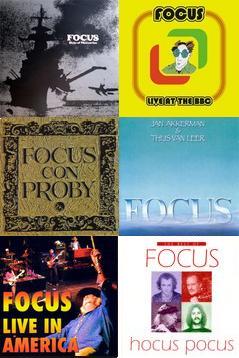
 One thing that attracted me to Focus’s music as a teenager in the 1970s was its seriousness. Raised on pop music I was tiring of its superficial predictability. Then along came Focus with something quite different. The irony is that if the novelty piece Hocus Pocus had not become an international hit, I may never have discovered Van Leer (and Akkerman's) music. Somewhat unique in being the only yodelling track to consistently feature on albums that showcase the world’s greatest guitarists, it manages somehow, with its claps, shouts, whistles, yodels and blistering guitar riffs both to amuse and amaze. Perhaps the live version on Focus at the Rainbow is the most fun. (On the 1973 American tour, one night poor old Van Leer sang ‘And on the drums Pierre van der Linden’ only to find Colin Allen there – a reminder that not all humour is intentional!)
On Focus Con Proby the question is asked When does a smile begin? There is certainly a vein of humour, especially in Akkerman's work but also in Van Leer's that surfaces at various points. It is certainly in the Focus output and perhaps the search for novelty did dog them. Singles Harem Scarem and Mother Focus tried to capitalise on Van Leer’s distinctive vocals but nothing is quite as much fun or as satisfying as yodelling! An earlier version of Mother Focus is preserved on Ship of Memories, of course, in the weirder, possibly more satisfying, guise of Glider.
Round goes the gossip (the opener on Focus 3) is a track of subtle humour, weirdly enunciated Latin amid a jazz set overlaid with eventually manic voices repeating the title. Both Carnival Fugue and Elspeth of Nottingham (with its cow mooing at the end) are not without humour either. At the end of the second side of what was originally a double album one can appropriately hear weird and manic laughing in the distance. Eruption (Moving Waves) with its call and answer, piano forte style and monastic choir is another track with witty moments. However, in the musical gag department perhaps Hamburger Concerto (Rare, Medium and Well done!), whose very title is a rather old joke, is the most eccentric. It features Van Leer alternately singing male and female opera parts along with an old Dutch hymn sung in a perfectly composed manner amid classical piano and timpani, electric jazz and rock.
Van Leer's solo output and later Focus work is not marked to any great extent by this same sort of humorous approach though it does surface on rare occasions. For example – Super Fishel and Bahama Mama on Nice to have met you with its rather humorous cover (compare the more risque joke on the best of collection Collage) and perhaps I hate myself (for loving you) on the album of that name and Shock treatment on the same album plus Hurkey Turkey Parts 1 and 2 and the rather weird Flower shower (Focus 8 bonus track) - what on earth is going on there? - and possibly European (Rap)sody. Other fun tracks include Finale (Glorious album), the Rondo pieces and several others. Often when doing scat (as on Etudes sans Genes) Van Leer can be very humorous. The name 147 bars (Etudes sans Genes) is a rare example of a humorous enough title. Van Leer, unlike Akkerman, tends not to go in for such things. An example from Focus days would be using the title Anonymus on the first album or the later Mother Focus (no comment) which also includes the closing track Father Bach.
Writing about humour is seldom funny, but like other elements pinpointed in previous articles, humour is an important element in Van Leer's music to some extent and a further part of what makes his body of work the phenomenon it is.
20081203
Longest Focus Tracks

The 10 longest Focus tracks are
1 Anonymus 2 (26:19)
2 Eruption (22:57)
3 Hamburger Concerto (20:15)
4 Beethoven's Revenge extended (18:42, short version 10:49)
5 Who's calling (16:14, short version 07:33)
6 Maximum Live (13:58, studio version 08:40)
7 Answers? Questions! Questions? Answers! (13:50, live version 11:28)
8 Virtuous Woman (10:57)
9 Beethoven's Revenge (10:49 - the extended version is 18:42)
10 European (Rap)sody (10:25)
20081202
Non-English Titles
Focus song titles are usually in English. These are the exceptions:
French
La Cathedrale de Strasburg (Strasbourg Cathedral)
Le Clochard (The Tramp)
Spanish
De Ti O De Mi (From you or from me)
Croatian
Sto Ces Raditi Ostatac Zivota (Do everything to survive in life)
Blizu Tebe (Close to you)
Dutch
Avondrood (Red evening)
French
La Cathedrale de Strasburg (Strasbourg Cathedral)
Le Clochard (The Tramp)
Spanish
De Ti O De Mi (From you or from me)
Croatian
Sto Ces Raditi Ostatac Zivota (Do everything to survive in life)
Blizu Tebe (Close to you)
Dutch
Avondrood (Red evening)
Latin
Delitae Musicae (Delightful music)
We could add too - Anonymus (Anonymous)
20080209
Track by track 30[U] House of the King (Live)
Archive number: 30[U]
Title: House of the King (Live)
Genre: Live Progressive Rock Instrumental
Venue: Rainbow Theatre, Finsbury Park, 232 Seven Sisters Road, N4 3NX (recorded using Pye Studios Mobile Unit and edited from the two performances).
Length: 02' 45”
Composer: Jan Akkerman
Musicians: Jan Akkerman – Electric guitar (Gibson Les Paul Custom); Thijs van Leer – Flute, Hammond organ; Bert Ruiter - Bass; Pierre van der Linden – Drums
Producer: Mike Vernon
Engineer: Phil Dunne
Date of recording/release: May 4, 5 1973, unreleased
Title: House of the King (Live)
Genre: Live Progressive Rock Instrumental
Venue: Rainbow Theatre, Finsbury Park, 232 Seven Sisters Road, N4 3NX (recorded using Pye Studios Mobile Unit and edited from the two performances).
Length: 02' 45”
Composer: Jan Akkerman
Musicians: Jan Akkerman – Electric guitar (Gibson Les Paul Custom); Thijs van Leer – Flute, Hammond organ; Bert Ruiter - Bass; Pierre van der Linden – Drums
Producer: Mike Vernon
Engineer: Phil Dunne
Date of recording/release: May 4, 5 1973, unreleased
Alternative version: This track was originally a single and appeared on In and out and Focus 3
Notes: ("Anonymous 2" was also played but not recorded). This track appears to have followed Hocus Pocus but may have come later. Van Leer stands away from the organ at the beginning, playing the flute. The track begins with Akkerman's strummed guitar (00:00-00:09) then the whole band join in at a slightly faster rate than on the original. At 01:11 van Leer moves to the organ for a guitar-led 'middle eight' that is slightly different to the original (to 01:48). Van Leer then stands behind the organ with his flute again for the final main theme, which begins with Akkerman's strummed guitar (01:49-01:51) followed by a caesura at 01:52 and the flute-led finale (01:53-02:40) with its ritartando ending. This is followed by applause and cheering (02:41-02:45).
Notes: ("Anonymous 2" was also played but not recorded). This track appears to have followed Hocus Pocus but may have come later. Van Leer stands away from the organ at the beginning, playing the flute. The track begins with Akkerman's strummed guitar (00:00-00:09) then the whole band join in at a slightly faster rate than on the original. At 01:11 van Leer moves to the organ for a guitar-led 'middle eight' that is slightly different to the original (to 01:48). Van Leer then stands behind the organ with his flute again for the final main theme, which begins with Akkerman's strummed guitar (01:49-01:51) followed by a caesura at 01:52 and the flute-led finale (01:53-02:40) with its ritartando ending. This is followed by applause and cheering (02:41-02:45).
20080116
Track by track 23 Anonymus 2
Archive number: 23
Title: Anonymus 2
Main Album: Focus 3
Track number: 8 (CD version, 7 on the LP)
Genre: Progressive Rock Instrumental
Studio: Olympic Studios 'B', 117 Church Road, Barnes, London SW13 9HL
Length: 26' 19”
Composer: Thijs van Leer, Jan Akkerman, Pierre van der Linden
Musicians: Jan Akkerman – Electric guitars (Gibson Les Paul Customs?); Thijs van Leer – Hammond organ, Flute; Bert Ruiter - Bass; Pierre van der Linden – Drums
Producer: Mike Vernon
Engineer: George Chkiantz
Label: LP – Imperial, Polydor, Sire CD – EMI-Bovema, IRS, Red Bullet
Date of recording/release: July 1972/November 1972 CD - 1988, 1993, 2001
Alternative version: This is a development of the track Anonymus that appeared on the first album and that can also be heard in the background on the Ramses Shaffy album Sunset Sunkiss.
Notes: The longest track Focus were ever to record (on the original vinyl it took up the whole of one side of a disc and continued on to the next side), the piece can be divided into three main parts (00:00-06:17; 06:18-19:03 and 19:04-24:46) followed by a sort of coda (24:47-26:19).
The band begin together with a staccato statement of the main theme. The guitar quickly-plucked leads. At 01:01 a rasping flute takes up the lead and is backed first by the band's fourfold repetition of an 8 or 9-note riff (modified slightly from the original one in Anonymus). The flute grows increasingly breathless until at 03:24 the organ comes in to take up the lead. At 05:23 they slip into a repeated descending riff and at 05:59 the 8-note riff is again repeated until all goes quiet. Around 06:18 a solo bass quietly takes up a slow melody that is explored alone, picking up pace from 07:41 and being joined first by a strummed or chugging electric guitar (08:12) then snares and cymbals (08:50). The bass, backed by rhythm guitar and drums, continues to build and explore these funky rhythms until the organ finally returns at 11:37 (was van leer on a toilet break?) and it is time for Akkerman, whose restrained guitar has been growing ever more sonorous, to move from rhythm to lead, which he does with aplomb. By this stage the sound is quite heavy but still melodic. It is pretty much a live presentation. At 15:19 an 'alarm style' is hinted at and at 18:33 this comes in with a strong echo as, with the help of the drums, the section is concluded at 19:03. Without a break, the 8-note riff comes in again (19:04) as we are led towards the track's long (and technically impressive) drum solo. Full band and drums alternate briefly then the solo comes in at 19:24, lasting to 23:45, when bass and organ quietly return with the riff. Lead guitar takes it on briefly at 24:10 but by 24:47 the whole thing has ground to a halt. A coda immediately follows as the band play the main theme as at the beginning. This time Akkerman is even quicker until, at 25:31-26:11, a grand reprise-style finale brings us almost to the end. The job is completed with a brief, final, abrupt and comically fast conclusion (26:12-26:19). The whole piece is mostly live and full of enthusiasm. At various points enthusiastic shouts from the band can be heard (eg 06:22, 19:13).
20071122
Track by track 4 Anonymus
Archive number: 4
Title: Anonymus
Main Album: In and Out of Focus
Track number: 4
Genre: Progressive Rock Instrumental
Studio: Sound Techniques Studio, 46a Old Church Street, Chelsea, London SW3
Length: 7' 00"
Composer: Thijs van Leer, Jan Akkerman, Martijn Dresden, Hans Cleuver
Musicians: Jan Akkerman - Electric guitars (Fender telecaster), Handclaps; Thijs van Leer - Hammond organ, Flutes, Piano, Handclaps; Martijn Dresden: Bass, Trumpet, Handclaps; Hans Cleuver - Drums, Handclaps
Producer: Hubert Terheggen (RTM)
Engineer: Jerry Boys
Label: LP - Imperial, Sire, Polydor; CD - EMI Bovema, IRS, Red Bullet
Date of recording/release: Late January 1970/Autumn 1970 (1973 in the US. In 1974 the album appeared in Brazil as Pop Giants). CD – 1988, 1993, 2001.
Title: Anonymus
Main Album: In and Out of Focus
Track number: 4
Genre: Progressive Rock Instrumental
Studio: Sound Techniques Studio, 46a Old Church Street, Chelsea, London SW3
Length: 7' 00"
Composer: Thijs van Leer, Jan Akkerman, Martijn Dresden, Hans Cleuver
Musicians: Jan Akkerman - Electric guitars (Fender telecaster), Handclaps; Thijs van Leer - Hammond organ, Flutes, Piano, Handclaps; Martijn Dresden: Bass, Trumpet, Handclaps; Hans Cleuver - Drums, Handclaps
Producer: Hubert Terheggen (RTM)
Engineer: Jerry Boys
Label: LP - Imperial, Sire, Polydor; CD - EMI Bovema, IRS, Red Bullet
Date of recording/release: Late January 1970/Autumn 1970 (1973 in the US. In 1974 the album appeared in Brazil as Pop Giants). CD – 1988, 1993, 2001.
Alternative version: The piece appears first in the background on the Ramses Shaffy album Sunset Sunkiss. It was later expanded as Anonymous 2 (Focus 3). A live version can be found on the second CD in the Focus 50 Years Anthology.
Notes: This longer ensemble track is the first real hint of things to come. The title is a classical music joke and the piece begins with a mediaeval feel as trumpet, bass and 'marching' snare drums play the opening theme (00:00-00:18) which is from an anonymous 15th century French piece called Le dit Bourgignon. The band then come in and jam for a while (00:19-02:32) using a distinctive 10-note riff repeated on guitar four times. Van Leer's flute in the opposite channel to the guitar (until 01:27) is prominent firstly, then his piano takes over (they overlap, pointing to overdubbing). Next is a bass and drums break (02:34-03:22) based on the riff (a stray guitar is heard at 02:48 and a definite shout at 03:04), followed by a section where the whole band plays and electric guitars take the lead (03:23-04:30). There is again evidence of overdubbing with this as electric guitars are heard from both channels. Next comes a section where drums alternate with electric guitars and bass playing the main riff (04:31-05:01). Eventually the drummer is left to a simple solo (05:02-05:31), which includes an effective caesura or pause (05:23). The band comes back with the riff for the closing section (05:32-06:31), which employs ritardando (slowing down) from 05:48, lots of reverb on the electric guitar. This is all concluded by a longer caesura and Le dit Bourgignon as an Elizabethan or Mediaeval style coda (06:33-07:00) played on flutes and featuring percussive handclaps. (In some recordings the coda finds itself attached to the House of the King track as a prelude, which works fine and is an understandable mistake in dividing things up).
A note on anonymus (from Wikipedia)
Anonymus is the Latin word for anonymous, the correct English spelling. Both words are from a Greek one meaning not named. The Latin spelling is traditionally used by scholars in the humanities to refer to an ancient writer whose name is not known or to a manuscript of their work. Many such writers have left valuable historical or literary records through the ages. Sometimes Anonymus refers not to an author but to a manuscript copyist. Anonymous IV refers to a 13th Century English student of medieval music theory whose works are a major source for modern scholars of that era.
Subscribe to:
Posts (Atom)