Archive number: 5
Title:
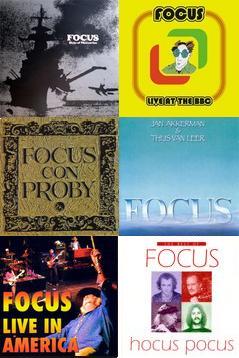
Happy Nightmare (Mescaline) Main Album: In and Out of Focus (Also a single in 1970)
Track number: 5 (third on the Sire release)
Genre: Jazz Pop Vocal
Studio: Sound Techniques Studio, 46a Old Church Street, Chelsea, London SW3
Length: 3' 59"
Composer: Thijs van Leer, Martijn Dresden (music) Mike Hayes (words)
Musicians: Jan Akkerman - Electric guitars (Fender telecasters), acoustic guitars; Thijs van Leer - Backing vocals, Piano, Hammond organ, Mellotron; Martijn Dresden – Vocals, Bass; Hans Cleuver – Drums; Cello - Wouter Moller
Producer: Hubert Terheggen (RTM)
Engineer: Jerry Boys
Label: LP - Imperial, Sire, Polydor; CD - EMI Bovema, IRS, Red Bullet
Date of recording/release: Late January 1970/Autumn 1970 (1973 in the US. In 1974 the album appeared in Brazil as Pop Giants). CD – 1988, 1993, 2001.
Notes: The track, which is an anti-drug song, begins with an introduction using the words given below in italics. These are sung against a cello and a steel strung acoustic guitar (Vicente Tatay Tomas, apparently) from opposite stereo channels. After a concluding guitar harmonic (00:00-01:24) the electric guitars (chopped and smooth), piano, mellotron, bass and drums begin in bossa nova style and Dresden (perhaps with van Leer backing) comes in, double tracked in several places. This is broken by a brief (01:36-01:50) instrumental break where the mellotron, set to orchestral mode, replaces the voice. The whole section ends at 02:21 when the instrumental breaks in again led by Akkerman's jazzy, increasingly chopped-style electric guitar (anticipating the style of Sylvia in part) and backed chiefly by Hammond organ through to 03:27. The opening lyrics are then repeated in a similar style to the introduction as a sort of coda or bookend (03:28-03:58) that closes with acoustic guitar and the cello sound.
The lyrics are the only ones of three possible sets by Mike Hayes used on the album
“On a once in a life mescaline.
Floating over a mountain, like the sea.
Step off into the sun, feel the blood through you run,
On a once in a life mescaline.
Have a nightmare lifelong, live it through,
(Taste the beauty of a sweet red wine),
Grab for air, see your skin turning blue,
(Smell the freshness of the grass beneath the pines).
There's a man with three heads,
There's a girl with three beds,
See they're both running fast after me,
(Gonna catch you, gonna fill you full of love).
Have your head filled to the top with big pearls,
(Feel the softness of a mountain silk),
Then you hear someone's dead in the world,
(Sink your body in a cold bath of milk)
You can bet your sweet life
That they fought with a knife,
See they're all running fast after me,
(Wanna kiss you, run their fingers through your hair).
[Shorter break]
Get a feeling deep inside that you're dead,
(Can't you hear the clock of life ticking loud?),
Try to run from the snake pit in your bed,
(Then you find what you thought could not be found).
Smell the nearness of the grave,
Wonder if you can be saved,
Oh the world's still running fast after me,
(When they get you, gonna give you everything).
[Longer break]
On a once in a life mescaline.
Floating over a mountain, make the scene.
Step off into the sun, feel the blood through you run,
On a once in a life mescaline.
A note on Mescaline (from Wikipedia)
Mescaline (3,4,5-trimethoxyphenethylamine) is a psychedelic alkaloid of the phenethylamine class mainly used as a recreational drug, an entheogen and a tool in use to supplement various types of practises for transcendence, including in meditation, psychonautics and illegal psychedelic psychotherapy, whether self administered or not.
It occurs naturally in the peyote cactus (Lophophora williamsii), the San Pedro cactus (Echinopsis pachanoi) and the Peruvian Torch cactus (Echinopsis peruviana), and in a number of other members of the Cactaceae. It is also found in small amounts in certain members of the Fabaceae (bean family), including Acacia berlandieri.
Mescaline was first isolated and identified in 1897 by the German Arthur Heffter and first synthesised in 1919 by Ernst Späth.
In the US it was made illegal in 1970 by the Comprehensive Drug Abuse Prevention and Control Act. It was prohibited internationally by the 1971 Convention on Psychotropic Substances and is categorised as a Schedule I hallucinogen by the CSA. Mescaline is only legal for certain natives (such as those involved in the Native American Church). Penalties for manufacture or sale can be as high as five years in jail and a fine of $15,000, with a penalty of up to one year and fine of $5000 for possession.