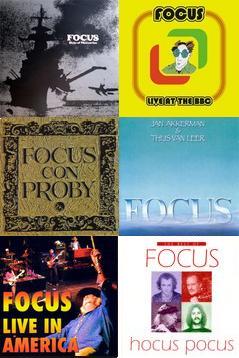
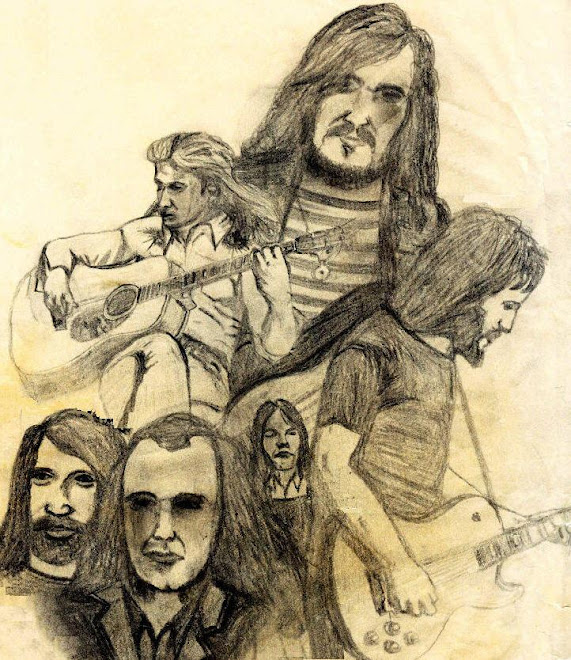
Looking at the music of Dutch rock band Focus, started in the late sixties by Thijs van Leer (b /31/03/48) with Jan Akkerman (b 24/12/46). Van Leer still performs and records under the name today (official site here). Akkerman's site here.

.

.
Showing posts with label Edit. Show all posts

20090219

Track by track 84 Who's calling?

Archive number: 84
Title: Who's calling?
Main Album: Focus (1985). Also a single b/w Beethoven's Revenge.
Track number: 7
Genre: Progressive Rock Instrumental
Studio: Studio Spitsbergen, Zuidbroek, Groningen, The Netherlands (mixed at Dureco Studios, Weesp, The Netherlands)
Length: 16' 14” (7:30)
Composer: Jan Akkerman, Thijs van Leer
Musicians: Jan Akkerman - Synthesiser Guitar, drum machine; Thijs van Leer – Keyboards inc synthesisers, Flute, Vocals; Tato Gomez - Bass
Producer: Ruud Jacobs with Jan Akkerman, Thijs van Leer and Theo Balijon
Engineer: Emile Elsen, Jan Akkerman and Theo Balijon
Label: Mercury (Phonogram)/Vertigo
Date of recording/release: Recorded 1985 Released LP/CD -1985 CD – 1989.
Alternative version: There is a later version on Focus 11
Notes: There are longer and shorter versions of this piece. The edited version (more than 8 minutes shorter) appeared on the original vinyl version.
In typically prog rock fashion the closer is a slow march. This is briefly introduced by a dreamy flute and guitar with a synthesised background (00:00-00:29). The march is led first (00:30-01:44) by a synthesised guitar. The flute then takes up the lead (1:45-03:01) backed by guitar and the synthesised beat. At 03:02 there is a break down to a slower, pleasant guitar-led section (until 04:10 on the longer version). The longer version has a transitional section (04:11-04:16) before coming back to the main guitar led theme (04:17-05:31). This too breaks down again at 05:32 and goes on to 06:30 with guitar and a little flute. In 06:31-06:49 the guitar becomes more raucous and the flute more eastern in style. It's then back to the main flute theme again (06:50-08:03) followed by the main guitar theme (08:04-08:46). At 08:47 the flute joins in again and takes things up to another climax at 09:19. At 09:20-10:33 the longer version has a unique section exploring the theme further on more acoustic then more rock like guitars before eventually coming back to the main theme. In 10:33-11:17 the flute leads (in the longer version) in a different key. There is also a section (11:18-11:36) led by the high guitar sound. From 11:37-11:50 the flute takes up the lead again. From 11:51-13:06 (on the longer version; 05:34-06:50 on the shorter one) a choir like chant comes in (van Leer's synthesised and choired voice). The flute brings this section to its climax. The shorter version ends with the keyboards playing out until the fade. The longer version allows the keyboard section to become rather tedious (13:07-14:23) until it is finally rescued by the pleasant addition (14:24-16:08) of the flute (Akkerman has presumably left early). The piece then fades.

20090218

Track by track 82 Beethoven's Revenge

Archive number: 82
Title: Beethoven's Revenge (Bach-One-Turbo-Overdrive)
Main Album: Focus (1985). Also a single b/w Who's Calling?
Track number: 5
Genre: Progressive Rock Instrumental
Studio: Studio Spitsbergen, Zuidbroek, Groningen, The Netherlands (mixed at Dureco Studios, Weesp, The Netherlands)
Length: 18' 40" (10' 43")
Composer: Jan Akkerman
Musicians: Jan Akkerman - Synthesiser Guitar, drum machine, Acoustic Guitar; Thijs van Leer – Keyboards inc synthesisers, Flute; Ruud Jacobs – Acoustic Bass; Fairlight programmed by Ed Staring
Producer: Ruud Jacobs with Jan Akkerman, Thijs van Leer and Theo Balijon
Engineer: Emile Elsen, Jan Akkerman and Theo Balijon
Label: Mercury (Phonogram)/Vertigo
Date of recording/release: Recorded 1985 Released LP/CD -1985 CD – 1989.
Alternative version: My Pleasure on Akkerman's solo album Heartware provides the core of this piece
Notes: This track appears in its fullest form on the CD. The original vinyl had an edited version that lacked around 8 minutes of the original. The title references both the 19th Century Romantic composer Beethoven and the 1970s Canadian rock band Bachman Turner Overdrive. Focus had produced long tracks previously but they were mostly composite tracks. This track has several elements but is really more akin to a long jam session based around Akkerman's My Pleasure than anything symphonic.
The introduction (00:00-00:32) uses a strong beat and a scattered keyboard effect before a choppy guitar takes up the lead (00:33-01:02). A wistful, synthesised flute sound comes in next (01:03-01:37) before a new rhythm is introduced led by harp like sounds (probably from the keyboard but possibly the guitar) in 01:38-02:13. The flute like melody then recurs (02:14-02:45) before we break into the very catchy guitar riff that carries the piece (02:44-03:29). Another catchy section follows – probably on the keyboard this time (03:27-03:41). It is then the turn of the guitar again (03:42-04:10) before the original catchy guitar riff and succeeding section are repeated (04:10-04:25; 04:25-04:39). We then move in to a more minor key for the next section (4:40-05:09) before the flute-like, romantic style returns (05:10-05:39). A percussive guitar with bell-like sounds breaks across this for another fresh section (05:40-06:13). A section from 06:14-07:33 first harp-like then flute-like comes next on the extended version, edited out on the shorter one. In 07:34-08:10 the percussive guitar with bells returns and is followed by the catchy guitar, etc (08:11-08:23) then a quieter section with an organ sound (08:23-09:51) and the catchy guitar again (09:52-10:06). In 10:07-10:19 the catchy piece is repeated with a flute sound before another fresher section (10:20-11:26) with a struck harp sound (at 10:40, 41 and 10:49) plus a Spanish guitar. In 11:27-11:54 the synthesiser's pitch fluctuates rather. At 11:55 the double bass comes in as the main theme is attacked at length with an oddly pitched guitar. A large chunk of this final section is (helpfully) cut from the final guitar-led jam (from about 13:22). The band are still going as the music fades.

20080209

Track by track 32 Hocus Pocus Reprise

Archive number: 32
Title: Hocus Pocus (reprise)
Main Album: Focus at the Rainbow
Track number: 7
Genre: Live Progressive Rock Instrumental
Venue: Rainbow Theatre, Finsbury Park, 232 Seven Sisters Road, N4 3NX (recorded using Pye Studios Mobile Unit and edited from the two performances)
Length: 2' 43” (or 03' 03” as originally played)
Composer: Thijs van Leer, Jan Akkerman
Musicians: Jan Akkerman – Electric guitar (Gibson Les Paul Custom); Thijs van Leer – Hammond organ, Voice; Bert Ruiter - Bass; Pierre van der Linden – Drums
Producer: Mike Vernon
Engineer: Phil Dunne Label: LP – Polydor, Sire CD – EMI-Bovema, IRS, Red Bullet, JVC Victor Date of recording/release: May 4, 5 1973/October 1973 (May 4 concert televised UK July 1973) CD 1988, 1993, 2001, 2002, 2004, 2006
Alternative version: The original is on Moving Waves
Notes: This reprise of Hocus Pocus immediately follows Sylvia. It begins with Akkerman's chopped guitar (00:00-00:03) playing the opening part from the US single. The guitar is joined by strong bass (00:04) then drums (00:11) then the whole band (00:28). This is followed, after a very brief caesura, by the main theme (00:35-00:58). The break features van Leer's voice singing operatically high at first then very low, before breaking into a chanting style, accompanied by the audience's claps. This gets faster and faster until the 'scream' breaks in and (01:43) the band returns with the theme (01:49) at break neck speed. The whole is then brought to a dramatic, climactic and unified end at 02:09. Clapping, cheers and whistles follow and fade. The track has been subject to an edit around 02:17. On the orginal some 20 seconds of Akkerman playfully sliding his hand down the guitar neck to a halt have been excised to make for a more satisfying audio experience.