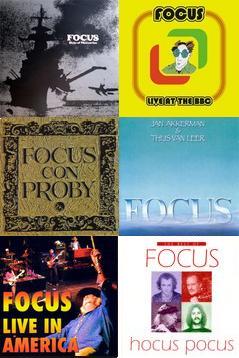
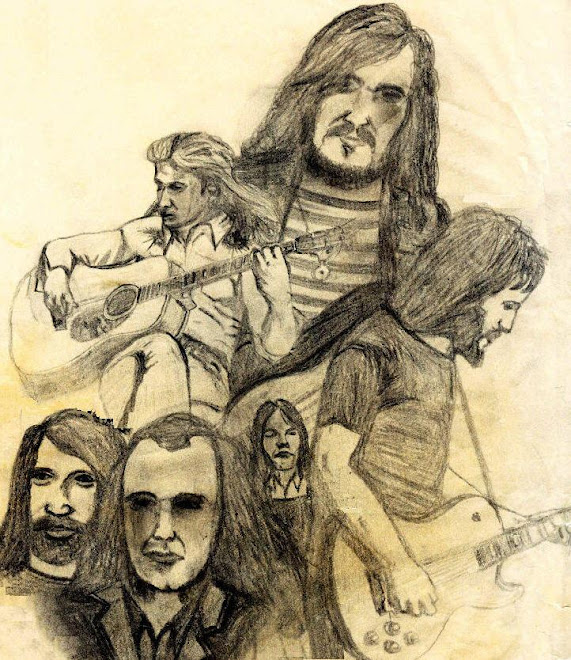
Looking at the music of Dutch rock band Focus, started in the late sixties by Thijs van Leer (b /31/03/48) with Jan Akkerman (b 24/12/46). Van Leer still performs and records under the name today (official site here). Akkerman's site here.

.

.
Showing posts with label J Dowland. Show all posts

20080306

Other Composers

Apart from those who were members of the group at the time Focus have looked occasionally to other writers for material. These have usually been classical composers. The exceptions are Tom Barlage (Tommy) and Paul Stoppelman (No Hang Ups). Also Eelke Nobel (Euridice).

Classical composers are Bach, Brahms and Haydn


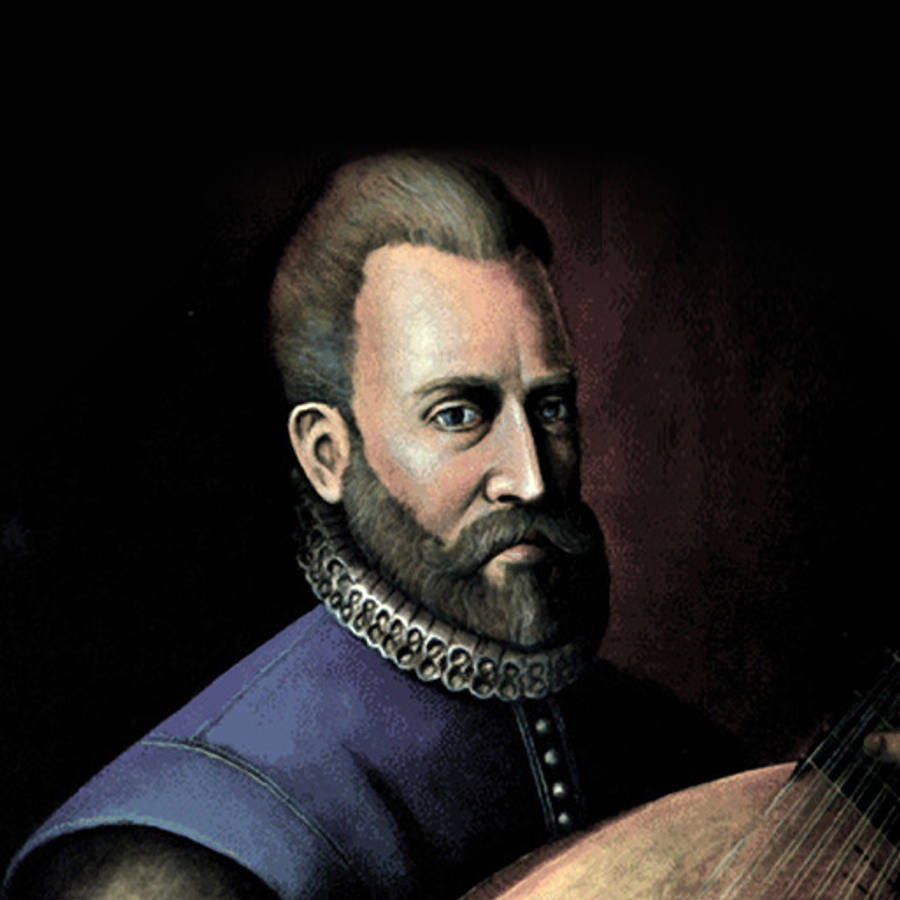
We should also mention the lutenist John Dowland


20080209

Track by track 33[U] Britannia (Live)

Archive number: 33[U]
Title: Britannia
Genre: Live Elizabethan Instrumental
Venue: Rainbow Theatre, Finsbury Park, 232 Seven Sisters Road, N4 3NX (recorded using Pye Studios Mobile Unit and edited from the two performances)
Length: 3' 56”
Composer: John Dowland
Musicians: Jan Akkerman – Lute
Producer: Mike Vernon
Engineer: Phil Dunne Date of recording/release: May 4, 5 1973/unreleased
Alternative version: A concerto version appears on Akkerman's solo album Tabernakel. He did it much later live and just on guitar (Live at the Priory).
Notes: This was the very final encore and featured only Akkerman. It was apparently an afterthought (though tuning a lute is no quick task) and some had left the theatre by this point. It features Akkerman unaccompanied for 3' 40" with clapping and cheering either side. After the initial enthusiasm Akkerman seems in danger of losing his audience but fights manfully on and eventually wins them.
A note on John Dowland (From Wikipedia)
John Dowland (1563-1626) English composer, singer and lutenist, best known today for his melancholy songs such as "Come, heavy sleep", "Come again", "Flow my tears", etc. His instrumental music has undergone a major revival and has been a source of repertoire for classical guitarists during the 20th Century.
Very little is known of his early life, but it is generally thought he was born in London. He went to Paris, 1580 where he was in service to the ambassador to the French court. He became a Roman Catholic at this time, which he claimed led to his not being offered a post at Elizabeth I's court. However, his conversion was unpublicised and being Catholic did not prevent other important musicians such as Byrd having a court career. Dowland worked instead for many years at the court of Christian IV of Denmark. He returned to England, 1606 and in 1612 secured a post as one of James I's lutenists. Interestingly there are no compositions dating from this time until his death. Most of his music is for his own instrument, the lute. It includes several books of solo lute works, lute songs (for one voice and lute), part-songs with lute accompaniment and several pieces for viol consort with lute. Poet Richard Barnfield wrote that Dowland's "heavenly touch upon the lute doth ravish human sense." He wrote what is probably his best known instrumental work, Lachrimae or Seaven Teares Figured in Seaven Passionate Pavans, a set of seven for five viols and lute, each based on Flow My Tears. It became one of the best known pieces of consort music in his own time. His pavane Lachrymae antiquae was also one of the big hits of the 17th Century. Dowland's music often displays the melancholia so fashionable in music at that time. He wrote a consort piece with the punning title Semper Dowland, semper dolens (always Dowland, always doleful), which may be said to sum up much of his work. His Come Heavy Sleepe, the Image of True Death, was the inspiration for Britten's Nocturnal after John Dowland for guitar, written in 1964 for guitarist Julian Bream. His music became part of the repertoire of the early music revival with Chrisopher Hogwood and David Munrow and the Early Music Consort in the late 1960s and later with the Academy of Ancient Music from the early 1970s.

20071220

Jan Akkerman: the classical element 2

Tabernakel
(1973), Akkerman's third solo album, is again diverse but has several classical elements. On Javeh and Lammy, especially the Amen, the classical input is strong and never far away. However, it is again on the lute tracks that it is most obvious. There are three tracks by John Dowland (1663-1626), ‘the greatest lutenist of his age’. The album opens with Britannia (the track played at the Rainbow) and features an orchestra and rhythm section. We also have two galliards (quick and lively Elizabethan dances), The earl of Derby, his galliard and another, simply here called A galliard. Dowland is revisited on track three of the later Live at the Priory for Heavy Sleep (better known as Come, heavy sleep). The second Tabernakel track is Coranto for Mrs. Murcott by Francis Pilkington (c1565-1638), on solo lute. We also have a galliard from Anthony Holborne (c1584-1602). His Last Will and Testament later features towards the end of the Lammy suite. An Elizabethan courtier, Holborne was possibly a lawyer and cultured well beyond the confines of music. He was also involved in diplomatic missions on behalf of Elizabeth’s secretary of state, Sir Robert Cecil. His best known publication was his Pavans, Galliards, Almains and other short Aeires published 1599, just three years before his premature death. The other two solo lute tracks on Tabernakel are A pavan (a more stately Elizabethan dance form) by Elizabethan composer, businessman and spy Thomas Morley (1557-1602), no doubt from his book of lute pieces The first book of ayres and A fantasy by the Italian Laurencini of Rome (c1550-1608).
The self-titled 1977 Jan Akkerman album features more jazz than classical music. The title Pavane, however, shows where Jan had been musically and Gate to Europe, featuring acoustic guitar and strings, is in classical vein. Something similar could be said of the album Eli made with Kaz Lux in 1976.
In 1978 Jan made an album with the German classical arranger and composer Claus Ogerman (1930-2016). Later bearing various titles, the album was originally called Aranjuez. That title drew attention to the opening track – the adagio from the Concierto de Aranjuez by blind Spanish composer Joaquin Rodrigo (1901-1999), an inevitable choice perhaps. Other classical composers featured are Heitor Villa-Lobos (1887-1959). Author of over 2000 works, this experimental Brazilian composer drew on folk music and many diverse sources. Here Jan plays The Prelude from Modinha and The seed of God from Magdalena. Track four on the album is by 17th Century guitarist and composer Gaspar Sanz (1640-1710). He published one of the earliest books on guitar playing in 1694, Espanoleta. That track is followed by Pavane pour une infante defunte, an early work (1899) originally for piano, by French composer Maurice Ravel (1875-1937).
In the seventies Akkerman also performed with the classical guitarist Paco de Lucia (1947-2014) but after 1978 there was perhaps something of a retreat from classical themes, although one does find it, for example, in Valdez on Pleasure Point (1981) and on the 1987 album Heartware in Winterborn Lyric and Firenze. It comes out, less obviously in Prima Donna from Art of Noise (1990), which is apparently about the opera singer Maria Callas (1923-1977).
With the release of the excellent Focus in Time in 1997 we return to classical themes big time. The opening track, Home voyage and the closing track I’ll find my own way home (the sleeve notes describe it as 'Acid Bach') are based on parts of Bach’s Goldberg Variations (BWV 988) and Well Tempered Clavier 1 (BWV 846-869). Three other classical composers are also plundered. Aprés un Rêve (Op 7 No 1) written in 1877 is adapted from French composer and organist Gabriel-Urbain Fauré (1845-1924) as is Elegy (from Op 20). The song for Akkerman’s daughter Laurie Anne is adapted from Norwegian Edvard Grieg (1843-1907) and Leading me there from W A Mozart (1756-1791). (Jan himself told me how he inadvertently sent the late Rick van der Linden who features on the track, on a wild goose chase looking for the air in the works of Bach instead of Mozart!). Wildflower,  Akkerman’s own composition, also has something of a classical air.
The unplugged guitar album Live at the Priory, issued the following year, has many classical pieces. Wildflower is conjoined with the charming Altogether … Oh that! from Mother Focus. We have mentioned the Dowland piece. Le Clochard is prefaced by the appropriate Classical gas, a hit for Mason Williams back in 1968. Firenze is partnered by the jazz standard Autumn Leaves.
Some of these tracks feature on the 1999 unplugged studio album Passion. In addition there is the Bach derived title track best known through the hymn O sacred head sore wounded; two tracks from Anthony Holborne (Countess of Pembrook’s Paradise and Muy Linda) and the anonymous piece labelled Knight of the Lute. The distinctive final track includes part of the Liebestraum (No 3) by Franz Liszt (1811-1886). Written around 1847 it is his most famous piece. We are not talking about straight classical music, of course. Far from it. I'm thankful for that.
Studio albums since 2004 have rarely strayed into classical territroy. The track Passagaglia on Close Beauty would be an example. A rare item from 2006 called Fadoman includes nods to Rahcmaninov, Chopin and perhaps others.

Jan Akkerman: the classical element 1

The word ‘classical’ has many meanings. Here we use it to refer to older and more traditional musical styles as opposed to more contemporary and popular ones. I am not a very great fan of classical music, though I have many classical CDs. Much of my classical education has been via men like Jan Akkerman.
Akkerman’s most famous period was with Focus in the 1970s. He remarkably finished the At the Rainbow concert by coming on stage and performing a John Dowland piece on solo lute (check it out on youtube). He had become interested in the instrument through seeing Julian Bream in concert back in the seventies. It seems that the live act often included a Menuett from J S Bach (1685-1750) some Joaquin Rodrigo (1901-1999) and the fourth movement of the Concerto for Orchestra by Hungarian composer Bela Bartok (1881-1945), among other things classical, that were never released. Akkerman expressed particular appreciation for Bach and for Bartok's Concerto and Third Piano Concerto. In an interview from the period he neatly sums up the difference between the two. Bach, he says, sought to make earthly music and made heavenly, while Bartok sought to make heavenly music and made beautiful earthly music. (In a 1973 interview in Dutch he expanded on this saying - "Talking about Bach, this composer tried to create the earthly aspect in his music, but got very heavenly music instead. Maybe his subconscious desire for death has to do with that. He is constantly happy in his music, you’ll never hear any dissonance. His Fugues, for instance, are very well built, very major. And when he does something in minor, it still sounds happy, but it has a depth, which is almost frightening. A composer like Bartók, is the opposite. He tried to create heavenly music, but it became very earthly. In his music I hear waterfalls, I see beautiful trees and butterflies, alternated with weirdness, strange dissonants, and so on." In the same interview he says "A pop musician is being influenced all the time. I started to play rock ‘n’ roll but if one is confronted with classical music and it moves you, then you’ll be influenced by that. That will be recognisable in the music and that is very much an element in the music of Focus. We don’t go back to, let’s say, to Bach and stuff like that, no, we go back even a little further … and I like that.").
Even without such comments journalists at the time were not slow to spot the classical influence on the music. Relistening to the recorded corpus this is not immediately obvious. The careful listener, however, soon spots the influence as far back as the coda to Anonymus (In and out of) through to the Hamburger Concerto album and beyond. It is sometimes in the background as with Anonymus, Eruption (Moving Waves) or P’s March and Spake the Lord Creator (Ship of Memories) or there are parodies such as with the opera singing on Hamburger Concerto or the harpsichord intro to Birth (Hamburger Concerto). Then there are tracks in a classical style such as Le Clochard (Moving Waves) on guitar or Elspeth of Nottingham (Focus 3) on lute.
It was apparently intended that Eruption should include adaptations from Bartok but the composer's family refused permission. At least one listener has spotted in Eruption a lift from the opera Orpheus and Euridice by Monteverdi (1567-1643) and believes there is also a quotation from the opera of the same name by Christoph Willibald Gluck (1714-1787).
As for direct lifts from classical composers, however, there appear only to be some three tracks of this sort. They are Delitae Musicae and the Starter from the title track of Hamburger Concerto and Father Bach (Mother Focus). The first is credited to good old Anonymous. The story goes that Akkerman found a manuscript by an old Belgian composer from Antwerp in a London music shop. It was then arranged for lute and recorder with Van Leer. It has been suggested that the piece is the work of a J Hove whose lute arrangement of a motet appeared in 1612 as Delitiae Musicae Cantiones. Starter uses the theme best known as The St Anthony Chorale. It was written by Franz Joseph Haydn (1732-1809) as a trumpet serenade and later taken up by Johannes Brahms (1833-1897) in his Variations on a theme by Haydn (Op 56a), completed in 1873. The third piece is based on part of Bach’s St Matthew Passion of 1729.
Turning to Akkerman’s solo output we remind ourselves that his very first release, aged 15, was a rocked up version of Melody in F (but played in 'A') by American classical pianist Arthur Rubinstein (1887-1982). We can make similar divisions to those above. The albums vary in classical content from some (eg Tabernakel) that are full of it to others (eg CU) that appear to have none at all.
Guitar for Sale, the debut album, gives only a slight hint of classicism with the Jewish traditional Hineimatov. The next two albums have several classical themes. Profile (1972) is very diverse and shows plenty of evidence of Akkerman’s classical training on the second side where four of seven tracks are in a classical style for solo guitar or lute. First, the anonymous Kemp’s jig, on lute. William Kemp was apparently a Shakespearian actor who came to fame with his nine days wonder - a morris dance performed from London to Norwich in the days of Elizabeth I. Then comes an etude by Matteo Carcassi (1792-1853), a leading 19th Century guitarist-composer. Born in Florence he began as a pianist but changed to guitar, beginning a concert career in Germany in 1810. He moved from place to place but was eventually based in Paris where he died. His fame there rivalled that of Carulli, though the two differed greatly in technique and style. Carcassi left almost a hundred works for guitar, all of romantic taste, brilliant and technically demanding. His Method (Op 59) is still considered among the best didactic works of 19th Century guitar masters and his etudes (Op 60) are popular. Track four is by Austrian composer Antonio Diabelli (1781-1858). Andante Sostenuto, as its title suggests, is slow and sustained. It is from a Guitar Sonata (Op 29 No 3) and is described by one aficionado as ‘almost too beautiful to be true’. The sixth track is a short lute composition of Akkerman’s own - Minstrel/Farmers dance.
To be continued