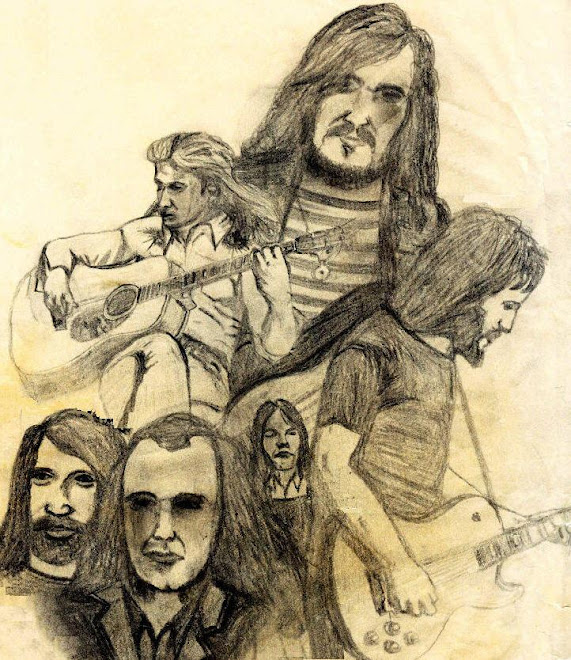
Looking at the music of Dutch rock band Focus, started in the late sixties by Thijs van Leer (b /31/03/48) with Jan Akkerman (b 24/12/46). Van Leer still performs and records under the name today (official site here). Akkerman's site here.
.
Showing posts with label Hamburger Concerto. Show all posts
20241115
20150327
20121112
20121011
20121010
20090803
Focus Live 07
The year 1974 was the year of the Hamburger Concerto album and concerts feature that material alongside the older numbers. In April a TV show was recorded for Danish television with Colin Allen (not 1975 as previously stated here). The show includes the ever popular Sylvia, House of the King and Hocus Pocus. They also do an Improvisation in D major and the wonderful No Hang Ups.
In March, Focus did their first tour of Germany. A recording exists of a performance in the Hamburg Musikhalle. It begins with a 21 minute Hamburger Concerto plus other tracks from the album (Strasbourg, Harem and a 14 minute Birth). They finish off with the familiar Hocus Pocus/Sylvia/Hocus Pocus (reprise) sequence. Between comes a jam featuring bits of Focus 2, Focus 3 and Tommy, possibly a regular feature of concerts at the time.
A good recording exists from Monday April 29 from Vereeniging, Nijmegen, Holland. It begins with a 25 minute Hamburger followed by La Cathedrale, Sylvia, a 12 minute Harem and a 14 minute Birth. Finally there is a 10 minute improvisation and House of the King. Oddly, there seems to have been no Hocus Pocus this time round. Perhaps they just ran out of time.
Focus recorded several shows for TV in 1974. One was for Vara Televisie in Holland featuring Hocus Pocus, a Hamburger excerpt and House Of The King. A well known recording exists for BBC 2's In Concert. It begins with an 18 minute Hamburger followed by La Cathedrale and Harem and ends with a Hocus Pocus/Sylvia medley.
Later in the year concerts were televised in America. One on ABC included short versions of Hocus Pocus, No Hang Ups and some improvised material (from the Rainbow?). In October or November the Don Kirshner Rock Concert featured Hocus Pocus, Birth (9:57) and Hamburger (13:51). No Hang Ups was also apparently performed but not recorded.
In May there was a short tour of seven British cities (May 19-27) including two nights at the Rainbow Theatre. The support band was Blue. On Saturday May 25 they played the Bristol Hippodrome and I was there - the one and only time to see Akkerman and Van Leer play together. It was an amazing concert - very loud (massive Bose speakers to the fore) and pretty magical all round.
A good recording exists from Monday April 29 from Vereeniging, Nijmegen, Holland. It begins with a 25 minute Hamburger followed by La Cathedrale, Sylvia, a 12 minute Harem and a 14 minute Birth. Finally there is a 10 minute improvisation and House of the King. Oddly, there seems to have been no Hocus Pocus this time round. Perhaps they just ran out of time.
Focus recorded several shows for TV in 1974. One was for Vara Televisie in Holland featuring Hocus Pocus, a Hamburger excerpt and House Of The King. A well known recording exists for BBC 2's In Concert. It begins with an 18 minute Hamburger followed by La Cathedrale and Harem and ends with a Hocus Pocus/Sylvia medley.
Later in the year concerts were televised in America. One on ABC included short versions of Hocus Pocus, No Hang Ups and some improvised material (from the Rainbow?). In October or November the Don Kirshner Rock Concert featured Hocus Pocus, Birth (9:57) and Hamburger (13:51). No Hang Ups was also apparently performed but not recorded.
In May there was a short tour of seven British cities (May 19-27) including two nights at the Rainbow Theatre. The support band was Blue. On Saturday May 25 they played the Bristol Hippodrome and I was there - the one and only time to see Akkerman and Van Leer play together. It was an amazing concert - very loud (massive Bose speakers to the fore) and pretty magical all round.
In the Summer they toured Japan (June) and Australia (July). Later in the year they also performed in Scandinavia. Recordings exist from at least three of the Japanese concerts – one in the Koseinenkin Kaikan, Osaka on Sunday June 2; one in the Koseinenkin Kaikan, Tokyo on Sunday June 30 and one the same month some time in Nagoya.
The concerts begin with the Focus 3/AQQA/Focus 2 sequence (first two missing from the Nagoya recording) followed by Sylvia. Then comes Harem (11:07 Tokyo; 14:03 Osaka; 15:17 Nagoya). Very unusually, in Osaka, Love Remembered comes next. It also features in the Nagoya show where it is preceded by an early version of My Sweetheart on piano and guitar (untitled and apparently composed that afternoon!). The Osaka and Nagoya concerts continue with Tommy then (in Tokyo and Osaka) House of the King, Birth (around 13 minutes), Hamburger Concerto (around 21 minutes) and Hocus Pocus. In Tokyo Tommy comes after Birth. Next in Osaka comes a drum solo and various improvisations (15:20). In Osaka and Tokyo they finish with No Hang Ups and Hocus Pocus (reprise). In Tokyo the jam is more of a Hamburger Concerto thing and lasts around 13 minutes. The Nagoya recording has after Tommy - Birth (13:31), Hamburger (20:43) and Hocus Pocus.
On August 23 they again did the Reading Festival.
Labels:
1974,
Australia,
Denmark,
Germany,
Hamburger Concerto,
Japan,
Live,
Love remembered
20090615
Focus Live 06
A good number of recordings have surfaced from the very busy period that the second half of 1973 was, some of them quite interesting.
Focus were supposed to begin touring America and Canada in early July 1973 but Van Leer went down with appendicitis and so the tour was delayed. They did do San Francisco (Friday June 29) and Passaic NJ (Friday July 13). Eventually they did over 20 more dates in the period October 30-December 1. While in America Akkerman hired an electric sitar, which he also used on his solo album Tabernakel recorded in between gigs in New York, July 14-25.
The sitar can be heard on Anonymous 2 in a gig recorded at the Hollywood Sportatorium in Hollywood, Florida on August 25. Either side of Anonymous 2 they play Focus 3/AQQA/Focus 2 and Hocus Pocus/Sylvia/House of the King/Hocus Pocus (reprise). That same month Focus also played back in Holland, in de Veermarkthallen in Leeuwarden. In this concert Anonymous 2 does not appear but a long version of Eruption does and this features not just the electric sitar but Akkerman playing the recently composed Hamburger Concerto riff on it.
Recordings exist from some time in Arlington, University of Texas, where Van Leer distinguished himself with quite an amazing operatic riff. In late September the band were in Europe, appearing at Alkmaar in Holland (Friday September 14) and the Turnhout Festival in Belgium (with Kayak, etc) on Sunday September 30. Rehearsals then began in Kasteel Groengueid, Holland for Hamburger Concerto. It is at this time that Van Der Linden left the band to be replaced by Colin Allen, who played his first gig with them in Toronto on October 29. This gig is notable for the first version of Hamburger Concerto, a 27:11 work out complete with drum break. They also played Focus 1 and the Rainbow material on this occasion.
On Friday November 2 they were in Bloomington, Indiana. It is during this concert that Van Leer mistakenly announced Pierre Van Der Linden on the drums and has to apologise and correct himself. A classic moment!
20090219
Jan Akkerman: the eastern element
In an interview in Odessa, Ukraine, in 2005 Jan Akkerman said “I think I have Russian roots. My aunt told me that one of my great-grandmothers was from the Akkerman region (a nearby fortress does have the name Akkerman) where were then living the Dutch merchantmen who traded between South Russia and Holland. My last name seems to be very eloquent in this respect, though sometimes I think I can't be completely certain in that. All in all, I don't have a wish to delve into my genealogy, but I believe my ancestors were from here.” No doubt he was not wholly serious but if you listen to Akkerman's music you will see that there is something in what he says. Eastern music is notoriously difficult to define but something definitely happens to harmony and rhythm east of a point somewhere in line with Vienna that is quite distinct. This eastern element can be found in several places throughout Akkerman's work. In recent years Akkerman and his band have played live in Mumbai, in Japan, in the middle east and other places east of Vienna and he has sometimes deliberately brought out this eastern element in these places. The current very eastern version of House of the King (Palace of the King) typifies it. If truth be told, however, House of the King always did have something eastern about it, something first declared unequivocally in the electric sitar version found on the solo album Tabernakel. Like many others in the UK my first introduction to Akkerman's music was the album Moving Waves with Focus. One feature of that album was its unique sound. It was quite different to much of the rock music around at the time. Its European sound was often referred to. However, not only did it sound pretty European but in certain places there was an undoubtedly eastern feel to it. Think of a track like Janis for example, with its distinctly eastern flutes or certain parts of the long track Eruption, especially Dayglow. Hocus Pocus and the title track also share this eastern feel. (Vanessa Mae's version of Hocus Pocus brings out the eastern element very well). This was the early seventies, of course. The Beatles and others had already blazed a trail to India and back so this element was a very contemporary one. Jan appears on the original cover, if you remember, wearing a state of the art khaftan. A similar phenomenon is faintly recognisable on the first and third Focus albums (although to be fair, both albums contain tracks firmly in the Caribbean tradition and so no corner of the globe is entirely neglected). Check out Black Beauty or Love Remembered for example. Harem Scarem and parts of Hamburger Concerto (especially Medium 1) also contain quite eastern elements. Akkerman's eastern credentials go back a long way. His art was cradled in the very beginnings of Dutch rock in the fifties, when the Tielman brothers from Indonesia and their Indo-rock style dominated the Dutch scene. In a recent interview Akkerman has said that there were “a lot of Indonesian kids in the area where I grew up, and we played blues and rock & roll”. That surf rock sound always did have an eastern leaning and the influence can be detected in the early music of Akkerman and others. (The eastern influence on Dick Dale for example is widely acknowledged). Akkerman also admits freely to other early eastern influences from gypsies and from Balkan music. Before his Focus days the eastern element can also be detected in the Jewish traditional, Hineimatov, on the first solo album, on the Russian styled hits with The Hunters The Russian spy and I and Janosh (revisited on Russian Roulette with Van Leer in 1985) and quite obviously on the Brainbox track Dark Rose. By the time we come to the solo album Tabernakel Akkerman is featuring, at certain points, both the electric and the acoustic sitar. For some reason the sitars are not credited on the original album but it is an open secret that in the seventies and eighties Jan often used a Coral electronic sitar. This sitar also apparently features on the later Focus track Glider (on Ship of Memories). Jan also played it in public at the end of 1974 at a Brainbox reunion concert, later shown on Dutch television. With regard to the early solo albums Profile and Tabernakel, it is interesting that Akkerman plays the oudh-like lute rather than, say, a banjo! In the seventies Akkerman played and recorded a lot with Neppie Noya the Indonesian born percussionist and son of Japanese Taiko drummer Fusao Nakato San. Later on, the legendary 1981 album Oil in the family features a very eastern style cover, reflecting the strong presence of eastern style melodies on most tracks. Jan actually credits A. Rab (!) as composer on certain tracks in an effort to acknowledge his borrowings from unknown middle-eastern musicians. Some live performances of this material actually featured the use of a belly dancer. The album apparently went down very well in Turkey. With subsequent albums the eastern element is perhaps excluded, though in 1985 on the track Indian Summer with Thijs Van Leer an Indian tabla player based in Holland (Ustad Zamir Ahmad Khan) is brought in and some have detected it, for example, on some of the percussion for The noise of art (1990), the track Saudade on Focus in time (1996) and the opening track See you! on CU (2003). How much direct Akkerman influence there may be in the Forcefield tracks Year of the Dragon and Tokyo (on their second and third albums of 1988 and 1989) we do not know. The more one is aware of this eastern element, however, the more one can hear it perhaps.
20081203
Longest Focus Tracks
The 10 longest Focus tracks are
1 Anonymus 2 (26:19)
2 Eruption (22:57)
3 Hamburger Concerto (20:15)
4 Beethoven's Revenge extended (18:42, short version 10:49)
5 Who's calling (16:14, short version 07:33)
6 Maximum Live (13:58, studio version 08:40)
7 Answers? Questions! Questions? Answers! (13:50, live version 11:28)
8 Virtuous Woman (10:57)
9 Beethoven's Revenge (10:49 - the extended version is 18:42)
10 European (Rap)sody (10:25)
20080713
20080607
The Best Focus Album
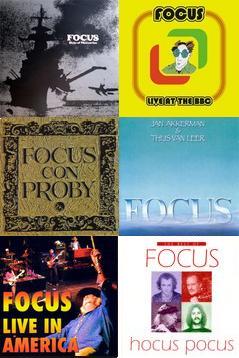
There are now around 17 Focus albums all told (if we include the three live albums - there is a fourth [Live in South America] not widely available).
In chronological order:
1. In and out
2. Moving Waves
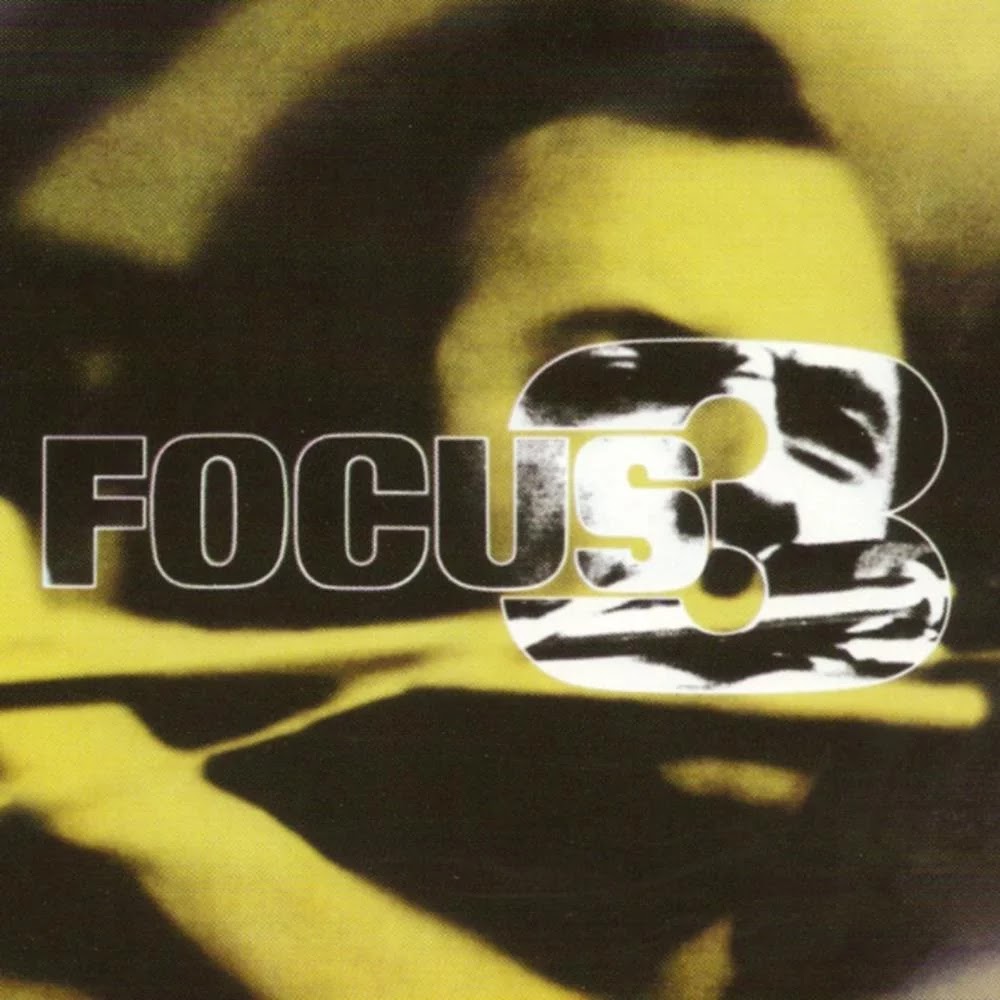
3. Three
4. At the Rainbow (Live)
5. Hamburger Concerto
6. Mother Focus
7. Ship of Memories
8. Live at the BBC (Live)
9. Con Proby
10. Focus (1985)
11. Live in America (Live)
12. Eight
13. Focus 9/New skin
14. Focus X
15. Golden Oldies
16. Focus 8.5/Beyond the Horizon
17. Focus 11
Putting these in order of merit is not easy in some respects. Undoubtedly 2, 3 and 5 should be in the top three - but in what order? We all agree that Con Proby and Golden Oldies must come near the bottom. Here are two personal lists, the first only including studio albums, the second the live ones too.
14. Focus X
15. Golden Oldies
16. Focus 8.5/Beyond the Horizon
17. Focus 11
Putting these in order of merit is not easy in some respects. Undoubtedly 2, 3 and 5 should be in the top three - but in what order? We all agree that Con Proby and Golden Oldies must come near the bottom. Here are two personal lists, the first only including studio albums, the second the live ones too.
1. Three
2. Hamburger
3. Waves
4. Ship
5. In & Out
6. 1985
7. Mother
8. New Skin
9. X
10. 11
11. Eight
12. 8.5
13. Proby
14. Oldies
11. Eight
12. 8.5
13. Proby
14. Oldies
1. Three
2. Hamburger
3. Waves
4. Rainbow
2. Hamburger
3. Waves
4. Rainbow
5. Ship
6. In & Out
7. 1985
8. Mother
9. New Skin
10. X
7. 1985
8. Mother
9. New Skin
10. X
11. 11
12. 8.5
12. 8.5
13. BBC
14. Eight
15. America
16. Proby
17. Oldies
14. Eight
15. America
16. Proby
17. Oldies
20080529
Track by track 44f Hamburger Concerto Part 6 (One for the road)
Archive number: 44f
Title: Hamburger Concerto (Part 6 One for the road)
Main Album: Hamburger Concerto
Track number: 5f
Genre: Progressive Rock Instrumental (Symphonic)
Studio: Olympic Studios 'B', 117 Church Road, Barnes, London SW13 9HL
Length: 1' 20” (20' 15” the whole)
Composer: Jan Akkerman
Musicians: Jan Akkerman – Electric Guitars (Fenders); Thijs van Leer – Hammond organ, ARP Synthesiser, Voices; Bert Ruiter - Bass; Colin Allen – Drums
Producer: Mike Vernon
Engineer: Bob Hall
Label: Polydor, Atco, EMI, Red Bullet, JVC, JVC Victor
Date of recording/release: January/March 1974; April 1974. CD – 1998, 2001, 2001, 2002, 2006
Alternative version: The briefest snatch of the main melody here can be heard on the Ramses Shaffy album Sunset Sunkiss.
Notes: The piece now comes to its climax first with the synthesiser-led crescendo backed by piano and the rest of the band (18:58-19:31) then a triple repetition of the original 13-note Akkerman riff heard at the beginning (19:32-20:15). On the last hearing, the mellotron choir is added for a triumphant ritartando ending that closes with cymbals, guitar and majestic piano chords in two groups of four.
Track by track 44e Hamburger Concerto Part 5 (Well done)
Archive number: 44e
Title: Hamburger Concerto (Part 5 Well done)
Main Album: Hamburger Concerto
Track number: 5c
Genre: Progressive Rock Instrumental (Symphonic)
Studio: Olympic Studios 'B', 117 Church Road, Barnes, London SW13 9HL
Length: 3' 26” (20' 15” the whole)
Composer: Thijs van Leer, Joost van den Vondel, Jan Pieterszoon Sweelinck
Musicians: Jan Akkerman – Electric Guitars (Fenders); Thijs van Leer – Hammond organ, ARP Synthesiser, Voices; Bert Ruiter - Bass; Colin Allen – Drums, Wood block
Producer: Mike Vernon
Engineer: Bob Hall
Label: Polydor, Atco, EMI, Red Bullet, JVC, JVC Victor
Date of recording/release: January/March 1974; April 1974. CD – 1998, 2001, 2001, 2002, 2006
Notes: Hands are clapped three times (15:31) before van Leer sings two verses of the traditional Dutch Christmas Hymn O, Kerstnacht schoner dan de dagen. It is from Joost Van Den Vondel's 1623 drama De Gijsbrecht van Aemstel. The music appears to be by Cornelis Padbrué and Jan Pieterszoon Sweelinck though Jan van Biezen's 19th Century version is preferred today (15:33-16:50). The voice is multi-tracked (tenor and bass on verse 1 then tenor, bass and descant on the second verse) and is accompanied by organ. The words are
O, Kerstnacht schoner dan de dagen
Hoe kan Herodes het licht verdragen
Dat in Uw duisternisse blinkt
En wordt gevierd en aangebeden
Zijn hoogmoed luistert naar geen reden
Hoe schel die in zijn oren klinkt?
Hij tracht d' onnozelen te vernielen
Door doden van onnozele zielen
En wekt een stad en landgeschrei
In Bethlehem en op den akker
En maakt den geest van Rachel wakker
Die waren gaat door beemd en wei
[O, Christmas Eve more beautiful than the days
How can Herod bear the light
That blinks in your darkness
And is celebrated and worshipped.
His pride listens to no reason
How noisily it sounds to his ears.
He tries to destroy the untaught ones
By killing untaught souls
And raises a crying in town and country
In Bethlehem and in the field
And awakes the spirit of Rachel
So that it starts haunting field and meadow.]
A drum roll then announces the whole band - guitars, organ, piano, mellotron choir, synthesisers (16:51-18:57). This builds and builds along with a beautiful melody to prepare for a mighty climax.
Title: Hamburger Concerto (Part 5 Well done)
Main Album: Hamburger Concerto
Track number: 5c
Genre: Progressive Rock Instrumental (Symphonic)
Studio: Olympic Studios 'B', 117 Church Road, Barnes, London SW13 9HL
Length: 3' 26” (20' 15” the whole)
Composer: Thijs van Leer, Joost van den Vondel, Jan Pieterszoon Sweelinck
Musicians: Jan Akkerman – Electric Guitars (Fenders); Thijs van Leer – Hammond organ, ARP Synthesiser, Voices; Bert Ruiter - Bass; Colin Allen – Drums, Wood block
Producer: Mike Vernon
Engineer: Bob Hall
Label: Polydor, Atco, EMI, Red Bullet, JVC, JVC Victor
Date of recording/release: January/March 1974; April 1974. CD – 1998, 2001, 2001, 2002, 2006
Notes: Hands are clapped three times (15:31) before van Leer sings two verses of the traditional Dutch Christmas Hymn O, Kerstnacht schoner dan de dagen. It is from Joost Van Den Vondel's 1623 drama De Gijsbrecht van Aemstel. The music appears to be by Cornelis Padbrué and Jan Pieterszoon Sweelinck though Jan van Biezen's 19th Century version is preferred today (15:33-16:50). The voice is multi-tracked (tenor and bass on verse 1 then tenor, bass and descant on the second verse) and is accompanied by organ. The words are
O, Kerstnacht schoner dan de dagen
Hoe kan Herodes het licht verdragen
Dat in Uw duisternisse blinkt
En wordt gevierd en aangebeden
Zijn hoogmoed luistert naar geen reden
Hoe schel die in zijn oren klinkt?
Hij tracht d' onnozelen te vernielen
Door doden van onnozele zielen
En wekt een stad en landgeschrei
In Bethlehem en op den akker
En maakt den geest van Rachel wakker
Die waren gaat door beemd en wei
[O, Christmas Eve more beautiful than the days
How can Herod bear the light
That blinks in your darkness
And is celebrated and worshipped.
His pride listens to no reason
How noisily it sounds to his ears.
He tries to destroy the untaught ones
By killing untaught souls
And raises a crying in town and country
In Bethlehem and in the field
And awakes the spirit of Rachel
So that it starts haunting field and meadow.]
A drum roll then announces the whole band - guitars, organ, piano, mellotron choir, synthesisers (16:51-18:57). This builds and builds along with a beautiful melody to prepare for a mighty climax.
Note on van den Vondel (from Wikipedia)
A writer and playwright born 1587 in Cologne to Mennonite parents from Antwerp. In 1595 they fled to Utrecht then Amsterdam in the newly formed Dutch Republic (probably because of religious conviction). He married at 23 and had 4 children (2 survived). After his father's death (1608) he managed the family silk shop. Meantime, he began to learn Latin and got to know famous poets such as Visscher. Around 1641 he became a Catholic - a shock to most of his fellow countrymen - it is unclear why, though love for a Catholic lady may have played a role (his wife had died 1635). In Calvinist Holland Catholicism, Anabaptism and Arminianism were officially forbidden though there was no direct persecution. In his lifetime he became a strong advocate for religious tolerance and wrote many satires criticising the Calvinists. This, with his new faith, made him unpopular with them. He died (1679) a bitter man - though honoured by many fellow poets. Amsterdam's biggest park, the Vondelpark, bears his name. There is a statue in the northern part of the park. The Dutch five guilder banknote bore his portrait 1950-1990.
Subscribe to:
Posts (Atom)