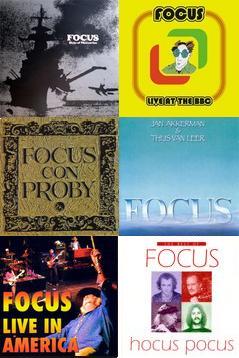
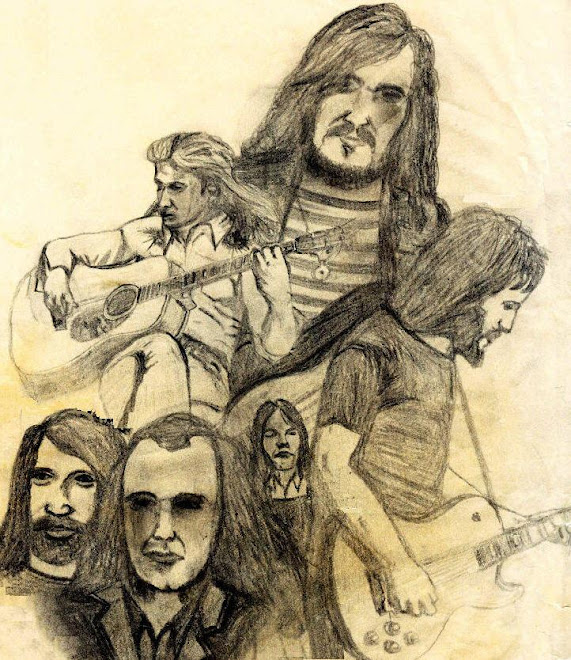
Looking at the music of Dutch rock band Focus, started in the late sixties by Thijs van Leer (b /31/03/48) with Jan Akkerman (b 24/12/46). Van Leer still performs and records under the name today (official site here). Akkerman's site here.

.

.
Showing posts with label Classical. Show all posts

20260719

Albert Hall Proms

This is the audio of the recent Prog Rock proms - 
Click here
If you go to 01:02:18 you will hear Sylvia by Focus played by a BBC Orchestra. (Chapter 12 I think it is).

20080626

Track by track 64 Sonata for Flute (Live)

Archive number: 64
Title: Sonata for Flute (Live)
Main Album: Live at the BBC
Track number: 5
Genre: Live Classical Instrumental
Venue: New Victoria Theatre, 17 Wilton Road, London SW1V 1LL (now Apollo Victoria)
Length: 02' 45”
Composer: J S Bach (Arranged van Leer)
Musicians: Thijs van Leer – Flute
Producer: BBC
Engineer: BBC
Label: Hux Records
Date of recording/release: Recorded March 21 1976 but only released (on CD) June 1 2004
Alternative versions: A quite different fully orchestrated version can be found on Introspection 2 and a new age setting opens Bach for a New Age
Notes: This is a then rare solo effort from van Leer on flute that now often features in the live act. Bach wrote a number of three movement sonatas for flute and keyboard. This appears to be the siciliano from J S Bach's Sonata for Flute or Recorder and Harpsichord in E flat Major (BWV 1030). Brief applause can be heard at the end.
A note on the Sonata form (from Wikipedia)
Sonata (from Latin/Italian sonare, to sound), in music, literally means a piece played not sung as a cantata (Latin/Italian cantare, to sing). The term, being vague, naturally evolved over time, designating a variety of forms prior to the Classical era. The term took on increasing importance in the Classical period, and by the early 19th Century came to represent a principle of composing large scale works. It was applied to most instrumental genres and regarded alongside fugue as one of two fundamental methods of organising, interpreting and analysing concert music. Though the sound of sonatas have changed since the Classical Era, 20th Century sonatas still maintain the same structure and build.
The Baroque period (when Bach flourished) applied the term to a variety of works, though most works then were fugues and toccatas, including works for solo instrument or groups of instruments. In the transition from Baroque to Classical, the term underwent a change in usage, from being applied to many different kinds of small instrumental work to being more specifically applied to chamber music genres with either a solo instrument, or a solo instrument with piano. Increasingly after 1800, the term applies to a form of large-scale musical argument, and it is generally used in this sense in musicology and musical analysis. Most of the time if some more specific usage is meant, then the particular body of work will be noted: eg Beethoven's sonatas refers to works specifically labelled sonata, whereas Beethoven and sonata form applies to all of his large-scale instrumental works, concert or chamber. In the 20th Century, sonatas in this sense would continue to be composed by influential and famous composers, though many works which do not meet the strict criterion of "sonata" in the formal sense would also be created and performed.
In the Baroque period, a sonata was for one or more instruments almost always with continuo. Later, most works designated as sonatas specifically are performed by a solo instrument, most often a keyboard, or by a solo instrument with a keyboard. In the late Baroque/early Classical period, a work with instrument and keyboard was referred to as having an obbligato part, in order to distinguish this from use of an instrument as a continuo, though this fell out of usage by the early 1800s. Beginning in the early 19th Century, works were termed sonata if, according to the understanding of that time, they were part of the genre, even if they were not designated sonata when originally published, or by the composer.
By the time of Corelli, two polyphonic types of sonata were established: sonata da chiesa(church sonata) and sonata de camera ("ordinary" sonata, literally chamber sonata). The sonata da chiesa, generally for one or more violins and bass, consisted normally of a slow introduction, a loosely fugued allegro and a cantabile slow movement, and a lively finale in somebinary form suggesting affinity with the dance-tunes of the suite. This scheme, however, was not very clearly defined, until Bach and Handel, when it became the essential sonata and persisted as a tradition of Italian violin music – even into the early 19th Century, in the works of Boccherini.
The sonata da camera had consisted almost entirely of idealised dance-tunes, but by the time of Bach and Handel such a composition drew apart from the sonata, and came to be called a suite, a partita
, an ordre, or, when it had a prelude in the form of a French opera-overture, an overture. On the other hand, the features of sonata da chiesa and sonata da camera then tended to be freely intermixed. Bach, however, while not using the titles themselves, nevertheless keeps the two types so distinct that they can be recognized by style and form. Thus, in his 6 violin sonatas, Nos 1, 3, and 5 are recognisably sonate de chiesa; and Nos 2, 4, and 6 are explicitly called partitas, but are admissible among the sonatas as being sonate da camera. Bach is also cited as being among the first composers to have the keyboard and solo instrument share a melodic line, whereas previously most sonatas for keyboard and instrument had kept the melody exclusively in the solo instrument.
The genre – particularly for solo instruments with just the continuo or ripieno – eventually influenced the solo movements of suites or concerti that occurred between movements with the full orchestra playing, eg Bach's Brandenburg concertos. The trio sonatas of Vivaldi, too, show parallels with the concertos he was writing at the same time.

20080102

Track by track 18 Love Remembered

Archive number: 18
Title: Love Remembered
Main Album: Focus 3 (also a single in 1972)
Track number: 2
Genre: Classical/Progressive Rock Instrumental
Studio: Olympic Studios 'B', 117 Church Road, Barnes, London SW13 9HL
Length: 2' 45”
Composer: Jan Akkerman
Musicians: Jan Akkerman – Acoustic guitars; Thijs van Leer – Flute, Synthesizer, Voice; Bert Ruiter - Bass; Pierre van der Linden – Drums
Producer: Mike Vernon
Engineer: George Chkiantz
Label: LP – Imperial, Polydor, Sire CD – Capitol, EMI-Bovema, IRS, Red Bullet , JVC Victor
Date of recording/release: July 1972/November 1972, 1975 CD - 1988, 1993, 2001, 2002, 2004
Alternative version: A version by Toots Thielemans appeared subsequently and Akkerman himself later re-recorded the track in a very laid back style with Claus Ogerman and his orchestra (Aranjuez).
Notes: This beautiful piece opens with acoustic guitars that continue throughout the piece. Some seconds in, the flute takes up the main theme, backed by a high wind-like flute provided by a studio synthesizer. At 01:19 two beats from the drums, which were in the background until this point signal a new phase and van Leer's voice and more cymbals can be heard. The song builds from here with a great yearning, breaking down a little around 01:58 but finding some sort of resolve by 02:16 and returning to the opening style. We end with an extended flute note followed by a muted final chord from a guitar so leaving way on the album for the opening chords of Sylvia, the next track.

20071220

Thijs van Leer: the classical element

van Leer on stage with Letty de Jong 1974
Van Leer grew up in a family where classical music was prominent. He himself studied first under piano soloist Maria Stroo and then learned Bach and Mozart under Karel Hilversum. His two brothers (Frank and Maarten) have forged careers in music, chiefly of the classical variety.
As with the religious element, the classical element in Thijs van Leer's music is quite prominent. In a previous article on Jan Akkerman we outlined the elements of Bach, Bartok and Rodrigo in the live act and on vinyl in Anonymus (In and Out of); Eruption (Moving Waves); Hamburger Concerto (especially Starter), Birth and Delitae Musicae (Hamburger Concerto); Father Bach (Mother Focus); P’s March and Spake the Lord Creator (Ship of Memories). It is difficult to know how far to go looking for such things. Van Leer admits in one place that the middle line of Focus 1 is lifted from a Schubert theme. The distinctive opening notes of Focus 3 are the opening notes of Tchaikovsky's Piano Concerto No 1 in reverse. Coincidence or not?
On post-Akkerman albums by Focus the classical element comes out most obviously on the Live at the BBC album, which includes a solo flute arrangement of a Bach Sonata and on the Focus 9 track Remember Mozart, which utilises the Alla turca from Piano Sonata No 11. (Mozart also features on a track by that name on the album Hommage aan Rogier van Otterloo). Again, however, there could be more. One fan detects strains of the first movement of Brahms' String Sextet (Op 18) at the beginning of Tokyo Rose and Brother (both on Focus con Proby).
Here we want to focus chiefly on the solo output and the most obvious place to begin is with the Introspection series, which began in 1972 while van Leer was still very much part of Focus. I remember getting the initial album as a 15 year old and, though not the sort of teenager who bought classical music, being quite impressed with it. I liked the line in the sleeve notes that said of van Leer 'meanwhile he studied the History of Art, took lessons in harmony and counterpoint at the Amsterdam Conservatory and painted many pictures'. Could this be the same man as the one who played on Hocus Pocus? Clearly a genius.
On reflection, this is very light classical music for the most part and van Leer never got any deeper. The first album includes orchestral rearrangements of Focus 1 and Focus 2, the delightful Introspection and Rondo by composer and arranger Rogier van Otterloo (1941-1988), the delightful Pavane (op 50) by Faure and two pieces from Bach (from the Mass in B minor, BWV 232 and the St Matthew Passion, BWV 244). Letty de Jong's voice and the whole set is quite charming. This is perhaps the best of the Introspection albums.
In this same period another track was recorded that appears on an obscure 1973 compilation album Metamorphose. It is entitled Siciliana and is again by Bach. Subsequent Introspection albums (2, 3, 4 and '92) continued in the same vein with Focus 3-5 plundered, the Introspection series extended to four and the Rondo one to three. Other non-classical tracks given the treatment include Mild Wild Rose, Carmen Elysium (P's March), Le Tango, Brother and Song for Eva, which was used as a TV Theme and Rondeau des Enfants (for UNICEF). More straightforwardly, classical raids were made on Baroque composers Albinoni, Bach (at least 7 tracks), Giazotto, Gluck, Handel, Purcell, Scarlatti, Stölzel and Teleman as well as Mozart, Schubert, Domenico Cimarosa (1749-1801), Gabriel Urbain Fauré (1845-1924) and Enrique Granados (1867-1916) and Jacques Offenbach (1819-1880).
Other albums have included classical work. For example, the 1981 album Reflections had several classical style pieces and included contributions from Bach, Telemann, Brahms and Ruggiero Leoncavallo (1858-1919). Later versions on CD added the popular Bolero by Maurice Ravel (1875-1937). The 1986 album Renaissance though not orchestrated has a classical feel and includes yet more Bach. Bach gets a similarly more updated treatment on the 1999 anniversary album Bach for a new age which revisits some of the tracks already attempted.
As for orchestral arrangements, these are also employed on two or three albums of hymns (including Instrumental hymns [also issued as 12 Mooiste Liederen] and The glorious album) and one of show tunes (Musical Melody). The first track on the second of these albums is Rule Britannia by Thomas Arne (1710-1788) a great favourite at the last night of the proms in London. Classical arrangements can also be found on the four Christmas albums (where Bach again features) and the very Dutch Geluckig is het land. On the second Christmas album opera star Elly von Ameling features.
Since 2004 the only obvious classical influence in the Focus repertoire has been on Talk of the Clown (Focus X) based on a work by the English composer James Hook (1746-1827).
Clearly then the classical influence is quite strong though it is only part of the mix.

Jan Akkerman: the classical element 2

Tabernakel
(1973), Akkerman's third solo album, is again diverse but has several classical elements. On Javeh and Lammy, especially the Amen, the classical input is strong and never far away. However, it is again on the lute tracks that it is most obvious. There are three tracks by John Dowland (1663-1626), ‘the greatest lutenist of his age’. The album opens with Britannia (the track played at the Rainbow) and features an orchestra and rhythm section. We also have two galliards (quick and lively Elizabethan dances), The earl of Derby, his galliard and another, simply here called A galliard. Dowland is revisited on track three of the later Live at the Priory for Heavy Sleep (better known as Come, heavy sleep). The second Tabernakel track is Coranto for Mrs. Murcott by Francis Pilkington (c1565-1638), on solo lute. We also have a galliard from Anthony Holborne (c1584-1602). His Last Will and Testament later features towards the end of the Lammy suite. An Elizabethan courtier, Holborne was possibly a lawyer and cultured well beyond the confines of music. He was also involved in diplomatic missions on behalf of Elizabeth’s secretary of state, Sir Robert Cecil. His best known publication was his Pavans, Galliards, Almains and other short Aeires published 1599, just three years before his premature death. The other two solo lute tracks on Tabernakel are A pavan (a more stately Elizabethan dance form) by Elizabethan composer, businessman and spy Thomas Morley (1557-1602), no doubt from his book of lute pieces The first book of ayres and A fantasy by the Italian Laurencini of Rome (c1550-1608).
The self-titled 1977 Jan Akkerman album features more jazz than classical music. The title Pavane, however, shows where Jan had been musically and Gate to Europe, featuring acoustic guitar and strings, is in classical vein. Something similar could be said of the album Eli made with Kaz Lux in 1976.
In 1978 Jan made an album with the German classical arranger and composer Claus Ogerman (1930-2016). Later bearing various titles, the album was originally called Aranjuez. That title drew attention to the opening track – the adagio from the Concierto de Aranjuez by blind Spanish composer Joaquin Rodrigo (1901-1999), an inevitable choice perhaps. Other classical composers featured are Heitor Villa-Lobos (1887-1959). Author of over 2000 works, this experimental Brazilian composer drew on folk music and many diverse sources. Here Jan plays The Prelude from Modinha and The seed of God from Magdalena. Track four on the album is by 17th Century guitarist and composer Gaspar Sanz (1640-1710). He published one of the earliest books on guitar playing in 1694, Espanoleta. That track is followed by Pavane pour une infante defunte, an early work (1899) originally for piano, by French composer Maurice Ravel (1875-1937).
In the seventies Akkerman also performed with the classical guitarist Paco de Lucia (1947-2014) but after 1978 there was perhaps something of a retreat from classical themes, although one does find it, for example, in Valdez on Pleasure Point (1981) and on the 1987 album Heartware in Winterborn Lyric and Firenze. It comes out, less obviously in Prima Donna from Art of Noise (1990), which is apparently about the opera singer Maria Callas (1923-1977).
With the release of the excellent Focus in Time in 1997 we return to classical themes big time. The opening track, Home voyage and the closing track I’ll find my own way home (the sleeve notes describe it as 'Acid Bach') are based on parts of Bach’s Goldberg Variations (BWV 988) and Well Tempered Clavier 1 (BWV 846-869). Three other classical composers are also plundered. Aprés un Rêve (Op 7 No 1) written in 1877 is adapted from French composer and organist Gabriel-Urbain Fauré (1845-1924) as is Elegy (from Op 20). The song for Akkerman’s daughter Laurie Anne is adapted from Norwegian Edvard Grieg (1843-1907) and Leading me there from W A Mozart (1756-1791). (Jan himself told me how he inadvertently sent the late Rick van der Linden who features on the track, on a wild goose chase looking for the air in the works of Bach instead of Mozart!). Wildflower,  Akkerman’s own composition, also has something of a classical air.
The unplugged guitar album Live at the Priory, issued the following year, has many classical pieces. Wildflower is conjoined with the charming Altogether … Oh that! from Mother Focus. We have mentioned the Dowland piece. Le Clochard is prefaced by the appropriate Classical gas, a hit for Mason Williams back in 1968. Firenze is partnered by the jazz standard Autumn Leaves.
Some of these tracks feature on the 1999 unplugged studio album Passion. In addition there is the Bach derived title track best known through the hymn O sacred head sore wounded; two tracks from Anthony Holborne (Countess of Pembrook’s Paradise and Muy Linda) and the anonymous piece labelled Knight of the Lute. The distinctive final track includes part of the Liebestraum (No 3) by Franz Liszt (1811-1886). Written around 1847 it is his most famous piece. We are not talking about straight classical music, of course. Far from it. I'm thankful for that.
Studio albums since 2004 have rarely strayed into classical territroy. The track Passagaglia on Close Beauty would be an example. A rare item from 2006 called Fadoman includes nods to Rahcmaninov, Chopin and perhaps others.

Jan Akkerman: the classical element 1

The word ‘classical’ has many meanings. Here we use it to refer to older and more traditional musical styles as opposed to more contemporary and popular ones. I am not a very great fan of classical music, though I have many classical CDs. Much of my classical education has been via men like Jan Akkerman.
Akkerman’s most famous period was with Focus in the 1970s. He remarkably finished the At the Rainbow concert by coming on stage and performing a John Dowland piece on solo lute (check it out on youtube). He had become interested in the instrument through seeing Julian Bream in concert back in the seventies. It seems that the live act often included a Menuett from J S Bach (1685-1750) some Joaquin Rodrigo (1901-1999) and the fourth movement of the Concerto for Orchestra by Hungarian composer Bela Bartok (1881-1945), among other things classical, that were never released. Akkerman expressed particular appreciation for Bach and for Bartok's Concerto and Third Piano Concerto. In an interview from the period he neatly sums up the difference between the two. Bach, he says, sought to make earthly music and made heavenly, while Bartok sought to make heavenly music and made beautiful earthly music. (In a 1973 interview in Dutch he expanded on this saying - "Talking about Bach, this composer tried to create the earthly aspect in his music, but got very heavenly music instead. Maybe his subconscious desire for death has to do with that. He is constantly happy in his music, you’ll never hear any dissonance. His Fugues, for instance, are very well built, very major. And when he does something in minor, it still sounds happy, but it has a depth, which is almost frightening. A composer like Bartók, is the opposite. He tried to create heavenly music, but it became very earthly. In his music I hear waterfalls, I see beautiful trees and butterflies, alternated with weirdness, strange dissonants, and so on." In the same interview he says "A pop musician is being influenced all the time. I started to play rock ‘n’ roll but if one is confronted with classical music and it moves you, then you’ll be influenced by that. That will be recognisable in the music and that is very much an element in the music of Focus. We don’t go back to, let’s say, to Bach and stuff like that, no, we go back even a little further … and I like that.").
Even without such comments journalists at the time were not slow to spot the classical influence on the music. Relistening to the recorded corpus this is not immediately obvious. The careful listener, however, soon spots the influence as far back as the coda to Anonymus (In and out of) through to the Hamburger Concerto album and beyond. It is sometimes in the background as with Anonymus, Eruption (Moving Waves) or P’s March and Spake the Lord Creator (Ship of Memories) or there are parodies such as with the opera singing on Hamburger Concerto or the harpsichord intro to Birth (Hamburger Concerto). Then there are tracks in a classical style such as Le Clochard (Moving Waves) on guitar or Elspeth of Nottingham (Focus 3) on lute.
It was apparently intended that Eruption should include adaptations from Bartok but the composer's family refused permission. At least one listener has spotted in Eruption a lift from the opera Orpheus and Euridice by Monteverdi (1567-1643) and believes there is also a quotation from the opera of the same name by Christoph Willibald Gluck (1714-1787).
As for direct lifts from classical composers, however, there appear only to be some three tracks of this sort. They are Delitae Musicae and the Starter from the title track of Hamburger Concerto and Father Bach (Mother Focus). The first is credited to good old Anonymous. The story goes that Akkerman found a manuscript by an old Belgian composer from Antwerp in a London music shop. It was then arranged for lute and recorder with Van Leer. It has been suggested that the piece is the work of a J Hove whose lute arrangement of a motet appeared in 1612 as Delitiae Musicae Cantiones. Starter uses the theme best known as The St Anthony Chorale. It was written by Franz Joseph Haydn (1732-1809) as a trumpet serenade and later taken up by Johannes Brahms (1833-1897) in his Variations on a theme by Haydn (Op 56a), completed in 1873. The third piece is based on part of Bach’s St Matthew Passion of 1729.
Turning to Akkerman’s solo output we remind ourselves that his very first release, aged 15, was a rocked up version of Melody in F (but played in 'A') by American classical pianist Arthur Rubinstein (1887-1982). We can make similar divisions to those above. The albums vary in classical content from some (eg Tabernakel) that are full of it to others (eg CU) that appear to have none at all.
Guitar for Sale, the debut album, gives only a slight hint of classicism with the Jewish traditional Hineimatov. The next two albums have several classical themes. Profile (1972) is very diverse and shows plenty of evidence of Akkerman’s classical training on the second side where four of seven tracks are in a classical style for solo guitar or lute. First, the anonymous Kemp’s jig, on lute. William Kemp was apparently a Shakespearian actor who came to fame with his nine days wonder - a morris dance performed from London to Norwich in the days of Elizabeth I. Then comes an etude by Matteo Carcassi (1792-1853), a leading 19th Century guitarist-composer. Born in Florence he began as a pianist but changed to guitar, beginning a concert career in Germany in 1810. He moved from place to place but was eventually based in Paris where he died. His fame there rivalled that of Carulli, though the two differed greatly in technique and style. Carcassi left almost a hundred works for guitar, all of romantic taste, brilliant and technically demanding. His Method (Op 59) is still considered among the best didactic works of 19th Century guitar masters and his etudes (Op 60) are popular. Track four is by Austrian composer Antonio Diabelli (1781-1858). Andante Sostenuto, as its title suggests, is slow and sustained. It is from a Guitar Sonata (Op 29 No 3) and is described by one aficionado as ‘almost too beautiful to be true’. The sixth track is a short lute composition of Akkerman’s own - Minstrel/Farmers dance.
To be continued

20071203

Track by track 13 Moving Waves

Archive number: 13
Title: Moving WavesMain Album: Moving Waves (Focus 2 in Holland)
Track number: 4
Genre: Classical (Piano and voice)
Studio: Sound Techniques Studio, 46a Old Church Street, Chelsea, London SW3
Length: 2' 36"
Composer: Thijs van Leer
Musicians: Thijs van Leer – Grand Piano, Vocal
Producer: Mike Vernon
Engineer: Jerry Boys
Label: LP - Imperial, Blue Horizon CD – EMI Bovema, IRS, Red Bullet
Date of recording/release: April 13 - May 14 1971/October 1971. CD - 1988, 1993, 2001
Alternative versions: There is a live version on the van Leer album Trading Boundaries
Notes: A very unusual track for a rock album, this piece is a setting of the words of the Muslim Sufi mystic, Inayat Khan, a big influence on van Leer's mother Mary. Van Leer wrote the piece when he was 16 (probably as a composition exercise) and only he features, singing to his own accompaniment on piano. Following a piano introduction (00:00-00:35) the vocal begins. The swirling sounds of the piano perfectly reflect the words at every point, climaxing with the caesura or pause (02:21) just before the crucial final line and a subsiding like the waves themselves. The words are
 
Moving waves, the wind has left you
And you are still in commotion?
Moving waves, the wind has left you
And you are still in commotion?

We are still repeating the word it has taught us.
It moves our whole being to ecstasy.

Waves, why do you all become excited
And then all calm together?
Because behind our individual action
There is one impulse working.
Because behind our individual action
There is one impulse working.

Rising waves ... what motive is behind your impulse?
What motive is behind your impulse?

The desire to reach upwards!

Note on Inayat Khan (from Wikipedia)
Hazrat Inayat Khan (July 5 1882 – February 5 1927) was the founder of Universal Sufism and the Sufi Order International. He initially came to the West as a representative of several traditions of classical Indian music, having received the title Tansen from the Nizam of Hyderabad. However, Khan felt his life mission was to be to introduce and transmit Sufi thought and practice to the West. His universal message of Divine Unity – Tawhid – focused on the themes of "Love, Harmony and Beauty" and evinced a distinctive and often effective ability to transmit Sufism to Western audiences in his day.

20071130

Track by track 11 Le Clochard

Archive number: 11
Title: Le Clochard (Bread)
Main Album: Moving Waves (Focus 2 in Holland)
Track number: 2
Genre: Classical Instrumental (Guitar)
Studio: Sound Techniques Studio, 46a Old Church Street, Chelsea, London SW3
Length: 1' 56”
Composer: Jan Akkerman
Musicians: Jan Akkerman – Classical guitar (Vicente Tatay Tomas); Thijs van Leer – Mellotron (Orchestra strings)
Producer: Mike Vernon
Engineer: Jerry Boys
Label: LP - Imperial, Blue Horizon CD – EMI Bovema, IRS, Red Bullet
Date of recording/release: April 13 - May 14 1971/October 1971. CD - 1988, 1993, 2001
Notes: At the time Rodrigo's Concerto de Aranjuez was popular and Focus would play a 15 minute live version. (Akkerman later recorded part of it on Gibson Les Paul). This much shorter track is in similar style, featuring only Akkerman's guitar and orchestral strings provided by van Leer's keyboard. The mellotron is there throughout except for one short section where only the guitar is heard (01:33-01:41). Le Clochard means hobo or tramp and bread can refer to food or money. The piece conjures up a romanticised Parisienne tramp quite well. Its juxtaposition with the previous Hocus Pocus is striking and is meant to be. Akkerman still sometimes plays the piece today.