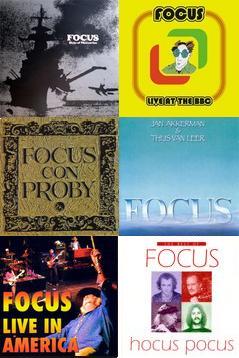
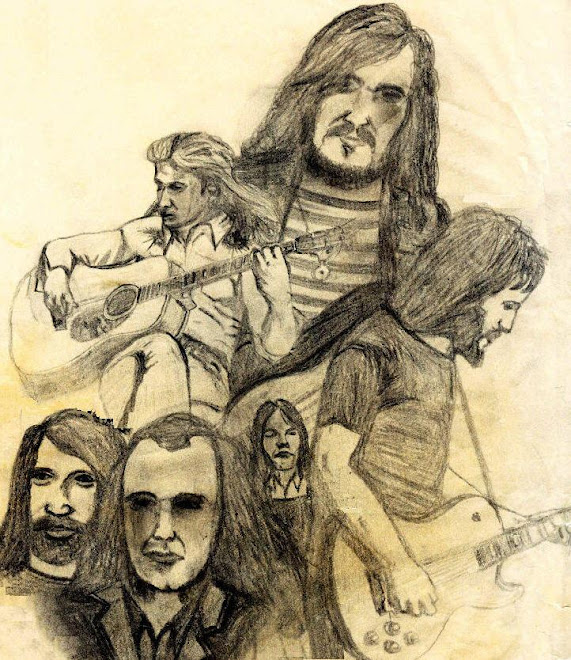
Looking at the music of Dutch rock band Focus, started in the late sixties by Thijs van Leer (b /31/03/48) with Jan Akkerman (b 24/12/46). Van Leer still performs and records under the name today (official site here). Akkerman's site here.

.

.
Showing posts with label Vocal. Show all posts

20210604

Track by track 158 Santa Teresa

Archive number: 158
Title: Santa Teresa
Main Album: The Focus Family Album
Track number: 14
Genre: Sung Ballad
Studio: Wedgeview Studios(Woerdense Verlaat, Netherlands) Fieldwork Studios (Schoten, Belgium)
Skystudio and Bassbob Studios
Length: 6:00
Composer: van Leer
Musicians: Ivan Lins vocals, Thijs van Leer organ flute, Menno Gootjes guitar, Udo Pannekeet bass, Pierre van der Linden drums
Producer: Geert Scheigrond
Engineer: Geert Scheigrond
Label: In and Out of Focus Recordings
Date of recording/release: 2017
Alternative version:
Notes: A crash of cymbal and a chord in unison from the band begin the track and after about 20 seconds of Hammond dominated introduction, the singer (Ivan Lins) begins with the hymn like words below in Spanish. At 1:50 a flute breaks in and there is a flute led instrumental break. At 2:26 the vocal returns. By the 4 minute mark Vins has risen to something of a tuneful shout an the band takes over again, this time with the electric guitar leading. Then on the five minute marker Vins sings for thfinal time and the song comes to an end.

Lyrics: Santa Teresa Enamorada.
Santa Teresa Enamorada.
Maravillosa
Vas tan de prisa,
Camino a tu amado
Tómanos de la mano, Tómanos de la mano

Virgen del Carmen
Estrella de Chile
Tu hija Teresa
Es nuestra alegría.
Virgen del Carmen
Abre tu manto de gracias, de luces
Tómanos de la mano, Tómanos de la mano

Santa Teresa Enamorada
Maravillosa
Vas tan de prisa,
Camino a tu amado
Tómanos de la mano, Tómanos de la mano.

Virgen del Carmen.
Estrella de Chile.
Tu hija Teresa
Es nuestra esperanza.
Virgen del Carmen
Abre tu manto de gracias, de luces
Tómanos de la mano. Tómanos de la mano.

Santa Teresa Enamorada
Maravillosa
Vas tan de prisa Camino a tu amado
Tómanos de la mano. Tómanos de la mano

Translation
St Theresa, beloved, St Theresa, beloved.
Wonderful.
You go so fast
On the way to your beloved.
Take us by the hand, take us by the hand.

Virgin of Carmen, Star of Chile
Your daughter Theresa
It is our joy.
Virgin of Carmen
Open your mantle of graces, of lights
Take us by the hand, take us by the hand.

Virgin of Carmen, Star of Chile
Your daughter Theresa
It is our joy.
Virgin of Carmen
Open your mantle of graces, of lights
Take us by the hand, take us by the hand.

St Theresa, beloved, St Theresa, beloved.
Wonderful.
You go so fast
On the way to your beloved.
Take us by the hand, take us by the hand.

20210309

Track by track 150 Mosh Blues

Archive number: 150
Title: Mosh Blues
Main Album: The Focus Family Album
Track number: 6
Genre: Prog Rock
Studio: Mosh Studios, Sao Paulo, Brazil
Length: 6:24
Composer: Thijs van Leer, Menno Gootjes, Bobby Jacobs & Pierre van der Linden
Musicians: Thijs van Leer - organ, scat, flute; Menno Gootjes - Guitar; Bobby Jacobs - Bass; Pierre van der Linden - Drums
Producer: Geert Scheijgrond
Engineer: Geert Scheigrond
Label: In and Out of Focus Recordings
Date of recording/release: 2017
Notes: The track begins with a bass and drums led band groove, the Hammond coming in from 00:27. Hammond and lead guitar swap the limelight, the guitar eventually triumphing, At 3:18 van Leer gives us about 48 seconds of scat, 28 seconds of Hammond lead and 47 seconds of breathy flute. The band then playout the rest of the song, which lasts just over a minute until the final chord.

Moshing
The word Mosh refers to the recording studio in sao Paulo, which got its name from the initials of its founders: M alagutti O swaldo S antisteban H élio.
(from Wikipedia) Also known as slam dancing or simply slamming, it is a style of dance in which participants push or slam into each other, typically performed to "aggressive" live music. Moshing usually happens in the centre of the crowd, generally closer to the stage, in an area called the "pit". It is intended to be energetic and full of body contact.
The dance style originated in the hardcore punk scenes of California and Washington, DC around 1980. Through the 1980s it spread to other branches of punk rock as well as thrash metal and grunge, which exposed it to the mainstream. Since then, moshing has occasionally been performed to energetic music within a wide variety of genres, including alternative rock, EDM and hip hop, while remaining a staple at punk and heavy metal shows.
Variations of moshing exist, including "pogoing", "circle pits" and "wall of death". Dancing can be done alone as well as in groups.
While moshing is seen as a form of positive fan feedback or expression of enjoyment. It has also drawn criticism over dangerous excesses occurring in offshoots. Injuries have been reported.

20201013

Track by track 144 Brother

Archive number: 144
Title: Brother GO
Main Album: Golden Oldies
Track number: 9
Genre: Progressive Rock Vocal
Studio: WedgeView Studios, Verlaat, The Netherlands
Length: 6:30
Composer: Thijs van Leer/Roselie Peters
Musicians: Thijs van Leer - Hammond organ, vocals, Menno Gootjes - Guitars, Bobby Jacobs - Bass, Pierre van der Linden - Drums
Producer: Bobby Jacobs
Engineer: Budy Mokoginta and Bram Boll
Label: Focus Music Ltd
Date of recording/release: 2014 CD also produced in vinyl format
Notes: Straightforward re-recording with spoken vocal

20191025

Track by track 132 Hoeratio

Archive number: 132
Title: Hoeratio
Main Album: Focus X
Track number: 7
Genre: Progressive Rock with vocal
Studio: Fieldwork Studios, Schoten, Belgium
Length: 5:38
Composer: Bobby Jacobs
Musicians: Thijs van Leer – Hammond organ, piano, flute, vocal; Menno Gootjes – Guitars; Bobby Jacobs – Bass; Pierre van der Linden – Drums
Producer: Bobby Jacobs
Label: Eastworld Recordings
Date of recording/release: November, 2012

Alternative version: None
Notes: The band play an atmospheric but languid tune throughout. From 01:12-02:24 van Leer does a voice over reciting from Horace's Ars Poetica the lines below. After this section the guitar leads with a thorough exploration of the fretboard for the next little while before getting back to the march at 04:01 and then van Leer's now more dramatic an unidentified vocal from 04:14. This takes us right to the end where there is a fade.
The words are

Tibia non ut nunc orichalco uincta tubaeque 
aemula, sed tenuis simplexque foramine pauco 
adspirare et adesse choris erat utilis atque 
nondum spissa nimis complere sedilia flatu: 
quo sane populus numerabilis, utpote paruus, 
et frugi castusque uerecundusque coibat. 
Postquam coepit agros extendere uictor et urbem 
latior amplecti murus uinoque diuino 
placari Genius festis impune diebus, 
accessit numerisque modisque licentia maior. 
Indoctus quid enim saperet liberque laborum 
rusticus urbano confusus, turpis honesto?

The meaning

The Flute – not, as now, bound in brass and a rival of the trumpet,
but slight and simple with few stops – was once of use to lead
and aid the chorus and fill with its breath benches not too
crowded, where, to be sure, folk gathered, easy to count because
few sober folk, too, and chaste and modest.
But when a conquering race began to widen its domain and an
ampler wall embraced its cities and when, on festive days,
appeasing the Genius by daylight drinking brought no penalty,
but then both time and tune won greater licence.
For what taste would you expect of an unlettered throng just freed
from toil rustic mixed up with city folk, vulgar with nobly born?

Note on Horace or Horatio (Hoe ratio is a word play - how rational)
Quintus Horatius Flaccus (65–8 BC), known in the English-speaking world as Horace, was the leading Roman lyric poet during the time of Augustus (Octavian). The rhetorician Quintilian regarded his Odes as just about the only Latin lyrics worth reading: "He can be lofty sometimes, yet he is also full of charm and grace, versatile in his figures, and felicitously daring in his choice of words."
Horace also crafted elegant hexameter verses (Satires and Epistles) and caustic iambic poetry (Epodes). The hexameters are amusing yet serious works, friendly in tone, leading the ancient satirist Persius to comment: "as his friend laughs, Horace slyly puts his finger on his every fault; once let in, he plays about the heartstrings".
His career coincided with Rome's momentous change from a republic to an empire. An officer in the republican army defeated at the Battle of Philippi in 42 BC, he was befriended by Octavian's right-hand man in civil affairs, Maecenas, and became a spokesman for the new regime. For some commentators, his association with the regime was a delicate balance in which he maintained a strong measure of independence (he was "a master of the graceful sidestep") but for others he was, in John Dryden's phrase, "a well-mannered court slave.
The Ars poetica  or "The Art of Poetry" is a poem written by him about 19 BC. In it he advises poets on the art of writing poetry and drama. It has "exercised a great influence in later ages on European literature, notably on French drama" and has inspired poets and authors since it was written. Although it had been familiar since the Middle Ages, it was used in literary criticism only since the Renaissance.
It includes several famous phrases including quandoque bonus dormitat Homerus (l. 359) or "sometimes even good Homer nods off". Today this expression is used to indicate that even the most skilled poet can make continuity errors and that long works, usually epics may have their faults without that detracting significantly from their general quality. In context, however, Horace censures Homer for such lapses. I mention it as perhaps Homer nodded here too.

20191010

Track by track 131 Birds Come Fly Over (Le Tango)

Archive number: 131
Title: Birds Come Fly Over (Le Tango)
Main Album: Focus X
Track number: 6
Genre: Jazz Pop Vocal
Studio: Fieldwork Studios, Schoten, Belgium
Length: 5:21
Composer: Thijs van Leer, Roselie Peters
Musicians: Thijs van Leer – Hammond organ, piano, flute, melodica; Menno Gootjes – Guitars; Bobby Jacobs – Bass; Pierre van der Linden – Drums; Ivan Lins - vocals. 
Producer: Bobby Jacobs, Geert Scheijgrond
Label: Eastworld Recordings
Date of recording/release: November, 2012
Alternative version: The same track is on The Focus Family album. Versions of  Le Tango appear on the Focus album with Jan Akkerman, on Introspection 4 and in other places.
Notes: We begin with drums then acoustic guitar, organ, flute and eventually a chugging electric guitar in tango time. At 0:54 the vocal begins. The words are

I'm always watching sunrise,
I have at least a life
And for my heart's desire, I can die.

And you my love, my good love,
I see you live your life,
But in my heart I've often seen you cry.

I'm only waiting for the time to pass,
How can I raise my voice or my hand?
Birds come fly over to the sun.

Out of a million lovers,
One only could be mine,
Oh there's a million others passing by

From sun up until sundown
This life is such a strife
And if you lose your love you lose your life.

I'm only waiting for the time to pass,
How can I raise my voice or my hand?
Birds come fly over to the sun.

There is a brief instrumental section announced by a beat from 2:02-02:21 after verse 3. In the subsequent part van Leer's melodica is heard. From 3:28-04:01 the band comes in more strongly again before the final vocal section which features the second three verses repeated. A piano is heard in the mix this time.

20191003

Track by Track 130 All Hens On Deck

Archive number: 130 
Title: All Hens On Deck 
Main Album: Focus X 
Track number: 5 
Genre: Progressive Rock Instrumental 
Studio: Fieldwork Studios, Schoten, Belgium 
Length: 5:44 
Composer: Thijs van Leer 
Musicians: Thijs van Leer – Hammond organ, piano, flute, vocals; Menno Gootjes – Guitars; Bobby Jacobs – Bass; Pierre van der Linden – Drums 
Producer: Bobby Jacobs, Geert Scheijgrond
Label: Eastworld Recordings 
Date of recording/release: November 2012
Notes: The track begins full pelt with drums then the band led by percussive guitar, the flute coming in from 00:06. This goes on until at 00:23 we have the breakdown with a series of three strokes, lasting until 00:44 when the Hammond led band takes up the theme. The flute then leads until 01:01 and the second break down. At 01:16 it is van Leer's scat vocal that comes in echoing the guitar with the band until 01:43. Menno's bluesy guitar then goes on until 02:28 when the scat section is repeated until 02:56. Next comes a radical slow down and a majestic, classical section led by the vocal and guitar. At 04:13 the earliest section is repeated, leading into the scat section (from 04:40). A final six strokes brings us almost to the end (05:25) before a long drawn out cat moan vocal contribution by a finally breathless van Leer.

20130305

Track by track 123 European Rap(sody)

Archive number: 123
Title: European Rap(sody)
Main Album: Focus 9 (New Skin)
Track number: 11
Genre: Progressive Rock Instrumental
Studio: Fieldwork Studios, Schoten, Belgium
Length: 10:19
Composer: Thijs van Leer, Gordon Taylor
Musicians: Thijs van Leer – Piano, voice, handclaps, synthesiser, organ, flute; Niels van der Steenhoven – Guitars; Bobby Jacobs – Bass; Pierre van der Linden – Drums
Producer: Bobby Jacobs and Thijs van Leer
Engineer: Han Nuijten
Label: Red Bullet
Date of recording/release: Summer 2006
Alternative version: None (although there is a clip of a Focus jam in Kasteel Groeneveld on Youtube where they play something similar to one of the sections)
Notes: This song is in several parts. First comes a slow, even halting part led by the guitar backed by piano and keyboard set to choral (00:00-00:42). It leads into a second slow part, backed by the organ (00:43-01:07). We then turn east for an increasingly fast, Russian style dance tune led by the flute with the guitar and backed by the rhythm section (01:08-02:10). This is further developed from 02:11 with the use of the voice and handclaps, the guitar giving balalaika-type riffs. At 02:37 a shout or laugh takes us back to the flute-led tune, this being brought to an end by a couple of piano arpeggios (02:38-02:59). The slow and introspective guitar then leads off again followed by the cymbals, organ, bass and then piano too (03:00-03:34). This segues into the next part, still slow, led first by piano then with guitar and backing from the rhythm section and organ (03:35-05:20).
A crash of cymbals abruptly announces a new and jaunty fast section, which features a first litany of about 12 titles of previous Focus tracks from van Leer (05:21-06:27). The list with the few additional words is as follows:

Spoke the Lord Creator, Can't believe my eyes, Out of Vesuvius, Red sky at night, Round goes the gossip, (of) Eruption, Well done, Dayglow (to break), (Creating) Moving Waves (for how long?), Answers, questions ..., (of) Love remembered, … Questions, Answers, Ship of memories, ??? (06:28-06:13)

This is followed by an instrumental section in the same vein (06:14-06:28)
At 06:29 we come into a new section that begins slowly then becomes jaunty again but this time we are looking west and the style is very French, the keyboards in a very accordion-like mode. At 07:33 this comes to an end with the same slow piano, cymbals and bass conclusion as before, ending at 07:47.
A crash of cymbals announces the second part of the litany. This time we have around 35 further tracks

Carnival Fugue, (on an) Endless Road, (it's an) Early birth, (like a fugue of the) Sneezing Bull, Hocus Pocus (and) Birth (and Birth, and Birth), No Hang ups, (with the) Russian Roulette, (surely) Harem Scarem (dreams, dream), (and a) Cathedrale de Strasbourg, Anonymus (it seems), Maximum, (or) Medium, (or) One for the Road (but) Someone's Crying … what? (in the) House of the King, (it's a) Happy nightmare, Altogether … Oh that!, (Let's) Focus (on) Who's calling?, (Is it) Beethoven's Revenge, (or may be) Father Bach, (is it) Tommy, Benny, Eddy (or) Judy or Sylvia, My Sweetheart (My Sweetheart), It's an Indian Summer, (I'm the) Glider, The Tango, (with) Tokyo Rose, Night flight (with a) Black Beauty, (such a) Tropic Bird, (With movement, with movement, with movement; that's the Lord, that's the Lord, that's the Lord) (07:48-09:15)

We then play out with the band led by van Leer's rocking flute (09:16-10:10). The closing nine seconds are left to the solo flute.

20130206

Songs in different languages


Focus are not known for their vocals but the songs they have sung feature several languages.
1. English (Why dream, Happy nightmare, Black Beauty, etc, etc)
2. Dutch (O Avondrood, Hamburger Concerto, Flower Shower)
3. Latin (Round goes the gossip, Hoeratio)
4. French (La Cathedrale de Strasbourg)
5. Spanish (Santa Teresa)

20111203

Track by track 118 Just Like Eddy

Archive number: 118
Title: Just like Eddy
Main Album: Focus 9 (New Skin)
Track number: 6
Genre: Progressive Rock Vocal
Studio: Fieldwork Studios, Schoten, Belgium
Length: 05:04
Composer: This van Leer/Roselie Peters
Musicians: Thijs van Leer – Hammond organ, piano; Niels van der Steenhoven – Guitars; Bobby Jacobs – Bass; Pierre van der Linden – Drums; Jan van der Roek - Vocal
Producer: Bobby Jacobs and Thijs van Leer
Engineer: Han Nuijten
Label: Red Bullet
Date of recording/release: Summer 2006
Alternative version: On Focus Con Proby with PJ Proby and on van Leer's solo album O my love!
Notes: This third version of Eddy is again unique. This time the band begins with a short introduction (00:00-00:21) before the vocal comes in at 00:22.

Just like Eddy in the morning
He never said, although he could
I know someone who would, but
He never woke to have an ear (00:22-01:00)

Yes I think of things unnoticed
Like what happens in the egg
As it lies without motion
Just like Eddie's sleeping head (01:01-01:40)

When I come home in the morning
Softly as I tread the dawn
I know things that are important
That have only just begun (01:41-02:22)

I'm gonna fly away
Here I go here I go here I go
I'm gonna fly away
Here I go here I go here I go (02:23-02:42)

Seeing you across the table
Smiles are dying on your face
Being here with my heart open
Seems a little out of place (02:43-03:41)

I'm gonna fly away
Here I go here I go here I go
I'm gonna fly away
Here I go here I go here I go (repeated twice) (03:42-04:18)

There is a break at 04:19-04:29 followed by another I'm gonna fly away (04:30-04:36) and a second break (04:37-04:46) and ending on the vocal (04:47-05:04).

20100219

Track by track 99 Tamara's Move

Archive number: 99
Title: Tamara's move (Allegro-adagio-allegro)
Main Album: Focus 8
Track number: 2
Genre: Progressive Rock Instrumental
Studio: Peptide Studio, Vuren
Length: 5' 14”
Composer: Jan Dumee
Musicians: Thijs van Leer – Hammond organ, Flute, synthesisers, hanclaps; Jan Dumee –Guitars including Spanish guitar, Vocal; Guitar; Bobby Jacobs - Bass; Bert Smaak - Drums
Producer: Geert Scheijgrond & Focus
Engineer: Geert Scheijgrond & Dick Kemper
Label: Musea/Red Bullet
Date of recording/release: A limited run of 500 of the album appeared in August 2002 to be followed by a general release on CD later that year. Also later on Paras and JVC Victor
Alternative version: None
Notes: The piece is in three sections – allegro, adagio, allegro. The first allegro section is from 00:00-02:12. It begins with double tracked acoustic guitars (00:00-00:07) soon accompanied by the rhythm section, which includes a distinctive synthesised mouth tom tom sound at certain points (00:08-00:00:18). The flute (multi-tracked at certain points) then takes up the lead in joyful style as far as 02:12, with a note held around 01:08 and handclaps from both speakers from 01:36.
The adagio section (02:13-03:34) has two parts. First, a mournful organ and synthesiser backed vocal section that ends at 02:49 with a timpani sound. The words are indistinct but appear to be

Don't let a thing respond,
No breath for you too.
Just signs of trying to forget you,
To exorcise you.
Leave me in your thoughts
But don't you miss the sight.

A drum roll immediately follows (02:50-02:57) and we are into a rather grand instrumental version of the same tune led by guitar with organ that ends at 03:34.
The third section is the flute-led allegro again. The handclaps begin at 04:03, the mouth tom toms are there and the Spanish guitar has a much more prominent role from 04:24.

20090407

Track by track 93 Cathedrale de Stasburg (Live FLIA)

Archive number: 93
Title: Cathedrale de Strasbourg (Live)
Main Album: Focus Live In America 
Track number: 7
Genre: Progressive Rock Vocal
Venue: Patriots Theater, 1 Memorial Drive, Trenton, New Jersey, USA
Length: 12' 57”
Composer: Thijs van Leer
Musicians: Thijs van Leer – Hammond organ, Vocals, Whistling; Jan Dumee – Gibson Marauder Guitar; Bobby Jacobs - Bass; Bert Smaak - Drums
Producer: Gavin Bott/Bob Carruthers Engineer: Mike Potter (Orion Sound) Mix (Total audio)
Label: Classical Rock Legends Limited
Date of recording/release: October 2002 (part of a two day Uriah Heep led classic rock legend festival that also featured Nektar, Mostly Autumn and Asia). Released on DVD and CD (edited) in 2003.
Alternative version: This track originally appeared on the Hamburger Concerto album
Notes: The data about this track is found on the previous track - “We've got another slow song for you. It's like a nostalgic feel I had thinking of the bells of the Cathedral of Stratzburg, which is a town in France on the frontiers with Germany and those bells had a very, very beautiful sound and I was a very little boy and I was more than impressed. So here's the impression. It's a little lyric sung in French.” The track itself begins with bell like organ tones. The band then join in. It was once unusual for this track to be played live and so again makes it easier for Dumee who plays well. Van Leer does slightly better with the vocals this time, the style suiting him better. He whistles well too (also in French!) as on the original (02:25-04:00). His voice is also heard near the end (05:38-06:10). The track closes (06:22) with the sound of the audience and van Leer's thanks. The CD then has the words “we go to a number which we call Focus number 7” Harem Scarem being edited out of the CD version. On the DVD he says “Here's a song I wrote in the pub in Belgium. It's called Harem Scarem."

20090406

Track by track 90 [DVD] Brother (Live FLIA)

Archive number: 90 [DVD only]
Title: Brother (Live)
Main Album: Focus Live In America DVD Track number: 6 (DVD) not on CD
Genre: Jazz Rock Vocal
Venue: Patriots Theater, 1 Memorial Drive, Trenton, New Jersey, USA
Length: 12' 57”
Composer: Thijs van Leer
Musicians: Thijs van Leer – Hammond organ, Vocal; Jan Dumee – Gibson Marauder Guitar; Bobby Jacobs - Bass; Bert Smaak - Drums
Producer: Gavin Bott/Bob Carruthers
Engineer: Mike Potter (Orion Sound) Mix (Total audio)
Label: Classical Rock Legends Limited
Date of recording/release: October 2002 (part of a two day Uriah Heep led classic rock legend festival that also featured Nektar, Mostly Autumn and Asia). Released on DVD and CD (edited) in 2003.
Alternative version: Instrumental versions can be found on van Leer's solo album Introspection 3 and later on Focus 8. P J Proby sings it on Focus Con Proby.
Notes: Perhaps van Leer was keen to include this when performing in America as it is essentially an American song. It includes a nice introduction on organ (as written for the Con Proby album), rather poor vocal work from van Leer and, most interestingly, a guitar coda quoting Eruption. It was rightly left off the CD.

20081201

Focus Vocalists


Surprisingly, perhaps, there are over 20 Focus vocal tracks of various sorts. Most of these feature Thijs Van Leer but there are a number of P J Proby vocals, of course, on the Focus Con Proby album and Bert Ruiter sang I need a bathroom on Mother Focus (though it is sometimes said that it is Akkerman). Akkerman can certainly be heard with Van Leer on Avondrood. Cyriel Havermans's voice is heard on Moving Waves. Jan Dumee sings briefly on Focus 8. On Focus 9 Jo de Roeck sings Just like Eddy.

20081128

Track by track 77 How Long

Archive number: 77
Title: How Long
Main Album: Focus Con Proby
Track number: 9
Genre: Jazz Rock Vocal
Studio: EMI Studios, Hilversum, The Netherlands
Length: 05' 16”
Composer: Roselie van Leer, Thijs van Leer
Musicians: Philip Catherine - Electric guitars; Thijs van Leer – Synthesisers, Hammond organ; Bert Ruiter – Bass; Steve Smith - Drums
Producer: Yde de Jong
Engineer: Jan van Vrijaldenhoven/Mike Stavron
Label: LP – EMI
Date of recording/release: Recorded/released 1978 LP – 1978 CD - 1998
Notes: We begin with a fast paced synthesiser-led introduction (00:00-00:55). Proby then comes in with the lyric (00:56-02:49). The lyrics are

How long
Lasts a love
When does a smile begin?
How far Is a dream
From remembering?
And how fast is a train of thought?
And I know how long a moment can last.

How high
Can you see in the sky?
And does it never end?
And I think that the world was meant to be
Much better than we've ever seen or hoped for
And I say that each time you can be
Kind or mild you'll know the joy to make it better
And I think we must, and why don't we start now?

How white
How clear and how bright
Is an angel's light?
And how fast is a train of thought
And I know how long a moment can last.

The backing is quite uniformly fast but occasionally begins to break down. There is then an instrumental break at 02:50-03:21 then Proby resumes (03:22-03:58) with the following:

And I think that the world was meant to be
Much better than we've ever seen or hoped for
And I say that each time you can be
Kind or mild you'll know the joy to make it better
And I think we must, and why don't we start now?
Hear, hear
The best of all, I think love never dies

The final upbeat section (03:59-05:16) is shared by the synthesiser and guitar.

20081124

Track by track 75 Tokyo Rose

Archive number: 75
Title: Tokyo Rose
Main Album: Focus Con Proby
Track number: 7
Genre: Jazz Rock Vocal
Studio: EMI Studios, Hilversum, The Netherlands
Length: 5' 05"
Composer: Roselie van Leer, Thijs van Leer
Musicians: P J Proby – Vocals; Eef Albers- Electric Guitars; Thijs van Leer – Flute, Piano, Hammond organ; Bert Ruiter – Bass; Steve Smith - Drums
Producer: Yde de Jong
Engineer: Jan van Vrijaldenhoven/Mike Stavron
Label: LP – EMI
Date of recording/release: Recorded/released 1978 LP – 1978 CD – 1998
Alternative versions: None
Notes: As with the previous track, we begin with a classical introduction possibly stolen from Brahms. This time the flute joins the piano. (00:00-00:44). The band then kicks in at marching pace and Proby (sounding very like Presley at times) begins to half sing half speak the lyric. The vocal is then punctuated by the guitar-led instrumental as indicated.

Hahaha, hey you know something?
World War II wasn't all that much fun, 
Specially if you didn't even have a gun.
Well, you know you gotta go through it if you wanna get to it,
and I can tell you I did,
but no thanks to a little lady.
She was, uh, she, she kept us up all hours of the night.
Hell, half the time we didn't have time to fight.
But I don't think I would have to expound much further
 'cause everyone knows 'bout Tokyo Rose.
(Instrumental break at 01:32-02:31)
Hehaha, lemme tell you a little more. Scared?
Christ, I was so damned scared I could crawl under a snake's belly,
with a top hat on, without even touching it.
That's how scared I was.
Shit, who wants your ass blown off when you don't even know if it's kosher.
You know, kind of like when you went to school.
Always breakin' the rules, thinkin' nobody knows.
Haha, but don't kid yourself, baby, the lady in the classroom knows, 
nd her name? You got it - Tokyo Rose.
(Instrumental break at 03:20-04:18)
Lord, have mercy. Ha, I feel like I'm teaching class.
I gotta go through it all over again,
'cause you haven't learned your lessons now.
I don't want to give you a bad report card,
so I say, do you know that World War II wasn't fun.
Have you got that down, Jim? Right on,
especially if you didn't have a gun.
Well, you know you gotta go through it
if you wanna get to it.
And I can tell you I did, but no thanks to a little lady,
yeah, she kept us up all hours of the night.
Hell, half the time, we never had time to fight.
And, uh, yeah, there's no sense of me expounding any further.

The end is again quite sudden.
Note on Tokyo Rose (from Wikipedia)
Tokyo Rose (or Tokio Rose) was a generic name given by Allied forces in the South Pacific during World War II to any of approximately a dozen English-speaking female broadcasters of Japanese propaganda. Their intent was to disrupt the morale of Allied forces listening to the broadcast near the Japanese mainland. The name is most strongly associated withIva Toguri D'Aquino, who broadcast under the pseudonym "Orphan Ann" during the 15-20 minute DJ segment of the 75-minute The Zero Hour programme on Radio Tokyo (NHK). Other women who, separately or together, may have warranted the title include American Ruth Hayakawa (who substituted for Iva on weekends) and Canadian June Suyama ("The Nightingale of Nanking"), who also broadcast on Radio Tokyo, and Myrtle Lipton ("Little Margie"), who broadcast from Japan-controlled Radio Manila.
Tokyo Rose has been the subject of two movies and four documentaries. Both in 1969 and 1976 CBS broadcast documentaires on the subject. 1969: The Story of "Tokyo Rose", CBS-TV and WGN radio documentary written and produced by Bill Kurtis. 1976: Tokyo Rose, CBS-TV documentary segment on 60 Minutes by Morley Safer, produced by Imrel Harvath.

Track by track 74 Brother

Archive number: 74
Title: Brother
Main Album: Focus Con Proby
Track number: 6
Genre: Jazz Rock Vocal
Studio: EMI Studios, Hilversum, The Netherlands
Length: 05' 16”
Composer: Roselie van Leer, Thijs van Leer
Musicians: P J Proby – Vocals; Eef Albers- Electric Guitars; Thijs van Leer – Piano, Mellotron, Hammond organ; Bert Ruiter – Bass; Steve Smith - Drums
Producer: Yde de Jong
Engineer: Jan van Vrijaldenhoven/Mike Stavron
Label: LP – EMI
Date of recording/release: Recorded/released 1978 LP – 1978 CD – 1998
Alternative versions: An instrumental version can be found on van Leer's solo album Introspection 3. Also see the later Focus 8.
Notes: The piece begins with a beautiful, classically informed, piano introduction with some slight mellotron backing (00:00-00:48) possibly stolen from Brahms. After five seconds silence (00:49-00:54) heavy drum beats are heard and the band comes in with a slow march led by Proby's rock ballad vocal (0051-03:35). The angst ridden verses and 1920s American depression influenced chorus are as follows:

I've never been unhappy or alone
Each day daylight came back
I always watched the stars
Not thinking space big and dark
Rains always were my friend
The wind knew all my secrets
Brother do you know that the times are hard
Do you wanna see my eyes
Better Make a start
Cause brother do you see that the times are hard
I need love
Hey yeah (Repeat chorus)
I did not fear the shadows of trees
But city shadows don't move
I saw a child of God. He was
Someday to grow into the world.
Brother do you know that the times are hard
Do you wanna see my eyes
You'd better make a start
Cause brother ...
do you see that the times are hard
I need love (Repeat chorus)

A horn-like guitar leads the band as the music rises (03:36-04:12) until the vocal comes back in very high (04:13-05:01) with the opening six lines. A triumphant classical style piano, organ and cymbals close the piece (05:02-05:16).

Track by track 72 Eddy

Archive number: 72
Title: Eddy
Main Album: Focus Con Proby. Also a single in 1977 b/w Sneezing Bull.
Track number: 4
Genre: Rock Vocal
Studio: EMI Studios, Hilversum, The Netherlands
Length: 5' 49"
Composer: Eef Albers
Musicians: P J Proby - Vocals; Eef Albers - Electric guitars; Thijs van Leer – Hammond, Bass Synthesiser; Bert Ruiter – Bass; Steve Smith - Drums
Producer: Yde de Jong
Engineer: Jan van Vrijaldenhoven/Mike Stavron
Label: EMI
Date of recording/release: Recorded 1977 Released 1978 LP – 1978 CD – 1998
Alternative versions: Roselie van Leer (Peters) sings an earlier version on van Leer's solo O my love and Jo De Roeck sings on a later version on Focus 9
Notes: The band open with bass and drums and 'violined' guitar and organ (00:00-00:09) then Proby comes in pleasantly crooning the lyric as follows

Just like Eddy in the morning
He never said, although he could
I know someone who would, but
He never woke to have an ear

Yes I think of things unnoticed
Like what happens in the egg
As it lies without motion
Just like Eddie's sleeping head

When I come home in the morning
Softly as I tread the dawn
I know things that are important
That have only just begun

I'm gonna fly away
Here I go here I go here I go
I'm gonna fly away
Here I go here I go here I go

Seeing you across the table
Smiles are dying on your face
Being here with my heart open
Seems a little out of place

I'm gonna fly away
Here I go here I go here I go
I'm gonna fly away
Here I go here I go here I go (repeated twice)

All the way, the guitar plays some fine licks against the vocal, which finally becomes breathless, insistent then indistinct, dying with a scream at 4:33, when the band takes over. The vocal is lost a little in the mix.
Note on Eddy
Eddy van Leer is Thijs van Leer's father. He plays with Thijs on the track Hommage (Song for pa) on the Thijs van Leer solo album Reflections. Van Leer senior, a competent classical flautist himself, bought his son a flute and gave him his first lessons when Thijs was around 11 or 12.

20081111

Track by track 69 Wingless

Archive number: 69
Title: Wingless
Main Album: Focus Con Proby
Track number: 1
Genre: Rock Vocal
Studio: EMI Studios, Hilversum, The Netherlands
Length: 5' 32”
Composer: Thijs van Leer, Roselie van Leer
Musicians: P J Proby – Vocals; Eef Albers - Electric guitars; Thijs van Leer – Hammond organ, Electric piano; Bert Ruiter – Bass; Steve Smith - Drums
Producer: Yde de Jong
Engineer: Jan van Vrijaldenhoven/Mike Stavron
Label: EMI
Date of recording/release: Recorded 1977 Released 1978 LP – 1978 CD – 1998
Alternative versions: None
Notes: This vocal track is bookended by a short reverbed instrumental introduction (00:00-00:37) quite dreamy and a heavier, wilder and longer reverbed instrumental conclusion (03:08-05:32) that eventually fades. There is also a reverbed guitar-led instrumental break at 01:33-02:08 between the second and third verses. The words are as follows

I'm a bird but I am wingless
On a treetop way up high
Springtime's coming green and reckless
How I long and long to fly
But my love I get so restless
Thinking of you all the time
While my heart moves free
I'm solid 
Wish that I could move around
While my heart was fixed forever
Fixed in love without the fear
That one day I'll be without you Is it true, and is it near?
Sunlight starlight love your laughter
And the love of gentle hearts
And beyond the face of the loved one
There you'll find the face of God

The words are sung well in a yearning rock ballad style but are slightly overwhelmed by the band until the final line, where everything slows and dies down before taking off again for the final section.
A note on P J Proby (from Wikipedia)
Born James Marcus Smith, November 6, 1938, Houston, Texas, this singer, songwriter and actor is noted for theatrical portrayals of Presley and Orbison and interpretations of old standards in the vein of Nat king Cole or Tony Bennett. His stage name was suggested by friend and songwriter Sharon Sheeley who remembered an old boyfriend with the name.
His father was VP of a big bank. He was educated at various military academies and later moved to California to be a movie actor. As Jett Powers he had minor roles and 2 singles on an independent label went unnoticed. In 1962 he began writing and recording demos for artists such as Elvis and Johnny Cash. Sheeley took him to audition at Liberty Records. He soon created his fashion image of a pony-tail tied back with a ribbon, swashbuckling pirate shirts and buckled shoes. In addition, he wore skin-tight suits of velvet in different colours. London based from 1964 he began to have hits but a royalty dispute broke his run of UK successes.
His career was also affected by controversy. His trousers split during a concert. Women in the audience went wild. Somehow, they split again at the next venue. Critics, and the audience, were divided on whether it was a gimmick or eccentricism. During a 1967 concert they split again and he was dropped from the rest of the tour.
Back in the US he had a hit but poor managerial advice led to him briefly declaring himself bankrupt. He took some rest then but in September '68 recorded Three Week Hero. Released in '69 The Yardbirds (later Led Zeppelin) were his backing band.
In 1971 he had a successful West End run as Casio in a rock musical version of Othello (Catch My Soul). He continued to perform mostly in cabarets and nightclubs, singing 1960s ballads and rhythm 'n' blues material. In 1977, he portrayed Elvis in Elvis - The Musical, which received rave reviews and awards. It was following this that he recorded with Focus, the result chiefly of manager Yde de Jong being a fan.
He then returned to singing in clubs. By 1990 he was suffering from alcoholism, living in Bolton but did produce an album Thanks. He enjoyed minor success with covers of Anarchy in the UK and other unexpected material but was neglected by the media. Following his return to the public eye, in 1991, he suffered a heart attack, curtailing activities until 1993, when he appeared in a Jack Good biomusical Good Rockin' Tonite as himself. In 1995 he was in a Roy Orbison tribute show Only the Lonely. By 1996 he was again doing the Elvis musical. In 1997, he toured with The Who, performing as "The Godfather" in the road production of Quadrophenia. Now into his seventies, he continues to tour. In 2007 he was accused of benefit fraud, something he strongly denies.

20080707

Track by track 67 Little Sister/What you see (Live)

Archive number: 67
Title: Little Sister/What you see (Live)
Main Album: Live at the BBC
Track number: 8
Genre: Live Cabaret Jazz Vocal/Live Jazz Funk Instrumental
Venue: New Victoria Theatre, 17 Wilton Road, London SW1V 1LL (now Apollo Victoria)
Length: 08' 18”
Composer: Thijs Van Leer/Roselie Peters
Musicians: Philip Catherine - Electric guitars; Thijs van Leer – Electric piano, Mellotron, Vocal, Voice; Bert Ruiter – Bass; David Kemper – Drums
Producer: BBC
Engineer: BBC
Label: Hux Records
Date of recording/release: Recorded March 21 1976 but only released (on CD) June 1 2004
Alternative versions: This track first appeared on van Leer's solo album O my love!
Notes: The quiet, wistful and undemanding vocal track is segued with the up tempo jazz funk instrumental. The vocal track is bounded by an introduction (00:00-01:04) and conclusion (03:11-03:36) the highly laid back vocal section taking up the rest of the time (1:05-03:10). The intro is very quiet, with keyboards and guitar only. After a brief silence (01:00-01:02) the high hat takes us into the slow and sparse band-backed vocal. The minimalist words are

I'll carry you, I'll carry you
Out into the land,
Go before dusk
My tears are made of diamond,
They are yours
Little sister, do you know?
I have seen into the sky,
Oh how, how I am moved!

We end (03:11-03:36) with an atmospheric signing off on keyboards and guitar before the rumbling thunder of the following track begins. The bass and drums lead the build up on this next track (03:37-04:28). After a few funky false starts. the guitar then takes up the lead as the band continue the funk backing (04:29-05:25). Next van Leer, almost comically, uses his uncanny voice to take things on (05:27-05:53) breaking down briefly to give space to the piano (05:54-06:01) but taking things up again briefly (06:02-00:20). Finally Catherine's guitar comes in again to give a jazzy lead that suddenly crashes (06:43-06:47) and we have a reprise of Little Sister (using the second part) as the coda, dying out with the sound that introduced the second track (06:48-07:50). We then have half a minute of audience applause and a 'thank you very much' from van Leer yet again (07:51-08:18). During this time the band presumably leave the stage then quickly return for the encore.

Segue (from Wikipedia)
A segue is a transition from one topic or section to the next. The term is derived from Italian segue, which literally means "follows". In music, segue is a direction to the performer. It means continue (the next section) without a pause. The term attacca is used synonymously. For written music, it implies a transition from one section to the next without any break. In improvisation, it is often used for transitions created as a part of the performance, leading from one section to another.
In recorded music, a segue sometimes means a seamless change between one song and another, sometimes achieved through beatmatching, especially on dance and disco recordings. However, as noted by composer John Williams in the liner notes for his Star Wars soundtrack album, a series of musical ideas can be juxtaposed with no transitions whatsoever. Arrangements that involve or create the effect of a classical musical suite, may be used in many pieces or progressive rock recordings, but by definition, a segue does not involve a bridging transition - it is an abrupt change of musical idea. With breakless joins of the elements in his albums Frank Zappa made extensive use of the segue technique. This was first used in 1966 on Zappa's Freak Out! and a year later on the Beatles' Sgt Pepper's Lonely Hearts Club Band. Some album notations distinguish track listings through the use of symbols, such as a >, →, or / to indicate songs that flow seamlessly. The alternative rock band Failure separates these musical transitions into individual tracks, which are simply given numerical distinctions such as Segue 1. This system began with their 1996 album Fantastic Planet.
In live performance, a segue can occur during a jam session, where the improvisation of the end of one song progresses into a new song. Segues can even occur between groups of musicians during live performance. For example, as one band finishes its set, members of the following act replace members of the first band one by one, until a complete band swap occurs.
In audio/visual media, a segue is transition from a song, scene or topic to another one. A segue allows the disc jockey, director or show host to naturally proceed from one song or scene or topic to another without jarring the audience. A good segue makes the transition look natural and effortless.