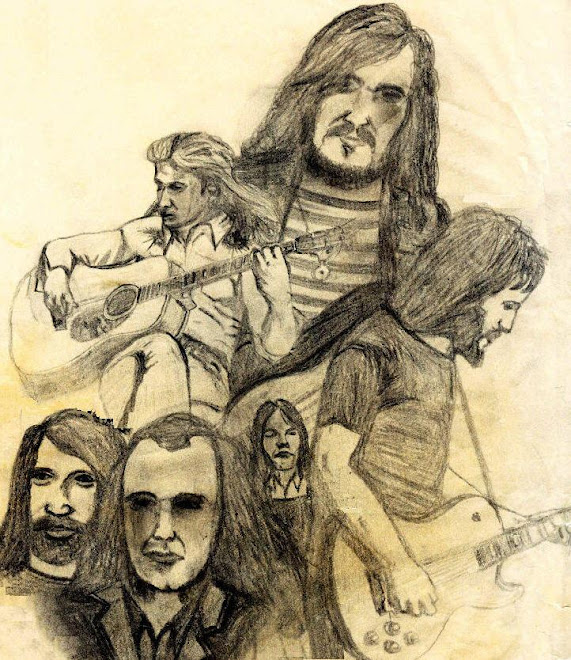
Looking at the music of Dutch rock band Focus, started in the late sixties by Thijs van Leer (b /31/03/48) with Jan Akkerman (b 24/12/46). Van Leer still performs and records under the name today (official site here). Akkerman's site here.

.

.
Showing posts with label Prog Rock Instrumental. Show all posts

20230218

Track by track 166 Heaven

Archive number: 166
Title: Heaven
Main Album: Focus 11
Track number: 2
Genre: Progressive Rock Instrumental
Studio: WedgeView Studios, Netherlands
Length: 4:26
Composer: Thijs van Leer
Key: G
Musicians: Thijs van Leer – Hammond organ, piano, flute, voice; Menno Gootjes – Guitars; Udo Panekeet – Bass; Pierre van der Linden – Drums
Producer: Geert Scheigrond
Engineer: Geert Scheigrond
Label: In and Out of Focus Recordings
Date of recording/release: November 2018
Alternative recording: None
Notes: We begin with several seconds of choppy organ with a drum beat at 00:04 and guitar led band joining in. At 00:09 a riff comes in and then is varied a little until 00:37 when a repeated piano trill comes into the mix, the drums becoming more stilted. Then at around 00:59 we have a four note chanticleer or cockerel sound played on organ then guitar and then with flute dominating. That section carries on through to 01:55 where it is superseded by an organ and piano led theme that reverts quite soon to the four note theme. Shortly after, a rising theme dominates before, at 02:41, we are back with the organ theme from the beginning. That develops, giving room for some nice guitar work and jazzy piano. At 03:40-03:48 van Leer's voice is heard scatting. The band continue until 4:05 when a more laid back version of the four note section comes in and we end with a drawn out note on guitar.

Track by track 165 Who's calling?

Archive number: 165
Title: Who's calling?
Main Album: The Focus Family Album
Track number: 1
Genre: Progressive Rock Instrumental
Studio: WedgeView Studios, Netherlands
Length: 5:28
Composer: Thijs van Leer
Key: C
Musicians: Thijs van Leer – Hammond organ; Menno Gootjes – Guitars; Udo Panekeet – Bass; Pierre van der Linden – Drums
Producer: Geert Scheigrond
Engineer: Geert Scheigrond
Label: In and Out of Focus Recordings
Date of recording/release: November 2018
Alternative recording: Focus by Thijs van Leer and Jan Akkerman
Notes: This reworking of the flute led 1985 track begins and ends with distorted staccato solo electric guitar and provides the sort of loud and brash opener that often begins a Focus album. The electric guitar is joined by drums around 00:04 and then the full band. Over the furious paced rhythm an organ backed guitar comes in around 00:22 with a yearning melody that reaches something of a climax around 01:45. The original riff comes in again at 01:50. This riff over the organ continues until 2:22 when the guitar lead comes in again and the previous figure is more or less repeated, coming to a similar climax around 03:45. At 3:50 a more violined theme comes in and the guitar increasingly breaks down as Menno works up and down the fretboard at increasing speed until a fade begins, only cut off by the repeated riff from the beginninng.

20191003

Track by Track 130 All Hens On Deck

Archive number: 130 
Title: All Hens On Deck 
Main Album: Focus X 
Track number: 5 
Genre: Progressive Rock Instrumental 
Studio: Fieldwork Studios, Schoten, Belgium 
Length: 5:44 
Composer: Thijs van Leer 
Musicians: Thijs van Leer – Hammond organ, piano, flute, vocals; Menno Gootjes – Guitars; Bobby Jacobs – Bass; Pierre van der Linden – Drums 
Producer: Bobby Jacobs, Geert Scheijgrond
Label: Eastworld Recordings 
Date of recording/release: November 2012
Notes: The track begins full pelt with drums then the band led by percussive guitar, the flute coming in from 00:06. This goes on until at 00:23 we have the breakdown with a series of three strokes, lasting until 00:44 when the Hammond led band takes up the theme. The flute then leads until 01:01 and the second break down. At 01:16 it is van Leer's scat vocal that comes in echoing the guitar with the band until 01:43. Menno's bluesy guitar then goes on until 02:28 when the scat section is repeated until 02:56. Next comes a radical slow down and a majestic, classical section led by the vocal and guitar. At 04:13 the earliest section is repeated, leading into the scat section (from 04:40). A final six strokes brings us almost to the end (05:25) before a long drawn out cat moan vocal contribution by a finally breathless van Leer.

20101216

Track by track 113 Black Beauty (Instrumental)

Archive number: 113
Title: Black Beauty (instrumental)
Main Album: Focus 9 (New Skin)
Track number: 1
Genre: Progressive Rock Instrumental
Studio: Fieldwork Studios, Schoten, Belgium
Length: 04:10
Composer: van Leer
Musicians: Thijs van Leer – Hammond organ, piano, whistling; Niels van der Steenhoven – Guitars; Bobby Jacobs - Bass; Pierre van der Linden - Drums
Producer: Bobby Jacobs and Thijs van Leer
Engineer: Han Nuijten
Label: Red Bullet
Date of recording/release: Summer 2006
Alternative version: The original vocal version appears on the first Focus album
Notes: We begin with a mincing organ, accompanied by bass and drums to introduce the piece (00:00-00:16). The electric guitar joins in with a twice stated riff in slightly muted pizzicato style (00:17-00:32). The organ then swells and the band build up (00:33-00:48) to a first guitar led “vocal” section (00:49-01:04) followed by a more tempestuous yearning section (01:05-01:16). This pattern is repeated (01:17-01:32; 01:33-01:59) the yearning section more wistful, less tempestuous at first. The “vocal” section is repeated a third time (02:00-02:31). A piano trill is heard quite distinctly at 02:15 before the yearning section comes in and the “vocal” part is repeated yet again (02:32-02:55). There is then a break down where first van Leer leads with whistling (02:56-03:10) then van der Steenhoven very pleasantly on guitar (03:11-03:42). We play out with a whistle led “vocal” section with a final ritartando (03:43-04:10).

20100302

Track by track 104 Sto Ces Raditi Ostatac Zivota?

Archive number: 103
Title: Sto Ces Raditi Ostatac Zivota?
Main Album: Focus 8
Track number: 7
Genre: Progressive Rock Instrumental
Studio: Peptide Studio, Vuren
Length: 05' 23”
Composer: Jan Dumee
Musicians: Thijs van Leer – Flute, Hammond organ, Voices; Jan Dumee – Guitars, inc Acoustic, Voices; Bobby Jacobs - Bass; Bert Smaak - Drums
Producer: Geert Scheijgrond & Focus
Engineer: Geert Scheijgrond & Dick Kemper
Label: Musea/Red Bullet
Date of recording/release: A limited run of 500 of the album appeared in August 2002 to be followed by a general release on CD later that year. Also later on Paras and JVC Victor Alternative version: None Notes: The title is Bosnian-Serbo-Croatian and means something like What will you do with the rest of your life? The title is presumably a comment on the recent politics of the region, which has known great upheaval. If so, this would be a second political or protest song for Focus (Sugar Isalnd back at the beginning being the first). The opening introduction features flute and acoustic guitar which ends with the sound of tom toms (synthesised?) (00:00-00:30). The drums then introduce a further melodic introduction (00:31-01:23) featuring the band on acoustic guitar, organ, bass and drums with distant vocal backing of a scat variety. A flute is heard near the end of this. From 01:24 the electric guitar gives some strong notes to lead the organ, some flute coming in too (with a distinctive guitar sound briefly at 02:38-02:42). This goes on rising pretty much (though not really progressing much) until 04:16. A voice comes in at 04:17, 18 as the guitar grows more passionate. From 05:10 a fade begins featuring acoustic guitar that ends with just the voice at 05:23.

20100219

Track by track 100 Fretless Love

Archive number: 100
Title: Fretless Love
Main Album: Focus 8
Track number: 3
Genre: Progressive Rock Instrumental
Studio: Peptide Studio, Vuren
Length: 6'05”
Composer: Thijs van Leer
Musicians: Thijs van Leer – Hammond organ, Flute, Voice; Jan Dumee – Guitars; Bobby Jacobs - Bass; Bert Smaak - Drums, Timpani
Producer: Geert Scheijgrond & Focus
Engineer: Geert Scheijgrond & Dick Kemper
Label: Musea/Red Bullet
Date of recording/release: A limited run of 500 of the album appeared in August 2002 to be followed by a general release on CD later that year. Also later on Paras and JVC Victor Alternative version: None
Notes: The track begins in quiet and relaxed style with acoustic guitar (possibly synthesised) and a beautiful and melodic flute, backed by the Hammond (from 00:24). At 00:46 we move to a new yearning electric guitar-led section with Hammond and rhythm section. This itself is succeeded (at 01:30) by a funky guitar and organ part (with van Leer's voice giving oompahs at first - again possibly synthesised) and led by a hard blown flute. This is in turn is repeated and developed (from 02:19). Another break in tempo comes at 03:08 and we go into a section led by melodic flute but backed by the band with a riffing style and a distinct underlying guitar motif. Another break comes at 04:09 with a timpani marked halt (almost a caesura). We then return to the yearning electric guitar of the second section but slightly more staccato, until 04:50 where it all gets pretty funky again, this time with a heavier bass and more earnest guitar work from Dumee. This then heads relentlessly for the fade, volume disappearing around 06:05”

20090407

Track by track 96 Hocus Pocus (Live FLIA)

Archive number: 96
Title: Hocus Pocus (Live)
Main Album: Focus Live In America
Track number: 9
Genre: Live Progressive Rock Instrumental Venue: Patriots Theater, 1 Memorial Drive, Trenton, New Jersey, USA Length: 12' 57”
Composer: Thijs van Leer
Musicians: Thijs van Leer – Hammond organ, Flute, Voice, Whistling; Jan Dumee – Guitar; Bobby Jacobs - Bass; Bert Smaak - Drums
Producer: Gavin Bott/Bob Carruthers Engineer: Mike Potter (Orion Sound) Mix (Total audio) Label: Classical Rock Legends Limited Date of recording/release: October 2002 (part of a two day Uriah Heep led classic rock legend festival that also featured Nektar, Mostly Autumn and Asia). Released on DVD and CD (edited) in 2003. Alternative version: One of the most famous and oft repeated Focus tracks, it appeared first on the Moving Waves album.
Notes: On the DVD the flute improvisation that precedes it is separately credited. Beginning with organ too, the flute is mostly solo. This takes us to 02:35 when the organ comes in and van Leer begins on a sort of priestly singing in tongues. This then transmutes (to a loud cheer from the audience) into the famous yodel. Unable to get the high notes these days van Leer switches to a harsh whistling sound, supplemented by Dumee's voice. We are then into the main riff, complete with high volume (sometimes squealing) guitar. This is broken up twice by the yodel and scream, then the strange voice and scream. Third time round we have the low (Van Leer) and high (Dumee) voices. Next time it's the flute then the extended yodel (not quite as long as it used to be). The guitar is frenetic by this point but things cool down for the intros – Bobby Jacobs, Bertie Smaak, Jan Dumee and the man himself on organ and flute. We come out of that with a great driving bass and one more blast from the band ending in unison at 09:13. The crowd then cheer (one man's "Oh yeah" is very distinct), van Leer says thank you very much for the final time and that is the end – though on the CD we have edited in the intro for what is there the final track (Focus 3).

20090406

Track by track 85 Focus 1 (Live FLIA)

Archive number: 85
Title: Focus 1 (Live)
Main Album: Focus Live In America
Track number: 1
Genre: Progressive Rock Instrumental
Venue: Patriots Theater, 1 Memorial Drive, Trenton, New Jersey, USA
Length: 12' 57”
Composer: Thijs van Leer
Musicians: Thijs van Leer – Hammond organ, Flute; Jan Dumee – Gibson Marauder Guitar; Bobby Jacobs - Bass; Bert Smaak - Drums
Producer: Gavin Bott/Bob Carruthers
Engineer: Mike Potter (Orion Sound) Mix (Total audio)
Label: Classical Rock Legends Limited
Date of recording/release: October 2002 (part of a two day Uriah Heep led classic rock legend festival that also featured Nektar, Mostly Autumn and Asia). Released on DVD and CD (edited) in 2003. 
Alternative version: The original version was on the first album.
Notes: This is a competent version of the very first Focus number with plenty of reverb from Dumee (who, the DVD shows, is not using a tremelo arm). The music lasts for slightly over 12 minutes (00:20-12:34) topped and tailed with applause and van Leer's Thank you and announcement (“That was Focus 1. Now we do a thing called House of the King”). (On the DVD we have the opening announcement at the start "Welcome please Focus"). We begin quietly with just the distinctive Hammond. It also ends quietly with guitar and drums. In between we have a fairly raucous section (around 05:00-08:40) that people cheer, on conclusion. Then there is a slightly reggae-styled (08:41-08:59) section that leads into a beautiful flute section (09:00-11:24) which on conclusion is whistled appreciatively by the audience. As they are about to build up to another crescendo, this is abruptly cut short (11:48) and we return to the earlier earnest strains to close (12:34).

20090218

Track by track 82 Beethoven's Revenge

Archive number: 82
Title: Beethoven's Revenge (Bach-One-Turbo-Overdrive)
Main Album: Focus (1985). Also a single b/w Who's Calling?
Track number: 5
Genre: Progressive Rock Instrumental
Studio: Studio Spitsbergen, Zuidbroek, Groningen, The Netherlands (mixed at Dureco Studios, Weesp, The Netherlands)
Length: 18' 40" (10' 43")
Composer: Jan Akkerman
Musicians: Jan Akkerman - Synthesiser Guitar, drum machine, Acoustic Guitar; Thijs van Leer – Keyboards inc synthesisers, Flute; Ruud Jacobs – Acoustic Bass; Fairlight programmed by Ed Staring
Producer: Ruud Jacobs with Jan Akkerman, Thijs van Leer and Theo Balijon
Engineer: Emile Elsen, Jan Akkerman and Theo Balijon
Label: Mercury (Phonogram)/Vertigo
Date of recording/release: Recorded 1985 Released LP/CD -1985 CD – 1989.
Alternative version: My Pleasure on Akkerman's solo album Heartware provides the core of this piece
Notes: This track appears in its fullest form on the CD. The original vinyl had an edited version that lacked around 8 minutes of the original. The title references both the 19th Century Romantic composer Beethoven and the 1970s Canadian rock band Bachman Turner Overdrive. Focus had produced long tracks previously but they were mostly composite tracks. This track has several elements but is really more akin to a long jam session based around Akkerman's My Pleasure than anything symphonic.
The introduction (00:00-00:32) uses a strong beat and a scattered keyboard effect before a choppy guitar takes up the lead (00:33-01:02). A wistful, synthesised flute sound comes in next (01:03-01:37) before a new rhythm is introduced led by harp like sounds (probably from the keyboard but possibly the guitar) in 01:38-02:13. The flute like melody then recurs (02:14-02:45) before we break into the very catchy guitar riff that carries the piece (02:44-03:29). Another catchy section follows – probably on the keyboard this time (03:27-03:41). It is then the turn of the guitar again (03:42-04:10) before the original catchy guitar riff and succeeding section are repeated (04:10-04:25; 04:25-04:39). We then move in to a more minor key for the next section (4:40-05:09) before the flute-like, romantic style returns (05:10-05:39). A percussive guitar with bell-like sounds breaks across this for another fresh section (05:40-06:13). A section from 06:14-07:33 first harp-like then flute-like comes next on the extended version, edited out on the shorter one. In 07:34-08:10 the percussive guitar with bells returns and is followed by the catchy guitar, etc (08:11-08:23) then a quieter section with an organ sound (08:23-09:51) and the catchy guitar again (09:52-10:06). In 10:07-10:19 the catchy piece is repeated with a flute sound before another fresher section (10:20-11:26) with a struck harp sound (at 10:40, 41 and 10:49) plus a Spanish guitar. In 11:27-11:54 the synthesiser's pitch fluctuates rather. At 11:55 the double bass comes in as the main theme is attacked at length with an oddly pitched guitar. A large chunk of this final section is (helpfully) cut from the final guitar-led jam (from about 13:22). The band are still going as the music fades.

20080610

Track by track 60 Virtuous Woman (Live)

Archive number: 60 
Title: Virtuous Woman (Live)
Main Album: Live at the BBC
Track number: 1
Genre: Live Progressive Rock Instrumental
Venue: New Victoria Theatre, 17 Wilton Road, London SW1V 1LL (now Apollo Victoria)
Length: 10' 57”
Composer: Thijs van Leer
Musicians: Philip Catherine - Electric guitars; Thijs van Leer – Hammond organ, Electric Piano, Synthesiser, Voice; Bert Ruiter – Bass; David Kemper - Drums
Producer: BBC
Engineer: BBC
Label: Hux Records Date of recording/release: Recorded March 21 1976 but only released (on CD) June 1 2004
Notes: The applause dies down (00:00-00:13) and we hear van Leer intoning something like an ancient monk, backed chiefly by organ and some percussive sounds (from the guitarists?). He then becomes more operatic (00:09-02:02). After a further brief section dominated by bass (02:03-02:08) Catherine's guitar takes up the lead in jazz style, the organ and bass playing but still nothing from Kemper (02:09-03:15). His cymbals come in near the start of another atmospheric section that follows, featuring also the voice, electric piano and bass (03:16-03:30) then guitar too (03:31-04:06). This becomes more melodic in time (04:07-04:42), the guitar eventually sounding more clearly in a fairly long exploratory and meandering passage (04:43-07:05). An abrupt change announced by drums comes next with the electric piano and guitar leading at first (07:06-07:29) but being superseded by a jazzy scat section from van Leer (07:30-08:12). The previous groove then reasserts itself (08:13-08:40) before another abrupt increase of pace and a further more aggressive passage on guitar (08:41-09:56). Yet another final change of pace sees a reversion to something more sedate (09:57-10:44) and it is in this mood that the piece is played out except for three final fast and loud jazz chords in unison (10:45-10:47). The crowd show their appreciation (10:48-10:57).

20080607

Track by track 56 Someone's Crying ... What!

Archive number: 56
Title: Someone's Crying ... What!
Main Album: Mother Focus
Track number: 8
Genre: Progressive Rock Instrumental
Studio: Decca Studios, Hollywood, Los Angeles, California (later Studio 55)
Length: 3' 16”
Composer: Jan Akkerman
Musicians: Jan Akkerman – Acoustic Guitars, Electric guitars; Thijs van Leer – Mellotron, Flute; Bert Ruiter – Bass
Producer: Hubert Terheggen/Focus
Engineer: Eric Prestidge
Label: LP – Polydor, Atco, Philips, EMI Date of recording/release: Recorded 1975, released October 1975. LP – 1975, 1977, CD - 1988
Notes: This slow and highly atmospheric piece has a simple structure with alternating main sections. First two highly reverbed guitars (one plucked, one mostly 'violined') play over the bass (00:00-00:27). A string mellotron then backs the guitars (00:28-00:52) until an alto flute-led section succeeds (00:53-01:33). After the breakdown and a caesura at 01:32-34 the pattern from 00:28 is more or less repeated (01:34-02:00 and 02:01-02:41) including the caesura (02:39-02:41). A final guitar-led section (02:42-03:06) concludes with extended notes on flute and 'violined' guitar (03:07-03:16).

20080603

Track by track 50 Mother Focus

Archive number: 50
Title: Mother Focus
Main Album: Mother Focus
Track number: 1
Genre: Progressive Rock Instrumental
Studio: Decca Studios, Hollywood, Los Angeles, California (later Studio 55)
Length: 3' 03”
Composer: Jan Akkerman, Thijs van Leer, Bert Ruiter
Musicians: Jan Akkerman – Acoustic guitars, Electric guitars with talkbox; Thijs van Leer – Piano, Hammond organ, Electric piano; Bert Ruiter – Bass; David Kemper – Drums, Congas
Producer: Hubert Terheggen/Focus
Engineer: Eric Prestidge Label: LP – Polydor, Atco, Philips, EMI Date of recording/release: Recorded 1975, released October 1975. LP – 1975, 1977, CD - 1988
Alternative version: This is a remake of the track originally recorded as Glider, then abandoned but finally preserved on Ship of Memories
Notes: The track begins with acoustic guitar (00:00-00:04) then piano (00:00-00:07) and a high hat (00:08) then bass (00:11) and soon the whole band is playing together with Akkerman working the talk box upfront. At 00:33 van Leer adds classical piano chords and an operatic scat vocal. This all comes to a climax at 01:03. It is followed by a riff from Akkerman while van Leer switches to the organ (01:04-01:36). This eventually winds down before getting back to the original rhythm (01:37-02:09) when it is time for the operatic vocal to come in again (02:10-02:39). This again until drums and voice predominate backed by the band and building to a final climax (02:40-02:57) and the briefest talk box coda (02:58-03:03).
A note on the talk box (from Wikipedia) A talk box is an effects device allowing a musician to modify the sound of his instrument by changing the shape of his mouth. The effect can be used to shape the frequency content of the sound and apply speech sounds (in the same way as singing) onto a musical instrument, typically a guitar or keyboard. An effects pedal is usually used. This contains a speaker attached with an air tight connection to a plastic tube, however, it can come in other forms. The speaker is generally in the form of a horn driver, the sound generating part of a horn speaker with the horn replaced by the tube connection. The box has connectors for the connection to the speaker output of an amplifier and a connection to a normal instrument speaker. A foot-operated on/off switch on the box directs the sound either to the talkbox speaker or the normal speaker. The other end of the tube is taped to the side of a microphone, extending enough to direct the reproduced sound in or near the performer's mouth. When activated, the sound from the amplifier is reproduced by the speaker in the talkbox and directed through the tube into the performer's mouth. The shape of the mouth filters the sound, with the modified sound being picked up by the microphone. The shape of the mouth changes the harmonic content of the sound in the same way it affects the harmonic content generated by the vocal folds when speaking. The performer can vary the shape of the mouth and tongue position, changing the sound of the instrument being reproduced by the talkbox speaker. The performer can mouth words, with the resulting effect sounding as though the instrument is speaking. This "shaped" sound exits the performer's mouth, and when it enters a microphone, an instrument/voice hybrid is heard. The sound can be that of any musical instrument, but the effect is mostly commonly associated with the guitar. The rich harmonics of an electric guitar are shaped by the mouth producing a sound very similar to voice, effectively allowing the guitar to appear to "speak".
Pete Drake, a Nashville mainstay on the pedal steel guitar, first used a talk box in 1964. There is controversy over who invented the commercial device. Bob Heil has claimed he invented it but there is clearly a prior example in the form of the Kustom Electronics device, "The Bag", which is the same concept housed in a decorative bag slung over the shoulder like a wine bottle. This appeared in 1969, two years before Heil's Talk Box. The Bag is said to have been designed by Doug Forbes, who states that the exact same concept (horn driver attached to a plastic tube and inserted into the mouth) had previously been patented as an artificial larynx. In 1973, Heil gave his talk box to Peter Frampton as a Christmas present. Frampton first heard it when Stevie Wonder used it. Then when playing guitar for George Harrison, he saw Pete Drake use it with a pedal steel guitar. He used it extensively on his album Frampton Comes Alive! Due to the success of the album, Frampton became somewhat synonymous with the device. Other early adopters were Jeff Beck and Joe Walsh of the Eagles (in 1973). Akkerman was probably first aware of Joe Walsh though he played with Bogert and Appice who played with Beck.

20080529

Track by track 44f Hamburger Concerto Part 6 (One for the road)

Archive number: 44f
Title: Hamburger Concerto (Part 6 One for the road)
Main Album: Hamburger Concerto
Track number: 5f
Genre: Progressive Rock Instrumental (Symphonic)
Studio: Olympic Studios 'B', 117 Church Road, Barnes, London SW13 9HL
Length: 1' 20” (20' 15” the whole)
Composer: Jan Akkerman
Musicians: Jan Akkerman – Electric Guitars (Fenders); Thijs van Leer – Hammond organ, ARP Synthesiser, Voices; Bert Ruiter - Bass; Colin Allen – Drums
Producer: Mike Vernon
Engineer: Bob Hall 
Label: Polydor, Atco, EMI, Red Bullet, JVC, JVC Victor Date of recording/release: January/March 1974; April 1974. CD – 1998, 2001, 2001, 2002, 2006
Alternative version: The briefest snatch of the main melody here can be heard on the Ramses Shaffy album Sunset Sunkiss.
Notes: The piece now comes to its climax first with the synthesiser-led crescendo backed by piano and the rest of the band (18:58-19:31) then a triple repetition of the original 13-note Akkerman riff heard at the beginning (19:32-20:15). On the last hearing, the mellotron choir is added for a triumphant ritartando ending that closes with cymbals, guitar and majestic piano chords in two groups of four.

Track by track 44e Hamburger Concerto Part 5 (Well done)

Archive number: 44e
Title: Hamburger Concerto (Part 5 Well done)
Main Album: Hamburger Concerto
Track number: 5c
Genre: Progressive Rock Instrumental (Symphonic)
Studio: Olympic Studios 'B', 117 Church Road, Barnes, London SW13 9HL
Length: 3' 26” (20' 15” the whole)
Composer: Thijs van Leer, Joost van den Vondel, Jan Pieterszoon Sweelinck
Musicians: Jan Akkerman – Electric Guitars (Fenders); Thijs van Leer – Hammond organ, ARP Synthesiser, Voices; Bert Ruiter - Bass; Colin Allen – Drums, Wood block
Producer: Mike Vernon
Engineer: Bob Hall
Label: Polydor, Atco, EMI, Red Bullet, JVC, JVC Victor
Date of recording/release: January/March 1974; April 1974. CD – 1998, 2001, 2001, 2002, 2006
Notes: Hands are clapped three times (15:31) before van Leer sings two verses of the traditional Dutch Christmas Hymn O, Kerstnacht schoner dan de dagen. It is from Joost Van Den Vondel's 1623 drama De Gijsbrecht van Aemstel. The music appears to be by Cornelis Padbrué and Jan Pieterszoon Sweelinck though Jan van Biezen's 19th Century version is preferred today (15:33-16:50). The voice is multi-tracked (tenor and bass on verse 1 then tenor, bass and descant on the second verse) and is accompanied by organ. The words are

O, Kerstnacht schoner dan de dagen
Hoe kan Herodes het licht verdragen
Dat in Uw duisternisse blinkt
En wordt gevierd en aangebeden
Zijn hoogmoed luistert naar geen reden
Hoe schel die in zijn oren klinkt?

Hij tracht d' onnozelen te vernielen
Door doden van onnozele zielen
En wekt een stad en landgeschrei
In Bethlehem en op den akker
En maakt den geest van Rachel wakker
Die waren gaat door beemd en wei

[O, Christmas Eve more beautiful than the days
How can Herod bear the light
That blinks in your darkness
And is celebrated and worshipped.
His pride listens to no reason
How noisily it sounds to his ears.

He tries to destroy the untaught ones
By killing untaught souls
And raises a crying in town and country
In Bethlehem and in the field
And awakes the spirit of Rachel
So that it starts haunting field and meadow.]

A drum roll then announces the whole band - guitars, organ, piano, mellotron choir, synthesisers (16:51-18:57). This builds and builds along with a beautiful melody to prepare for a mighty climax.
Note on van den Vondel (from Wikipedia)
A writer and playwright born 1587 in Cologne to Mennonite parents from Antwerp. In 1595 they fled to Utrecht then Amsterdam in the newly formed Dutch Republic (probably because of religious conviction). He married at 23 and had 4 children (2 survived). After his father's death (1608) he managed the family silk shop. Meantime, he began to learn Latin and got to know famous poets such as Visscher. Around 1641 he became a Catholic - a shock to most of his fellow countrymen - it is unclear why, though love for a Catholic lady may have played a role (his wife had died 1635). In Calvinist Holland Catholicism, Anabaptism and Arminianism were officially forbidden though there was no direct persecution. In his lifetime he became a strong advocate for religious tolerance and wrote many satires criticising the Calvinists. This, with his new faith, made him unpopular with them. He died (1679) a bitter man - though honoured by many fellow poets. Amsterdam's biggest park, the Vondelpark, bears his name. There is a statue in the northern part of the park. The Dutch five guilder banknote bore his portrait 1950-1990.

20080527

Track by track 44b Hamburger Concerto Part 2 (Rare)

Archive number: 44b
Title: Hamburger Concerto (Part 2 Rare)
Main Album: Hamburger Concerto
Track number: 5b Genre: Progressive Rock Instrumental (Symphonic)
Studio: Olympic Studios 'B', 117 Church Road, Barnes, London SW13 9HL Length: 3' 24” (20' 15” the whole)
Composer: Jan Akkerman
Musicians: Jan Akkerman – Electric Guitars (Fenders); Thijs van Leer – Hammond organ, Electric piano, Mellotron, Vibes, ARP Synthesiser; Bert Ruiter - Bass, autoharp, triangles, Chinese finger cymbals, Swiss bells; Colin Allen – Drums, percussion
Producer: Mike Vernon
Engineer: Bob Hall
Label: Polydor, Atco, EMI, Red Bullet, JVC, JVC Victor Date of recording/release: January/March 1974; April 1974. CD – 1998, 2001, 2001, 2002, 2006
Notes: The piece carries on with the band in unison, alternating the 'rare' theme with the repeated riff (02:00-02:11; 02:12-02:22; 02:23-02:46; 02:47-02:59; 03:00-03:22; 03:23-03:34). Guitar and synthesiser led, the organ is more prominent on the second statement of the theme and extra percussion is heard the first and third time. In 03:35-04:21 we have the final statement of the theme, which now builds then takes off with a mellotron choir, a brief piano phrase and a rising synthesiser part, breaking only to, yet again, give the riff twice over (04:22-04:33). In the next section there is a slowing down as synthesisers, organ and mellotron meld with the vibes and percussion then the guitar with effects too (04:34-05:23) the section ending with the sound of the cymbals.
Note on the ARP 2600 (from Wikipedia)
Monophonic 49-key analogue subtractive audio synthesiser, designed by Alan R Pearlman and manufactured by his company 1971-1981. On initial release it was heavily marketed to educational facilities. Pearlman also provided synthesisers to famous musicians (eg Townshend, Stevie Wonder) for celebrity endorsements. Unlike other modular systems of the time, which required modules to be purchased individually and wired by the user, it was semi-modular with a fixed selection of basic synthesiser components internally pre-wired. Three basic versions were built. 1. "Blue Marvin" (after engineer Marvin Cohen) housed in a light blue/grey metal case, was assembled in a garage during ARP's infancy. 2. Later models were built in a vinyl covered wood case and contained an imitation of Bob Moog's infamous 4-pole "ladder" VCF (later subject of an infamous, threatened lawsuit). Mid-production grey models (the Van Leer era) featured many changes amongst themselves. Various panel lettering and circuitry changes provided at least three different grey panel models. 3. Later models had orange labels over a black aluminum panel. An ARP 2600 was used to create the voice of R2-D2 in the Star Wars movies.

Track by track 44a Hamburger Concerto Part 1 (Starter)

Archive number: 44a
Title: Hamburger Concerto (Part 1 Starter)
Main Album: Hamburger Concerto
Track number: 5a Genre: Progressive Rock Instrumental (Symphonic)
Studio: Olympic Studios 'B', 117 Church Road, Barnes, London SW13 9HL
Length: 1' 59” (20' 15” the whole)
Composer: Thijs van Leer (Based on Brahms/Haydn)
Musicians: Jan Akkerman – Electric Guitars (Fenders), Timpani; Thijs van Leer – Hammond organ, Piano, ARP Synthesiser; Bert Ruiter - Bass; Colin Allen – Drums, Timpani
Producer: Mike Vernon
Engineer: Bob Hall
Label: Polydor, Atco, EMI, Red Bullet, JVC, JVC Victor Date of recording/release: January/March 1974; April 1974. CD – 1998, 2001, 2001, 2002, 2006
Alternative version: Van Leer first made use of the Haydn piece back in the Ramses Shaffy days. It can be heard twice on the album Sunset Sunkiss.
Notes: The opening part draws on the St Anthony Chorale by Haydn later taken up by Brahms who wrote variations on it. We begin with the organ, backed by the guitar acting as a drone and with a timpani roll (00:00-00:14). This leads into a statement of the Haydn theme by 'violined' guitar, backed by a meandering bass (00:15-00:29). The timpani come in again along with a jangling piano (00:30-00:36) before reverting to the guitar and bass alone with the organ in the background and distant timpani (00:37-00:55). The synthesiser then leads (from 00:56). A cymbal is tapped (01:01) and the synthesiser part is repeated, then a guitar with an effect pedal on (used often in the piece) comes in too. At 01:21 the guitar leads the band for the first dramatic statement of Akkerman's main 13-note riff, which is played twice. Next we revert to the earlier theme on 'violined' guitar and bass, first with jangling piano then a drum roll (01:34-01:46) and the riff is again played twice.
Note on Variations on a Theme by Joseph Haydn (from Wikipedia):
Consisting of a theme in B-flat major, eight variations and a finale, it was composed in summer 1873 by Johannes Brahms and published in two versions: variations for two pianos, written first (Op 56b) and the same piece for orchestra (Op 56a). The piece is usually about 18 minutes in length. The first performance of the orchestral version was given November 2, 1873 by the Vienna Philharmonic under Brahms's baton.
Origin of the theme Recent scholarship has revealed that, despite the title of the work, the theme is very unlikely to be by Haydn. In 1870, Brahms's friend Carl Ferdinand Pohl, librarian for the Vienna Philharmonic, was working on a Haydn biography and showed Brahms a transcription he had made of a piece attributed to Haydn (Divertimento No 1). The second movement bore the heading St Anthony Chorale. While current usage still prefers the original title, Variations on the St Anthony Chorale is the name favoured by those who object to perpetuating a misattribution. Even that name, however, tells us very little. To date, no other mention of the so-called "St Anthony Chorale" has been found.
Form The theme begins with a repeated ten-measure passage which itself consists of two intriguing five-measure phrases, a quirk that is likely to have caught Brahms's attention. Almost without exception, the eight variations follow the phrasal structure of the theme and, though less strictly, the harmonic structure as well. Each has a distinctive character.

Track by track 43 Birth

Archive number: 43
Title: Birth
Main Album: Hamburger Concerto
Track number: 3
Genre: Progressive Rock Instrumental
Studio: Olympic Studios 'B', 117 Church Road, Barnes, London SW13 9HL
Length: 7' 42”
Composer: Akkerman
Musicians: Jan Akkerman – Electric Guitars (Fenders); Thijs van Leer – Harpsichord, Hammond organ, Flute; Bert Ruiter - Bass, Triangle, Finger Cymbals; Colin Allen – Drums, Flexatone, Cabasa 
Producer: Mike Vernon
Engineer: Bob Hall with David Hamilton-Smith and Rod Thear
Label: Polydor, Atco, EMI, Red Bullet, JVC, JVC Victor
Date of recording/release: January/March 1974; April 1974. CD – 1998, 2001, 2001, 2002, 2006
Alternative version: This grew out of the single Early birth
Notes: Firstly, a harpsichord takes us back to where the album began (00:00-00:46). It is heard again (01:09-11) as is the organ (01:14ff). From Colin Allen's stirring 'Here we go' (00:47) and the sound of the cymbals and drum we know we have suddenly leapt forward in time (00:47-01:01). A flexatone is heard (00:57) and a cabasa before we move into a slow march led by guitar with bass, drums then organ and eventually further back in the mix guitar and harpsichord (01:02-01:41). This builds until a first band-backed mainly flute-solo takes us on (01:42-02:03) before we descend into Akkerman's first band-backed horn-like guitar solo (02:04-02:30). Akkerman then applies an effect and, backed by bass, drums and harpsichord (02:31-02:46) brings us to a second flute-led solo, backed with finger cymbals and perhaps other percussion (02:47-03:31). This then blends into a second band-backed guitar solo (03:32-04:12) to close the first half of the number. At 04:13 we step back briefly to the previous build up with some harpsichord, triangles, finger cymbals and other percussion. At 04:28 the flute again takes the lead (04:28-04:50) before descending to a brief now wailing guitar solo (04:51-05:17). As we approach the climax, the guitar again uses the effect, backed by both harpsichord and organ (05:18-05:34). Gentle percussion again, as well as the full band, backs Van Leer's final flute-led solo, which begins smoothly then becomes increasingly agitated and breathless (05:35-06:37). It eventually slides into Akkerman's final majestic now screaming guitar solo (06:38-07:40). We end with lots of crashing cymbals.
Why birth? Akkerman's first son was not born until 1975. He met his first wife Lammy in 1973. It led to a later track called Virgin Mary so may be he was thinking on a higher plane.

Track by track 42 Early Birth

Archive number: 42
Title: Early Birth
Main Album: Single with Harem Scarem 1974. Also on Hamburger Concerto (CD). Hamburger Concerto (CD version).
Track number: 6 (CD)
Genre: Progressive Rock Instrumental
Studio: Olympic Studios 'B', 117 Church Road, Barnes, London SW13 9HL
Length: 2' 53”
Composer: Akkerman
Musicians: Jan Akkerman – Electric Guitars (Fenders), Acoustic guitars; Thijs van Leer – Hammond organ, Flute; Bert Ruiter - Bass; Colin Allen – Drums
Producer: Mike Vernon
Engineer: Bob Hall
Label: Polydor, Atco, EMI, Red Bullet, JVC, JVC Victor Date of recording/release: January/March 1974; April 1974. CD – 1998, 2001, 2001, 2002, 2006
Alternative version: Birth (note also Virgin Mary)
Notes: This appears to be the original 'demo' of Birth – shorter, simpler in execution and with more of a live feel. The retronymic title shows it to be a more primitive version. Certainly the additional percussion is gone, as are the harpsichord, synthesiser and some of the production. There also appears to be an acoustic guitar present not discernible on Birth itself. This acoustic guitar riff provides the basis for Akkerman's later track Virgin Mary (Blues Hearts). Guitars, bass, organ and cymbals set the scene (00:00-00:23) then a drum-led beat kicks in with some funky electric guitar (00:24-00:43) building to a first flute-led solo (00:44-01:03) followed by one led by soaring electric guitar (01:04-01:31). A bridge follows featuring flute and acoustic guitar (01:32-01:46) before one more flute-led solo (01:47-02:17) and a rather truncated electric guitar-led solo (02:18-02:53) still rather far back in the mix and that never quite gets going before the fade.

20080208

Track by track 29 Hocus Pocus (Live)

Archive number: 29
Title: Hocus Pocus (Live)
Main Album: Focus at the Rainbow
Track number: 5
Genre: Live Progressive Rock Instrumental
Venue: Rainbow Theatre, Finsbury Park, 232 Seven Sisters Road, N4 3NX (recorded using Pye Studios Mobile Unit and edited from the two performances)
Length: 8' 29"
Composer: Thijs van Leer, Jan Akkerman
Musicians: Jan Akkerman – Electric guitar (Gibson Les Paul Custom); Thijs van Leer – Hammond organ, Voice; Bert Ruiter - Bass; Pierre van der Linden – Drums
Producer: Mike Vernon
Engineer: Phil Dunne Label: LP – Polydor, Sire CD – EMI-Bovema, IRS, Red Bullet, JVC Victor Date of recording/release: May 4, 5 1973/October 1973 (May 4 concert televised UK July 1973) CD 1988, 1993, 2001, 2002, 2004, 2006
Alternative version: The original is on Moving Waves
Notes: This live version is based more on the US single rather than the album version. The pace is certainly hot. Akkerman begins it with just his guitar (00:00-00:13). The snare comes in at 00:14 and then the full drum kit at 00:34, followed by the full band at 00:46 as they run through the main riff for the first time. At 01:09-01:24 the yodelling and scream come in for the first time and this alternating pattern continues fairly predictably to the four minute mark - Full band (01:25-01:48) Yodelling, etc (01:49-02:04) Full band (02:05-02:27) Strange voice (02:28-02:40) Full band (02:41-03:03) Yodelling, including the low voice then the high voice (03:04-03:27) Full band (03:28-03:50) Flute (helped by guitar) (03:51-04:00). We then have the full band again (04:01-04:23) followed by another yodelling section (04:24-04:58) that includes an extended piece of yodelling (26 seconds altogether!) followed by a big breath at 04:50. After the full band (04:59-05:20) we have whistling with the organ and some guitar (05:21-05:42) the full band again (05:43-06:05) and then the famous introduction sequence (06:06-06:54). The words are 'On the bass guitar Bert Ruiter ... and on the drums Pierre van der Linden ... Guitar Jan Akkerman ... organ the flute Thijs van Leeeeeeeeeeeeeeeeeeer!' Then it is once more for the full band (06:55-07:16) and the guitar-led ending – first comic, then dramatic (07:17-07:48). Applause follows with whistles and claps for an encore and a cheer (08:16). Some young men can be heard shouting 'House of the King' as the band returns and prepares to play Sylvia (07:49-08:29).

20080131

Track by track 27 Focus 2 (Live)

Archive number: 27
Title: Focus 2 (Live)
Main Album: Focus at the Rainbow
Track number: 3
Genre: Live Progressive Jazz Rock Instrumental
Venue: Rainbow Theatre, Finsbury Park, 232 Seven Sisters Road, N4 3NX (recorded using Pye Studios Mobile Unit and edited from the two performances).
Length: 04' 36”
Composer: Thijs van Leer
Musicians: Jan Akkerman – Electric guitar (Gibson Les Paul Custom); Thijs van Leer – Hammond organ; Bert Ruiter - Bass; Pierre van der Linden – Drums
Producer: Mike Vernon
Engineer: Phil Dunne
Label: LP – Polydor, Sire CD – EMI-Bovema, IRS, Red Bullet, JVC Victor Date of recording/release: May 4, 5 1973/October 1973 (May 4 concert televised UK July 1973) CD 1988, 1993, 2001, 2002, 2004, 2006
Alternative version: The original of this is on Moving Waves
Notes: The piece opens with an unfamiliar organ solo which eventually turns, to the crowd's delight, into the familiar strains of Focus 2 (00:00-00:41). The organ is joined by 'Violined' guitar (00:42) then drums (00:52) and bass. As in the original, the band then plays and the high soaring guitar of 00:52-01:15 is followed by the jazz break (01:16-01:39) with only drums heard at 01:24-01:28. In 01:29-02:40 the sequence is repeated (Jazz [01:29-01:38], high soaring part [01:39-02:03], Jazz [02:04-02:40 including just drums at 02:10-02:15]). As in the original, a second movement follows (02:16-04:15). This slowly builds, beginning with 'James Bond' guitar and some harmonics. The whole comes to a satisfying climax and then a diminuendo. Finally, we have the sound of the audience and van Leer saying “That we played for you was called Focus 3 and Answers Questions Questions Answers and Focus 2”.