.

Showing posts with label Black Beauty. Show all posts
Showing posts with label Black Beauty. Show all posts
20091113

20090219
Jan Akkerman: the eastern element

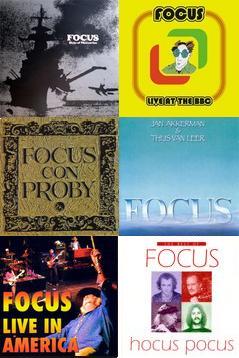
In an interview in Odessa, Ukraine, in 2005 Jan Akkerman said “I think I have Russian roots. My aunt told me that one of my great-grandmothers was from the Akkerman region (a nearby fortress does have the name Akkerman) where were then living the Dutch merchantmen who traded between South Russia and Holland. My last name seems to be very eloquent in this respect, though sometimes I think I can't be completely certain in that. All in all, I don't have a wish to delve into my genealogy, but I believe my ancestors were from here.” No doubt he was not wholly serious but if you listen to Akkerman's music you will see that there is something in what he says. Eastern music is notoriously difficult to define but something definitely happens to harmony and rhythm east of a point somewhere in line with Vienna that is quite distinct. This eastern element can be found in several places throughout Akkerman's work. In recent years Akkerman and his band have played live in Mumbai, in Japan, in the middle east and other places east of Vienna and he has sometimes deliberately brought out this eastern element in these places. The current very eastern version of House of the King (Palace of the King) typifies it. If truth be told, however, House of the King always did have something eastern about it, something first declared unequivocally in the electric sitar version found on the solo album Tabernakel. Like many others in the UK my first introduction to Akkerman's music was the album Moving Waves with Focus. One feature of that album was its unique sound. It was quite different to much of the rock music around at the time. Its European sound was often referred to. However, not only did it sound pretty European but in certain places there was an undoubtedly eastern feel to it. Think of a track like Janis for example, with its distinctly eastern flutes or certain parts of the long track Eruption, especially Dayglow. Hocus Pocus and the title track also share this eastern feel. (Vanessa Mae's version of Hocus Pocus brings out the eastern element very well). This was the early seventies, of course. The Beatles and others had already blazed a trail to India and back so this element was a very contemporary one. Jan appears on the original cover, if you remember, wearing a state of the art khaftan. A similar phenomenon is faintly recognisable on the first and third Focus albums (although to be fair, both albums contain tracks firmly in the Caribbean tradition and so no corner of the globe is entirely neglected). Check out Black Beauty or Love Remembered for example. Harem Scarem and parts of Hamburger Concerto (especially Medium 1) also contain quite eastern elements. Akkerman's eastern credentials go back a long way. His art was cradled in the very beginnings of Dutch rock in the fifties, when the Tielman brothers from Indonesia and their Indo-rock style dominated the Dutch scene. In a recent interview Akkerman has said that there were “a lot of Indonesian kids in the area where I grew up, and we played blues and rock & roll”. That surf rock sound always did have an eastern leaning and the influence can be detected in the early music of Akkerman and others. (The eastern influence on Dick Dale for example is widely acknowledged). Akkerman also admits freely to other early eastern influences from gypsies and from Balkan music. Before his Focus days the eastern element can also be detected in the Jewish traditional, Hineimatov, on the first solo album, on the Russian styled hits with The Hunters The Russian spy and I and Janosh (revisited on Russian Roulette with Van Leer in 1985) and quite obviously on the Brainbox track Dark Rose. By the time we come to the solo album Tabernakel Akkerman is featuring, at certain points, both the electric and the acoustic sitar. For some reason the sitars are not credited on the original album but it is an open secret that in the seventies and eighties Jan often used a Coral electronic sitar. This sitar also apparently features on the later Focus track Glider (on Ship of Memories). Jan also played it in public at the end of 1974 at a Brainbox reunion concert, later shown on Dutch television. With regard to the early solo albums Profile and Tabernakel, it is interesting that Akkerman plays the oudh-like lute rather than, say, a banjo! In the seventies Akkerman played and recorded a lot with Neppie Noya the Indonesian born percussionist and son of Japanese Taiko drummer Fusao Nakato San. Later on, the legendary 1981 album Oil in the family features a very eastern style cover, reflecting the strong presence of eastern style melodies on most tracks. Jan actually credits A. Rab (!) as composer on certain tracks in an effort to acknowledge his borrowings from unknown middle-eastern musicians. Some live performances of this material actually featured the use of a belly dancer. The album apparently went down very well in Turkey. With subsequent albums the eastern element is perhaps excluded, though in 1985 on the track Indian Summer with Thijs Van Leer an Indian tabla player based in Holland (Ustad Zamir Ahmad Khan) is brought in and some have detected it, for example, on some of the percussion for The noise of art (1990), the track Saudade on Focus in time (1996) and the opening track See you! on CU (2003). How much direct Akkerman influence there may be in the Forcefield tracks Year of the Dragon and Tokyo (on their second and third albums of 1988 and 1989) we do not know. The more one is aware of this eastern element, however, the more one can hear it perhaps.
20071121
Track by track 2 Black Beauty
Archive number: 2
Title: Black Beauty
Main Album: In and Out of Focus (was Focus Plays Focus) Also a single in 1970 and 1971
Track number: 2 (fifth on Sire release)
Genre: Jazz Pop Vocal
Studio: Sound Techniques Studio, 46a Old Church Street, Chelsea, London SW3
Length: 3' 08"
Composer(s): Thijs van Leer (music) Erik Cleuver (words)
Musicians: Jan Akkerman - Electric guitar (Fender telecaster), acoustic guitars; Thijs van Leer - Vocals, Piano; Martijn Dresden – Bass, Trumpet; Hans Cleuver – Drums
Producer: Hubert Terheggen (RTM)
Engineer: Jerry Boys
Label: LP - Imperial, Sire, Polydor; CD - EMI Bovema, IRS, Red Bullet
Date of recording/release: Late January 1970/Autumn 1970 (1973 in the US. In 1974 the album appeared in Brazil as Pop Giants). CD – 1988, 1993, 2001.
Title: Black Beauty
Main Album: In and Out of Focus (was Focus Plays Focus) Also a single in 1970 and 1971
Track number: 2 (fifth on Sire release)
Genre: Jazz Pop Vocal
Studio: Sound Techniques Studio, 46a Old Church Street, Chelsea, London SW3
Length: 3' 08"
Composer(s): Thijs van Leer (music) Erik Cleuver (words)
Musicians: Jan Akkerman - Electric guitar (Fender telecaster), acoustic guitars; Thijs van Leer - Vocals, Piano; Martijn Dresden – Bass, Trumpet; Hans Cleuver – Drums
Producer: Hubert Terheggen (RTM)
Engineer: Jerry Boys
Label: LP - Imperial, Sire, Polydor; CD - EMI Bovema, IRS, Red Bullet
Date of recording/release: Late January 1970/Autumn 1970 (1973 in the US. In 1974 the album appeared in Brazil as Pop Giants). CD – 1988, 1993, 2001.
Alternative version: An instrumental version was recorded much later and is on Focus 9.
Notes: The track begins with five successive screaming notes from the electric guitar spaced out over the opening 20 seconds with heavy drums, heavy but rhythmic bass then heavy drums again. The rhythm section are joined by an acoustic guitar and the vocal comes in at 00:21. Accompanied by guitars and piano, it goes on to 01:58 when there is an instrumental break featuring the electric guitar screams again and a partly muted trumpet (1:59-02:20). The band backed vocal then proceeds to the end via a key change (02:21-03:08). The number is again basically recorded live with perhaps some of the piano (used with the lyrics marked below in italics) and the electric guitar that appears at various points overdubbed as well as reverbed vocals and the trumpet. The lyrics have a rather eastern feel, which is reflected a little in the music. They contain a reference to the legend of King Solomon's affair with the Queen of Sheba. (Their meeting is recorded in Scripture but the love affair is pure legend). It has been suggested that the topic is an inter-racial liaison, a controversial matter in many places at that time. The lyrics are
Notes: The track begins with five successive screaming notes from the electric guitar spaced out over the opening 20 seconds with heavy drums, heavy but rhythmic bass then heavy drums again. The rhythm section are joined by an acoustic guitar and the vocal comes in at 00:21. Accompanied by guitars and piano, it goes on to 01:58 when there is an instrumental break featuring the electric guitar screams again and a partly muted trumpet (1:59-02:20). The band backed vocal then proceeds to the end via a key change (02:21-03:08). The number is again basically recorded live with perhaps some of the piano (used with the lyrics marked below in italics) and the electric guitar that appears at various points overdubbed as well as reverbed vocals and the trumpet. The lyrics have a rather eastern feel, which is reflected a little in the music. They contain a reference to the legend of King Solomon's affair with the Queen of Sheba. (Their meeting is recorded in Scripture but the love affair is pure legend). It has been suggested that the topic is an inter-racial liaison, a controversial matter in many places at that time. The lyrics are
“Night was stark, your skin was dark,
Your eyes were shining bright,
Oh black beauty, close in my heart.
I was King Solomon who held his Queen of Sheba tight,
Oh black beauty, held in my arms.
Your eyes were shining bright,
Oh black beauty, close in my heart.
I was King Solomon who held his Queen of Sheba tight,
Oh black beauty, held in my arms.
How we were told
Love was not meant for us,
Two diff'rent worlds kept apart,
Heart against heart.
Love was not meant for us,
Two diff'rent worlds kept apart,
Heart against heart.
But we knew where to find an opportunity,
Far away where no one was near.
We could meet there at night and with impunity,
Oh black beauty, love without fear.
Far away where no one was near.
We could meet there at night and with impunity,
Oh black beauty, love without fear.
Our love was wonderment,
So young and so pure.
I held your trembling hands,
I was so sure.
Then when our lips met
There was no returning,So young and so pure.
I held your trembling hands,
I was so sure.
Then when our lips met
The fire was burning
In our hearts.
(Break)
So we were told
Love was not meant for us,
Two different worlds kept apart,
Heart against heart.
But we knew where to find an opportunity,
Far away where no one was near.
I was King Solomon who held his Queen of Sheba tight,
Oh black beauty, love without fear.”
Peet Johnson tells us that an alternative set of lyrics called Questions was prepared by Mike Hayes but not used. They are re-produced in his book.
A note on the Queen of Sheba (from Wikipedia)
A note on the Queen of Sheba (from Wikipedia)
The Queen of Sheba (Malkat Shva) refers in Ethiopian history, the Old and New Testaments and the Qur'an to the woman who was ruler of the ancient kingdom of Sheba. The location of the historical kingdom may have included both Ethiopia and Yemen. Known to the Ethiopians as Makeda this queen has been called a variety of names by different peoples in different times. To King Solomon of Israel she was the Queen of Sheba. In Islamic tradition she was Bilqis. Roman historian Josephus calls her, Nicaula. She is thought to have lived in the 10th Century BC. Taking into account Genesis 10 many scholars see the Queen of Sheba as a descendant of the Semitic Sheba people located in southern Arabia but with origins in Ethiopia.
According to the Hebrew Bible, the unnamed queen of the land of Sheba heard of the great wisdom of Solomon and journeyed there with gifts of spices, gold, precious stones and beautiful wood and to test him with questions (1 Kings 10:1-13, 2 Chronicles 9:1-12). It is related further that the queen was awed by Solomon's great wisdom and wealth and pronounced a blessing on his deity the LORD. Solomon reciprocated with gifts and "everything she desired," whereupon the queen returned to her country. The queen was apparently quite rich, however, as she brought 4.5 tons of gold with her to give to Solomon (1 Kings 10:10). In the biblical passages which refer explicitly to the Queen of Sheba there is no hint of love or sexual attraction between Solomon and the Queen of Sheba. The two are depicted merely as fellow monarchs engaged in the affairs of state. The biblical text Song of Songs contains references, which at various times have been interpreted as referring to love between Solomon and the Queen of Sheba (but with no real warrant - there is little to identify the speaker in the text with the rich and powerful foreign queen depicted in Kings). It is the later Ethiopian tradition that Cleuver's lyrics reflect. This firmly asserts that Solomon seduced and impregnated his guest and provides a detailed story of how he went about it. The matter is of considerable importance to Ethiopians - as their emperors traced their lineage to that union.
Subscribe to:
Posts (Atom)