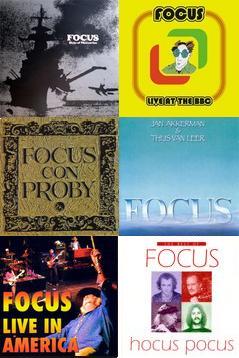
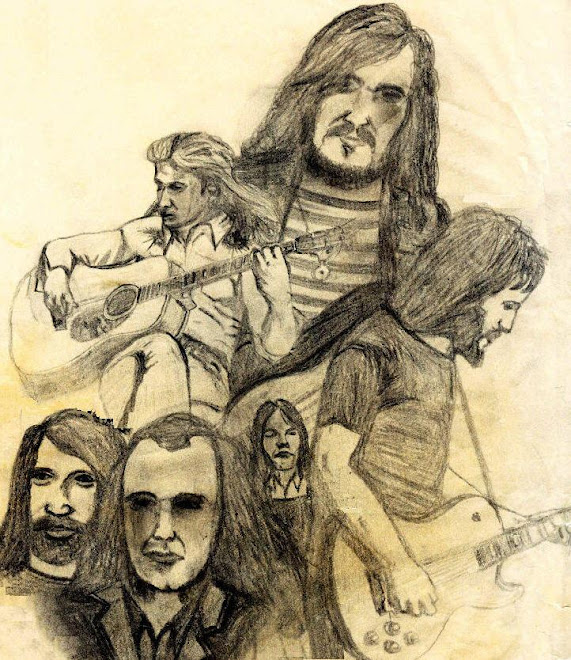
Looking at the music of Dutch rock band Focus, started in the late sixties by Thijs van Leer (b /31/03/48) with Jan Akkerman (b 24/12/46). Van Leer still performs and records under the name today (official site here). Akkerman's site here.

.

.

20240712

Track by track 206 Born To Be You

Main Album: Focus 12
Title: Born To Be You
Track number: 6
Genre: Progressive Rock Instrumental
Studio: Wisseloord Studios, Hilversum, Netherlands
Length: 1:48
Composer: Menno Gootjes
Musicians: Menno Gootjes – Piano
Producer: Udo Pannekeet and Menno Gootjes
Label: Spirit of the Unicorn
Date of recording/release: July 2024
Alternative recording: None
Notes: We begin with solo piano (probably a Motif 8). There are some synthesised sounds in the background of this slow, rambling piece.

20240711

Track by track 205 All Aboard

Main Album: Focus 12
Title: All Aboard 
Track number: 5
Genre: Progressive Rock Instrumental
Studio: Wisseloord Studios, Hilversum, Netherlands
Length: 4:31
Composer: Udo Pannekeet
Musicians: Thijs van Leer – Hammond organ, flute; Menno Gootjes – Guitars; Udo Panekeet – Bass; Pierre van der Linden – Drums
Producer: Udo Pannekeet and Menno Gootjes
Label: Spirit of the Unicorn
Date of recording/release: July 2024
Alternative recording: None
Notes: We begin with a groove from the rhythm section with plenty of cow bell. The flute comes in around 00:15 and then the guitar too from around 00:33. This all rises to a guitar chord that sounds at around 01:05. The band then carries on exploring the theme until a brief slow down around 01:40. It then carries on until another break down at 02:17 before heading onwards. At 03:05 a fresh choppy break is added. This dominates until the fade.

Track by track 204 Meta Indefinita

Main Album: Focus 12
Title: Meta Indefinita
Track number: 4
Genre: Progressive Rock Instrumental
Studio: Wisseloord Studios, Hilversum, Netherlands
Length: 4:36
Composer: Pierre van der Linden
Musicians: Thijs van Leer – Hammond organ, flute; Menno Gootjes – Guitars; Udo Panekeet – Bass; Pierre van der Linden – Drums
Producer: Udo Pannekeet and Menno Gootjes
Label: Spirit of the Unicorn
Date of recording/release: July 2024
Alternative recording: None
Notes: The atmospheric track, said to be improvised, begins with a solo reverberating guitar. At around 00:20 a flute joins in and a bass guitar, mostly harmonics. The cymbals and drums are also heard from around 01:10 and begin to dominate but with guitar chords too and then flute and bass. From 03:31 the guitar is briefly 'violined'. Everything slows down after that and the piece drifts out much the way it drifted in. The title is the equivalent to something like no limits.

20240709

Track by track 203 Béla

Main Album: Focus 12
Title: Béla
Track number: 3
Genre: Progressive Rock Instrumental
Studio: Wisseloord Studios, Hilversum, Netherlands
Length: 4:08
Composer: Thijs van Leer
Musicians: Thijs van Leer – Piano, Hammond organ, flute; Menno Gootjes – Guitars; Udo Panekeet – Bass; Pierre van der Linden – Drums
Producer: Udo Pannekeet and Menno Gootjes
Label: Spirit of the Unicorn
Date of recording/release: July 2024
Alternative recording: None
Notes: The first minute and a half or so of this track is just piano. Then the reververating guitar-led band comes in more stridently, taking up the theme and playing it through two or three times. Is the title a reference to Bela Bartok? Actually a grand child!

Track by Track 202 Focus 13

Main Album: Focus 12
Title: Focus 13
Track number: 2
Genre: Progressive Rock Instrumental
Studio: Wisseloord Studios, Hilversum, Netherlands
Length: 5:09
Composer: Thijs van Leer
Musicians: Thijs van Leer – Hammond organ; Menno Gootjes – Guitars; Udo Panekeet – Bass; Pierre van der Linden – Drums
Producer: Udo Pannekeet and Menno Gootjes
Label: Spirit of the Unicorn
Date of recording/release: July 2024
Alternative recording: None
Notes: A few seconds of drums introduce the whole guitar-led band playing the main slow theme. Around 02:30 there is a ritardando and at 03:37 the briefest of caesurae, then a brisk new theme comes in until 03:21 when a further development breaks in as guitar and hammond organ swap the lead. At 04:04 a frenetic guitar riff lead comes in and takes things on to the end with several reverbed siren-like elements.

20240708

Track by Track 201 Fjord Focus

Archive number: 201
Title: Fjord Focus
Main Album: Focus 12
Track number: 1
Genre: Progressive Jazz Instrumental
Studio: Wisseloord Studios, Hilversum, Netherlands
Length: 4:24
Composer: Thijs van Leer
Musicians: Thijs van Leer – Hammond organ, piano, flute; Menno Gootjes – Guitars; Udo Panekeet – Bass; Pierre van der Linden – Drums
Producer: Udo Pannekeet and Menno Gootjes
Label: Spirit of the Unicorn
Date of recording/release: July 2024
Alternative recording: None
Notes: Focus keep up the humour with a tongue in cheek reference to the Ford Focus motor car. We begin with the whole band pumping out a majestic and orchestral theme that breaks down at the 30 second mark with a jazzy guitar-lead and more mellow section, a flute section coming in 00:52-01:16 and a series of descending scales to 01:40 when the original theme breaks back in again. At 02:07 Menno takes up the lead jazz rock electric guitar (all in one take apparently). At 03:39 the flute drifts back into the mix with piano too as things once again settle down to the close. 

20240705

Focus 12


A new Focus album is officially released today. Like other recent albums, its cover is graced with a pleasing piece of Roger Dean artwork. The opening two tracks - the tongue in cheek titled Fjord Focus and Focus 13 (yes 13, not 12) have been out for a while. These are the first two of a total of ten tracks, all written by our lead man Thijs van Leer, except for tracks 4-6 by the other members of the band. In reverse order - Born to be you is by Menno Gootjes, All Aboard is by Udo Pannekeet and Meta Indefinata is credited to drummer Pierre van der Linden, though it is not a drum track. As with any Focus album, it takes a while to get into what is going on but initial impressions are positive. All the tracks, as one might expect, are instrumental, although to have no vocals or voices at all is unusual if not unique. Acoustic guitar and flute are heard and plenty of piano and even may be some synthesisers appear. Uniquely, Bowie is a solo piano piece from van Leer. Born to be you is piano heavy too with no drums or bass as is the opening of Bela. One of the tracks was apparently completely improvised in the studio (Meta Indefinata).

20240330

Duets


There are at least four tracks where only two men play
1. Le Clochard where Akkerman plays acoustic guitar and van Leer is on Mellotron.
2. Delitae Musicae where Akkerman is on lute and van Leer on recorder.
3. Holy Graal where only van Leer and Dumee are involved.
4. Focus 9. Just van Leer and Gootjes on the Completely Focussed version.

Some of the tracks on Focus 1985 come into this category. Also, Born to be You on Focus 12 appears to be just van Leer and Gootjes, the composer.

Solo Tracks


Of the 200 tracks listed on this website so far, some 14 or so are solo efforts.
1. Moving Waves. Thijs van Leer sings and plays piano.
2. Britannia Live. On this unreleased track Jan Akkerman plays the lute.
3. Sonata for Flute (Live). Thijs van Leer. This is the first solo flute release.
4. Nature is our friend. Thijs van Leer. This is the second solo flute release.
5. Let us wander. Thijs van Leer. This is the third solo flute release.
6. Drum solo. Pierre van der Linden. This unreleased track can be found on Old Skin.
7. River Dance. Pierre van der Linden. This track from a solo album is on The Focus Family Album.
8. Spiritual Swung. Pierre van der Linden.  This track from the same solo album is also on The Focus Family Album.
9. Two part interventon. Menno Gootjes. Acoustic guitar solo.
10. Hazel. Menno Gootjes. Acoustic guitar solo.
11. Song for Yaminah. Udo Pannekeet. Bass solo.
12. Anaya. Ydo Pannekeet. Bass solo with drum machine.
Bowie and Born to be You from Focus 12, piano solos by Thijs van Leer and Menno Gootjes repectively, need to be added to this list.

Sound effects


A sound effect (or audio effect) is an artificially created or enhanced sound, or sound process used to emphasise artistic or other content of films and music or other media. Here we are thinking mainly of a sound recorded and presented to make a specific storytelling or creative point. Such effects are found on some few Focus tracks.
1. Elspeth of Nottingham. The sounds of birds and cows can be heard towards the end of the track and this is the first example of such a thing on a Focus recording.
2. Ship of memories. This track closes with wind and seagull sounds.
3. Red sky at night. This track begins and ends with the sound of a wind machine that appears to go on throughout the track.
4. Blizu Tébe. Seagulls are again heard both at the beginning and the end.
5. Flower shower. This strange track includes the sound of a bathroom shower.
6. Aya-yuppie-hippie-hee. At the beginning of this track van Leer blows a clay bird whistle.
7. Nature is our friend. The sound of ducks in the water and then various birds in a wood are heard throughout this track.
8. Let us wander. This track has a similar but different set of nature sounds near water and in woods.

20240314

200 Tracks and rising

According to our records, Focus have by now released 200 official recordings. That number is slightly misleading in that three tracks have been released twice - Clair-Obscur, Winnie and Victoria (shorter and longer versions).
So the exact number is 197.
There are
44 live tracks
We include four live albums (Rainbow, BBC, America and Rio) leaving 153 distinct studio tracks.
So 153 studio tracks.
20 or so re-recorded tracks
Sometimes tracks have been re-recorded, the obvious examples being the 9 tracks on Golden Oldies and 11 of the 12 tracks on Completely Focussed but also Birds come fly over and Eddy with different vocalists and two versions of Who's calling, leaving 130.
So about 130 fairly unique studio tracks.
First period - 49
There are 49 tracks from the first period, the Akkerman period - In and out (7) House of the King (1) Moving Waves (5) Focus 3 (9) Hamburger Concerto (6) and Mother Focus (12) plus the "Left overs album" Ship of Memories which featured 9 tracks.
That leaves 81.
Second period - 16
There are 16 tracks in what we might call the middle period, namely the albums Focus con Proby (9) and the album that Akkerman and van Leer did together in 1985 Focus.
That leaves 65.
Third period - 65
Those 65 are from the most recent period and include 10 on Focus 8, 5 on an obscure album dubbed 8.5/Old skin, 12 on Focus 9, 10 on Focus X, 11 on Focus 11, the track Focus 12 and 16 tracks unique to the album Focus Family album.
This third period number now rises to 75 with the release of the ten tracks on Focus 12 in 2024.

20240229

Track by track 200 Focus 12 (Introspective Duet Between Menno & Me - A Well-Deserved Pause For Pierre & Udo!)

Archive number: 200
Title: Focus 12
Main Album: Focus 50 Completely Focussed Disc
Track number: 12
Genre: Progressive Rock Instrumental
Studio: WedgeView Studios, Netherlands
Length: 4:13
Composer: Thijs van Leer
Musicians: Thijs van Leer – Piano; Menno Gootjes – Guitars
Producer: Geert Scheigrond
Engineer: Geert Scheigrond
Label: In and Out of Focus Recordings
Date of recording/release: June 2021
Alternative recording: None
Notes: This new track is again performed in a minimalist style with only two instrumentalists

Track by track 199 Focus 11 (Another wordless song)

Archive number: 186
Title: Focus 11 (Another wordless song)
Main Album: Focus 50 Completely Focussed Disc
Track number: 11
Genre: Progressive Rock Instrumental
Studio: WedgeView Studios, Netherlands
Length: 3:34
Composer: Thijs van Leer
Musicians: Thijs van Leer – Hammond organ, piano, flute; Menno Gootjes – Guitars; Udo Panekeet – Bass; Pierre van der Linden – Drums
Producer: Geert Scheigrond
Engineer: Geert Scheigrond
Label: In and Out of Focus Recordings
Date of recording/release: June 2021
Alternative recording: Focus 11
Notes: This is a pretty much live re-recording of the original Focus number with full band but with some changes of instrumentation.

Track by track 198 Focus 10 (Sophisticated)

Archive number: 185
Title: Focus 10 (Sophisticated)
Main Album: Focus 50 Completely Focussed Disc
Track number: 10
Genre: Progressive Rock Instrumental
Studio: WedgeView Studios, Netherlands
Length: 3:15
Composer: Thijs van Leer
Musicians: Thijs van Leer – Hammond organ, piano, flute; Menno Gootjes – Guitars; Udo Panekeet – Bass; Pierre van der Linden – Drums
Producer: Geert Scheigrond
Engineer: Geert Scheigrond
Label: In and Out of Focus Recordings
Date of recording/release: June 2021
Alternative recording: Focus X
Notes: This swinging jazz number is shorter than the original but similar otherwise.

Track by track 197 Focus 9 (Classic Dream)

Archive number: 184
Title: Focus 9 (Classic Dream)
Main Album: Focus 50 Completely Focussed Disc
Track number: 9
Genre: Progressive Rock Instrumental
Studio: WedgeView Studios, Netherlands
Length: 4:25
Composer: Thijs van Leer
Musicians: Thijs van Leer – Piano; Menno Gootjes – Guitars
Producer: Geert Scheigrond
Engineer: Geert Scheigrond
Label: In and Out of Focus Recordings
Date of recording/release: June 2021
Alternative recording: Focus 9/New Skin
Notes: This minimalisitc version of the track drops the bass and drums and the flute.

Track by track 196 Focus 8 (Rondo)

Archive number: 183
Title: Focus 8 (Rondo)
Main Album: Focus 50 Completely Focussed Disc
Track number: 8
Genre: Progressive Rock Instrumental
Studio: WedgeView Studios, Netherlands
Length: 5:50
Composer: Thijs van Leer
Musicians: Thijs van Leer – Hammond organ, piano; Menno Gootjes – Guitars; Udo Panekeet – Bass; Pierre van der Linden – Drums
Producer: Geert Scheigrond
Engineer: Geert Scheigrond
Label: In and Out of Focus Recordings
Date of recording/release: June 2021
Alternative recording: Focus 8
Notes: A much improved version of the track, chiefly due to the drums of Pierre van der Linden, which start the track off and close it.
Rondo The rondo is a musical form that contains a principal theme (sometimes called the "refrain") which alternates with one or more contrasting themes, generally called "episodes", but also occasionally referred to as "digressions" or "couplets". Some possible patterns include: ABACA, ABACAB, ABACBA, or ABACABA.
The rondo form emerged in the Baroque period and became increasingly popular during the Classical period. The earliest examples of compositions employing rondo form are found within Italian opera arias and choruses of the first years of the 17th century. These examples use a multi-couplet rondo or chain rondo (ABACAD) known as the Italian rondo.

Track by track 195 Focus 7 (Inner Joy)

Archive number: 182
Title: Focus 7 (Inner Joy)
Main Album: Focus 50 Completely Focussed Disc
Track number: 7
Genre: Progressive Rock Instrumental
Studio: WedgeView Studios, Netherlands
Length: 5:18
Composer: Thijs van Leer
Musicians: Thijs van Leer – Hammond organ, flute; Menno Gootjes – Guitars; Udo Panekeet – Bass; Pierre van der Linden – Drums
Producer: Geert Scheigrond
Engineer: Geert Scheigrond
Label: In and Out of Focus Recordings
Date of recording/release:  June 2021
Alternative recording: Focus 9 and the live albums Focus Live in America and Live at Trading Boundaries (van Leer solo)
Notes: This is a pretty much live re-recording of the original Focus number with full band. Some nice violined guitar at the close.

Track by track 194 Focus 6 (Thinking and Drinking)

Archive number: 194
Title: Focus 6 (Thinking and Drinking)
Main Album: Focus 50 Completely Focussed Disc
Track number: 6
Genre: Progressive Rock Instrumental
Studio: WedgeView Studios, Netherlands
Length: 3:40
Composer: Thijs van Leer
Musicians: Thijs van Leer – Hammond organ, flute; Menno Gootjes – Guitars; Udo Panekeet – Bass; Pierre van der Linden – Drums
Producer: Geert Scheigrond
Engineer: Geert Scheigrond
Label: In and Out of Focus Recordings
Date of recording/release:  June 2021
Alternative recording: None
Notes: This rare track often threatens tot turn into one of the other tracks in the series but is ts own beast.

Track by track 193 Focus 5 (Impressionistic ...)

Archive number: 180
Title: Focus 5 (Impressionistic ...)
Main Album: Focus 50 Completely Focussed Disc
Track number: 5
Genre: Progressive Rock Instrumental
Studio: WedgeView Studios, Netherlands
Length: 3:54
Composer: Thijs van Leer
Musicians: Thijs van Leer – Hammond organ; Menno Gootjes – Guitars; Udo Panekeet – Bass; Pierre van der Linden – Drums
Producer: Geert Scheigrond
Engineer: Geert Scheigrond
Label: In and Out of Focus Recordings
Date of recording/release: June 2021
Alternative recording: Ship of Memories
Notes: This is a pretty much live re-recording of the original Focus number with full band. No flute this time.

Track by track 192 Focus 4 (Rock Ballad)

Archive number: 179
Title: Focus 4 (Rock Ballad)
Main Album: Focus 50 Completely Focussed Disc
Track number: 4
Genre: Progressive Rock Instrumental
Studio: WedgeView Studios, Netherlands
Length: 4:30
Composer: Thijs van Leer
Musicians: Thijs van Leer – Piano, flute; Menno Gootjes – Guitars; Udo Panekeet – Bass; Pierre van der Linden – Drums
Producer: Geert Scheigrond
Engineer: Geert Scheigrond
Label: In and Out of Focus Recordings
Date of recording/release: June 2021
Alternative recording: Mother Focus
Notes: This is a pretty much live re-recording of the original Focus number with full band but no Hammond organ or synthesiser.

20240227

Track by track 191 Focus 3 (Song without words)

Archive number: 178
Title: Focus 3 (Song without words)
Main Album: Focus 50 Completely Focussed Disc
Track number: 3
Genre: Progressive Rock Instrumental
Studio: WedgeView Studios, Netherlands
Length: 3:42
Composer: Thijs van Leer
Musicians: Thijs van Leer – Hammond organ, flute; Menno Gootjes – Guitars; Udo Panekeet – Bass; Pierre van der Linden – Drums
Producer: Geert Scheigrond
Engineer: Geert Scheigrond
Label: In and Out of Focus Recordings
Date of recording/release: June 2021
Alternative recording: It was first on the third album. Van Leer and Akkerman have nice versions on solo albums.
Notes: This is a pretty much live re-recording of the original with full band.

Track by track 190 Focus 2 (Mini-opera)

Archive number: 177
Title: Focus 2 (Mini-opera)
Main Album: Focus 50 Completely Focussed Disc?
Track number: 2
Genre: Progressive Rock Instrumental
Studio: WedgeView Studios, Netherlands
Length: 4:39
Composer: Thijs van Leer
Musicians: Thijs van Leer – Hammond organ, flute; Menno Gootjes – Guitars; Udo Panekeet – Bass; Pierre van der Linden – Drums
Producer: Geert Scheigrond
Engineer: Geert Scheigrond
Label: In and Out of Focus Recordings
Date of recording/release: June 2021
Alternative recording: It was first on the second album. Van Leer and Akkerman have nice versions on solo albums.
Notes: This is a pretty much live re-recording of the original with full band. Some nice double tracked flute early on.

Track by track 189 Focus 1 (Statement)

Archive number: 176
Title: Focus 1 (Statement)
Main Album: Focus 50 Completely Focussed Disc
Track number: 1
Genre: Progressive Rock Instrumental
Studio: WedgeView Studios, Netherlands
Length: 3:34
Composer: Thijs van Leer
Musicians: Thijs van Leer – Hammond organ; Menno Gootjes – Guitars; Udo Panekeet – Bass; Pierre van der Linden – Drums
Producer: Geert Scheigrond
Engineer: Geert Scheigrond
Label: In and Out of Focus Recordings
Date of recording/release: June 2021
Alternative recording: In and Out of Focus, Golden Oldies, etc
Notes: This is a pretty much live re-recording of the original Focus number with full band. There is no vocal.

20240226

Track by Track 176--188 Focus Live in Rio

Archive number: 176-188
Titles disc 1: Focus 1, House of the King, Eruption, Sylvia, Song for Eva, All hens on deck,
Titles disc 2: Le Tango, P's March, Focus 5, Harem Scarem, Hocus Pocus, Focus 3, Answers? Questions! Questions? Answers!
Main Album: Focus 50 Live Rio (Two disc audio and single disc Blu Ray)
Track numbers: 1-12
Genre: Live Progressive Rock Instrumentals
Venue: Teatro Municipal João Caetano, Niteroi, Rio de Janeiro Brazil
Length: c 01.59.27
Composers: Thijs van Leer, Jan Akkerman, 
Musicians: Thijs van Leer – Hammond organ, melodica, flute, vocals, whistling; Menno Gootjes– Guitars; Udo Pannekeet - Bass; Pierre van der Linden - Drums
Producer: Geert Scheijgrond
Engineer: Geert Scheijgrond
Label: In and Out of Focus Records
Date of recording/release: September 14 2017.June 2021
Alternative version: These tracks are found on various Focus albums
Notes: This is a fairly complete recording with at least some of the verbal introduction to songs included

20240224

Track by track 175 Focus 11

Archive number: 175
Title: Focus 11
Main Album: Focus 11
Track number: 11
Genre: Progressive Rock Instrumental
Studio: WedgeView Studios, Netherlands
Length: 6:11
Composer: Thijs van Leer
Key: C#
Musicians: Thijs van Leer – Hammond organ, piano, flute; Menno Gootjes – Guitars; Udo Panekeet – Bass; Pierre van der Linden – Drums
Producer: Geert Scheigrond
Engineer: Geert Scheigrond
Label: In and Out of Focus Recordings
Date of recording/release: November 2018
Alternative recording: Focus 50 Album Complelely Focussed
Notes: This stand out track is in several parts. We begin with with a beautiful guitar led slow melody that takes us to 1:15. Something more brisk then breaks in, introdiced by the piano but led by the guitar, flute and piano. This goes on until 1:47, ending on a long drawn out note that is succeeded by a further part based around a very catchy 10 note tune on guitar. At 3:07 there is a flute led bridge as far as 3:31 when the catchy melody comes back in. This meanders on until 4:38. From there to 5:41 we have a guitar led tune, again very catchy and ending on a long drawn out note. The final section is a repeat of the second brisk element from before, again featuring piano and flute. The track ends with a flourish on solo flute.

Track by track 174 Final Analysis

Archive number: 174
Title: Final analysis
Main Album: Focus 11
Track number: 10
Genre: Progressive Rock Instrumental
Studio: WedgeView Studios, Netherlands
Length: 3:51
Composer: Thijs van Leer
Key: F#
Musicians: Thijs van Leer – Hammond organ, piano; Menno Gootjes – Guitars; Udo Panekeet – Bass; Pierre van der Linden – Drums
Producer: Geert Scheigrond
Engineer: Geert Scheigrond
Label: In and Out of Focus Recordings
Date of recording/release: November 2018
Alternative recording: None
Notes The track begins with 35 seconds of rhythmic drums and rhythm guitar work as it builds up an atmosphere (slightly reminiscent of the track Birth). A screaming guitar then comes in as the beat continues. At 54 seconds things slow slightly and the piano leads for a short while. A clear but slightly dissonant guitar leads briefly after that. The chugging beat continues then until at 1:31 the guitar leads again with a series of descending lines. The piano can still be heard behind it. At 3:13 the beat we began with resumes until 3:22 and again 3:32 when the piano motif is heard briefly twice more. The track then fades.

Track by track 173 Mare Nostrum

Archive number: 173
Title: Mare Nostrum
Main Album: Focus Family 11
Track number: 9
Genre: Progressive Rock Instrumental
Studio: WedgeView Studios, Netherlands
Length: 5:08
Composer: Udo Pannekeet
Key: C
Musicians: Thijs van Leer – Hammond organ; Menno Gootjes – Guitars; Udo Panekeet – Bass; Pierre van der Linden – Drums
Producer: Geert Scheigrond
Engineer: Geert Scheigrond
Label: In and Out of Focus Recordings
Date of recording/release: November 2018
Alternative recording: None
Notes: The whole band begin together with a laconic guitar-led melody slightly changing around the one minute mark. At about 1:53 the drums energetically lead into a jauntier section. The guitar work grows increasingly more energetic. At around 4:32 it slows before quickly closing with drums and the whole band.
Mare Nostrum is Latin for "Our Sea" and was a Roman name for the Mediterranean. In the decades following the 1861 unification of Italy, Italian nationalists and Italian fascists who saw Italy as the successor state to the Roman Empire attempted to revive the term.

20230729

Track by track 172 (154) Clair-Obscur

Archive number: 172
Title: Clair-Obscur
Main Album: Focus 11
Track number: 8
Genre: Progressive Rock Instrumental
Studio: Unknown
Length: 3:14
Composer: Thijs van Leer
Key: G#m
Musicians: Thijs van Leer – Hammond organ; Menno Gootjes – Guitars; Udo Panekeet – Bass; Pierre van der Linden – Drums
Producer: Geert Scheigrond
Engineer: Geert Scheigrond
Label: In and Out of Focus Recordings
Date of recording/release: November 2018
Alternative recording: Focus Family Album
Notes: This is the same recording as is found on The Focus Family Album

Track by track 171 Palindrome

Archive number: 171
Title: Palindrome
Main Album: Focus Family 11
Track number: 7
Genre: Progressive Rock Instrumental
Studio: WedgeView Studios, Netherlands
Length: 5:34
Composer: Thijs van Leer
Key: A
Musicians: Thijs van Leer – Hammond organ; Menno Gootjes – Guitars; Udo Panekeet – Bass; Pierre van der Linden – Drums
Producer: Geert Scheigrond
Engineer: Geert Scheigrond
Label: In and Out of Focus Recordings
Date of recording/release: November 2018
Alternative recording: None
Notes: The track begins with drums then a guitar riff plus a discordant organ sound that cuts through the melody. This pattern continues for the first 49 seconds when a lighter pattern comes in for 15 seconds before reverting to the previous pattern. At 1:26 we are back to the new lighter pattern for another 15 seconds before reversion to the first pattern. At 2:02 a new stately slow march comes in. This lasts down to 2:36 when the original pattern repeats, punctuated with a series of short drum breaks (at 2:58-3:05, 3:16-3:23, a longer one at 3:34-3:5, 3:56-4:03 and the longest at 4:14-4:45). The stately slow march comes in again at 4:46 to end the track.
A palindrome is a word, number, phrase or other sequence of symbols that reads the same backwards as forwards, eg madam or racecar, the date and time 12/21/33 12:21 and the sentence: "A man, a plan, a canal – Panama". The 19-letter Finnish word saippuakivikauppias (a soapstone vendor), is the longest single-word palindrome in everyday use, while the 12-letter term tattarrattat (James Joyce Ulysses) is the longest in English.
The word was introduced by English poet and writer Henry Peacham in 1638. It is derived from the Greek roots πάλιν 'again' and δρóμος 'way, direction'; a different word is used in Greek, καρκινικός 'carcinic' (lit. crab-like) to refer to letter-by-letter reversible writing. The concept of a palindrome can be dated to the 3rd-century BC, although no examples survive; the first physical examples can be dated to the 1st-century AD with the Latin acrostic word square, the Sator Square (contains both word and sentence palindromes) and the 4th-century Greek Byzantine sentence palindrome nipson anomemata me monan opsin.
Palindromes are also found in music and biological structures (most genomes include palindromic gene sequences). In music Haydn's Symphony No. 47 in G is nicknamed "the Palindrome". In the third movement, a minuet and trio, the second half of the minuet is the same as the first but backwards, the second half of the ensuing trio similarly reflects the first half, and then the minuet is repeated.
The interlude from Alban Berg's opera Lulu is a palindrome, as are sections and pieces, in arch form, by many other composers, including James Tenney, and most famously Béla Bartók. George Crumb also used musical palindrome to text paint the Federico García Lorca poem "¿Por qué nací?", the first movement of three in his fourth book of Madrigals. Stravinsky's final composition, The Owl and the Pussy Cat, is a palindrome.
The first movement from Constant Lambert's ballet Horoscope (1938) is entitled "Palindromic Prelude". Lambert claimed that the theme was dictated to him by the ghost of Bernard van Dieren, who had died in 1936. British composer Robert Simpson also composed music in the palindrome or based on palindromic themes; the slow movement of his Symphony No. 2 is a palindrome, as is the slow movement of his String Quartet No. 1. His hour-long String Quartet No. 9 consists of 32 variations and a fugue on a palindromic theme of Haydn (from the minuet of his Symphony No. 47). All of Simpson's 32 variations are themselves palindromic.
Hin und Zurück ("There and Back": 1927) is an operatic 'sketch' (Op. 45a) in one scene by Paul Hindemith, with a German libretto by Marcellus Schiffer. It is essentially a dramatic palindrome. Through the first half, a tragedy unfolds between two lovers, involving jealousy, murder and suicide. Then, in the reversing second half, this is replayed with the lines sung in reverse order to produce a happy ending.
The music of Anton Webern is often palindromic. Webern, who had studied the music of the Renaissance composer Heinrich Isaac, was extremely interested in symmetries in music, be they horizontal or vertical. 
Just as the letters of a verbal palindrome are not reversed, so are the elements of a musical palindrome usually presented in the same form in both halves. Although these elements are usually single notes, palindromes may be made using more complex elements. For example, Karlheinz Stockhausen's composition Mixtur, originally written in 1964, consists of 20 sections, called "moments", which may be permuted in several different ways, including retrograde presentation, and two versions may be made in a single program. When the composer revised the work in 2003, he prescribed such a palindromic performance, with the 20 moments first played in a "forwards" version, and then "backwards". Each moment, however, is a complex musical unit, and is played in the same direction in each half of the program. By contrast, Karel Goeyvaerts's 1953 electronic composition, Nummer 5 (met zuivere tonen) is an exact palindrome: not only does each event in the second half of the piece occur according to an axis of symmetry at the centre of the work, but each event itself is reversed, so that the note attacks in the first half become note decays in the second, and vice versa. It is a perfect example of Goeyvaerts's aesthetics, the perfect example of the imperfection of perfection.
In classical music, a crab canon is a canon in which one line of the melody is reversed in time and pitch from the other. A large-scale musical palindrome covering more than one movement is called "chiastic", referring to the cross-shaped Greek letter "χ" (pronounced /ˈkaɪ/.) This is usually a form of reference to the crucifixion; for example, the Crucifixus movement of Bach's Mass in B minor. The purpose of such palindromic balancing is to focus the listener on the central movement, much as one would focus on the centre of the cross in the crucifixion. Other examples are found in Bach's cantata BWV 4, Christ lag in Todes Banden, Handel's Messiah and Fauré's Requiem.
A table canon is a rectangular piece of sheet music intended to be played by two musicians facing each other across a table with the music between them, with one musician viewing the music upside down compared to the other. The result is somewhat like two speakers simultaneously reading the Sator Square from opposite sides, except that it is typically in two-part polyphony rather than in unison.
(See Wikipedia)