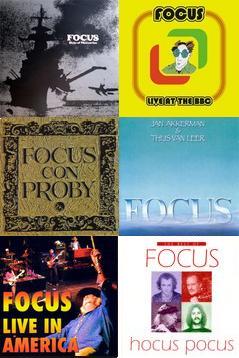
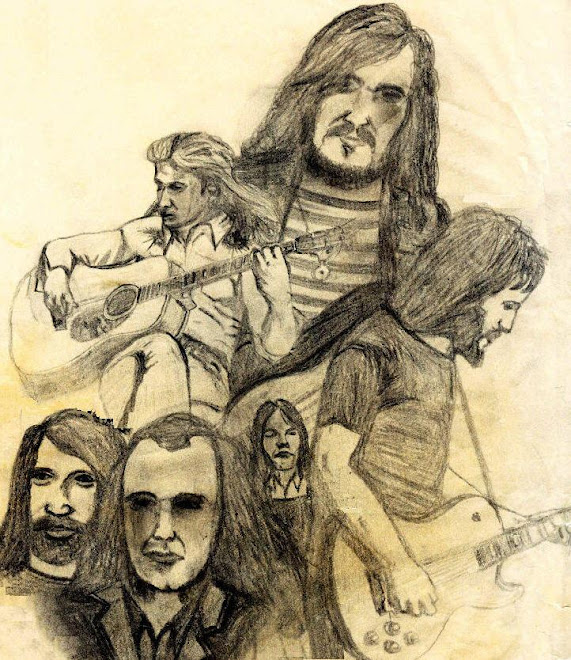
Looking at the music of Dutch rock band Focus, started in the late sixties by Thijs van Leer (b /31/03/48) with Jan Akkerman (b 24/12/46). Van Leer still performs and records under the name today (official site here). Akkerman's site here.

.

.
Showing posts with label 1976. Show all posts

20230201

Liner Notes 3 Ship of Memories


These appeared on the reverse of Ship of Memories when it came out in 1976

The key to success for any rock or music band lies not only in their individual skills but in their ability to mould those special talents into a formula of sound and substance which will be, by nature of those merits, sought out by the mass audience. Undeniably, the two founder members of FOCUS, Thijs van Leer and Jan Akkeman, along with the varying other members from Hans Cleuver and Martin Dresden through to Bert Ruiter and Colin Allen, have achieved just this goal - with flying colours. But it was the magical mixture of van Leer, Akkerman, Pierre van der Linden and Cyril Havermans (later replaced by the redoubtable Ruiter) which produced both on stage and on record the greatest moments of FOCUS' musical pageants. "SHIP OF MEMORIES" contains much of the magic from this prolific period as well as other items of equal importance from other stages in the carrer of this unique band.
My first encounter with the band, other than a quick glance at their first album "In And Out of Focus", was in Holland. At the suggestion of Seymour Stein I visited a small farming town in the north of Holland - the town had one of those unpronounceable names - during the last months of l97O. The original drummer and bassist - Hans Cleuver and Martin Dresden respectively - had just been replaced by Pierre van der Linden and Cyril Havermans. The performance that night was formidable - although I doubt the greater part of the crowd present were in much of a state to appreciate it. The beer flows heavy and fast in that part of the world ! A few months later all was ready to record. Sound Techniques and engineer Jerry Boys were booked and "Moving Waves" was set to Ampex 8 track. It was in this same studio and with the same engineer and equipment that "In And Out of Focus" had been made during the preceeding year. "SPOKE THE LORD CREATOR" comes from this period. Produced by Hubert Terheggen, the Sound Techniques legend states the recording date as 26th January 1970. The main melody part is stated by Thijs and Jan is left to solo - it serves well to show the direction in which the unit was heading even at this early stage, as did "House Of The King", still one of their best compositions.
The success of "Moving Waves" far surpassed all our wildest dreams. It also spawned a huge single hit in the shape of the bizarre "Hocus Pocus". Sadly, time - a little too much time - elapsed before we could get back into the studio again. It was not until mid-1972 that we embarked on "Focus 3" at Olympic Studios with engineer George Chkiantz. You know, this was only supposed to be a single album, but so much material was recorded in a three week period we decided to make it a double album project. Once again the album was successful and another single, "Sylvia" proved to be a chart entry. Incidentally, the recording of this material marked the arrival of Bert Ruiter and the departure of Cyril Havermans, who went his way to follow a solo career.
A further year was to pass until we were able to get back into the studios again - and as the saying goes, this is where the story really starts! The twelve month period between May'72 and May'73 had been filled to the brim with work for the band. Tours of Europe and the like left little ar no time to put together new material for another record project. An appearance at London's Rainbow Theatre on May 5th 1973 was recorded and subsequently released as the "Live At The Rainbow" set. It was only released as a stop-gag in view of the fact that there was disagreement with regard to the new material we had recorded in the last two weeks of that month of May. Those two weeks - almost immediately following on the tale end of a British tour - were booked at Chipping Norton in the heart of The Cotswold Hills. There had been not time for Preparation but it was essential to try and get something down on tape toward a new album. It was not a very fruitful period - at least that is how it appeared at the time, but on reflection ...
Musical ideas within the band were scarce and fatigue was fast setting in as too were certain discontents, of which I was to learn more as the two week period wore on. The first two days were spent working on the sounds of the various instruments until everyone was happy. Engineer Dave Grinsted had a very hard time with Pierre's drum sound - he had just purchased a Ludwig transparent framed kit and in terms of recorded sound it was disappointing - at least to Dave and I it was. Pierre was over the moon about it. And so the business of making music got under way. Of the items recorded about half are included here. "P'S March" is in true Focus style and was recorded as a single although it has not seen the light of day until now. This was about the only item completely finished to the satisfaction of Thijs and Jan - completed in fact, as I recall, during the very first few days of our sojourn in Chippy. Thijs is featured here on organ, Mellotron, clavinet, flute, alto flute and piccolo. The band took the tapes to New York some months later where they remixed it but I have remixed again for the reason of continuity. "Can't Believe My Eyes" was one of the first items we recorded and according to the tape box was called "Can't Believe My Ears" and subtitled "Dance Macabre". I have no idea how it got changed although I doubt it matters much.
As I recall, "Focus 5" was recorded without Jan being present in the Studio. Indeed, a certain amount of the material used here was initially committed to tape whilst Jan was in his bedroom resting. It was his apparent unwillingness to work on this project at this particular time that caused a great Ideal of soul searching in the hearts of the other members of the band. I suffered those "pin-jabs" too for it was my job, amongst others, to get an album out of these sessions. Proceedings were not going according to plan - it really looked as if we were about to lose everything. I talked to Jan but could get nothing out of him. Thijs talked to him with similar results. Bert just looked on - he was ready to work. Pierre wouldn't speak to anyone and grew the "long face" look which he wore for most of the two week period. Dave Grinsted, laconic as ever, just stood by - what could he do anyway ? It was in this kind of atmosphere that we recorded almost forty minutes worth of music - most of which we subsequently decided was not good enough to keep. Strange how one's outlook can change over the years. Anyway, back to "Focus 5". Jan's quitar part was added days after the track had been laid down - very late one night when all we really wanted to do was to rest.
Despite all these factors, the results are magical. There is a quality about the guitar lines - I find it hart to put it into words. Meanwhile ... Thijs had been working on a sequel to "Eruption", which had appeared on the "Moving Waves" album. He admitted freely to not having had enough time to work the piece through thoroughly but he would attempt to get something of it down on tape. "Vesuvius" was the piece and it sounded good - even in its very raw state. We recorded a fair amount of the work, but not having Jan present for the greater part of it, proved too much of a handicap and it was shelved. However, a section from the improvisation which did feature Jan is included here under the title "Out Of Vesuvius". What happened to "Vesuvius" you may ask. It was re-written and appears on record as "Hamburger Concerto". And so we come to "Ship Of Memories" which features Pierre van der Linden on drums and harmonium. Pierre's uneasiness during this time may have been related to his apparent insecurity within the band. Remember that he was subsequently replaced by ex-Stone the Crows drummer, Colin Allen. The inactivity during the fourteen days in Chipping Norton, gave Pierre the change to write this item, which in its full form is over five minutes long. In a sense it was his way of saying to the others in the band: "I too can offer something in the way of composition". Being in a free position to do this lifted the gloom from his face, at least. The day following the recording of this song the sessions came to an end. Our next sessions were some nine months later - at Olympic again.
The remaining titles which make up this set were made in different parts of the world with the band themselves handling the production. "Glider" for instance was made in Brussels at Morgan Studios with Pierre on drums. This is full of interest. Jan is featured on electric sitar as well as guitar-the only time I can remember him using one on record and there is the phantom "rhythm machine" to the forefront. I wonder how Pierre felt about this. In any event, the tune was shelved - later re-written and re-recorded in Los Angeles with Colin Allen and appears on the "Mother Focus" album under that title. "Red Sky At Night" is another odd item. Recorded again at Morgan in Brussels it features Thijs and Jan. Thijs makes use here of the Moog bass, thus substituting the bass guitar of Bert. David Kemper on drums. And finally, "Crackers", which would appear to have been made between the U.S., Belgium and Holland. Jan features acoustic guitars on this number, an instrument missing from much of the band's material since "House of The King".
Working with and alongside the members of Focus, their manager Yde de Jong, and Production manager Hubert Terheggen, has been a rewarding experience. We have had a great deal of fun and there have also been times not so fun-filled. It must be that way with any relationship. But no one can take away the beauty and power of the music. Nor can they take away the memories of how it all happened. I for my part, am grateful to have had the chance to be involved with such talent. "Ship of Memories" will become a prized possession.
Mike Vernon
October 1976

20090903

Focus Live 09

In February 1976 Jan Akkerman finally left the band. A 33 date tour of the UK and Ireland had already been agreed and could not be cancelled so Belgian jazz guitarist Philip Catherine was drafted in. The first date (February 20) was in the Cardiff University Student Union. I remember being present on that rather disappointing occasion. The band was forced to perform a relatively brief set of unfamiliar material that included Catherine's own Sneezing Bull. When pressed for an encore they could only repeat one of the previous numbers.
As the tour progressed it was possible to add Hocus Pocus and one or two other familiar things to the set list. The tour ended on March 29 and included near the end (recorded March 17, broadcast March 21 by the BBC) the concert at The New Victoria Theatre, London. This concert appeared on CD many years later. At this time they also did Maximum and Sneezing Bull on the The Old Grey Whistle Test. The concert in Southport is also around but is of poor quality.
Things then go very quiet as far as Focus is concerned for nearly a decade. In 1985 there were at least four reunion concerts in Holland, including one recorded in Utrecht on May 21 where, with Mario ArgandoƱa and Tato Gomez, Akkerman and Van Leer play the material found on the album of that year among other things. The set list reads - Who Is Who? (14:56) King Kong (4:02) a reggae-style House Of The King (8:51) Le Tango (6:20) Tommy (11:15) Russian Roulette (8:34) Sylvia (4:53) Streetwalker (14:05) Beethoven's Revenge (13:12) Indian Summer (8:44) Song For The Open Road (12:29) and Just Like A Star (5:31). Previous to this Akkerman had guested at a Pedal Point concert at De Brakke Grond in Amsterdam (April 4) where the Dona Nobis Pacum material was played along with a version of Akkerman's Central Station (Centralus Stationium!)
There is then another shorter gap until 1990 and the concert for Radio Veronica's Goud Van Oud in Apeldoorn, available in audio and video formats. On that occasion the classic line up of Akkerman, Van Leer, Van Der Linden and Ruiter tackled Focus 3, Focus 2, House of the King, Sylvia, Tommy and Hocus Pocus.
The very last time that Akkerman and Van Leer appeared together was in 1993 on July 10 when they shared the stage at The North Sea Jazz Festival. The set list at that time included Focus 3 (6:17) Pietons/Hocus Pocus (10:18) Puccini's Cafe (7:22) Streetwalker (8:56) My Pleasure (14:03) Fool For Your Stockings (10:55) Crackers (8:04) House of the King (2:23) Hocus Pocus (reprise) (0:55) Flute Solo (2:13) Focus 2 (4:09) Burger's Blues (4:24). Akkerman and Van Leer were joined by Ton Dijkman (Drums) Lesley Joseph (Bass) and Willem Swikker (Keyboards).

20080712

Track by track 68 Hocus Pocus (Live) BBC

Archive number: 68
Title: Hocus Pocus (Live)
ain Album: Live at the BBC
Track number: 9
Genre: Live Progressive Rock Instrumental
Venue: New Victoria Theatre, 17 Wilton Road, London SW1V 1LL (now Apollo Victoria)
Length: 5' 45”
Composer: Thijs van Leer/Jan Akkerman
Musicians: Philip Catherine - Electric guitars; Thijs van Leer – Electric piano, Mellotron, Vocal, Voice; Bert Ruiter – Bass; David Kemper – Drums
Producer: BBC
Engineer: BBC
Label: Hux Records
Date of recording/release: Recorded March 21 1976 but only released (on CD) June 1 2004
Alternative versions: There are many of these
Notes: This somewhat unusual rendition of Hocus Pocus is an encore. Philip Catherine had only been playing it around a month at the time so all the emphasis is on van Leer's antics. All the changes are rung, beginning, unusually, with a yodel and scream (00:00-00:16) then interleaving frenetic band work outs, followed by drum breaks, with a second yodel and scream (00:38-00:51), the strange voice and scream (01:14-01:26), a slightly extended yodel with a low then high voice (01:47-02:08), the flute (02:30-02:38), an extended yodel and scream (03:01-03:26), some whistling (03:47-04:08) and introductions (04:30-05:02) ending with “Thijs van Leeeeeeeer”. Then we have the final riff and close (05:03-05:34) with applause to close the album (05:35-05:45).

20080707

Track by track 67 Little Sister/What you see (Live)

Archive number: 67
Title: Little Sister/What you see (Live)
Main Album: Live at the BBC
Track number: 8
Genre: Live Cabaret Jazz Vocal/Live Jazz Funk Instrumental
Venue: New Victoria Theatre, 17 Wilton Road, London SW1V 1LL (now Apollo Victoria)
Length: 08' 18”
Composer: Thijs Van Leer/Roselie Peters
Musicians: Philip Catherine - Electric guitars; Thijs van Leer – Electric piano, Mellotron, Vocal, Voice; Bert Ruiter – Bass; David Kemper – Drums
Producer: BBC
Engineer: BBC
Label: Hux Records
Date of recording/release: Recorded March 21 1976 but only released (on CD) June 1 2004
Alternative versions: This track first appeared on van Leer's solo album O my love!
Notes: The quiet, wistful and undemanding vocal track is segued with the up tempo jazz funk instrumental. The vocal track is bounded by an introduction (00:00-01:04) and conclusion (03:11-03:36) the highly laid back vocal section taking up the rest of the time (1:05-03:10). The intro is very quiet, with keyboards and guitar only. After a brief silence (01:00-01:02) the high hat takes us into the slow and sparse band-backed vocal. The minimalist words are

I'll carry you, I'll carry you
Out into the land,
Go before dusk
My tears are made of diamond,
They are yours
Little sister, do you know?
I have seen into the sky,
Oh how, how I am moved!

We end (03:11-03:36) with an atmospheric signing off on keyboards and guitar before the rumbling thunder of the following track begins. The bass and drums lead the build up on this next track (03:37-04:28). After a few funky false starts. the guitar then takes up the lead as the band continue the funk backing (04:29-05:25). Next van Leer, almost comically, uses his uncanny voice to take things on (05:27-05:53) breaking down briefly to give space to the piano (05:54-06:01) but taking things up again briefly (06:02-00:20). Finally Catherine's guitar comes in again to give a jazzy lead that suddenly crashes (06:43-06:47) and we have a reprise of Little Sister (using the second part) as the coda, dying out with the sound that introduced the second track (06:48-07:50). We then have half a minute of audience applause and a 'thank you very much' from van Leer yet again (07:51-08:18). During this time the band presumably leave the stage then quickly return for the encore.

Segue (from Wikipedia)
A segue is a transition from one topic or section to the next. The term is derived from Italian segue, which literally means "follows". In music, segue is a direction to the performer. It means continue (the next section) without a pause. The term attacca is used synonymously. For written music, it implies a transition from one section to the next without any break. In improvisation, it is often used for transitions created as a part of the performance, leading from one section to another.
In recorded music, a segue sometimes means a seamless change between one song and another, sometimes achieved through beatmatching, especially on dance and disco recordings. However, as noted by composer John Williams in the liner notes for his Star Wars soundtrack album, a series of musical ideas can be juxtaposed with no transitions whatsoever. Arrangements that involve or create the effect of a classical musical suite, may be used in many pieces or progressive rock recordings, but by definition, a segue does not involve a bridging transition - it is an abrupt change of musical idea. With breakless joins of the elements in his albums Frank Zappa made extensive use of the segue technique. This was first used in 1966 on Zappa's Freak Out! and a year later on the Beatles' Sgt Pepper's Lonely Hearts Club Band. Some album notations distinguish track listings through the use of symbols, such as a >, →, or / to indicate songs that flow seamlessly. The alternative rock band Failure separates these musical transitions into individual tracks, which are simply given numerical distinctions such as Segue 1. This system began with their 1996 album Fantastic Planet.
In live performance, a segue can occur during a jam session, where the improvisation of the end of one song progresses into a new song. Segues can even occur between groups of musicians during live performance. For example, as one band finishes its set, members of the following act replace members of the first band one by one, until a complete band swap occurs.
In audio/visual media, a segue is transition from a song, scene or topic to another one. A segue allows the disc jockey, director or show host to naturally proceed from one song or scene or topic to another without jarring the audience. A good segue makes the transition look natural and effortless.

Track by track 66 Angel WIngs (Live)

Archive number: 66
Title: Angel wings (Live)
Main Album: Live at the BBC
Track number: 7
Genre: Live Jazz Rock Instrumental
Venue: New Victoria Theatre, 17 Wilton Road, London SW1V 1LL (now Apollo Victoria)
Length: 05' 38”
Composer: Philip Catherine
Musicians: Philip Catherine - Electric guitars; Thijs van Leer – Electric piano Bert Ruiter – Bass; David Kemper – Drums
Producer: BBC
Engineer: BBC
Label: Hux Records
Date of recording/release: Recorded March 21 1976 but only released (on CD) June 1 2004
Alternative versions: This track first appeared on Catherine's effort with Jasper Van't Hof and Charlie Mariano Transitory by Pork Pie. An acoustic version can be found on his Moods Vol 1. A live Focus version appears on a later greatest hits album.
Notes: All begin together (00:00-00:07) except the drums, which come in a little later, as a melodic atmosphere of mystery is created. This is very much Catherine's track. He breaks in with his guitar to take up the lead at 00:48 and we are then treated to a feast of jazz rock guitar mastery (00:49-05:32) as he rings the changes on his own composition, ably backed by the band. Applause follows (05:33-05:38).

20080626

Track by track 65 House of the King (Live) BBC

Archive number: 65
Title: House of the King (Live)
Main Album: Live at the BBC
Track number: 6
Genre: Live Progressive Rock Instrumental
Venue: New Victoria Theatre, 17 Wilton Road, London SW1V 1LL (now Apollo Victoria)
Length: 03' 10”
Composer: Jan Akkerman
Musicians: Philip Catherine - Electric guitars; Thijs Van Leer – Flute, Hammond organ; Bert Ruiter – Bass; David Kemper – Drums
Producer: BBC
Engineer: BBC
Label: Hux Records
Date of recording/release: Recorded March 21 1976 but only released (on CD) June 1 2004
Alternative versions: Several other versions of this early Focus favourite exist
Notes: This is a fairly brisk run through beginning with Catherine's strummed electric guitar (00:00-00:07) and continuing with the band in unison. The slow movement (01:18-01:56) features a pretty jazz oriented effort from Catherine. The band end on a triumphant note (02:47). This is followed by applause, sounds of tuning up for the next track and the obligatory 'thank you' (02:49-03:10).

Track by track 64 Sonata for Flute (Live)

Archive number: 64
Title: Sonata for Flute (Live)
Main Album: Live at the BBC
Track number: 5
Genre: Live Classical Instrumental
Venue: New Victoria Theatre, 17 Wilton Road, London SW1V 1LL (now Apollo Victoria)
Length: 02' 45”
Composer: J S Bach (Arranged van Leer)
Musicians: Thijs van Leer – Flute
Producer: BBC
Engineer: BBC
Label: Hux Records
Date of recording/release: Recorded March 21 1976 but only released (on CD) June 1 2004
Alternative versions: A quite different fully orchestrated version can be found on Introspection 2 and a new age setting opens Bach for a New Age
Notes: This is a then rare solo effort from van Leer on flute that now often features in the live act. Bach wrote a number of three movement sonatas for flute and keyboard. This appears to be the siciliano from J S Bach's Sonata for Flute or Recorder and Harpsichord in E flat Major (BWV 1030). Brief applause can be heard at the end.
A note on the Sonata form (from Wikipedia)
Sonata (from Latin/Italian sonare, to sound), in music, literally means a piece played not sung as a cantata (Latin/Italian cantare, to sing). The term, being vague, naturally evolved over time, designating a variety of forms prior to the Classical era. The term took on increasing importance in the Classical period, and by the early 19th Century came to represent a principle of composing large scale works. It was applied to most instrumental genres and regarded alongside fugue as one of two fundamental methods of organising, interpreting and analysing concert music. Though the sound of sonatas have changed since the Classical Era, 20th Century sonatas still maintain the same structure and build.
The Baroque period (when Bach flourished) applied the term to a variety of works, though most works then were fugues and toccatas, including works for solo instrument or groups of instruments. In the transition from Baroque to Classical, the term underwent a change in usage, from being applied to many different kinds of small instrumental work to being more specifically applied to chamber music genres with either a solo instrument, or a solo instrument with piano. Increasingly after 1800, the term applies to a form of large-scale musical argument, and it is generally used in this sense in musicology and musical analysis. Most of the time if some more specific usage is meant, then the particular body of work will be noted: eg Beethoven's sonatas refers to works specifically labelled sonata, whereas Beethoven and sonata form applies to all of his large-scale instrumental works, concert or chamber. In the 20th Century, sonatas in this sense would continue to be composed by influential and famous composers, though many works which do not meet the strict criterion of "sonata" in the formal sense would also be created and performed.
In the Baroque period, a sonata was for one or more instruments almost always with continuo. Later, most works designated as sonatas specifically are performed by a solo instrument, most often a keyboard, or by a solo instrument with a keyboard. In the late Baroque/early Classical period, a work with instrument and keyboard was referred to as having an obbligato part, in order to distinguish this from use of an instrument as a continuo, though this fell out of usage by the early 1800s. Beginning in the early 19th Century, works were termed sonata if, according to the understanding of that time, they were part of the genre, even if they were not designated sonata when originally published, or by the composer.
By the time of Corelli, two polyphonic types of sonata were established: sonata da chiesa(church sonata) and sonata de camera ("ordinary" sonata, literally chamber sonata). The sonata da chiesa, generally for one or more violins and bass, consisted normally of a slow introduction, a loosely fugued allegro and a cantabile slow movement, and a lively finale in somebinary form suggesting affinity with the dance-tunes of the suite. This scheme, however, was not very clearly defined, until Bach and Handel, when it became the essential sonata and persisted as a tradition of Italian violin music – even into the early 19th Century, in the works of Boccherini.
The sonata da camera had consisted almost entirely of idealised dance-tunes, but by the time of Bach and Handel such a composition drew apart from the sonata, and came to be called a suite, a partita
, an ordre, or, when it had a prelude in the form of a French opera-overture, an overture. On the other hand, the features of sonata da chiesa and sonata da camera then tended to be freely intermixed. Bach, however, while not using the titles themselves, nevertheless keeps the two types so distinct that they can be recognized by style and form. Thus, in his 6 violin sonatas, Nos 1, 3, and 5 are recognisably sonate de chiesa; and Nos 2, 4, and 6 are explicitly called partitas, but are admissible among the sonatas as being sonate da camera. Bach is also cited as being among the first composers to have the keyboard and solo instrument share a melodic line, whereas previously most sonatas for keyboard and instrument had kept the melody exclusively in the solo instrument.
The genre – particularly for solo instruments with just the continuo or ripieno – eventually influenced the solo movements of suites or concerti that occurred between movements with the full orchestra playing, eg Bach's Brandenburg concertos. The trio sonatas of Vivaldi, too, show parallels with the concertos he was writing at the same time.

20080621

Track by track 63 Sneezing Bull (Live)

Archive number: 63
Title: Sneezing Bull (Live)
Main Album: Live at the BBC
Track number: 4
Genre: Progressive Rock Instrumental
Venue: New Victoria Theatre, 17 Wilton Road, London SW1V 1LL (now Apollo Victoria)
Length: 07' 45”
Composer: Philip Catherine
Musicians: Philip Catherine - Electric guitars (Taped acoustic guitars accompanied by soprano saxophone); Thijs van Leer – Flute; Bert Ruiter – Bass, cabasa; David Kemper – Cabasa, Cymbals, Gong
Producer: BBC
Engineer: BBC
Label: Hux Records
Date of recording/release: Recorded March 21 1976 but only released (on CD) June 1 2004
Alternative versions: Catherine's version on Guitars and the later studio recording found on Focus Con Proby. Another short live recording appears on some collections.
Date of recording/release: Recorded 19, released 1978 LP – 1978 CD - 19
Notes: Though a previously recorded Philip Catherine number this track fits well into the Focus style and obviously recalls House of the King. This version retains the building up of an atmosphere present on the original Catherine track (on Guitars) but later abandoned. Ostensibly live, Catherine make use of a backing tape featuring acoustic guitars and soprano sax which he and Ruiter play over in the first part (00:00-02:07) where the atmosphere is built up. We then swing into a jazzy main section (02:08-05:33) where Catherine strums (still accompanied by his taped acoustic guitar), Kemper and Ruiter accompanying on cabasas and van Leer plays his distinctive flute in varying styles. Besides the main riff there are various bridges in and out, some quite jazzy and others quite plaintive or wild, in what is a quite joyous piece. Kemper crashes his cymbals from time to time. Then for a longish stretch it is just the guitars and percussion (05:34-06:15) but the flute comes back in as the riff continues to come in and lead out (06:16-07:15). At last a final gong is struck accompanied by wild flute sounds (07:16-07:20). Finally (07:21-07:45) we have the audience appreciation and yet another grateful 'thank you' from van Leer.

20080617

Track by track 62 Maximum (Live)

Archive number: 62
Title: Maximum (Live)
Main Album: Live at the BBC
Track number: 3
Genre: Live Funk Instrumental
Venue: New Victoria Theatre, 17 Wilton Road, London SW1V 1LL (now Apollo Victoria)
Length: 13' 58”
Composer: Thijs van Leer
Musicians: Philip Catherine - Electric guitar; Thijs van Leer – Electric Piano, Mellotron, Hammond organ; Voice; Bert Ruiter – Bass; David Kemper - Drums
Producer: BBC
Engineer: BBC
Label: Hux Records
Date of recording/release: Recorded March 21 1976 but only released (on CD) June 1 2004
Alternative version: A shorter version can be found on Focus Con Proby
Notes: This is a number said to date back to Akkerman days. (Some claim to be able to hear its strains on a much later Akkerman solo album). The band begin together (00:00-00:24) with an introductory groove that is followed by a drum-announced electric piano-led burst (00:25-00:29) and a slower groove (00:30-00:52). Another funkier riff (00:53-01:08) then precedes a similarly slow keyboard-led section (01:09-01:37) ended by the guitar. The guitar then leads us into more funky stuff (01:38-02:10) before the main funky riff breaks in again (02:11-02:17) and another slower meandering section follows (02:18-03:26). Here the mellotron is more prominent. The guitar and keyboard lead off on familiar lines (03:27-03:36) but is then more distinctive and percussive (03:37-03:57). At 03:58 a brand new Bach-influenced keyboard section enters. This is punctuated first by a screaming guitar (at 04:09ff) then van Leer's screaming voice (04:31ff). At 04:45 we break down with first the more staccato-style guitar then (04:56) the Bach-influenced keyboards. At 05:07 the screaming guitar is backed by distinctive drumming and we move on via screams from the guitar (05:10-05:18) and van Leer (05:30-05:40) to yet another breakdown (at 05:44). The rises, falls and breaks continue until 07:40-08:27 where there is a decided slowing of pace that eventually picks up in a different vein, led by the guitar (08:28-12:09). Catherine uses pedal effects here and plays some beautiful lines now backed by van Leer's organ as well as other keyboards. We finally break back into the funky groove again at the end, which alternates with the established tune to the end (12:10-13:49). Applause follows and van Leer can again be heard – this time saying 'thank you very much' (13:50-13:58)

20080613

Track by track 61 Blues in D (Live)

Archive number: 61
Title: Blues in D (Live)
Main Album: Live at the BBC
Track number: 2
Genre: Live Jazz Rock Instrumental 
Venue: New Victoria Theatre, 17 Wilton Road, London SW1V 1LL (now Apollo Victoria)
Length: 3' 46”
Composer: Bert Ruiter
Musicians: Philip Catherine - Electric guitar; Thijs van Leer – Mellotron, Electric Piano; Bert Ruiter – Bass; David Kemper - Drums
Producer: BBC
Engineer: BBC
Label: Hux Records
Date of recording/release: Recorded March 21 1976 but only released (on CD) June 1 2004
Notes: We begin with the drums and straight away the band is into a keyboard led (electric piano over mellotron) groove as strummed guitar, bass and drums accompany (00:00-00:51). A guitar chord then breaks in and proceedings hang a little as the riff is repeated until the original groove is re-established (00:52-01:30). A crisp guitar next takes up the lead role in a similar jazzy exploratory style (01:31-03:00) the rhythm never failing all the while. At the three minute mark the electric piano briefly comes back in (03:01-03:11) but the guitar is soon back and leads the descent into the close of the piece (03:12-03:35). Applause follows and van Leer can be heard saying 'thank you' (00:36-03:46).
A note on the Blues (from Wikipedia)
Blues is a vocal and instrumental music form based on the use of the blue notes. It emerged in African-American communities of the USA from spirituals, work songs, field hollers, shouts and chants and rhymed simple narrative ballads. The use of blue notes and the prominence of call and response patterns in the music and lyrics are indicative of African influence. The blues influenced later American and Western popular music, as it became the roots of jazz, R& B, rock, etc, etc.
The phrase "the blues" is a reference to the blue devils, meaning 'down' spirits, depression and sadness. An early reference to "the blues" can be found in George Colman's farce Blue devils, a farce in one act (1798). Later during the 19th Century, the phrase was used as a euphemism for delirium tremens and the police and was not uncommon in letters from homesick Civil War soldiers. Though the use of the phrase in African-American music may be older, it has been attested to since 1912, when Hart Wand's Dallas Blues became the first copyrighted Blues composition. In lyrics the phrase is often used to describe a depressed mood. There are few characteristics common to all blues, because the genre takes its shape from the idiosyncrasies of individual performances. However, there are some characteristics that were present long before the creation of the modern blues. An early form of blues-like music were call-and-response shouts, which were a "functional expression ... style without accompaniment or harmony and unbounded by the formality of any particular musical structure." A form of this pre-blues was heard in slave field shouts and hollers, expanded into "simple solo songs laden with emotional content". The blues, as now known, can be seen as a musical style based on both European harmonic structure and the African call-and-response tradition, transformed into an interplay of voice and guitar. Many blues elements, such as the call-and-response format and the use of blue notes, can be traced back to the music of Africa. The Diddley bow, a homemade one-stringed instrument found in parts of the American South in the early 20th Century and the banjo are African-derived instruments that may have helped in the transfer of African performance techniques into the early blues instrumental vocabulary.
During the first decades of the 20th Century blues music was not clearly defined in terms of a chord progression. There were many blues in 8-bar form, such as "How Long Blues", "Trouble in Mind" and Big Bill Broonzy's "Key to the Highway." Idiosyncratic numbers of bars are also encountered occasionally, as with the 9 bar progression in Howlin Wolf's's "Sitting on top of the world". The basic 12-bar lyric framework of a blues composition is reflected by a standard harmonic progression of 12 bars, in 4/4 or (rarely) 2/4 time. Slow blues are often played in 12/8 (4 beats per measure with 3 subdivisions per beat). By the 1930s, 12-bar blues became the standard. There would also be 16 bar blues, as in Ray Charles's instrumental "Sweet 16 Bars", and in Herbie Hancock's "Watermelon Man".

20080610

Track by track 60 Virtuous Woman (Live)

Archive number: 60 
Title: Virtuous Woman (Live)
Main Album: Live at the BBC
Track number: 1
Genre: Live Progressive Rock Instrumental
Venue: New Victoria Theatre, 17 Wilton Road, London SW1V 1LL (now Apollo Victoria)
Length: 10' 57”
Composer: Thijs van Leer
Musicians: Philip Catherine - Electric guitars; Thijs van Leer – Hammond organ, Electric Piano, Synthesiser, Voice; Bert Ruiter – Bass; David Kemper - Drums
Producer: BBC
Engineer: BBC
Label: Hux Records Date of recording/release: Recorded March 21 1976 but only released (on CD) June 1 2004
Notes: The applause dies down (00:00-00:13) and we hear van Leer intoning something like an ancient monk, backed chiefly by organ and some percussive sounds (from the guitarists?). He then becomes more operatic (00:09-02:02). After a further brief section dominated by bass (02:03-02:08) Catherine's guitar takes up the lead in jazz style, the organ and bass playing but still nothing from Kemper (02:09-03:15). His cymbals come in near the start of another atmospheric section that follows, featuring also the voice, electric piano and bass (03:16-03:30) then guitar too (03:31-04:06). This becomes more melodic in time (04:07-04:42), the guitar eventually sounding more clearly in a fairly long exploratory and meandering passage (04:43-07:05). An abrupt change announced by drums comes next with the electric piano and guitar leading at first (07:06-07:29) but being superseded by a jazzy scat section from van Leer (07:30-08:12). The previous groove then reasserts itself (08:13-08:40) before another abrupt increase of pace and a further more aggressive passage on guitar (08:41-09:56). Yet another final change of pace sees a reversion to something more sedate (09:57-10:44) and it is in this mood that the piece is played out except for three final fast and loud jazz chords in unison (10:45-10:47). The crowd show their appreciation (10:48-10:57).