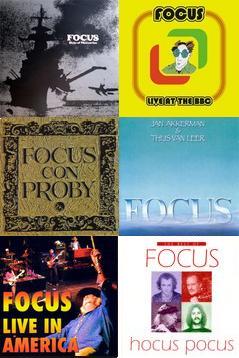
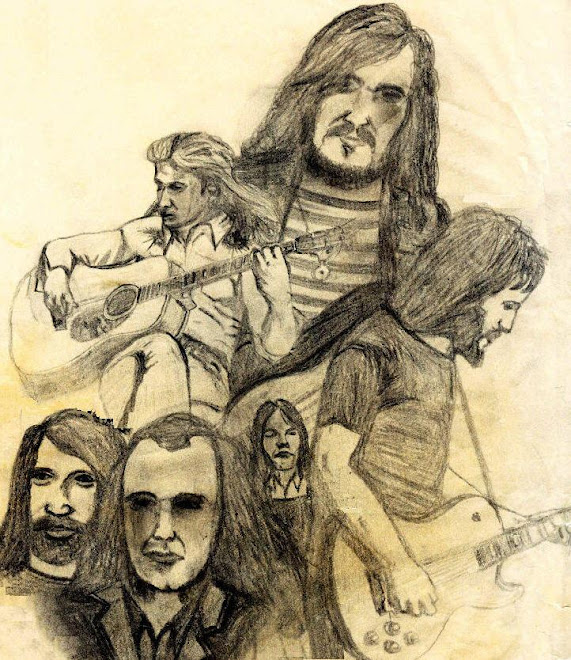
Looking at the music of Dutch rock band Focus, started in the late sixties by Thijs van Leer (b /31/03/48) with Jan Akkerman (b 24/12/46). Van Leer still performs and records under the name today (official site here). Akkerman's site here.

.

.
Showing posts with label Track 15. Show all posts

20071217

Track by track 15c Eruption (Part 3 - Euridice, Dayglow, Endless Road)

Archive number: 15c
Title: Eruption (Part 3 - Euridice, Dayglow, Endless Road)
Main Album: Moving Waves (Focus 2 in Holland)
Track number: 6c
Genre: Progressive Rock (Symphonic) Studio: Sound Techniques Studio, 46a Old Church Street, Chelsea, London SW3
Length: 5' 25" (22' 57" the whole)
Composer: Thijs van Leer, (Tom Barlage, Jan Akkerman), Eelko Nobel, Pierre van der Linden
Musicians: Jan Akkerman – Electric guitars (Gibson Les Paul Customs), Bass; Thijs van Leer – Hammond organ, Piano, Voice, Flute, Mellotron; Cyriel Havermans - Bass; Pierre van der Linden - Drums
Producer: Mike Vernon
Engineer: Jerry Boys
Label: LP - Imperial, Blue Horizon CD – EMI Bovema, IRS, Red Bullet
Date of recording/release: April, May 1971/October 1971. CD - 1988, 1993, 2001
Alternative version: The original Eelko Nobel contribution can be heard briefly in the background on the Ramses Shaffy album Sunset Sunkiss.
Notes: Eruption is a brilliant composite piece that pulls together various musical elements. Album notes refer to as many as 15 different parts though the nature of the music means that there are overlaps and the debatable nature of deciding just where one part ends and another begins is reflected in the varied timings given. We present here our own attempt to convey what is included.
14:35-20:00
There is a definite caesura or pause at 14:35 and then we enter on the third and penultimate section.
14:36-16:16 Euridice
First we have Euridice by Eelko Nobel (van Leer's fellow singer when he was working with Ramses Shaffy). This begins with beautiful piano and guitar, then the organ comes in. The flute takes up the lead at 15:14 with bass. From 15:53 to 16:16 it is the heavily reverbed solo flute that rounds off the piece.
16:17-17:53 Dayglow
The next part begins with a monk-like voice and organ to be succeeded (16:47-17:19) by organ and 'violined' guitar. At 17:18 a mellotron comes in featuring voices and a horn-like sound. At 17:52 a transition is signalled with bass, cymbals and the horn-like mellotron.
18:24-20:00 Endless Road
This transitional part leads into van der Linden's drumbreak.

Track by track 15b Eruption (Part 2 - End of Orfeus, Answer, Pupilla, Answer, Tommy, Pupilla, Answer, The Bridge)

Archive number: 15b
Title: Eruption (Part 2 - End of Orfeus, Answer, Pupilla, Answer, Tommy, Pupilla, Answer, The Bridge)
Main Album: Moving Waves (Focus 2 in Holland). Tommy was also a single in 1972.
Track number: 6
Genre: Progressive Rock (Symphonic)
Studio: Sound Techniques Studio, 46a Old Church Street, Chelsea, London SW3
Length: This part 10' 44" (22' 57" the whole)
Composer: Thijs van Leer, Tom Barlage, Jan Akkerman, (Eelke Nobel, Pierre van der Linden)
Musicians: Jan Akkerman – Electric guitars (Gibson Les Paul Customs), Bass; Thijs van Leer – Hammond organ, Piano, Mellotron,Voice; Cyriel Havermans - Bass, Voice; Pierre van der Linden - Drums
Producer: Mike Vernon
Engineer: Jerry Boys
Label: LP - Imperial, Blue Horizon CD – EMI Bovema, IRS, Red Bullet
Date of recording/release: April, May 1971/October 1971. CD - 1988, 1993, 2001
Notes: Eruption is a brilliant composite piece that pulls together various musical elements. Album notes refer to as many as 15 different parts though the nature of the music means that there are overlaps and the debatable nature of deciding just where one part ends and another begins is reflected in the varied timings given. We have divided it into four parts in our own attempt to convey what is included. Next 03:50-14:34
03:50-04:15
At 03:50 slow solo organ comes in followed by 'violined' guitar as the opening theme is repeated to close the Orfeus element.
04:16-05:07 Answer
And so back to the fast guitar-led answer, which this time features drums and is brought to a conclusion by a short drum break, 04:38-05:07.
05:08-06:10 Pupilla
The next section is Pupilla. This is a band effort. It is quite slow and features ethereal background voices and mellotron. From 5:42 the guitar comes in and dominates.
06:11-07:58 Tommy
From here Akkerman features more, beginning with the wonderful Tommy – a soaring guitar with the band backing - still played by Akkerman today. The Who's rock opera Tommy made the name fashionable and The Who had performed much of it in Amsterdam in 1969vbut Tommy himself is the flautist and saxophonist Tom Barlage, who often played with Akkerman's previous band Brainbox. Barlage's own band Solution recorded a track called Divergence where one of the themes, played on saxophone, is this same tune.
07:59-08:30 Pupilla
After Tommy we return to the ethereal voices backed by the band for a short reprise of Pupilla.
08:31-09:17 Answer
We are then back into Answer with an ascending guitar-led band then strong chords. From 08:52 we have the Answer riff then a rising and falling scale (09:05-09:17) when we enter into the next section. The section 09:05-09:17 is discussed by a musicologist here in relation to a similar riff by the band Camel.
09:18-14:34 The Bridge
This begins with a heavy rock guitar-led section (09:18-11:35) concluded (11:36-12:01) with the Answer riff and rising scales. This Akkerman section is matched by a van Leer one, a heavy rock organ-led part (12:02-13:44) concluding again (13:45-14:10) with the Answer riff and rising scales. The final part of this section is the Break (14:11-14:34) where it is scorching solo guitar after the three introductory double beats from the rhythm section.

Track by track 15a Eruption (Part 1 - Orfeus, Answer, Orfeus)

Archive number: 15a
Title: Eruption (Part 1 - Orfeus, Answer, Orfeus)
Main Album: Moving Waves (Focus 2 in Holland)
Track number: 6a
Genre: Progressive Rock (Symphonic)
Studio: Sound Techniques Studio, 46a Old Church Street, Chelsea, London SW3
Length: This part 3' 50" (22' 57" the whole)
Composer: Thijs van Leer (Tom Barlage, Jan Akkerman, Eelke Nobel, Pierre van der Linden)
Musicians: Jan Akkerman – Electric guitars (Gibson Les Paul Customs), Bass; Thijs van Leer – Hammond organ, Piano, Voice; Cyriel Havermans - Bass; Pierre van der Linden - Drums
Producer: Mike Vernon
Engineer: Jerry Boys
Label: LP - Imperial, Blue Horizon CD – EMI Bovema, IRS, Red Bullet
Date of recording/release: April, May 1971/October 1971. CD - 1988, 1993, 2001
Notes: Eruption is a brilliant composite piece that pulls together various musical elements. Album notes refer to as many as 15 different parts though the nature of the music means that there are overlaps and the debatable nature of deciding just where one part ends and another begins is reflected in the varied timings given. We have divided it into four parts in our own attempt to convey what is included. First, 00:00-03:50
First we have the van Leer composed parts (Orfeus, Answer, Orfeus part 1) drawn originally from works by Bartok and perhaps others.
00:00-01:20 Orfeus
We begin slowly with bass, organ and 'violined' guitar.
01:21-02:55 Answer
Organ and guitar take us to a suspended chord, immediately followed by a deliberate solo organ phrase repeated by the guitar (01:21-01:42). Then at 01:43 a fast part is played by the whole band leading into rising scales.
02:56-03:50 (goes on to 04:15)
Orfeus
We then go back to the slower part repeated on 'violined' guitar with heavy 'erupting' drums in the background.
This is a convenient place to make the first break (although Orfeus appears to go until 04:15).