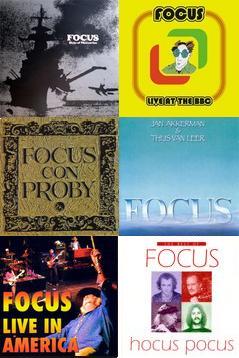
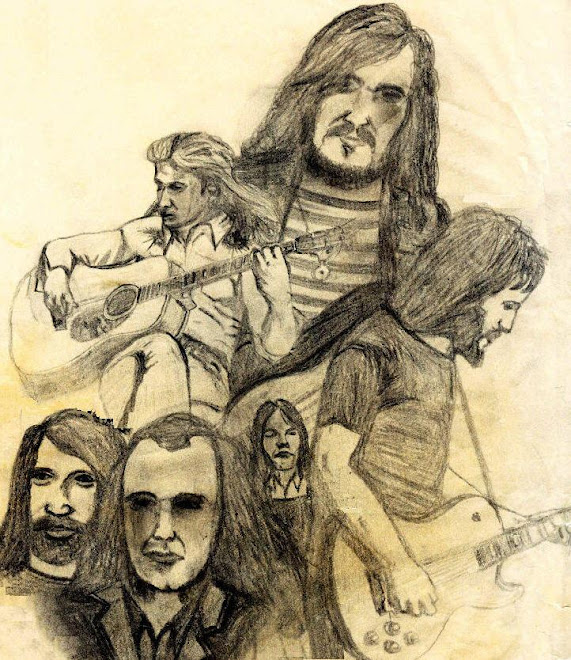
Looking at the music of Dutch rock band Focus, started in the late sixties by Thijs van Leer (b /31/03/48) with Jan Akkerman (b 24/12/46). Van Leer still performs and records under the name today (official site here). Akkerman's site here.

.

.
Showing posts with label Fade. Show all posts

20240724

Track by track 210 Gaia

Main Album: Focus 12
Title: Gaia
Track number: 10
Genre: Progressive Rock Instrumental
Studio: Wisseloord Studios, Hilversum, Netherlands
Length: 4:16
Composer: Thijs van Leer
Musicians: Thijs van Leer – Piano, Hammond organ, Flute; Menno Gootjes – Guitars; Udo Pannekeet - Bass; Pierre van der Linden - Drums
Producer: Udo Pannekeet and Menno Gootjes
Label: Spirit of the Unicorn
Date of recording/release: July 2024
Alternative recording: None
Notes: After a stately piano-led band introduction in the first part, just under two minutes long, a quicker section breaks in with flute and organ and then guitar then flute again, eventually echoing the earlier theme and then fading out. Name of another grand child it seems.

20240713

Track by track 207 Nura

Main Album: Focus 12
Title: Nura
Track number: 7
Genre: Progressive Rock Instrumental
Studio: Wisseloord Studios, Hilversum, Netherlands
Length: 3:57
Composer: Thijs van Leer
Musicians: Thijs van Leer – Hammond organ, Flute; Menno Gootjes – Guitars; Udo Pannekeet - Bass; Pierre van der Linden - Drums
Producer: Udo Pannekeet and Menno Gootjes
Label: Spirit of the Unicorn
Date of recording/release: July 2024
Alternative recording: None
Notes: Nura has a trademark van Leer keyboard introduction on Hammond organ with violined guitar. A caesura at 1:15 is followed by a raucous band backed guitar riff, joined briefly by a swinging flute around 01:42. All is very jolly until 02:10 when the initial slow piece returns for about 40 seconds, backed with high-hat and cymbals. After a second caesura, the raucous part returns and plays out to the fade.

20240711

Track by track 205 All Aboard

Main Album: Focus 12
Title: All Aboard 
Track number: 5
Genre: Progressive Rock Instrumental
Studio: Wisseloord Studios, Hilversum, Netherlands
Length: 4:31
Composer: Udo Pannekeet
Musicians: Thijs van Leer – Hammond organ, flute; Menno Gootjes – Guitars; Udo Panekeet – Bass; Pierre van der Linden – Drums
Producer: Udo Pannekeet and Menno Gootjes
Label: Spirit of the Unicorn
Date of recording/release: July 2024
Alternative recording: None
Notes: We begin with a groove from the rhythm section with plenty of cow bell. The flute comes in around 00:15 and then the guitar too from around 00:33. This all rises to a guitar chord that sounds at around 01:05. The band then carries on exploring the theme until a brief slow down around 01:40. It then carries on until another break down at 02:17 before heading onwards. At 03:05 a fresh choppy break is added. This dominates until the fade.

Track by track 204 Meta Indefinita

Main Album: Focus 12
Title: Meta Indefinita
Track number: 4
Genre: Progressive Rock Instrumental
Studio: Wisseloord Studios, Hilversum, Netherlands
Length: 4:36
Composer: Pierre van der Linden
Musicians: Thijs van Leer – Hammond organ, flute; Menno Gootjes – Guitars; Udo Panekeet – Bass; Pierre van der Linden – Drums
Producer: Udo Pannekeet and Menno Gootjes
Label: Spirit of the Unicorn
Date of recording/release: July 2024
Alternative recording: None
Notes: The atmospheric track, said to be improvised, begins with a solo reverberating guitar. At around 00:20 a flute joins in and a bass guitar, mostly harmonics. The cymbals and drums are also heard from around 01:10 and begin to dominate but with guitar chords too and then flute and bass. From 03:31 the guitar is briefly 'violined'. Everything slows down after that and the piece drifts out much the way it drifted in. The title is the equivalent to something like no limits.

20240224

Track by track 174 Final Analysis

Archive number: 174
Title: Final analysis
Main Album: Focus 11
Track number: 10
Genre: Progressive Rock Instrumental
Studio: WedgeView Studios, Netherlands
Length: 3:51
Composer: Thijs van Leer
Key: F#
Musicians: Thijs van Leer – Hammond organ, piano; Menno Gootjes – Guitars; Udo Panekeet – Bass; Pierre van der Linden – Drums
Producer: Geert Scheigrond
Engineer: Geert Scheigrond
Label: In and Out of Focus Recordings
Date of recording/release: November 2018
Alternative recording: None
Notes The track begins with 35 seconds of rhythmic drums and rhythm guitar work as it builds up an atmosphere (slightly reminiscent of the track Birth). A screaming guitar then comes in as the beat continues. At 54 seconds things slow slightly and the piano leads for a short while. A clear but slightly dissonant guitar leads briefly after that. The chugging beat continues then until at 1:31 the guitar leads again with a series of descending lines. The piano can still be heard behind it. At 3:13 the beat we began with resumes until 3:22 and again 3:32 when the piano motif is heard briefly twice more. The track then fades.

20191025

Track by track 132 Hoeratio

Archive number: 132
Title: Hoeratio
Main Album: Focus X
Track number: 7
Genre: Progressive Rock with vocal
Studio: Fieldwork Studios, Schoten, Belgium
Length: 5:38
Composer: Bobby Jacobs
Musicians: Thijs van Leer – Hammond organ, piano, flute, vocal; Menno Gootjes – Guitars; Bobby Jacobs – Bass; Pierre van der Linden – Drums
Producer: Bobby Jacobs
Label: Eastworld Recordings
Date of recording/release: November, 2012

Alternative version: None
Notes: The band play an atmospheric but languid tune throughout. From 01:12-02:24 van Leer does a voice over reciting from Horace's Ars Poetica the lines below. After this section the guitar leads with a thorough exploration of the fretboard for the next little while before getting back to the march at 04:01 and then van Leer's now more dramatic an unidentified vocal from 04:14. This takes us right to the end where there is a fade.
The words are

Tibia non ut nunc orichalco uincta tubaeque 
aemula, sed tenuis simplexque foramine pauco 
adspirare et adesse choris erat utilis atque 
nondum spissa nimis complere sedilia flatu: 
quo sane populus numerabilis, utpote paruus, 
et frugi castusque uerecundusque coibat. 
Postquam coepit agros extendere uictor et urbem 
latior amplecti murus uinoque diuino 
placari Genius festis impune diebus, 
accessit numerisque modisque licentia maior. 
Indoctus quid enim saperet liberque laborum 
rusticus urbano confusus, turpis honesto?

The meaning

The Flute – not, as now, bound in brass and a rival of the trumpet,
but slight and simple with few stops – was once of use to lead
and aid the chorus and fill with its breath benches not too
crowded, where, to be sure, folk gathered, easy to count because
few sober folk, too, and chaste and modest.
But when a conquering race began to widen its domain and an
ampler wall embraced its cities and when, on festive days,
appeasing the Genius by daylight drinking brought no penalty,
but then both time and tune won greater licence.
For what taste would you expect of an unlettered throng just freed
from toil rustic mixed up with city folk, vulgar with nobly born?

Note on Horace or Horatio (Hoe ratio is a word play - how rational)
Quintus Horatius Flaccus (65–8 BC), known in the English-speaking world as Horace, was the leading Roman lyric poet during the time of Augustus (Octavian). The rhetorician Quintilian regarded his Odes as just about the only Latin lyrics worth reading: "He can be lofty sometimes, yet he is also full of charm and grace, versatile in his figures, and felicitously daring in his choice of words."
Horace also crafted elegant hexameter verses (Satires and Epistles) and caustic iambic poetry (Epodes). The hexameters are amusing yet serious works, friendly in tone, leading the ancient satirist Persius to comment: "as his friend laughs, Horace slyly puts his finger on his every fault; once let in, he plays about the heartstrings".
His career coincided with Rome's momentous change from a republic to an empire. An officer in the republican army defeated at the Battle of Philippi in 42 BC, he was befriended by Octavian's right-hand man in civil affairs, Maecenas, and became a spokesman for the new regime. For some commentators, his association with the regime was a delicate balance in which he maintained a strong measure of independence (he was "a master of the graceful sidestep") but for others he was, in John Dryden's phrase, "a well-mannered court slave.
The Ars poetica  or "The Art of Poetry" is a poem written by him about 19 BC. In it he advises poets on the art of writing poetry and drama. It has "exercised a great influence in later ages on European literature, notably on French drama" and has inspired poets and authors since it was written. Although it had been familiar since the Middle Ages, it was used in literary criticism only since the Renaissance.
It includes several famous phrases including quandoque bonus dormitat Homerus (l. 359) or "sometimes even good Homer nods off". Today this expression is used to indicate that even the most skilled poet can make continuity errors and that long works, usually epics may have their faults without that detracting significantly from their general quality. In context, however, Horace censures Homer for such lapses. I mention it as perhaps Homer nodded here too.

20100220

Track by track 102 De Ti O De Mi

Archive number: 102
Title: De Ti O De Mi
Main Album: Focus 8
Track number: 5
Genre: Progressive Rock Instrumental
Studio: Peptide Studio, Vuren Length: 06' 22”
Composer: Bobby Jacobs
Musicians: Thijs van Leer – Hammond organ; Jan Dumee – Guitars; Bobby Jacobs - Bass; Bert Smaak - Drums
Producer: Geert Scheijgrond & Focus
Engineer: Geert Scheijgrond & Dick Kemper Label: Musea/Red Bullet
Date of recording/release: A limited run of 500 of the album appeared in August 2002 to be followed by a general release on CD later that year. Also later on Paras and JVC Victor Alternative version: None Notes: We begin with a dark bass riff backed by drums then organ (from about 00:26). At 00:46 an electric guitar takes up the lead with a yearning jazz melody that when eventually about to build at 01:21 reverts to the sparse bass riff. At 01:39 drums re-introduce the organ and a cleaner electric guitar sound and (from 02:01) the jazz guitar melody. It builds a little more this time until panning out with an organ backed development leading to a caesura at 02:59 and 03:00. For the remainder of the track the guitar-led melody is allowed to develop further, this time eventually taking off to some extent, though still meandering a little and later getting quite earnest. The section eventually begins to fade at 05:55 and ends around 06' 22”.

20100219

Track by track 101 Hurkey Turkey

Archive number: 101
Title: Hurkey Turkey
Main Album: Focus 8
Track number: 4
Genre: Progressive Rock Instrumental
Studio: Peptide Studio, Vuren
Length: 4' 07”
Composer: T van der Kaaij, Thijs van Leer
Musicians: Thijs van Leer – Hammond organ, Voices; Jan Dumee – Guitars; Bobby Jacobs - Bass; Bert Smaak - Drums; Geert Scheigrond - Additional guitars.
Producer: Geert Scheijgrond & Focus
Engineer: Geert Scheijgrond & Dick Kemper Label: Musea/Red Bullet
Date of recording/release: A limited run of 500 of the album appeared in August 2002 to be followed by a general release on CD later that year. Also later on Paras and JVC Victor Alternative version: None
Notes: The studio version of Hurkey Turkey starts very distinctively with 8 slightly odd notes on electric guitars followed by a longer ninth one that also features a crash cymbal (00:00-00:08). We then get another two and one then one and one twice and the drums crash in before one of two main themes starts at 00:15 - a bassy riff thing. This is played several times with van Leer's voice in the background and Dumee going up and down the fretboard. At 01:00 there is a slight change of pace announced by the guitar which then takes up more of a lead with the other contrasting theme. This ends at 01:32 when the first theme returns led this time by the Hammond organ (01:33-02:03). We then go back to the guitar-led second theme (02:04-02:34) before the original theme returns with van Leer's voice more prominent at first. This section slows down around 02:44 and from 02:51-03:12 we have a 'scat' section where van Leer's voice is multi-tracked over just drums, one voice providing a jazzy “danga danga danga dang dumdiddy” style and the other a rather crazy turkey voice! The band then come back, with the guitar getting pretty wild and ending with a fade around 04:07.

Track by track 100 Fretless Love

Archive number: 100
Title: Fretless Love
Main Album: Focus 8
Track number: 3
Genre: Progressive Rock Instrumental
Studio: Peptide Studio, Vuren
Length: 6'05”
Composer: Thijs van Leer
Musicians: Thijs van Leer – Hammond organ, Flute, Voice; Jan Dumee – Guitars; Bobby Jacobs - Bass; Bert Smaak - Drums, Timpani
Producer: Geert Scheijgrond & Focus
Engineer: Geert Scheijgrond & Dick Kemper
Label: Musea/Red Bullet
Date of recording/release: A limited run of 500 of the album appeared in August 2002 to be followed by a general release on CD later that year. Also later on Paras and JVC Victor Alternative version: None
Notes: The track begins in quiet and relaxed style with acoustic guitar (possibly synthesised) and a beautiful and melodic flute, backed by the Hammond (from 00:24). At 00:46 we move to a new yearning electric guitar-led section with Hammond and rhythm section. This itself is succeeded (at 01:30) by a funky guitar and organ part (with van Leer's voice giving oompahs at first - again possibly synthesised) and led by a hard blown flute. This is in turn is repeated and developed (from 02:19). Another break in tempo comes at 03:08 and we go into a section led by melodic flute but backed by the band with a riffing style and a distinct underlying guitar motif. Another break comes at 04:09 with a timpani marked halt (almost a caesura). We then return to the yearning electric guitar of the second section but slightly more staccato, until 04:50 where it all gets pretty funky again, this time with a heavier bass and more earnest guitar work from Dumee. This then heads relentlessly for the fade, volume disappearing around 06:05”

20090219

Focus fades

The fade is used by Focus quite sparingly, except on Mother Focus, where nearly half the tracks fade. It is usually adopted where a live piece has no obvious ending. Tracks using a fade include these

1. Why dream (In and out)
2. Round goes the gossip, Carnival fugue and Sylvia (Focus 3)
3. The US or fast version of Hocus Pocus
4. Early Birth
5. Red sky at night
6. Bennie Helder, My Sweetheart, All together ... Oh that!, Hard Vanilla and No Hang Ups (Mother Focus) 7. Nightflight and Wingless (Focus Con Proby)
8. Le Tango, Who's calling and Beethoven's Revenge (Focus 1985)
9. Fretless love, Hurkey Turkey, De ti O de mi (Focus 8)
10. Father Bacchus, Hoeratio and Crossroads (Focus X)
11. Five fourth (Focus Family Album)

Track by track 84 Who's calling?

Archive number: 84
Title: Who's calling?
Main Album: Focus (1985). Also a single b/w Beethoven's Revenge.
Track number: 7
Genre: Progressive Rock Instrumental
Studio: Studio Spitsbergen, Zuidbroek, Groningen, The Netherlands (mixed at Dureco Studios, Weesp, The Netherlands)
Length: 16' 14” (7:30)
Composer: Jan Akkerman, Thijs van Leer
Musicians: Jan Akkerman - Synthesiser Guitar, drum machine; Thijs van Leer – Keyboards inc synthesisers, Flute, Vocals; Tato Gomez - Bass
Producer: Ruud Jacobs with Jan Akkerman, Thijs van Leer and Theo Balijon
Engineer: Emile Elsen, Jan Akkerman and Theo Balijon
Label: Mercury (Phonogram)/Vertigo
Date of recording/release: Recorded 1985 Released LP/CD -1985 CD – 1989.
Alternative version: There is a later version on Focus 11
Notes: There are longer and shorter versions of this piece. The edited version (more than 8 minutes shorter) appeared on the original vinyl version.
In typically prog rock fashion the closer is a slow march. This is briefly introduced by a dreamy flute and guitar with a synthesised background (00:00-00:29). The march is led first (00:30-01:44) by a synthesised guitar. The flute then takes up the lead (1:45-03:01) backed by guitar and the synthesised beat. At 03:02 there is a break down to a slower, pleasant guitar-led section (until 04:10 on the longer version). The longer version has a transitional section (04:11-04:16) before coming back to the main guitar led theme (04:17-05:31). This too breaks down again at 05:32 and goes on to 06:30 with guitar and a little flute. In 06:31-06:49 the guitar becomes more raucous and the flute more eastern in style. It's then back to the main flute theme again (06:50-08:03) followed by the main guitar theme (08:04-08:46). At 08:47 the flute joins in again and takes things up to another climax at 09:19. At 09:20-10:33 the longer version has a unique section exploring the theme further on more acoustic then more rock like guitars before eventually coming back to the main theme. In 10:33-11:17 the flute leads (in the longer version) in a different key. There is also a section (11:18-11:36) led by the high guitar sound. From 11:37-11:50 the flute takes up the lead again. From 11:51-13:06 (on the longer version; 05:34-06:50 on the shorter one) a choir like chant comes in (van Leer's synthesised and choired voice). The flute brings this section to its climax. The shorter version ends with the keyboards playing out until the fade. The longer version allows the keyboard section to become rather tedious (13:07-14:23) until it is finally rescued by the pleasant addition (14:24-16:08) of the flute (Akkerman has presumably left early). The piece then fades.

20090218

Track by track 83 Ole Judy

Archive number: 83
Title: Ole Judy
Main Album: Focus (1985)
Track number: 6
Genre: Progressive Rock Instrumental
Studio: Studio Spitsbergen, Zuidbroek, Groningen, The Netherlands (mixed at Dureco Studios, Weesp, The Netherlands)
Length: 03' 44”
Composer: Thijs van Leer
Musicians: Jan Akkerman - Synthesiser Guitar, drum machine; Thijs van Leer – Keyboards inc synthesisers, Flute; Tato Gomez - Bass; Fairlight programmed by Ed Staring.
Producer: Ruud Jacobs with Jan Akkerman, Thijs van Leer and Theo Balijon
Engineer: Emile Elsen, Jan Akkerman and Theo Balijon
Label: Mercury (Phonogram)/Vertigo
Date of recording/release: Recorded 1985 Released LP/CD -1985 CD – 1989
Alternative version: None
Notes: Perhaps the most accessible track on the album, this piece is has a slightly Latin feel but is reminiscent of Birth (Hamburger Concerto) in the juxtaposing of van Leer and Akkerman throughout the song. Van Leer kicks things off with his keyboards, sounding first more reedy (00:00-00:21) then more trumpet like (0:22-0:41) with a trace of flute at the end of the section. Akkerman then steps up to lead with a tough guitar riff (00:42-00:51). We then go back to the trumpet like keyboard briefly (00:52-01:02) before Akkerman has a second stab (01:03-01:23). At this point the flute comes in with gusto (01:24-01:44) before giving way to the trumpet-like keyboards (01:45-02:04) which are inevitably succeeded by the guitar (02:05-02:14). Van Leer's keyboard (02:15-02:35) then flute (02:36-02:45) lead once more before Akkerman closes with a final guitar solo in two parts (02:46-02:51 and 02:52-03:44) that finally fades away.

Track by track 82 Beethoven's Revenge

Archive number: 82
Title: Beethoven's Revenge (Bach-One-Turbo-Overdrive)
Main Album: Focus (1985). Also a single b/w Who's Calling?
Track number: 5
Genre: Progressive Rock Instrumental
Studio: Studio Spitsbergen, Zuidbroek, Groningen, The Netherlands (mixed at Dureco Studios, Weesp, The Netherlands)
Length: 18' 40" (10' 43")
Composer: Jan Akkerman
Musicians: Jan Akkerman - Synthesiser Guitar, drum machine, Acoustic Guitar; Thijs van Leer – Keyboards inc synthesisers, Flute; Ruud Jacobs – Acoustic Bass; Fairlight programmed by Ed Staring
Producer: Ruud Jacobs with Jan Akkerman, Thijs van Leer and Theo Balijon
Engineer: Emile Elsen, Jan Akkerman and Theo Balijon
Label: Mercury (Phonogram)/Vertigo
Date of recording/release: Recorded 1985 Released LP/CD -1985 CD – 1989.
Alternative version: My Pleasure on Akkerman's solo album Heartware provides the core of this piece
Notes: This track appears in its fullest form on the CD. The original vinyl had an edited version that lacked around 8 minutes of the original. The title references both the 19th Century Romantic composer Beethoven and the 1970s Canadian rock band Bachman Turner Overdrive. Focus had produced long tracks previously but they were mostly composite tracks. This track has several elements but is really more akin to a long jam session based around Akkerman's My Pleasure than anything symphonic.
The introduction (00:00-00:32) uses a strong beat and a scattered keyboard effect before a choppy guitar takes up the lead (00:33-01:02). A wistful, synthesised flute sound comes in next (01:03-01:37) before a new rhythm is introduced led by harp like sounds (probably from the keyboard but possibly the guitar) in 01:38-02:13. The flute like melody then recurs (02:14-02:45) before we break into the very catchy guitar riff that carries the piece (02:44-03:29). Another catchy section follows – probably on the keyboard this time (03:27-03:41). It is then the turn of the guitar again (03:42-04:10) before the original catchy guitar riff and succeeding section are repeated (04:10-04:25; 04:25-04:39). We then move in to a more minor key for the next section (4:40-05:09) before the flute-like, romantic style returns (05:10-05:39). A percussive guitar with bell-like sounds breaks across this for another fresh section (05:40-06:13). A section from 06:14-07:33 first harp-like then flute-like comes next on the extended version, edited out on the shorter one. In 07:34-08:10 the percussive guitar with bells returns and is followed by the catchy guitar, etc (08:11-08:23) then a quieter section with an organ sound (08:23-09:51) and the catchy guitar again (09:52-10:06). In 10:07-10:19 the catchy piece is repeated with a flute sound before another fresher section (10:20-11:26) with a struck harp sound (at 10:40, 41 and 10:49) plus a Spanish guitar. In 11:27-11:54 the synthesiser's pitch fluctuates rather. At 11:55 the double bass comes in as the main theme is attacked at length with an oddly pitched guitar. A large chunk of this final section is (helpfully) cut from the final guitar-led jam (from about 13:22). The band are still going as the music fades.

20090123

Track by track 80 Le Tango

Archive number: 80
Title: Le Tango
Main Album: Focus (1985)
Track number: 3
Genre: Progressive Rock Instrumental
Studio: Studio Spitsbergen, Zuidbroek, Groningen, The Netherlands (mixed at Dureco Studios, Weesp, The Netherlands)
Length: 04' 49”
Composer: Thijs van Leer/Roselie Peters
Musicians: Jan Akkerman - Synthesiser Guitar, drum machine; Thijs van Leer – Keyboards inc piano and synthesisers; Sergio Castillio – Drum fills; Fairlight programmed by Ed Staring.
Producer: Ruud Jacobs with Jan Akkerman, Thijs van Leer and Theo Balijon
Engineer: Emile Elsen, Jan Akkerman and Theo Balijon
Label: Mercury (Phonogram)/Vertigo
Date of recording/release: Recorded 1985 Released LP/CD -1985 CD – 1989
Alternative version: van Leer has recorded this number more than once elsewhere
Notes: Van Leer has said that he heard the Polish-American pianist Arthur Rubinstein (1887-1982) saying how much he loved the tango (it is in a 1969 documentary on his life L'amour de la vie). It led van Leer to write this number with his then wife. Here, we begin with loud guitar and drums from Akkerman (00:00-00:12) but the track quickly slips into the familiar tango rhythm, provided chiefly by van Leer's piano (00:13-00:38). From 00:39 and a torpedo-like sound that occurs again at times (eg 01:03, 01:36) the two elements combine, staccato rhythm predominating over slight melody (00:40-02:38). A much faster guitar-led section follows (02:39-03:08) before returning to the previous staccato style. Not really getting anywhere the track begins to fade from about 04:30.
Note on the tango (from Wikipedia)
Tango is a musical genre and is used for its associated dance forms. It is traditionally played by a sextet, known as the orquestra typica (2 violins, piano, double bass, 2 bandoneons). Earlier forms of this ensemble sometimes included flute, clarinet and guitar. Tango music may be instrumental or include a vocalist. It is well-known across much of the world, along with the associated dance, which originated in (lower-class districts of) Buenos Aires, Argentina and Montevideo, Uruguay. Early tango was sometimes known as tango criollo.
The music derives from the fusion of various forms from Europe. Jorge Luis Borges (El idioma de los argentinos) writes:"Tango belongs to theRio de la Plata and it is the son of Uruguyan “milonga” and grandson of the “habanera”. The word Tango seems to have first been used in connection with the dance in the 1890s. The music's deep roots cannot be fully known but it is safe to assume that it is a combination of musical traditions from Spain, West Africa, Central Europe and North America, in chronological order.
Even though the present forms are 19th century, there are records of 18th and early 19th century tango styles in Cuba and Spain, while there is a flamenco tango dance that may share a common ancestor in a minuet-style European dance. All sources stress the influence of the African communities and their rhythms, while the instruments and techniques brought in by European immigrants in the second half of the 19th century played a major role in its final definition, relating it to the salon music styles.
The first tango ever recorded was made by Angel Villodo and played by the French national guard in Paris. Villoldo had to record in Paris because there was no recording studio in Argentina at the time. Early tango was played by immigrants in Buenos Aires. The first generation of tango players was called "Guardia Vieja" (the Old Guard). By the end of the 19th century, the music was heard throughout metropolitan Buenos Aires. It took time to move into wider circles. In the early 20th century it was the favourite music of gangsters who visited the brothels, in a city with 100,000 more men than women (1914). The complex dances that arose from the music reflect the habit of men practicing tango together in groups, expressing both machismo and sexual desire, leading to the form's distinct mix of sensitivity and aggression. The music was played on portable instruments (flute, guitar, violins, etc). The organito, a portable player-organ, broadened the popularity of certain songs.
Like many forms of popular music, the tango was associated with the underclass, and the better-off Argentines tried to restrict its influence. In spite of the scorn, some were fans. A poem describes the music as like the "all-absorbing love of a tyrant, jealously guarding his dominion, over women who have surrendered submissively, like obedient beasts".
The tango has attracted many musicians and has become part of the repertoire for some classical musicians. One of the first classical interpreters to "cross over" was baritone Jorge Chamine, who worked with bandoneonist Olivier Manoury. Since then, Yo-Yo Ma, Danile Barenboim, Placido Domingo, etc, have performed and recorded tangos. Among classical composers who have written tangos are Albeniz (in España 1890), Satie (1914), Stravinsky (1918) and John Cage (1984). Many popular songs in the US have borrowed melodies from tango.

20081124

Track by track 71 Nightflight

Archive number: 71
Title: Nightflight
Main Album: Focus Con Proby
Track number: 3
Genre: Progressive Jazz Instrumental
Studio: EMI Studios, Hilversum, The Netherlands
Length: 3' 35”
Composer: Eef Albers
Musicians: Eef Albers - Electric guitars; Thijs van Leer – Mellotron, Electric piano, Synthesisers; Bert Ruiter – Bass; Steve Smith - Drums
Producer: Yde de Jong
Engineer: Jan van Vrijaldenhoven/Mike Stavron
Label: EMI
Date of recording/release: Recorded 1977 Released 1978 LP – 1978 CD – 1998
Alternative versions: None
Notes: This lively but unremarkable and rather jazz track zips straight in, led by guitar. The pace quickens and gets jazzier at 00:41. A distinctive hornlike synthesiser sound comes in at 02:44-02:55 followed by a brief guitar solo then a break down and fade.
Note on Nighflight (from Wikipedia)
Nightflight is also the name of a 1975 song with vocals by Led Zeppelin, a 1933 film starring Clark Gable and a 1931 novel by the aviator Antoine Saint-Exupéry.

20081111

Track by track 69 Wingless

Archive number: 69
Title: Wingless
Main Album: Focus Con Proby
Track number: 1
Genre: Rock Vocal
Studio: EMI Studios, Hilversum, The Netherlands
Length: 5' 32”
Composer: Thijs van Leer, Roselie van Leer
Musicians: P J Proby – Vocals; Eef Albers - Electric guitars; Thijs van Leer – Hammond organ, Electric piano; Bert Ruiter – Bass; Steve Smith - Drums
Producer: Yde de Jong
Engineer: Jan van Vrijaldenhoven/Mike Stavron
Label: EMI
Date of recording/release: Recorded 1977 Released 1978 LP – 1978 CD – 1998
Alternative versions: None
Notes: This vocal track is bookended by a short reverbed instrumental introduction (00:00-00:37) quite dreamy and a heavier, wilder and longer reverbed instrumental conclusion (03:08-05:32) that eventually fades. There is also a reverbed guitar-led instrumental break at 01:33-02:08 between the second and third verses. The words are as follows

I'm a bird but I am wingless
On a treetop way up high
Springtime's coming green and reckless
How I long and long to fly
But my love I get so restless
Thinking of you all the time
While my heart moves free
I'm solid 
Wish that I could move around
While my heart was fixed forever
Fixed in love without the fear
That one day I'll be without you Is it true, and is it near?
Sunlight starlight love your laughter
And the love of gentle hearts
And beyond the face of the loved one
There you'll find the face of God

The words are sung well in a yearning rock ballad style but are slightly overwhelmed by the band until the final line, where everything slows and dies down before taking off again for the final section.
A note on P J Proby (from Wikipedia)
Born James Marcus Smith, November 6, 1938, Houston, Texas, this singer, songwriter and actor is noted for theatrical portrayals of Presley and Orbison and interpretations of old standards in the vein of Nat king Cole or Tony Bennett. His stage name was suggested by friend and songwriter Sharon Sheeley who remembered an old boyfriend with the name.
His father was VP of a big bank. He was educated at various military academies and later moved to California to be a movie actor. As Jett Powers he had minor roles and 2 singles on an independent label went unnoticed. In 1962 he began writing and recording demos for artists such as Elvis and Johnny Cash. Sheeley took him to audition at Liberty Records. He soon created his fashion image of a pony-tail tied back with a ribbon, swashbuckling pirate shirts and buckled shoes. In addition, he wore skin-tight suits of velvet in different colours. London based from 1964 he began to have hits but a royalty dispute broke his run of UK successes.
His career was also affected by controversy. His trousers split during a concert. Women in the audience went wild. Somehow, they split again at the next venue. Critics, and the audience, were divided on whether it was a gimmick or eccentricism. During a 1967 concert they split again and he was dropped from the rest of the tour.
Back in the US he had a hit but poor managerial advice led to him briefly declaring himself bankrupt. He took some rest then but in September '68 recorded Three Week Hero. Released in '69 The Yardbirds (later Led Zeppelin) were his backing band.
In 1971 he had a successful West End run as Casio in a rock musical version of Othello (Catch My Soul). He continued to perform mostly in cabarets and nightclubs, singing 1960s ballads and rhythm 'n' blues material. In 1977, he portrayed Elvis in Elvis - The Musical, which received rave reviews and awards. It was following this that he recorded with Focus, the result chiefly of manager Yde de Jong being a fan.
He then returned to singing in clubs. By 1990 he was suffering from alcoholism, living in Bolton but did produce an album Thanks. He enjoyed minor success with covers of Anarchy in the UK and other unexpected material but was neglected by the media. Following his return to the public eye, in 1991, he suffered a heart attack, curtailing activities until 1993, when he appeared in a Jack Good biomusical Good Rockin' Tonite as himself. In 1995 he was in a Roy Orbison tribute show Only the Lonely. By 1996 he was again doing the Elvis musical. In 1997, he toured with The Who, performing as "The Godfather" in the road production of Quadrophenia. Now into his seventies, he continues to tour. In 2007 he was accused of benefit fraud, something he strongly denies.

20080607

Track by track 58 My Sweetheart

Archive number: 58
Title: My Sweetheart
Main Album: Mother Focus
Track number: 11
Genre: Funky Pop Instrumental
Studio: Decca Studios, Hollywood, Los Angeles, California (later Studio 55)
Length: 3' 28”
Composer: Thijs van Leer, Jan Akkerman
Musicians: Jan Akkerman - Electric sitars; Thijs van Leer – Piano, Mellotron, Flute; Bert Ruiter – Bass; David Kemper – Drums, Congas
Producer: Hubert Terheggen/Focus
Engineer: Eric Prestidge
Label: LP – Polydor, Atco, Philips, EMI Date of recording/release: Recorded 1975, released October 1975. LP – 1975, 1977, CD - 1988
Alternative version: Van Leer repeated this track on his solo album Nice to have met you.
Notes: This bass driven piece of disco-influenced pop music begins with the whole band grooving (00:00-00:15) before the electric sitar strikes out a melody (00:16-02:04). It is the sitar that carries the load for most of the time though the flute (possibly synthesised at first) can also be heard in the background (01:17-01:33). A flute-led bridge then takes us on (02:05-02:16) until the sitar leads again (02:17-02:30). The flute is heard again (02:31-02:43) and things break down (02:44-02:49) until a bass-led break (02:50-03:07) some more flute (03:08-03:20) and a fade (03:21-03:28).

Track by track 57 All together ... Oh That!

Archive number: 57
Title: All Together ... Oh That!
Main Album: Mother Focus
Track number: 9
Genre: Progressive Rock Instrumental
Studio: Decca Studios, Hollywood, Los Angeles, California (later Studio 55)
Length: 3' 36”
Composer: Jan Akkerman
Musicians: Jan Akkerman – Acoustic guitars, Electric guitars; Thijs van Leer – Piano; Bert Ruiter – Bass; David Kemper - Drums
Producer: Hubert Terheggen/Focus
Engineer: Eric Prestidge
Label: LP – Polydor, Atco, Philips, EMI
Date of recording/release: Recorded 1975, released October 1975. LP – 1975, 1977, CD - 1988
Notes: As with Ruiter's pair of 'Vanilla' tracks so with these Akkerman tracks we again have a matching title and a livelier second piece. This one is possibly the most commercially accessible track in the whole Focus catalogue. Rather countrified, it begins with double-tracked acoustic guitars (00:00-00:18) supplemented by drums, bass and wandering piano (00:19-01:02) before a very bright and playful electric guitar takes things up at 01:03. The piece then plays out with electric guitar beautifully leading the other guitars and the rest of the band breaking down a little from time to time but then rising again (01:03-03:10) until the piano becomes more insistent and we reach a final fade (03:11-03:36).

20080605

Track by track 53 Hard Vanilla

Archive number: 53 
Title: Hard Vanilla
Main Album: Mother Focus
Track number: 5
Genre: Progressive Rock Instrumental
Studio: Decca Studios, Hollywood, Los Angeles, California (later Studio 55)
Length: 2' 36”
Composer: Bert Ruiter
Musicians: Jan Akkerman – Acoustic guitars, Electric guitars with talkbox; Thijs van Leer – Electric piano?; Bert Ruiter – Bass; David Kemper - Drums
Producer: Hubert Terheggen/Focus
Engineer: Eric Prestidge
Label: LP – Polydor, Atco, Philips, EMI
Date of recording/release: Recorded 1975, released October 1975. LP – 1975, 1977, CD - 1988
Notes: This harder edged counterpart to the previous track has the band dominated by guitars – acoustic guitars and especially the talkbox. The main theme is repeated several times until we reach a coda that winds down before going a little wild then fading (02:10-02:31).

20080603

Track by track 51 Bennie Helder

Archive number: 51
Title: Bennie Helder
Main Album: Mother Focus
Track number: 3
Genre: Jazz Fusion Instrumental
Studio: Decca Studios, Hollywood, Los Angeles, California (later Studio 55)
Length: 3' 27”
Composer: Thijs van Leer
Musicians: Jan Akkerman - Electric guitars, Acoustic guitars; Thijs van Leer – Electric Piano, Mellotron, Piano, Synthesiser, Voice, Flute; Bert Ruiter – Bass; Dave Kemper - Drums
Producer: Hubert Terheggen/Focus
Engineer: Eric Prestidge
Label: LP – Polydor, Atco, Philips, EMI
Date of recording/release: Recorded 1975, released October 1975. LP – 1975, 1977, CD - 1988
Notes: Van Leer opens this slightly directionless piece with keyboards and voice (00:00-00:07). The band then come in with some pleasant stuff (00:08-00:58) well mixed keyboards and guitar with an effect leading. Things slow then something similar follows (00:58-01:44) until another break down (01:45-01:43) where we hear a five note interjection featuring voice and keyboards (01:44-01:47) before the flute comes in to lead, supported too by acoustic guitar (01:48-02:09). Then comes a series of seven definite unison chords (02:10-02:17) and a return to the main theme (02:18-02:50). Finally, we have a few more chords (02:51-02:59) a ritartando (03:00-03:10) and a final bass dominated coda that includes flute and begins to set off in another (perhaps more interesting) direction as it fades (03:11-03:27). Bennie Helder is the name van Leer used for himself as a child.