Looking at the music of Dutch rock band Focus, started in the late sixties by Thijs van Leer (b /31/03/48) with Jan Akkerman (b 24/12/46). Van Leer still performs and records under the name today (official site here). Akkerman's site here.

.

.
Showing posts with label Solo. Show all posts

20240330

Solo Tracks


Of the 200 tracks listed on this website so far, some 14 or so are solo efforts.
1. Moving Waves. Thijs van Leer sings and plays piano.
2. Britannia Live. On this unreleased track Jan Akkerman plays the lute.
3. Sonata for Flute (Live). Thijs van Leer. This is the first solo flute release.
4. Nature is our friend. Thijs van Leer. This is the second solo flute release.
5. Let us wander. Thijs van Leer. This is the third solo flute release.
6. Drum solo. Pierre van der Linden. This unreleased track can be found on Old Skin.
7. River Dance. Pierre van der Linden. This track from a solo album is on The Focus Family Album.
8. Spiritual Swung. Pierre van der Linden.  This track from the same solo album is also on The Focus Family Album.
9. Two part interventon. Menno Gootjes. Acoustic guitar solo.
10. Hazel. Menno Gootjes. Acoustic guitar solo.
11. Song for Yaminah. Udo Pannekeet. Bass solo.
12. Anaya. Ydo Pannekeet. Bass solo with drum machine.
Bowie and Born to be You from Focus 12, piano solos by Thijs van Leer and Menno Gootjes repectively, need to be added to this list.

20210930

New Solo Album from Thijs van Leer

I thought it unlikely that Thijs van Leer would have been doing nothing during the pandemic. His new album is now out. All in French, Parce que is a set of ten vocal numbers with piano and flute from the maestro. Downloaded it recently and am enjoying it.

20210604

Track by track 163 Anaya

Archive number: 163
Title: Anaya
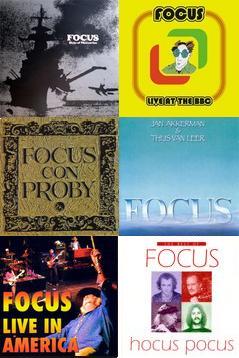
Main Album: The Focus Family Album
Track number: 19
Genre: Bass solo
Studio: Unknown
Length: 1:53
Composer: Udo Pannekeet
Musicians: Udo Pannekeet - Six string Bass, percussion machine
Producer: Geert Scheigrond
Engineer: Geert Scheigrond
Label: In and Out of Focus Recordings
Date of recording/release: 2017
Notes: Anaya is the 9-year-old daughter of Yaminah. This is another more lively solo bass piece from Udo Pannekeet with percussion machine and multi-tracking.

Track by track 159 Hazel

Archive number: 159
Title: Hazel
Main Album: The Focus Family Album
Track number:15
Genre: Acoustic guitar
Studio: Unknown
Length: 1:56
Composer: Menno Gootjes
Musicians: Menno Gootjes – Guitar
Producer: Geert Scheijgrond
Engineer: Geert Scheigrond
Label: In and Out of Focus Recordings
Date of recording/release: 2017
Notes: Menno plays his guitar again.

Track by track 157 Spiritual Swung

Archive number: 157
Title: Spiritual Swung
Main Album: The Focus Family Album
Track number: 13
Genre: Drums
Studio: Unknown
Length: 3:02
Composer: Pierre van der Linden
Musicians: Pierre van der Linden - Drums
Producer: Geert Scheigrond
Engineer: Marlies Helder
Label: In and Out of Focus Recordings
Date of recording/release: 2017
Alternative version: The same track is on Drum Poetry
Notes: This is another drum piece from Pierre van der Linden.

Track by track 155 Let us wander

Archive number: 155
Title:  Let us wander
Main Album: The Focus Family Album 
Track number: 11
Genre: Solo instrumental (Flute)
Studio: Unknown 
Length: 2:33
Composer: Thijs van Leer 
Musicians: Thijs van Leer – 1989 Muramatsu Flute 
Producer: Geert Scheigrond 
Engineer: Geert Scheigrond 
Label: In and Out of Focus Recordings 
Date of recording/release: 2017 
Notes:  Thijs apparently wanders near a river playing his flute with aquatic and other background nature sounds.

Track by track 153 Song for Yaminah

Archive number: 153
Title: Song for Yaminah
Main Album: The Focus Family Album
Track number: 9
Genre: Solo instrumental
Studio: Unknown
Length: 1:53
Composer: Udo Pannekeet
Musicians: Udo Pannekeet – five string bass
Producer: Geert Scheigrond
Engineer: Geert Scheigrond
Label: In and Out of Focus Recordings
Date of recording/release: 2017
Notes: Dedicated to his one true love, this pleasant piece finds the latest Focus bass player exploring his instrument with skill.

20201113

Track by track 149 Two-part intervention

Archive number: 149
Title: Two-part Intervention
Main Album: The Focus Family Album
Track number: 5
Genre: Acoustic guitar
Studio: Unknown
Length: 1:21
Composer: Menno Gootjes
Musicians: Menno Gootjes – Guitar
Producer: Geert Scheijgrond
Engineer: Geert Scheigrond
Label: In and Out of Focus Recordings
Date of recording/release: 2017
Notes: Menno plays his guitar

Track by track 147 Riverdance

Archive number: 147
Title: Riverdance
Main Album: The Focus Family Album
Track number: 3
Genre: Drums
Studio: Unknown
Length: 4:45
Composer: Pierre van der Linden
Musicians: Pierre van der Linden - Drums
Producer: Geert Scheigrond
Engineer: Marlies Helder
Label: In and Out of Focus Recordings
Date of recording/release: 2017
Alternative version: The same track is on Drum Poetry
Notes: This is a drum piece from Pierre van der Linden

20201014

Track by track 145 Nature is our friend

Archive number: 145
Title: Nature is our Friend 
Main Album: The Focus Family Album 
Track number: 1 
Genre: Solo instrumental 
Studio: Unknown 
Length: 3:14 
Composer: Thijs van Leer 
Musicians: Thijs van Leer – 1989 Muramatsu Flute 
Producer: Geert Scheigrond 
Engineer: Geert Scheigrond 
Label: In and Out of Focus Recordings 
Date of recording/release: 2017 
Notes: Thijs apparently wanders in the woods playing his flute with background nature sounds.

20101024

Track by track 112 Drum Solo (Old Skin)

Archive number: 112 [u]
Title: Drum solo
Main Album: Unreleased
Track number: 4
Genre: Live Drum solo
Venue: Unknown
Length: 03' 33”
Composer: Pierre van der Linden
Musicians: Pierre van der Linden – Drums.
Producer: Bobby Jacobs and Thijs van Leer
Engineer: Unknown
Label: None
Date of recording/release: This track was recorded in 2006 and appears on the Old Skin collection
Note: The track appears to be a live recording of van der Linden doing what he does best.

20090219

Akkerman Solo


Before joining Focus Jan Akkerman had produced a solo album - the 1969 instrumental album Guitar for sale. While still with Focus he produced Profile and Tabernakel and the collaboration with Peter Banks (Two sides of Peter Banks 1973). Between the break up of Focus and the 1985 reunion with Van Leer in 1985 he produced several diverse albums, including a self-titled album (1977) and a live album with similar content the following year (Live in Montreux). The very classically oriented Aranjuez with Claus Ogerman also appeared in 1978. In 1980 the funky Jan Akkerman 3 appeared and in 1981 the Arab disco influenced Oil in the family. The 1982 album Pleasure Point covered diverse but more familiar territory as did It could happen to you (1985). Between these came the ZZ Top inspired From the basement. Alongside these albums came collaborations with jazz clarinettist Tony Scott (1977) singer Kaz Lux and drummer Pierre Van der Linden (1977 and 1980) and German keyboard maestro Joachim Kuhn (1978 and 1979) as well as others.

Since 1985 the albums have continued to come from time to time - Can't stand noise (1986) Heartware (1987) The noise of art (1990) Puccini's Cafe (1993) Blues Hearts (1994) Focus in time (1996) Blues Roots with Curtis Knight (1999) the acoustic Passion (1999) plus a number of live albums of various sorts. In 1989 Akkerman was on two albums from the heavy rock band Forcefield. He has been involved in several other collaborations and made many, many guest appearances. In 2003 the last studio album CU was produced, making use of then current techno or house production technique. Since 2003 several "unreleased albums" have appeared on the internet and in April 2011 the studio album Minor Details was released.

Van Leer Solo


While still with the original Focus, Thijs van Leer produced one solo album - the very successful light classical orchestral album
Introspection of 1972. At the time of the break up in 1975 he also produced the album O my love! with his then wife Roselie Peters. By 1985 he had done three further Introspection albums and in America the slightly different Reflections (1981) and the more jazz rock style Nice to have met you (1977). Van Leer also collaborated in this period on two Christmas albums and Geluckig is het land featuring Dutch national songs. In 1981 using the name Pedal Point he was involved with others in a modern mass called Dona Nobis Pacem. In 1984 he guested on one or two tracks for Akkerman's solo project From the basement.
After 1985 van Leer went on to do several solo albums, mostly of an orchestral type exploring the classics (Introspection 92, Bolero 1996) musicals (Musical Melody 1994) and hymns (at least two collections in the 1990s). Renaissance (1986) and Bach for a new age (1999) were solo efforts in a classical style. In 1987 a straight rock album appeared with a band I hate myself for loving you. There have also been two more Christmas albums, guest appearances on various albums and less commercial projects such as the DVD Etudes sans genes and the At home CD.

20080626

Track by track 64 Sonata for Flute (Live)

Archive number: 64
Title: Sonata for Flute (Live)
Main Album: Live at the BBC
Track number: 5
Genre: Live Classical Instrumental
Venue: New Victoria Theatre, 17 Wilton Road, London SW1V 1LL (now Apollo Victoria)
Length: 02' 45”
Composer: J S Bach (Arranged van Leer)
Musicians: Thijs van Leer – Flute
Producer: BBC
Engineer: BBC
Label: Hux Records
Date of recording/release: Recorded March 21 1976 but only released (on CD) June 1 2004
Alternative versions: A quite different fully orchestrated version can be found on Introspection 2 and a new age setting opens Bach for a New Age
Notes: This is a then rare solo effort from van Leer on flute that now often features in the live act. Bach wrote a number of three movement sonatas for flute and keyboard. This appears to be the siciliano from J S Bach's Sonata for Flute or Recorder and Harpsichord in E flat Major (BWV 1030). Brief applause can be heard at the end.
A note on the Sonata form (from Wikipedia)
Sonata (from Latin/Italian sonare, to sound), in music, literally means a piece played not sung as a cantata (Latin/Italian cantare, to sing). The term, being vague, naturally evolved over time, designating a variety of forms prior to the Classical era. The term took on increasing importance in the Classical period, and by the early 19th Century came to represent a principle of composing large scale works. It was applied to most instrumental genres and regarded alongside fugue as one of two fundamental methods of organising, interpreting and analysing concert music. Though the sound of sonatas have changed since the Classical Era, 20th Century sonatas still maintain the same structure and build.
The Baroque period (when Bach flourished) applied the term to a variety of works, though most works then were fugues and toccatas, including works for solo instrument or groups of instruments. In the transition from Baroque to Classical, the term underwent a change in usage, from being applied to many different kinds of small instrumental work to being more specifically applied to chamber music genres with either a solo instrument, or a solo instrument with piano. Increasingly after 1800, the term applies to a form of large-scale musical argument, and it is generally used in this sense in musicology and musical analysis. Most of the time if some more specific usage is meant, then the particular body of work will be noted: eg Beethoven's sonatas refers to works specifically labelled sonata, whereas Beethoven and sonata form applies to all of his large-scale instrumental works, concert or chamber. In the 20th Century, sonatas in this sense would continue to be composed by influential and famous composers, though many works which do not meet the strict criterion of "sonata" in the formal sense would also be created and performed.
In the Baroque period, a sonata was for one or more instruments almost always with continuo. Later, most works designated as sonatas specifically are performed by a solo instrument, most often a keyboard, or by a solo instrument with a keyboard. In the late Baroque/early Classical period, a work with instrument and keyboard was referred to as having an obbligato part, in order to distinguish this from use of an instrument as a continuo, though this fell out of usage by the early 1800s. Beginning in the early 19th Century, works were termed sonata if, according to the understanding of that time, they were part of the genre, even if they were not designated sonata when originally published, or by the composer.
By the time of Corelli, two polyphonic types of sonata were established: sonata da chiesa(church sonata) and sonata de camera ("ordinary" sonata, literally chamber sonata). The sonata da chiesa, generally for one or more violins and bass, consisted normally of a slow introduction, a loosely fugued allegro and a cantabile slow movement, and a lively finale in somebinary form suggesting affinity with the dance-tunes of the suite. This scheme, however, was not very clearly defined, until Bach and Handel, when it became the essential sonata and persisted as a tradition of Italian violin music – even into the early 19th Century, in the works of Boccherini.
The sonata da camera had consisted almost entirely of idealised dance-tunes, but by the time of Bach and Handel such a composition drew apart from the sonata, and came to be called a suite, a partita
, an ordre, or, when it had a prelude in the form of a French opera-overture, an overture. On the other hand, the features of sonata da chiesa and sonata da camera then tended to be freely intermixed. Bach, however, while not using the titles themselves, nevertheless keeps the two types so distinct that they can be recognized by style and form. Thus, in his 6 violin sonatas, Nos 1, 3, and 5 are recognisably sonate de chiesa; and Nos 2, 4, and 6 are explicitly called partitas, but are admissible among the sonatas as being sonate da camera. Bach is also cited as being among the first composers to have the keyboard and solo instrument share a melodic line, whereas previously most sonatas for keyboard and instrument had kept the melody exclusively in the solo instrument.
The genre – particularly for solo instruments with just the continuo or ripieno – eventually influenced the solo movements of suites or concerti that occurred between movements with the full orchestra playing, eg Bach's Brandenburg concertos. The trio sonatas of Vivaldi, too, show parallels with the concertos he was writing at the same time.

20080209

Track by track 33[U] Britannia (Live)

Archive number: 33[U]
Title: Britannia
Genre: Live Elizabethan Instrumental
Venue: Rainbow Theatre, Finsbury Park, 232 Seven Sisters Road, N4 3NX (recorded using Pye Studios Mobile Unit and edited from the two performances)
Length: 3' 56”
Composer: John Dowland
Musicians: Jan Akkerman – Lute
Producer: Mike Vernon
Engineer: Phil Dunne Date of recording/release: May 4, 5 1973/unreleased
Alternative version: A concerto version appears on Akkerman's solo album Tabernakel. He did it much later live and just on guitar (Live at the Priory).
Notes: This was the very final encore and featured only Akkerman. It was apparently an afterthought (though tuning a lute is no quick task) and some had left the theatre by this point. It features Akkerman unaccompanied for 3' 40" with clapping and cheering either side. After the initial enthusiasm Akkerman seems in danger of losing his audience but fights manfully on and eventually wins them.
A note on John Dowland (From Wikipedia)
John Dowland (1563-1626) English composer, singer and lutenist, best known today for his melancholy songs such as "Come, heavy sleep", "Come again", "Flow my tears", etc. His instrumental music has undergone a major revival and has been a source of repertoire for classical guitarists during the 20th Century.
Very little is known of his early life, but it is generally thought he was born in London. He went to Paris, 1580 where he was in service to the ambassador to the French court. He became a Roman Catholic at this time, which he claimed led to his not being offered a post at Elizabeth I's court. However, his conversion was unpublicised and being Catholic did not prevent other important musicians such as Byrd having a court career. Dowland worked instead for many years at the court of Christian IV of Denmark. He returned to England, 1606 and in 1612 secured a post as one of James I's lutenists. Interestingly there are no compositions dating from this time until his death. Most of his music is for his own instrument, the lute. It includes several books of solo lute works, lute songs (for one voice and lute), part-songs with lute accompaniment and several pieces for viol consort with lute. Poet Richard Barnfield wrote that Dowland's "heavenly touch upon the lute doth ravish human sense." He wrote what is probably his best known instrumental work, Lachrimae or Seaven Teares Figured in Seaven Passionate Pavans, a set of seven for five viols and lute, each based on Flow My Tears. It became one of the best known pieces of consort music in his own time. His pavane Lachrymae antiquae was also one of the big hits of the 17th Century. Dowland's music often displays the melancholia so fashionable in music at that time. He wrote a consort piece with the punning title Semper Dowland, semper dolens (always Dowland, always doleful), which may be said to sum up much of his work. His Come Heavy Sleepe, the Image of True Death, was the inspiration for Britten's Nocturnal after John Dowland for guitar, written in 1964 for guitarist Julian Bream. His music became part of the repertoire of the early music revival with Chrisopher Hogwood and David Munrow and the Early Music Consort in the late 1960s and later with the Academy of Ancient Music from the early 1970s.

20071203

Track by track 13 Moving Waves

Archive number: 13
Title: Moving WavesMain Album: Moving Waves (Focus 2 in Holland)
Track number: 4
Genre: Classical (Piano and voice)
Studio: Sound Techniques Studio, 46a Old Church Street, Chelsea, London SW3
Length: 2' 36"
Composer: Thijs van Leer
Musicians: Thijs van Leer – Grand Piano, Vocal
Producer: Mike Vernon
Engineer: Jerry Boys
Label: LP - Imperial, Blue Horizon CD – EMI Bovema, IRS, Red Bullet
Date of recording/release: April 13 - May 14 1971/October 1971. CD - 1988, 1993, 2001
Alternative versions: There is a live version on the van Leer album Trading Boundaries
Notes: A very unusual track for a rock album, this piece is a setting of the words of the Muslim Sufi mystic, Inayat Khan, a big influence on van Leer's mother Mary. Van Leer wrote the piece when he was 16 (probably as a composition exercise) and only he features, singing to his own accompaniment on piano. Following a piano introduction (00:00-00:35) the vocal begins. The swirling sounds of the piano perfectly reflect the words at every point, climaxing with the caesura or pause (02:21) just before the crucial final line and a subsiding like the waves themselves. The words are
 
Moving waves, the wind has left you
And you are still in commotion?
Moving waves, the wind has left you
And you are still in commotion?

We are still repeating the word it has taught us.
It moves our whole being to ecstasy.

Waves, why do you all become excited
And then all calm together?
Because behind our individual action
There is one impulse working.
Because behind our individual action
There is one impulse working.

Rising waves ... what motive is behind your impulse?
What motive is behind your impulse?

The desire to reach upwards!

Note on Inayat Khan (from Wikipedia)
Hazrat Inayat Khan (July 5 1882 – February 5 1927) was the founder of Universal Sufism and the Sufi Order International. He initially came to the West as a representative of several traditions of classical Indian music, having received the title Tansen from the Nizam of Hyderabad. However, Khan felt his life mission was to be to introduce and transmit Sufi thought and practice to the West. His universal message of Divine Unity – Tawhid – focused on the themes of "Love, Harmony and Beauty" and evinced a distinctive and often effective ability to transmit Sufism to Western audiences in his day.