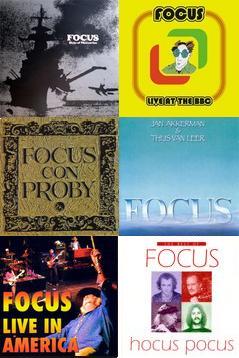
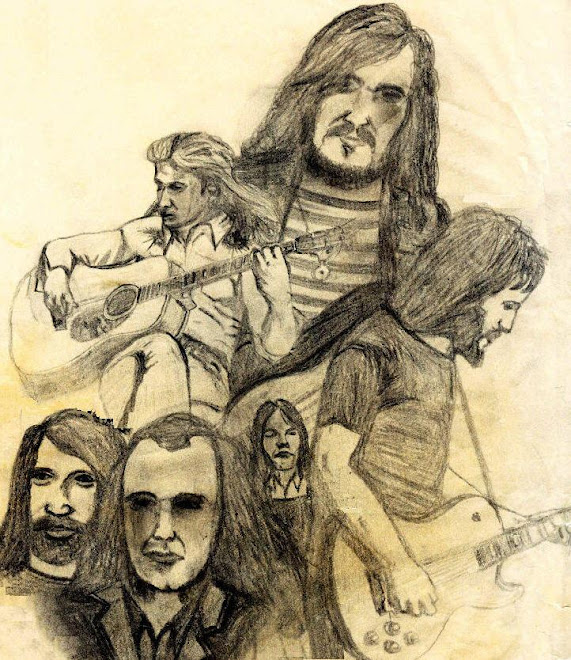
Looking at the music of Dutch rock band Focus, started in the late sixties by Thijs van Leer (b /31/03/48) with Jan Akkerman (b 24/12/46). Van Leer still performs and records under the name today (official site here). Akkerman's site here.

.

.
Showing posts with label Jazz Pop Vocal. Show all posts

20090406

Track by track 90 [DVD] Brother (Live FLIA)

Archive number: 90 [DVD only]
Title: Brother (Live)
Main Album: Focus Live In America DVD Track number: 6 (DVD) not on CD
Genre: Jazz Rock Vocal
Venue: Patriots Theater, 1 Memorial Drive, Trenton, New Jersey, USA
Length: 12' 57”
Composer: Thijs van Leer
Musicians: Thijs van Leer – Hammond organ, Vocal; Jan Dumee – Gibson Marauder Guitar; Bobby Jacobs - Bass; Bert Smaak - Drums
Producer: Gavin Bott/Bob Carruthers
Engineer: Mike Potter (Orion Sound) Mix (Total audio)
Label: Classical Rock Legends Limited
Date of recording/release: October 2002 (part of a two day Uriah Heep led classic rock legend festival that also featured Nektar, Mostly Autumn and Asia). Released on DVD and CD (edited) in 2003.
Alternative version: Instrumental versions can be found on van Leer's solo album Introspection 3 and later on Focus 8. P J Proby sings it on Focus Con Proby.
Notes: Perhaps van Leer was keen to include this when performing in America as it is essentially an American song. It includes a nice introduction on organ (as written for the Con Proby album), rather poor vocal work from van Leer and, most interestingly, a guitar coda quoting Eruption. It was rightly left off the CD.

20080527

Track by track 44c Hamburger Concerto Part 3 (Medium 1)

Archive number: 44c
Title: Hamburger Concerto (Part 3 Medium 1)
Main Album: Hamburger Concerto
Track number: 5c
Genre: Progressive Rock Instrumental (Symphonic)
Studio: Olympic Studios 'B', 117 Church Road, Barnes, London SW13 9HL
Length: 4' 06” (20' 15” the whole)
Composer: Thijs van Leer
Musicians: Jan Akkerman – Electric Guitars (Fenders); Thijs van Leer – Hammond organ, ARP Synthesiser, Flute, Voices; Bert Ruiter - Bass; Colin Allen – Drums, Castanets, Percussion
Producer: Mike Vernon
Engineer: Bob Hall
Label: Polydor, Atco, EMI, Red Bullet, JVC, JVC Victor
Date of recording/release: January/March 1974; April 1974. CD – 1998, 2001, 2001, 2002, 2006
Notes: Next van Leer sings evoking an opera with female and male leads (05:23-06:18). No words are used but a form of scat. In 06:19-06:35 Akkerman's guitar with the effects pedal on leads, joined by various percussive instruments. Next comes a rather eastern section led by organ with castanets, other percussion then trumpet-like guitar (06:57) and rising and falling with more organ, guitar and percussion (06:36-08:04). A flute-led piece comes next with castanets, tambourine and drums backing (08:05-09:03). Akkerman then winds down with the guitar effects and heavy drums then cymbals (09:04-09:29).
Note on castanets (from Wikipedia)
A percussion instrument much used in Moorish, Ottoman, Ancient Roman, Italian, Iberian (especially flamenco) and Latin American music. A pair of concave shells joined on one edge by string are held in the hand and used to produce clicks for rhythmic accents or a ripping or rattling sound consisting of a rapid series of clicks. They are traditionally made of hardwood, though fibreglass is popular. In practice a player usually uses two pairs of castanets, one pair in each hand, with the string hooked over the thumb and the castanets resting on the palm with the fingers bent over to support the other side. Each pair will make a sound of a slightly different pitch. The higher pair (hembra - female), is usually held in the right hand, the larger (macho) in the left. They are sometimes attached to a handle, or mounted to a base to form a pair of machine castanets. This makes them easier to play, but also alters the sound, particularly for the machine castanets. The name (Spanish: castañuelas) is from the diminutive form of castaña, Spanish for chestnut, which they resemble. In Andalusia they are known as palillos (little sticks). The origins of the instrument are unknown. They feature in music by Bizet, Chabrier, Wagner, Rimsky-Korsakov, Ravel and others.

20071127

Track by track 6 Why Dream

Archive number: 6
Title: Why dream
Main Album: In and Out of Focus (Also a single in 1970)
Track number: 6 (second on the Sire release)
Genre: Jazz Pop Vocal
Studio: Sound Techniques Studio, 46a Old Church Street, Chelsea, London SW3
Length: 3' 54"
Composer: Thijs van Leer (music) Eric Cleuver (words)
Musicians: Jan Akkerman - Electric guitars (Fender telecasters), Acoustic guitars; Thijs van Leer - Vocals, Hammond organ, Piano; Martijn Dresden – Backing vocals, Bass; Hans Cleuver – Drums
Producer: Hubert Terheggen (RTM)
Engineer: Jerry Boys
Label: LP - Imperial, Sire, Polydor; CD - EMI Bovema, IRS, Red Bullet
Date of recording/release: Late January 1970/Autumn 1970 (1973 in the US. In 1974 the album appeared in Brazil as Pop Giants). CD – 1988, 1993, 2001.
Notes: The track begins with solemn strummed acoustic guitars, 'violined' electric guitar and organ (00:00-00:14). The reverbed vocal then comes in backed by acoustic and electric guitars, organ, bass, drums and some piano. Van Leer's vocal uses the same alternating and double tracking style found on Happy Nightmare. This vocal section takes up the bulk of the track (00:15-02:23). At 02:24 an instrumental section is dominated by Akkerman's echoing and horn-like electric guitars against acoustic guitars, organ and the rhythm section. For the only time on the album, the song ends with a fade.
The lyrics by Hans Cleuver's father are

“Why dream about the future?
Now is the present, as bad as the present can be.

Why dream about the future?
The light is dark, and darkness is all you can see.
 
Planes go flight by flight (Planes go flight by flight)
Ready for a fight (Ready for a fight)
Ships pass in the night (Ships pass) through the Bosphorus

Marching columns sound (Marching columns)
Reasons scattered, found
For me, for you
For all of us.

Why dream about the future?
The sun is shining upon a world full of fear.
Why dream about the future?
When the clash and the bang of that future is coming too near.

This is our time (This is our time)
We will drink this wine (We will drink this wine)
Reaches our cup (Reaches) And we like it fine.

Please don't hesitate
Before it is too late,
You had your chance and lived your fate.
 
We dream about the future!
Where we can change things as they ought to be.
 
We dream about the future!
Where we'll be moulding and choosing our own destiny.”

Peet Johnson suggest that the lyrics reflect the times. The reference to the Bosporus relates to the Soviet shipment of military supplies from Nikolayev in Ukraine to Hai Phong, North Vietnam via those Turkish straits.
Note on Fade (based on Wikipedia)
This is the first of a limited number of Focus tracks that fade out rather than coming to a definite conclusion. A recorded song can easily be gradually reduced to silence at its end (fade-out). A gradual increase from silence at the beginning (fade-in) can also be used. The length of fade can vary. Fading-out can serve as a recording solution for pieces of music that contain no obvious ending.
"Neptune", from orchestral suite The Planets by Gustav Holst is said to be the first piece of music to end with a fade-out. Though commonplace today, the effect bewitched audiences in the era before widespread recorded sound (1918).
The technique of ending a spoken or musical recording by fading out the sound goes back to the earliest days of recording. In the era of pre-electrical recording, this could only be achieved by either moving the sound source away from the recording horn or by gradually reducing the volume at which performers sang, played or spoke. With the advent of electrical recording, smooth and controllable fadeout effects could be easily achieved by simply reducing the input volume from the microphones using the fader on the mixing desk. No single recording can be reliably identified as "the first" to use the technique.

20071126

Track by track 5 Happy Nightmare

Archive number: 5
Title: Happy Nightmare (Mescaline)
Main Album: In and Out of Focus (Also a single in 1970)
Track number: 5 (third on the Sire release)
Genre: Jazz Pop Vocal
Studio: Sound Techniques Studio, 46a Old Church Street, Chelsea, London SW3
Length: 3' 59"
Composer: Thijs van Leer, Martijn Dresden (music) Mike Hayes (words)
Musicians: Jan Akkerman - Electric guitars (Fender telecasters), acoustic guitars; Thijs van Leer - Backing vocals, Piano, Hammond organ, Mellotron; Martijn Dresden – Vocals, Bass; Hans Cleuver – Drums; Cello - Wouter Moller
Producer: Hubert Terheggen (RTM)
Engineer: Jerry Boys
Label: LP - Imperial, Sire, Polydor; CD - EMI Bovema, IRS, Red Bullet
Date of recording/release: Late January 1970/Autumn 1970 (1973 in the US. In 1974 the album appeared in Brazil as Pop Giants). CD – 1988, 1993, 2001.
Notes: The track, which is an anti-drug song, begins with an introduction using the words given below in italics. These are sung against a cello and a steel strung acoustic guitar (Vicente Tatay Tomas, apparently) from opposite stereo channels. After a concluding guitar harmonic (00:00-01:24) the electric guitars (chopped and smooth), piano, mellotron, bass and drums begin in bossa nova style and Dresden (perhaps with van Leer backing) comes in, double tracked in several places. This is broken by a brief (01:36-01:50) instrumental break where the mellotron, set to orchestral mode, replaces the voice. The whole section ends at 02:21 when the instrumental breaks in again led by Akkerman's jazzy, increasingly chopped-style electric guitar (anticipating the style of Sylvia in part) and backed chiefly by Hammond organ through to 03:27. The opening lyrics are then repeated in a similar style to the introduction as a sort of coda or bookend (03:28-03:58) that closes with acoustic guitar and the cello sound.
The lyrics are the only ones of three possible sets by Mike Hayes used on the album

“On a once in a life mescaline.
Floating over a mountain, like the sea.
Step off into the sun, feel the blood through you run,
On a once in a life mescaline.
Have a nightmare lifelong, live it through,
(Taste the beauty of a sweet red wine),
Grab for air, see your skin turning blue,
(Smell the freshness of the grass beneath the pines).
There's a man with three heads,
There's a girl with three beds,
See they're both running fast after me,
(Gonna catch you, gonna fill you full of love).
 
Have your head filled to the top with big pearls,
(Feel the softness of a mountain silk),
Then you hear someone's dead in the world,
(Sink your body in a cold bath of milk)
You can bet your sweet life
That they fought with a knife,
See they're all running fast after me,
(Wanna kiss you, run their fingers through your hair).
[Shorter break]
Get a feeling deep inside that you're dead,
(Can't you hear the clock of life ticking loud?),
Try to run from the snake pit in your bed,
(Then you find what you thought could not be found).
Smell the nearness of the grave,
Wonder if you can be saved,
Oh the world's still running fast after me,
(When they get you, gonna give you everything).
[Longer break]
On a once in a life mescaline.
Floating over a mountain, make the scene.
Step off into the sun, feel the blood through you run,
On a once in a life mescaline.


A note on Mescaline (from Wikipedia)
Mescaline (3,4,5-trimethoxyphenethylamine) is a psychedelic alkaloid of the phenethylamine class mainly used as a recreational drug, an entheogen and a tool in use to supplement various types of practises for transcendence, including in meditation, psychonautics and illegal psychedelic psychotherapy, whether self administered or not.
It occurs naturally in the peyote cactus
(Lophophora williamsii), the San Pedro cactus (Echinopsis pachanoi) and the Peruvian Torch cactus (Echinopsis peruviana), and in a number of other members of the Cactaceae. It is also found in small amounts in certain members of the Fabaceae (bean family), including Acacia berlandieri.
Mescaline was first isolated and identified in 1897 by the German Arthur Heffter and first synthesised in 1919 by Ernst Späth.
In the US it was made illegal in 1970 by the Comprehensive Drug Abuse Prevention and Control Act. It was prohibited internationally by the 1971 Convention on Psychotropic Substances and is categorised as a Schedule I hallucinogen by the CSA. Mescaline is only legal for certain natives (such as those involved in the Native American Church). Penalties for manufacture or sale can be as high as five years in jail and a fine of $15,000, with a penalty of up to one year and fine of $5000 for possession.

20071121

Track by track 3 Sugar Island

Archive number: 3
Title: Sugar Island
Main Album: In and Out of Focus
Track number: 3 (not on the Sire release - too politically sensitive)
Genre: Jazz Pop Vocal (protest song)
Studio: Sound Techniques Studio, 46a Old Church Street, Chelsea, London SW3
Length: 3' 05"
Composer: Thijs van Leer, Martijn Dresden (music) Jan Staal (words)
Musicians: Jan Akkerman - Electric guitar (Fender telecaster), acoustic guitar, backing vocals; Thijs van Leer - Vocals, Backing vocals, Flute, Hammond organ; Martijn Dresden – Bass; Hans Cleuver - Drums
Producer: Hubert Terheggen (RTM)
Engineer: Jerry Boys
Label: LP - Imperial, Sire, Polydor; CD - EMI Bovema, IRS, Red Bullet
Date of recording/release: Late January 1970/Autumn 1970 (1973 in the US. In 1974 the album appeared in Brazil as Pop Giants). CD – 1988, 1993, 2001.
Notes: For this egregiously political song the band turn west for musical inspiration and appropriately to the Caribbean. The number has quite a jazz feel, including some scat from van Leer (the first example). The band (bass, electric guitar, drums) begin together and are soon supplemented by acoustic rhythm guitars that go on throughout, before going straight into the lyric, sung by van Leer. His voice is multi-tracked, with backing vocals  (as indicated in part below) probably from Akkerman as well as van Leer. The vocal is interspersed with an instrumental break, led first by Akkerman's pizzicato jazzy electric guitar (01:15-01:39) then a mildly rasping jazz-style flute (01:40-02:05). After more vocal work the band play out, led by flute and guitar from 02:47. The whole is brought to a conclusion by a final definite but repeated ensemble chord.
The lyrics (by Dutch writer and actor Jan Staal 1920-1992) are:

Sugar island Cuba (Aaah)
You lay there just for fun (Aaah)
With all your colours and your palms,
A treasure in the sun (2 x)

Dabadabadabada Dabadabadabada

Castro makes the poor man rich (Aaah)
And rings the rich man's knell. (Aaah)
He makes the island grey and pale
I wish he were in hell. (2 x)

Dabadabadabada Dabadabadabada
(Break)

Dabadabadabada Dabadabadabada

Sugar island Cuba (Aaah)
You are no more for sale (Aaah)
This Castro makes the poor man rich
He makes the flowers pale. (2 x)
Dabadabadabada Dabadabadabada.

A note on Castro (based on Wikipedia)
Fidel Alejandro Castro Ruz (1926-2016) was a Cuban revolutionary leader who led his country from January 1959 until the announcement of his retirement in February 2008. He took power in an armed revolution that overthrew the dictatorship of Fulgencio Batista and was shortly thereafter sworn in as Prime Minister. In 1965 he became First Secretary of the Communist Party of Cuba and led its transformation into a one-party socialist republic. In 1976 he became President of the Council of State and of Ministers. In 2006 he passed on duties to his son Raul and in 2008 announced he would neither seek nor accept a new term as President or Commander-in-chief.
Castro first attracted attention in Cuban political life through nationalist critiques of Batista and the US political and corporate influence in Cuba. He gained an ardent, but limited, following and also drew the attention of the authorities. He eventually led the failed 1953 attack on Moncada Barracks, after which he was captured, tried, incarcerated and later released. He then travelled to Mexico to organise and train for the guerrilla invasion of Cuba that took place in December 1956. Since his assumption of power in 1959 Castro has evoked both praise and condemnation (at home and internationally). Opponents characterise him as a dictator, claiming that he has not risen to power through open, public elections, while some contend that his rule is illegitimate because the socialist system itself was not established through what they considered to be legal means. Supporters, on the other hand, see him as a charismatic leader whose presidential authority has been acquired through legitimate elections. Outside Cuba, he has been defined by his relationship with the USA and the former Soviet Union, both of whom courted Cuban attentions as part of their own global political agenda. While Cuba's relations with countries of the Soviet bloc were generally cordial during the Cold War, the Castro-led government has had an antagonistic relationship with the USA since the failed Bay of Pigs invasion of Cuba (1961) by US-backed forces. Following the collapse of the USSR and Cuba's one major Latin American ally, Sandinista Nicaragua, in the early 1990s, the Cuban government found itself in a precarious spot. However, in recent years, Castro has found new regional allies in Latin America. At home, Castro has overseen the implementation of various economic policies, leading to the rapid centralisation of Cuba's economy, land reform, collectivisation, etc. Opponents claim that these changes have at best maintained Cuba's pre-'59 level of development, but at an "extraordinary" cost to the overall welfare of Cubans. Conversely, supporters blame the US embargo for some or all of Cuba's shortcomings but maintain that Cuba's economy has expanded and grown at a more than acceptable rate since the revolution. The expansion of publicly funded health care and education has been a cornerstone of Castro's domestic political program. Cuba ranks better than many countries with regard to infant mortality, which is claimed by Castro supporters as a success of his government. Opponents claim that Cuba's health care and infant mortality were the same if not better before the revolution and question the truthfulness of official statistics.

Track by track 2 Black Beauty

Archive number: 2
Title: Black Beauty
Main Album: In and Out of Focus (was Focus Plays Focus) Also a single in 1970 and 1971
Track number: 2 (fifth on Sire release)
Genre: Jazz Pop Vocal
Studio: Sound Techniques Studio, 46a Old Church Street, Chelsea, London SW3
Length: 3' 08"
Composer(s): Thijs van Leer (music) Erik Cleuver (words)
Musicians: Jan Akkerman - Electric guitar (Fender telecaster), acoustic guitars; Thijs van Leer - Vocals, Piano; Martijn Dresden – Bass, Trumpet; Hans Cleuver – Drums
Producer: Hubert Terheggen (RTM)
Engineer: Jerry Boys
Label: LP - Imperial, Sire, Polydor; CD - EMI Bovema, IRS, Red Bullet
Date of recording/release: Late January 1970/Autumn 1970 (1973 in the US. In 1974 the album appeared in Brazil as Pop Giants). CD – 1988, 1993, 2001.
Alternative version: An instrumental version was recorded much later and is on Focus 9.
Notes: The track begins with five successive screaming notes from the electric guitar spaced out over the opening 20 seconds with heavy drums, heavy but rhythmic bass then heavy drums again. The rhythm section are joined by an acoustic guitar and the vocal comes in at 00:21. Accompanied by guitars and piano, it goes on to 01:58 when there is an instrumental break featuring the electric guitar screams again and a partly muted trumpet (1:59-02:20). The band backed vocal then proceeds to the end via a key change (02:21-03:08). The number is again basically recorded live with perhaps some of the piano (used with the lyrics marked below in italics) and the electric guitar that appears at various points overdubbed as well as reverbed vocals and the trumpet. The lyrics have a rather eastern feel, which is reflected a little in the music. They contain a reference to the legend of King Solomon's affair with the Queen of Sheba. (Their meeting is recorded in Scripture but the love affair is pure legend). It has been suggested that the topic is an inter-racial liaison, a controversial matter in many places at that time. The lyrics are

“Night was stark, your skin was dark,
Your eyes were shining bright,
Oh black beauty, close in my heart.
I was King Solomon who held his Queen of Sheba tight,
Oh black beauty, held in my arms.

How we were told
Love was not meant for us,
Two diff'rent worlds kept apart,
Heart against heart.

But we knew where to find an opportunity,
Far away where no one was near.
We could meet there at night and with impunity,
Oh black beauty, love without fear.

Our love was wonderment,
So young and so pure.
I held your trembling hands,
I was so sure.


Then when our lips met
There was no returning,
The fire was burning
In our hearts.

(Break)

So we were told
Love was not meant for us,
Two different worlds kept apart,
Heart against heart.

But we knew where to find an opportunity,
Far away where no one was near.
I was King Solomon who held his Queen of Sheba tight,
Oh black beauty, love without fear.”

Peet Johnson tells us that an alternative set of lyrics called Questions was prepared by Mike Hayes but not used. They are re-produced in his book.
A note on the Queen of Sheba (from Wikipedia)
The Queen of Sheba (Malkat Shva) refers in Ethiopian history, the Old and New Testaments and the Qur'an to the woman who was ruler of the ancient kingdom of Sheba. The location of the historical kingdom may have included both Ethiopia and Yemen. Known to the Ethiopians as Makeda this queen has been called a variety of names by different peoples in different times. To King Solomon of Israel she was the Queen of Sheba. In Islamic tradition she was Bilqis. Roman historian Josephus calls her, Nicaula. She is thought to have lived in the 10th Century BC. Taking into account Genesis 10 many scholars see the Queen of Sheba as a descendant of the Semitic Sheba people located in southern Arabia but with origins in Ethiopia.
According to the Hebrew Bible, the unnamed queen of the land of Sheba heard of the great wisdom of Solomon and journeyed there with gifts of spices, gold, precious stones and beautiful wood and to test him with questions (1 Kings 10:1-13, 2 Chronicles 9:1-12). It is related further that the queen was awed by Solomon's great wisdom and wealth and pronounced a blessing on his deity the LORD. Solomon reciprocated with gifts and "everything she desired," whereupon the queen returned to her country. The queen was apparently quite rich, however, as she brought 4.5 tons of gold with her to give to Solomon (1 Kings 10:10). In the biblical passages which refer explicitly to the Queen of Sheba there is no hint of love or sexual attraction between Solomon and the Queen of Sheba. The two are depicted merely as fellow monarchs engaged in the affairs of state. The biblical text Song of Songs contains references, which at various times have been interpreted as referring to love between Solomon and the Queen of Sheba (but with no real warrant - there is little to identify the speaker in the text with the rich and powerful foreign queen depicted in Kings). It is the later Ethiopian tradition that Cleuver's lyrics reflect. This firmly asserts that Solomon seduced and impregnated his guest and provides a detailed story of how he went about it. The matter is of considerable importance to Ethiopians - as their emperors traced their lineage to that union.

20071120

Track by track 1 Focus (vocal)

Archive number: 1*
Title: Focus (vocal)
Main Album: In and Out of Focus (previously known as Focus Plays Focus)
Track number: 1 (sixth and final track on Sire release)
Genre: Jazz Pop Vocal
Studio: Sound Techniques Studio, 46a Old Church Street, Chelsea, London SW3
Length: 2' 43"
Composer(s): Thijs van Leer (music) Erik Cleuver (words)
Musicians: Jan Akkerman - Electric guitar (Fender telecaster); Thijs van Leer - Vocals, Hammond organ; Martijn Dresden – Bass; Hans Cleuver – Drums
Producer: Hubert Terheggen (RTM)
Engineer: Jerry Boys
Label: LP - Imperial, Sire, Polydor; CD - EMI Bovema, IRS, Red Bullet
Date of recording/release: Late January 1970/Autumn 1970 (1973 in the US. In 1974 the album appeared in Brazil as Pop Giants). Also 1971. CD – 1988, 1993, 2001.
Alternative version: A longer instrumental version appears elsewhere on the album and in rearranged form on van Leer's first Introspection album.
Notes: This track, which still features in the act today, is the first of a series bearing the eponymous title Focus and the only one of those to boast a vocal (although only 10 words at that). The same tune features as an instrumental elsewhere on the album. One of the earliest originals the band played, it is notable for Akkerman's pioneering use of volume swell or 'violining' without a pedal. The sound itself is very much a sixties rather than a seventies one. The number is basically recorded live with echo or reverb, especially on the vocal.
The band (bass, organ, drums) begin together setting up a slow jazz style rhythm (00:00-00:11) over which first van Leer tentatively sings (00:12-00:36) then Akkerman does his stuff, the track ending with just the guitar and eight hits of the cymbal, four slow and four quick.
Although Focus became primarily an instrumental band, the first album is about half and half vocals and instrumentals and every album has vocals on it somewhere.
The words act as a sort of manifesto for the band. They are

"Focus yourself on the love
You owe mankind.
Communication again."

We are still only three years on from the "summer of love" and such sentiments were in the air. The track can drag a little perhaps and was probably not the best choice for an opener, as is reflected in its postponement to the end of the American release. On the other hand, as originally conceived, the second track comes with some impact after this laid back opener.

*It is true that the original Focus line-up appeared on record together before this track was released (for the Dutch version of Hair, on Ramses Shaffy's album Sunset Sunkiss and on certain tracks for the album The Beauty of Bojoura but this is the first time they appeared on record together and alone as Focus).
It has been suggested that there was a previous recording of the first album in Amsterdam before the London version we have today. Apparently this is not so.