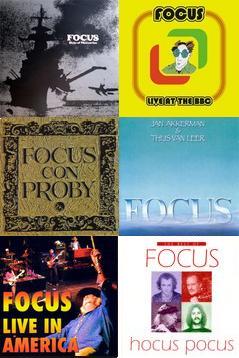
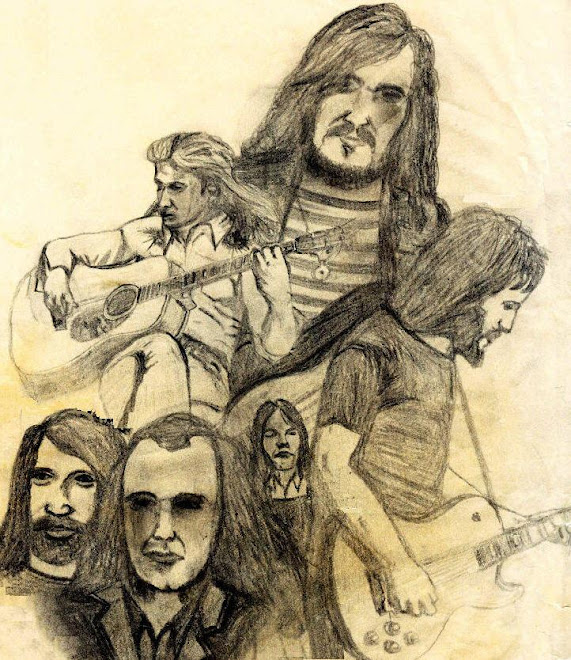
Looking at the music of Dutch rock band Focus, started in the late sixties by Thijs van Leer (b /31/03/48) with Jan Akkerman (b 24/12/46). Van Leer still performs and records under the name today (official site here). Akkerman's site here.

.

.
Showing posts with label Single. Show all posts

20090219

Track by track 84 Who's calling?

Archive number: 84
Title: Who's calling?
Main Album: Focus (1985). Also a single b/w Beethoven's Revenge.
Track number: 7
Genre: Progressive Rock Instrumental
Studio: Studio Spitsbergen, Zuidbroek, Groningen, The Netherlands (mixed at Dureco Studios, Weesp, The Netherlands)
Length: 16' 14” (7:30)
Composer: Jan Akkerman, Thijs van Leer
Musicians: Jan Akkerman - Synthesiser Guitar, drum machine; Thijs van Leer – Keyboards inc synthesisers, Flute, Vocals; Tato Gomez - Bass
Producer: Ruud Jacobs with Jan Akkerman, Thijs van Leer and Theo Balijon
Engineer: Emile Elsen, Jan Akkerman and Theo Balijon
Label: Mercury (Phonogram)/Vertigo
Date of recording/release: Recorded 1985 Released LP/CD -1985 CD – 1989.
Alternative version: There is a later version on Focus 11
Notes: There are longer and shorter versions of this piece. The edited version (more than 8 minutes shorter) appeared on the original vinyl version.
In typically prog rock fashion the closer is a slow march. This is briefly introduced by a dreamy flute and guitar with a synthesised background (00:00-00:29). The march is led first (00:30-01:44) by a synthesised guitar. The flute then takes up the lead (1:45-03:01) backed by guitar and the synthesised beat. At 03:02 there is a break down to a slower, pleasant guitar-led section (until 04:10 on the longer version). The longer version has a transitional section (04:11-04:16) before coming back to the main guitar led theme (04:17-05:31). This too breaks down again at 05:32 and goes on to 06:30 with guitar and a little flute. In 06:31-06:49 the guitar becomes more raucous and the flute more eastern in style. It's then back to the main flute theme again (06:50-08:03) followed by the main guitar theme (08:04-08:46). At 08:47 the flute joins in again and takes things up to another climax at 09:19. At 09:20-10:33 the longer version has a unique section exploring the theme further on more acoustic then more rock like guitars before eventually coming back to the main theme. In 10:33-11:17 the flute leads (in the longer version) in a different key. There is also a section (11:18-11:36) led by the high guitar sound. From 11:37-11:50 the flute takes up the lead again. From 11:51-13:06 (on the longer version; 05:34-06:50 on the shorter one) a choir like chant comes in (van Leer's synthesised and choired voice). The flute brings this section to its climax. The shorter version ends with the keyboards playing out until the fade. The longer version allows the keyboard section to become rather tedious (13:07-14:23) until it is finally rescued by the pleasant addition (14:24-16:08) of the flute (Akkerman has presumably left early). The piece then fades.

20090218

Track by track 82 Beethoven's Revenge

Archive number: 82
Title: Beethoven's Revenge (Bach-One-Turbo-Overdrive)
Main Album: Focus (1985). Also a single b/w Who's Calling?
Track number: 5
Genre: Progressive Rock Instrumental
Studio: Studio Spitsbergen, Zuidbroek, Groningen, The Netherlands (mixed at Dureco Studios, Weesp, The Netherlands)
Length: 18' 40" (10' 43")
Composer: Jan Akkerman
Musicians: Jan Akkerman - Synthesiser Guitar, drum machine, Acoustic Guitar; Thijs van Leer – Keyboards inc synthesisers, Flute; Ruud Jacobs – Acoustic Bass; Fairlight programmed by Ed Staring
Producer: Ruud Jacobs with Jan Akkerman, Thijs van Leer and Theo Balijon
Engineer: Emile Elsen, Jan Akkerman and Theo Balijon
Label: Mercury (Phonogram)/Vertigo
Date of recording/release: Recorded 1985 Released LP/CD -1985 CD – 1989.
Alternative version: My Pleasure on Akkerman's solo album Heartware provides the core of this piece
Notes: This track appears in its fullest form on the CD. The original vinyl had an edited version that lacked around 8 minutes of the original. The title references both the 19th Century Romantic composer Beethoven and the 1970s Canadian rock band Bachman Turner Overdrive. Focus had produced long tracks previously but they were mostly composite tracks. This track has several elements but is really more akin to a long jam session based around Akkerman's My Pleasure than anything symphonic.
The introduction (00:00-00:32) uses a strong beat and a scattered keyboard effect before a choppy guitar takes up the lead (00:33-01:02). A wistful, synthesised flute sound comes in next (01:03-01:37) before a new rhythm is introduced led by harp like sounds (probably from the keyboard but possibly the guitar) in 01:38-02:13. The flute like melody then recurs (02:14-02:45) before we break into the very catchy guitar riff that carries the piece (02:44-03:29). Another catchy section follows – probably on the keyboard this time (03:27-03:41). It is then the turn of the guitar again (03:42-04:10) before the original catchy guitar riff and succeeding section are repeated (04:10-04:25; 04:25-04:39). We then move in to a more minor key for the next section (4:40-05:09) before the flute-like, romantic style returns (05:10-05:39). A percussive guitar with bell-like sounds breaks across this for another fresh section (05:40-06:13). A section from 06:14-07:33 first harp-like then flute-like comes next on the extended version, edited out on the shorter one. In 07:34-08:10 the percussive guitar with bells returns and is followed by the catchy guitar, etc (08:11-08:23) then a quieter section with an organ sound (08:23-09:51) and the catchy guitar again (09:52-10:06). In 10:07-10:19 the catchy piece is repeated with a flute sound before another fresher section (10:20-11:26) with a struck harp sound (at 10:40, 41 and 10:49) plus a Spanish guitar. In 11:27-11:54 the synthesiser's pitch fluctuates rather. At 11:55 the double bass comes in as the main theme is attacked at length with an oddly pitched guitar. A large chunk of this final section is (helpfully) cut from the final guitar-led jam (from about 13:22). The band are still going as the music fades.

20081124

Track by track 72 Eddy

Archive number: 72
Title: Eddy
Main Album: Focus Con Proby. Also a single in 1977 b/w Sneezing Bull.
Track number: 4
Genre: Rock Vocal
Studio: EMI Studios, Hilversum, The Netherlands
Length: 5' 49"
Composer: Eef Albers
Musicians: P J Proby - Vocals; Eef Albers - Electric guitars; Thijs van Leer – Hammond, Bass Synthesiser; Bert Ruiter – Bass; Steve Smith - Drums
Producer: Yde de Jong
Engineer: Jan van Vrijaldenhoven/Mike Stavron
Label: EMI
Date of recording/release: Recorded 1977 Released 1978 LP – 1978 CD – 1998
Alternative versions: Roselie van Leer (Peters) sings an earlier version on van Leer's solo O my love and Jo De Roeck sings on a later version on Focus 9
Notes: The band open with bass and drums and 'violined' guitar and organ (00:00-00:09) then Proby comes in pleasantly crooning the lyric as follows

Just like Eddy in the morning
He never said, although he could
I know someone who would, but
He never woke to have an ear

Yes I think of things unnoticed
Like what happens in the egg
As it lies without motion
Just like Eddie's sleeping head

When I come home in the morning
Softly as I tread the dawn
I know things that are important
That have only just begun

I'm gonna fly away
Here I go here I go here I go
I'm gonna fly away
Here I go here I go here I go

Seeing you across the table
Smiles are dying on your face
Being here with my heart open
Seems a little out of place

I'm gonna fly away
Here I go here I go here I go
I'm gonna fly away
Here I go here I go here I go (repeated twice)

All the way, the guitar plays some fine licks against the vocal, which finally becomes breathless, insistent then indistinct, dying with a scream at 4:33, when the band takes over. The vocal is lost a little in the mix.
Note on Eddy
Eddy van Leer is Thijs van Leer's father. He plays with Thijs on the track Hommage (Song for pa) on the Thijs van Leer solo album Reflections. Van Leer senior, a competent classical flautist himself, bought his son a flute and gave him his first lessons when Thijs was around 11 or 12.

20080527

Track by track 42 Early Birth

Archive number: 42
Title: Early Birth
Main Album: Single with Harem Scarem 1974. Also on Hamburger Concerto (CD). Hamburger Concerto (CD version).
Track number: 6 (CD)
Genre: Progressive Rock Instrumental
Studio: Olympic Studios 'B', 117 Church Road, Barnes, London SW13 9HL
Length: 2' 53”
Composer: Akkerman
Musicians: Jan Akkerman – Electric Guitars (Fenders), Acoustic guitars; Thijs van Leer – Hammond organ, Flute; Bert Ruiter - Bass; Colin Allen – Drums
Producer: Mike Vernon
Engineer: Bob Hall
Label: Polydor, Atco, EMI, Red Bullet, JVC, JVC Victor Date of recording/release: January/March 1974; April 1974. CD – 1998, 2001, 2001, 2002, 2006
Alternative version: Birth (note also Virgin Mary)
Notes: This appears to be the original 'demo' of Birth – shorter, simpler in execution and with more of a live feel. The retronymic title shows it to be a more primitive version. Certainly the additional percussion is gone, as are the harpsichord, synthesiser and some of the production. There also appears to be an acoustic guitar present not discernible on Birth itself. This acoustic guitar riff provides the basis for Akkerman's later track Virgin Mary (Blues Hearts). Guitars, bass, organ and cymbals set the scene (00:00-00:23) then a drum-led beat kicks in with some funky electric guitar (00:24-00:43) building to a first flute-led solo (00:44-01:03) followed by one led by soaring electric guitar (01:04-01:31). A bridge follows featuring flute and acoustic guitar (01:32-01:46) before one more flute-led solo (01:47-02:17) and a rather truncated electric guitar-led solo (02:18-02:53) still rather far back in the mix and that never quite gets going before the fade.

20080313

Track by track 40 Harem Scarem

Archive number: 40
Title: Harem Scarem
Main Album: Hamburger Concerto. Also a single with Early Birth 1974.
Track number: 2
Genre: Jazz Rock Instrumental
Studio: Olympic Studios 'B', 117 Church Road, Barnes, London SW13 9HL
Length: 5' 50”
Composer: Anonymous
Musicians: Jan Akkerman – Electric Guitars (Fenders) and Talkbox?, Timpani; Thijs van Leer – Hammond organ, Grand piano, Voice, Flute, Accordion, Mellotron; Bert Ruiter - Bass; Colin Allen – Drums, Chinese Gong
Producer: Mike Vernon
Engineer: Bob Hall with David Hamilton-Smith and Rod Thear
Label: Polydor, Atco, EMI, Red Bullet, JVC, JVC Victor
Date of recording/release: January/March 1974; April 1974. CD – 1998, 2001, 2001, 2002, 2006
Notes: Van Leer says he wrote this one in a pub in Belgium about drinking and there is something quite rowdy about it, especially the way its beginning cuts in after the previous track. Harem Scarem means reckless, rash or wild. The duplicative rhyme echoes Hocus Pocus and the hope was for similar single success. Piano, guitar, bass and drums begin in unison with a strong beat. The latter three then alternate with an incredible jazzy guitar riff (00:00-00:12). The organ joins in next and the double tracked guitars really begin to rattle (00:13-01:27). The beat varies a little and at 01:07 van Leer attempts to move things along with some heavily reverbed Yeah, yeah, yeahs (01:07-01:27). Then, with a slight slowing of pace at 01:33-01:38, some reverbed Aahs follow and some timpani (01:39-01:59). A beautiful bridge follows, led first by guitar (02:00-02:11) then an electronically treated flute and accordion (02:12-02:25) with a Parisienne feel. The opening sequence is more or less repeated (but without the yeah, yeah section) and we come (03:30) to the bridge again. This time (03:41-03:53) the accordion is more prominent and the flute smoother. Just as things are about to get going again things slow once more and a very attractive jazz guitar break with piano, bass and drums, explores the theme further (04:00-05:05). Then it is back to the original jam (05:06) for a roaring finale that goes out on a glorious ascending note from van Leer that mingles with the final crash of a gong. The instruments are all carefully mixed and there is perhaps more evidence of production on this track than any previous one.

20080305

Track by track 35 P's March

Archive number: 35
Title: P's March
Main Album: Ship of Memories. Also a single in 1976 b/w Focus 5.
Track number: 1
Genre: Progressive Rock Instrumental
Studio: Chipping Norton Recording Studio, 26-32 New Street, Chipping Norton, Oxon, OX7 5LJ Length: 4' 45”
Composer: Thijs van Leer
Musicians: Jan Akkerman - Electric guitars; Thijs van Leer – Flute, Piccolo, Hammond organ, Clavinet, Mellotron; Bert Ruiter – Bass; Pierre van der Linden – Drums
Producer: Mike Vernon
Engineer: Barry Hammond and Dave Grinsted
Label: LP – EMI, Harvest, Sire CD – EMI-Bovema, IRS, Red Bullet, JVC
Date of recording/release: Final weeks of May 1973. Intended as a single but not released until 1976 (single) 1977 (LP). CD – 1988,1993, 2001, 2006
Alternative version: Van Leer used the track as the basis for his later Carmen Elysium on Introspection 2.
Notes: This, another track from the ill-fated trip to Oxfordshire, is really two alternating and perhaps too disparate pieces, each played twice over. The number begins with drums and two power chords on guitar then the whole band comes in with a repeated flute and piccolo-led jig with a bridge (00:00-01:23). It is followed by a lugubrious, dreamy-like guitar-led section that ends on a drawn out note (01:24-02:19). The sequence is repeated (02:20-02:56; 02:57-04:45) the guitar 'weeping' more the second time and becoming aggressive and insistent for a while (03:49-04:05), while the backing remains ballad-like. The whole ends with a distinct bass drum beat.

20080102

Track by track 18 Love Remembered

Archive number: 18
Title: Love Remembered
Main Album: Focus 3 (also a single in 1972)
Track number: 2
Genre: Classical/Progressive Rock Instrumental
Studio: Olympic Studios 'B', 117 Church Road, Barnes, London SW13 9HL
Length: 2' 45”
Composer: Jan Akkerman
Musicians: Jan Akkerman – Acoustic guitars; Thijs van Leer – Flute, Synthesizer, Voice; Bert Ruiter - Bass; Pierre van der Linden – Drums
Producer: Mike Vernon
Engineer: George Chkiantz
Label: LP – Imperial, Polydor, Sire CD – Capitol, EMI-Bovema, IRS, Red Bullet , JVC Victor
Date of recording/release: July 1972/November 1972, 1975 CD - 1988, 1993, 2001, 2002, 2004
Alternative version: A version by Toots Thielemans appeared subsequently and Akkerman himself later re-recorded the track in a very laid back style with Claus Ogerman and his orchestra (Aranjuez).
Notes: This beautiful piece opens with acoustic guitars that continue throughout the piece. Some seconds in, the flute takes up the main theme, backed by a high wind-like flute provided by a studio synthesizer. At 01:19 two beats from the drums, which were in the background until this point signal a new phase and van Leer's voice and more cymbals can be heard. The song builds from here with a great yearning, breaking down a little around 01:58 but finding some sort of resolve by 02:16 and returning to the opening style. We end with an extended flute note followed by a muted final chord from a guitar so leaving way on the album for the opening chords of Sylvia, the next track.

20071224

Track by track 16 Sylvia

Archive number: 16
Title: Sylvia
Main Album: Focus 3 (also a single in 1972 and 1973)
Track number: 3
Genre: Jazz Rock Instrumental
Studio: Olympic Studios 'B', 117 Church Road, Barnes, London SW13 9HL
Length: 03' 24"
Composer: Thijs van Leer
Musicians: Jan Akkerman – Electric guitars (Gibson Les Paul Customs?); Thijs van Leer – Hammond organ, Voice; Bert Ruiter - Bass; Pierre Van Der Linden – Drums
Producer: Mike Vernon
Engineer: George Chkiantz
Label: LP – Imperial, Polydor, Sire CD – Capitol, EMI-Bovema, IRS, Red Bullet, JVC Victor
Date of recording/release: July 1972/November 1972, 1975 CD - 1988, 1993, 2001, 2002, 2004
Alternative version: A live version appears on the Rainbow album. Van Leer has done acoustic versions (Hommage aan Rogier van Otterloo, etc). Akkerman likes to do what he calls Sylvia's grandmother emphasising his own contribution to the original hit. There have been some covers.
Notes: Apparently this was always intended as a single and so was probably recorded before the other material for Focus 3. One of Focus's most famous tracks, still played on the radio today, it was originally written by van Leer in the late sixties for Sylvia Alberts, when both were working as backing singers for Ramses Shaffy and Liesbeth List. The original piece used a lyric by Linda van Dijk, beginning "I thought I could do everything on my own, I was always stripping the town alone" (!). Alberts did not like the track and so it was shelved until being dusted down and used by Focus in its instrumental form. The Focus track begins with that famous jazz riff on guitars, reminiscent of the work of David T Walker, Louis Shelton and Don Peake on the 1969 Jackson 5 hit I want you back. The ambience is enhanced by heavy reverb from the one channel acting as a sort of drone against the chopped chords. (This is not found on live versions, of course). The organ and bass join in (00:09) then drums (00:15). The whole opening section lasts until 00:24, when the guitar leads the band into the main theme (00:25-00:42). The chopped chords then return (00:43-00:50) to be followed once again by the guitar-led theme (00:51-01:47). At 01:09-01:12 there is a brief bridge that features again at 01:48-02:00 where it is repeated three times, accompanied by van Leer's vibrato voice. In 02:01-02:45 we visit the main theme once again (note the distinctive variation around 02:18). This leads to a false ritartando ending when the chopped chords break in for the last time (02:46-02:54) again joined first by organ and bass (02:55-03:01) then drums (03:02-03:24) before the fade.

20071217

Track by track 15b Eruption (Part 2 - End of Orfeus, Answer, Pupilla, Answer, Tommy, Pupilla, Answer, The Bridge)

Archive number: 15b
Title: Eruption (Part 2 - End of Orfeus, Answer, Pupilla, Answer, Tommy, Pupilla, Answer, The Bridge)
Main Album: Moving Waves (Focus 2 in Holland). Tommy was also a single in 1972.
Track number: 6
Genre: Progressive Rock (Symphonic)
Studio: Sound Techniques Studio, 46a Old Church Street, Chelsea, London SW3
Length: This part 10' 44" (22' 57" the whole)
Composer: Thijs van Leer, Tom Barlage, Jan Akkerman, (Eelke Nobel, Pierre van der Linden)
Musicians: Jan Akkerman – Electric guitars (Gibson Les Paul Customs), Bass; Thijs van Leer – Hammond organ, Piano, Mellotron,Voice; Cyriel Havermans - Bass, Voice; Pierre van der Linden - Drums
Producer: Mike Vernon
Engineer: Jerry Boys
Label: LP - Imperial, Blue Horizon CD – EMI Bovema, IRS, Red Bullet
Date of recording/release: April, May 1971/October 1971. CD - 1988, 1993, 2001
Notes: Eruption is a brilliant composite piece that pulls together various musical elements. Album notes refer to as many as 15 different parts though the nature of the music means that there are overlaps and the debatable nature of deciding just where one part ends and another begins is reflected in the varied timings given. We have divided it into four parts in our own attempt to convey what is included. Next 03:50-14:34
03:50-04:15
At 03:50 slow solo organ comes in followed by 'violined' guitar as the opening theme is repeated to close the Orfeus element.
04:16-05:07 Answer
And so back to the fast guitar-led answer, which this time features drums and is brought to a conclusion by a short drum break, 04:38-05:07.
05:08-06:10 Pupilla
The next section is Pupilla. This is a band effort. It is quite slow and features ethereal background voices and mellotron. From 5:42 the guitar comes in and dominates.
06:11-07:58 Tommy
From here Akkerman features more, beginning with the wonderful Tommy – a soaring guitar with the band backing - still played by Akkerman today. The Who's rock opera Tommy made the name fashionable and The Who had performed much of it in Amsterdam in 1969vbut Tommy himself is the flautist and saxophonist Tom Barlage, who often played with Akkerman's previous band Brainbox. Barlage's own band Solution recorded a track called Divergence where one of the themes, played on saxophone, is this same tune.
07:59-08:30 Pupilla
After Tommy we return to the ethereal voices backed by the band for a short reprise of Pupilla.
08:31-09:17 Answer
We are then back into Answer with an ascending guitar-led band then strong chords. From 08:52 we have the Answer riff then a rising and falling scale (09:05-09:17) when we enter into the next section. The section 09:05-09:17 is discussed by a musicologist here in relation to a similar riff by the band Camel.
09:18-14:34 The Bridge
This begins with a heavy rock guitar-led section (09:18-11:35) concluded (11:36-12:01) with the Answer riff and rising scales. This Akkerman section is matched by a van Leer one, a heavy rock organ-led part (12:02-13:44) concluding again (13:45-14:10) with the Answer riff and rising scales. The final part of this section is the Break (14:11-14:34) where it is scorching solo guitar after the three introductory double beats from the rhythm section.

Track by track 14 Focus 2

Archive number: 14
Title: Focus 2
Main Album: Moving Waves (Focus 2 in Holland). Also a single in 1972.
Track number: 5
Genre: Progressive Rock/Jazz Instrumental
Studio: Sound Techniques Studio, 46a Old Church Street, Chelsea, London SW3 (and Morgan Studios, London)
Length: 4' 00”
Composer: Thijs van Leer
Musicians: Jan Akkerman – Electric guitars (Gibson Les Paul Customs), Bass; Thijs van Leer – Hammond organ, Piano, Mellotron, Voice; Cyriel Havermans - Bass; Pierre van der Linden - Drums
Producer: Mike Vernon
Engineer: Jerry Boys
Label: LP - Imperial, Blue Horizon CD – EMI Bovema, IRS, Red Bullet
Date of recording/release: April, May 1971/October 1971. CD - 1988, 1993, 2001
Alternative version: There is a live version on the Rainbow album. Van Leer has a classical version on Introspection. All the Focus tracks were redone to celebrate the fiftieth anniversary.
Notes: Very much a studio effort, with subtle use of the mellotron to build atmosphere, this piece has two main parts. The first (00:00-02:28) has two repeated sections. The first of these (00:00-00:51) opens with slow organ, piano and guitar (00:00-00:12). The guitar is 'violined' (00:13-00:24) and around 00:25 bass and drums join in and the guitar soon begins to soar (from 00:39 where the mellotron also probably begins). A jazz break follows (00:52-01:22 - only drums are heard at 01:02-01:06). The guitar leads the band on until the original theme, briefly slow then soaring, returns (01:23-01:47) after which the jazz break is repeated (01:48-02:29 [with the brief drum break at 01:58-02:02]). A second movement follows. This slowly builds, using mellotron, piano, 'James Bond' guitar and some harmonics to heighten atmosphere. The whole builds to a satisfying crescendo that is finally rounded off by what sounds like van Leer's voice mixed with the effect from the tremolo arm of Akkerman's guitar.

20071130

Track by track 10 Hocus Pocus

Archive number: 10
Title: Hocus Pocus
Main Album: Moving Waves (Focus 2 in Holland) (Also a single in edited form in 1971, 1972, 1973 and 1977)
Track number: 1
Genre: Progressive Rock Instrumental
Studio: Sound Techniques Studio, 46a Old Church Street, Chelsea, London SW3 (also Morgan Studios, London)
Length: 6' 40”
Composer: Jan Akkerman, Thijs van Leer
Musicians: Jan Akkerman – Electric guitars (Gibson Les Paul Customs), Bass; Thijs van Leer – Hammond organ, Yodelling, Whistles, Shouts, Claps, Flute, Harmonium; Cyriel Havermans - Bass; Pierre van der Linden - Drums
Producer: Mike Vernon
Engineer: Jerry Boys
Label: LP - Imperial, Blue Horizon CD – EMI Bovema, IRS, Red Bullet
Date of recording/release: April 13 - May 14 1971/October 1971. CD - 1988, 1993, 2001
Alternative versions: Among the many other versions of this piece are the single edit mentioned above, the US single version, a version by van Leer (Nice to have met you) and several live versions by Focus and Akkerman. There are also a number of covers by various bands. In 2010 a new mix (the Darius Syrossian & Nyra Mix) appeared in connection with a Nike advert for the 2010 football world cup. A further lease of fame came in 2017 with its use in the film Baby Driver.
Notes: When edited, this track was the single that later propelled Focus to fame. It was first seen on mainstream television in the UK on The Old Grey Whistle Test in November 1972. For the next 10 days Polydor had to devote its entire vinyl pressing plant to servicing the unexpected demand for Moving Waves.
Analysis of the self-mocking track reveals that it can be split into 15 constituent parts, beginning and ending with the full band but alternating with van Leer and his tricks all the way. We begin with electric guitars (first a single strummed guitar [00:00-00:09] with a single note from elsewhere at 00:05 before more guitars join in with the riff after first the drums then the whole band come in for the first run through of the riff (00:00-00:47). At 00:48 we have break 1 - the drums come in alone, followed by van Leer's yodel and a sort of scream. The band then come back in with the main theme (01:14-01:39) to be followed by break 2 - a repeat of the drums, yodel, scream sequence (1:40-02:04). The band come in again (02:05-02:32) but at the third break van Leer uses a strange unintelligible gnome-like gibberish (02:33-02:53). The order established, the band alternate with van Leer to the end. The yodel and scream come another twice. Between these breaks two other alternatives are used – break 4, a breathy flute (04:10-04:30) then break 5 - whistles, claps and a studio harmonium (04:56-05:12). Each time the band comes in, Akkerman's guitar grows wilder and more frenetic. The final yodel break (break 7) is at 05:43-06:03 and the band finale, introduced by screams or shouts, is at 06:04-06:40. The band end in unison. There is also an unconnected 1930s jazz number with the same title.
A note on Hocus Pocus (from Wikipedia)
Van Leer has said that the track has everything to do with rhyming with Focus and nothing to do with magic, however
Hocus Pocus is a generic term used by magicians, usually the magic words spoken when bringing about some sort of change. It was once a common term for a magician, juggler or other similar entertainer. In British English its most prevalent modern meaning is contrived nonsense, as in, "It was all a load of hocus pocus". The origins of the term remain obscure. Some believe it originates from a parody of the Roman Catholic liturgy of the eucharist, which contains the phrase Hoc est enim corpus meus (This is my body). This explanation goes back to speculations by Anglican Prelate John Tillotson who wrote (1694) "In all probability those common juggling words of hocus pocus are nothing else but a corruption of hoc est corpus, by way of ridiculous imitation of the priests of the Church of Rome in their trick of Transubstantiation." Others believe that it is an appeal to the Norse folklore magician Ochus Bochus. The Welsh hwca pwca (a "goblin's trick" or hoax) could also be the source. It may simply be imitation Latin with no meaning, made up to impress people: "I will speak of one man ... that went about in King James his time ... who called himself, The Kings Majesties most excellent Hocus Pocus, and so was he called, because that at the playing of every Trick, he used to say, Hocus pocus, tontus talontus, vade celeriter jubeo, a dark composure of words, to blinde the eyes of the beholders, to make his Trick pass the more currently without discovery, because when the eye and the ear of the beholder are both earnestly busied, the Trick is not so easily discovered, nor the Imposture discerned." Thomas Ady, A Candle in the Dark, 1656.

Track by track 9 House of the King

Archive number: 9
Title: House of the King
Main Album: In and Out of Focus (Left off the American album, it is on the album Focus 3. It was a single in 1970, 1971 [2], 1972, 1976, 1977, 1981 [12”] and 2001)
Track number: 5 (not on the Sire release)
Genre: Progressive Rock Instrumental (mainly acoustic)
Studio: EMI-Bovema Studios, Heemstede, Netherlands
Length: 2' 20"
Composer: Jan Akkerman
Musicians: Jan Akkerman - Acoustic guitars, Electric guitars (Fender telecasters), Handclaps; Thijs van Leer - Flutes, Handclaps, Piano; Martijn Dresden – Bass, Handclaps; Hans Cleuver - Drums
Producer: Tim Griek
Engineer: Andre Hooning
Label: LP - Imperial, Sire, Polydor; CD - EMI Bovema, IRS, Red Bullet
Date of recording/release: Late Summer/Autumn 1970 (1973 in the US. In 1974 the album appeared in Brazil as Pop Giants). CD – 1988, 1993, 2001.
Alternative version: Akkerman has produced more than one alternative version beginning with that on his solo album Tabernakel. Van Leer (who claims a disputed co-writing credit) has also tackled it more than once without Akkerman (eg on Hommage aan Rogier Van Otterloo).
Notes: This is one of the band's best known songs. It was recorded without producer Hubert Terheggen knowing and he was furious at first but he was impressed with the result. A very early original, it has often been re-recorded by the band and individual members in various forms. It has been covered by some minor bands and more than once used as introductory music on TV in the UK (Don't ask me – a popular science programme in the 70s; Saxondale – a more recent comedy). It predates the comparable work of Jethro Tull and Ian Anderson.
The piece begins with 12 seconds of double tracked acoustic guitars before going into the main theme, played on acoustic guitars, (reverbed) flute and bass with the percussion provided by drums on one channel and percussive hand claps on the other (00:00-01:25). At 00:34-00:44 and 01:06-01:16 the electric guitar can be heard with the flute (there are also an extra few flute trills between). Then comes the soaring 'middle eight' led by the electric guitar with acoustic guitars, bass and drums providing the rhythm (01:26-01:50). Piano chords are also heard in the mix. The piece closes with a brief half minute reprise of the main theme (01:51-2:20). The whole ends in unison on a final sustained note that suggests the gong eventually used by Akkerman for his Tabernakel version. Lyrics were written for the piece by Mike Hayes but never used. They can be seen in Peet Johnson's book.

20071128

Track by track 7 Focus (instrumental)

Archive number: 7
Title: Focus (Instrumental) [Also known as Focus 1]
Main Album: In and Out of Focus (Also on a single 1970)
Track number: 7 (first on the Sire release)
Genre: Progressive Rock Instrumental
Studio: Sound Techniques Studio, 46a Old Church Street, Chelsea, London SW3
Length: 9' 44”
Composer: Thijs van Leer
Musicians: Jan Akkerman - Electric guitars (Fender telecasters); Thijs van Leer - Hammond organ, Mellotron, Piano, Flute; Martijn Dresden – Bass; Hans Cleuver – Drums
Producer: Hubert Terheggen (RTM)
Engineer: Jerry Boys
Label: LP - Imperial, Sire, Polydor; CD - EMI Bovema, IRS, Red Bullet
Date of recording/release: Late January 1970/Autumn 1970 (1973 in the US. In 1974 the album appeared in Brazil as Pop Giants). CD – 1988, 1993, 2001.
Alternative version: A quite different version appears on van Leer's Introspection album. This has been covered on a new age mood record by The Lavender Hill Orchestra.
Notes: This is the much longer instrumental version of the opening track. It appears to be chiefly a live group session performed in the studio but the flute at the end perhaps and some of the guitar work has been overdubbed (the guitar is often double-tracked). There is plenty of reverb. Careful listening also reveals a mellotron (eg 02:07-02:25) and a piano (03:05-03:50) in the mix in the first section at certain points, as well as the organ. The track can be divided into two main sections. The first concludes (around 04:19-06:45) with a wild and bluesy guitar-led storm that has been brewing from the start as soaring and calmer passages have alternated all the way from the calm beginning (compare 00:00-01:06 with 01:07-01:18; 01:19-02:06 with 02:07-02:25 and 02:26-02:53 with 02:54-03:04). The final calm passage (03:05-03:50) leads into 03:51-04:18, which begins the rise. The second section is an increasingly wild flute-led romp (starting at 06:46) in which the guitar has a rather country-like sound but with some funky jazz playing too before breaking into heavy rock rhythms. The whole closes with a relatively abrupt ritardando, slowing down to a dying stop. It has been suggested that lines from Schubert's impromptu can be found hidden somewhere in the mix here.
Note on the mellotron (from Wikipedia)
An electro-mechanical, polyphonic keyboard originally developed and built in Birmingham in the early sixties, it superseded the Chamberlin, the world's first sample playback keyboard. The heart of the mellotron is a bank of magnetic audio tapes. Each has approximately 8 seconds playing time. Playback heads (under each key) enable the playing of pre-recorded sounds.
The earlier MkI and MkII models [Focus probably used a MkII] contained two side-by-side keyboards: on the right 18 selectable "lead/instrument" sounds (eg strings, flutes, brass); on the left pre-recorded musical rhythm tracks (in various styles).
The tape banks for the later, lighter-weight M400 models contain only 3 selectable sounds eg strings, cello, the famous eight-voice choir. The sound on each individual tape piece was recorded at the pitch of the key to which it was assigned. The M400 tapes came in a removable frame, which allowed for relatively quick changes to new racks of sounds.
First heard on records from the late sixties, through the 1970s the Mellotron had a major impact on rock music, particularly the 35 note (G-F) model M400 released 1970. It sold over 1800 units and became a trademark sound of the era's progressive bands. The MkI and MkII were not portable. All were expensive and temperamental and Focus probably used a studio instrument.
The unique sound of the Mellotron is produced by a combination of characteristics including the wow and flutter factor, the result being that each time a note is played it is slightly different from the previous time (a bit like a conventional instrument). The notes also interact with each other so that chords or even just pairs of notes have an extremely powerful sound.
Another factor in its strangely haunting quality of its most frequently-heard sounds is that the individual notes were recorded in isolation. For a musician accustomed to playing in an orchestral setting, this was unusual, and meant that he had nothing against which to intonate.

20071127

Track by track 6 Why Dream

Archive number: 6
Title: Why dream
Main Album: In and Out of Focus (Also a single in 1970)
Track number: 6 (second on the Sire release)
Genre: Jazz Pop Vocal
Studio: Sound Techniques Studio, 46a Old Church Street, Chelsea, London SW3
Length: 3' 54"
Composer: Thijs van Leer (music) Eric Cleuver (words)
Musicians: Jan Akkerman - Electric guitars (Fender telecasters), Acoustic guitars; Thijs van Leer - Vocals, Hammond organ, Piano; Martijn Dresden – Backing vocals, Bass; Hans Cleuver – Drums
Producer: Hubert Terheggen (RTM)
Engineer: Jerry Boys
Label: LP - Imperial, Sire, Polydor; CD - EMI Bovema, IRS, Red Bullet
Date of recording/release: Late January 1970/Autumn 1970 (1973 in the US. In 1974 the album appeared in Brazil as Pop Giants). CD – 1988, 1993, 2001.
Notes: The track begins with solemn strummed acoustic guitars, 'violined' electric guitar and organ (00:00-00:14). The reverbed vocal then comes in backed by acoustic and electric guitars, organ, bass, drums and some piano. Van Leer's vocal uses the same alternating and double tracking style found on Happy Nightmare. This vocal section takes up the bulk of the track (00:15-02:23). At 02:24 an instrumental section is dominated by Akkerman's echoing and horn-like electric guitars against acoustic guitars, organ and the rhythm section. For the only time on the album, the song ends with a fade.
The lyrics by Hans Cleuver's father are

“Why dream about the future?
Now is the present, as bad as the present can be.

Why dream about the future?
The light is dark, and darkness is all you can see.
 
Planes go flight by flight (Planes go flight by flight)
Ready for a fight (Ready for a fight)
Ships pass in the night (Ships pass) through the Bosphorus

Marching columns sound (Marching columns)
Reasons scattered, found
For me, for you
For all of us.

Why dream about the future?
The sun is shining upon a world full of fear.
Why dream about the future?
When the clash and the bang of that future is coming too near.

This is our time (This is our time)
We will drink this wine (We will drink this wine)
Reaches our cup (Reaches) And we like it fine.

Please don't hesitate
Before it is too late,
You had your chance and lived your fate.
 
We dream about the future!
Where we can change things as they ought to be.
 
We dream about the future!
Where we'll be moulding and choosing our own destiny.”

Peet Johnson suggest that the lyrics reflect the times. The reference to the Bosporus relates to the Soviet shipment of military supplies from Nikolayev in Ukraine to Hai Phong, North Vietnam via those Turkish straits.
Note on Fade (based on Wikipedia)
This is the first of a limited number of Focus tracks that fade out rather than coming to a definite conclusion. A recorded song can easily be gradually reduced to silence at its end (fade-out). A gradual increase from silence at the beginning (fade-in) can also be used. The length of fade can vary. Fading-out can serve as a recording solution for pieces of music that contain no obvious ending.
"Neptune", from orchestral suite The Planets by Gustav Holst is said to be the first piece of music to end with a fade-out. Though commonplace today, the effect bewitched audiences in the era before widespread recorded sound (1918).
The technique of ending a spoken or musical recording by fading out the sound goes back to the earliest days of recording. In the era of pre-electrical recording, this could only be achieved by either moving the sound source away from the recording horn or by gradually reducing the volume at which performers sang, played or spoke. With the advent of electrical recording, smooth and controllable fadeout effects could be easily achieved by simply reducing the input volume from the microphones using the fader on the mixing desk. No single recording can be reliably identified as "the first" to use the technique.

20071126

Track by track 5 Happy Nightmare

Archive number: 5
Title: Happy Nightmare (Mescaline)
Main Album: In and Out of Focus (Also a single in 1970)
Track number: 5 (third on the Sire release)
Genre: Jazz Pop Vocal
Studio: Sound Techniques Studio, 46a Old Church Street, Chelsea, London SW3
Length: 3' 59"
Composer: Thijs van Leer, Martijn Dresden (music) Mike Hayes (words)
Musicians: Jan Akkerman - Electric guitars (Fender telecasters), acoustic guitars; Thijs van Leer - Backing vocals, Piano, Hammond organ, Mellotron; Martijn Dresden – Vocals, Bass; Hans Cleuver – Drums; Cello - Wouter Moller
Producer: Hubert Terheggen (RTM)
Engineer: Jerry Boys
Label: LP - Imperial, Sire, Polydor; CD - EMI Bovema, IRS, Red Bullet
Date of recording/release: Late January 1970/Autumn 1970 (1973 in the US. In 1974 the album appeared in Brazil as Pop Giants). CD – 1988, 1993, 2001.
Notes: The track, which is an anti-drug song, begins with an introduction using the words given below in italics. These are sung against a cello and a steel strung acoustic guitar (Vicente Tatay Tomas, apparently) from opposite stereo channels. After a concluding guitar harmonic (00:00-01:24) the electric guitars (chopped and smooth), piano, mellotron, bass and drums begin in bossa nova style and Dresden (perhaps with van Leer backing) comes in, double tracked in several places. This is broken by a brief (01:36-01:50) instrumental break where the mellotron, set to orchestral mode, replaces the voice. The whole section ends at 02:21 when the instrumental breaks in again led by Akkerman's jazzy, increasingly chopped-style electric guitar (anticipating the style of Sylvia in part) and backed chiefly by Hammond organ through to 03:27. The opening lyrics are then repeated in a similar style to the introduction as a sort of coda or bookend (03:28-03:58) that closes with acoustic guitar and the cello sound.
The lyrics are the only ones of three possible sets by Mike Hayes used on the album

On a once in a life mescaline.
Floating over a mountain, like the sea.
Step off into the sun, feel the blood through you run,
On a once in a life mescaline.
Have a nightmare lifelong, live it through,
(Taste the beauty of a sweet red wine),
Grab for air, see your skin turning blue,
(Smell the freshness of the grass beneath the pines).
There's a man with three heads,
There's a girl with three beds,
See they're both running fast after me,
(Gonna catch you, gonna fill you full of love).
 
Have your head filled to the top with big pearls,
(Feel the softness of a mountain silk),
Then you hear someone's dead in the world,
(Sink your body in a cold bath of milk)
You can bet your sweet life
That they fought with a knife,
See they're all running fast after me,
(Wanna kiss you, run their fingers through your hair).
[Shorter break]
Get a feeling deep inside that you're dead,
(Can't you hear the clock of life ticking loud?),
Try to run from the snake pit in your bed,
(Then you find what you thought could not be found).
Smell the nearness of the grave,
Wonder if you can be saved,
Oh the world's still running fast after me,
(When they get you, gonna give you everything).
[Longer break]
On a once in a life mescaline.
Floating over a mountain, make the scene.
Step off into the sun, feel the blood through you run,
On a once in a life mescaline.


A note on Mescaline (from Wikipedia)
Mescaline (3,4,5-trimethoxyphenethylamine) is a psychedelic alkaloid of the phenethylamine class mainly used as a recreational drug, an entheogen and a tool in use to supplement various types of practises for transcendence, including in meditation, psychonautics and illegal psychedelic psychotherapy, whether self administered or not.
It occurs naturally in the peyote cactus
(Lophophora williamsii), the San Pedro cactus (Echinopsis pachanoi) and the Peruvian Torch cactus (Echinopsis peruviana), and in a number of other members of the Cactaceae. It is also found in small amounts in certain members of the Fabaceae (bean family), including Acacia berlandieri.
Mescaline was first isolated and identified in 1897 by the German Arthur Heffter and first synthesised in 1919 by Ernst Späth.
In the US it was made illegal in 1970 by the Comprehensive Drug Abuse Prevention and Control Act. It was prohibited internationally by the 1971 Convention on Psychotropic Substances and is categorised as a Schedule I hallucinogen by the CSA. Mescaline is only legal for certain natives (such as those involved in the Native American Church). Penalties for manufacture or sale can be as high as five years in jail and a fine of $15,000, with a penalty of up to one year and fine of $5000 for possession.

20071121

Track by track 2 Black Beauty

Archive number: 2
Title: Black Beauty
Main Album: In and Out of Focus (was Focus Plays Focus) Also a single in 1970 and 1971
Track number: 2 (fifth on Sire release)
Genre: Jazz Pop Vocal
Studio: Sound Techniques Studio, 46a Old Church Street, Chelsea, London SW3
Length: 3' 08"
Composer(s): Thijs van Leer (music) Erik Cleuver (words)
Musicians: Jan Akkerman - Electric guitar (Fender telecaster), acoustic guitars; Thijs van Leer - Vocals, Piano; Martijn Dresden – Bass, Trumpet; Hans Cleuver – Drums
Producer: Hubert Terheggen (RTM)
Engineer: Jerry Boys
Label: LP - Imperial, Sire, Polydor; CD - EMI Bovema, IRS, Red Bullet
Date of recording/release: Late January 1970/Autumn 1970 (1973 in the US. In 1974 the album appeared in Brazil as Pop Giants). CD – 1988, 1993, 2001.
Alternative version: An instrumental version was recorded much later and is on Focus 9.
Notes: The track begins with five successive screaming notes from the electric guitar spaced out over the opening 20 seconds with heavy drums, heavy but rhythmic bass then heavy drums again. The rhythm section are joined by an acoustic guitar and the vocal comes in at 00:21. Accompanied by guitars and piano, it goes on to 01:58 when there is an instrumental break featuring the electric guitar screams again and a partly muted trumpet (1:59-02:20). The band backed vocal then proceeds to the end via a key change (02:21-03:08). The number is again basically recorded live with perhaps some of the piano (used with the lyrics marked below in italics) and the electric guitar that appears at various points overdubbed as well as reverbed vocals and the trumpet. The lyrics have a rather eastern feel, which is reflected a little in the music. They contain a reference to the legend of King Solomon's affair with the Queen of Sheba. (Their meeting is recorded in Scripture but the love affair is pure legend). It has been suggested that the topic is an inter-racial liaison, a controversial matter in many places at that time. The lyrics are

“Night was stark, your skin was dark,
Your eyes were shining bright,
Oh black beauty, close in my heart.
I was King Solomon who held his Queen of Sheba tight,
Oh black beauty, held in my arms.

How we were told
Love was not meant for us,
Two diff'rent worlds kept apart,
Heart against heart.

But we knew where to find an opportunity,
Far away where no one was near.
We could meet there at night and with impunity,
Oh black beauty, love without fear.

Our love was wonderment,
So young and so pure.
I held your trembling hands,
I was so sure.


Then when our lips met
There was no returning,
The fire was burning
In our hearts.

(Break)

So we were told
Love was not meant for us,
Two different worlds kept apart,
Heart against heart.

But we knew where to find an opportunity,
Far away where no one was near.
I was King Solomon who held his Queen of Sheba tight,
Oh black beauty, love without fear.”

Peet Johnson tells us that an alternative set of lyrics called Questions was prepared by Mike Hayes but not used. They are re-produced in his book.
A note on the Queen of Sheba (from Wikipedia)
The Queen of Sheba (Malkat Shva) refers in Ethiopian history, the Old and New Testaments and the Qur'an to the woman who was ruler of the ancient kingdom of Sheba. The location of the historical kingdom may have included both Ethiopia and Yemen. Known to the Ethiopians as Makeda this queen has been called a variety of names by different peoples in different times. To King Solomon of Israel she was the Queen of Sheba. In Islamic tradition she was Bilqis. Roman historian Josephus calls her, Nicaula. She is thought to have lived in the 10th Century BC. Taking into account Genesis 10 many scholars see the Queen of Sheba as a descendant of the Semitic Sheba people located in southern Arabia but with origins in Ethiopia.
According to the Hebrew Bible, the unnamed queen of the land of Sheba heard of the great wisdom of Solomon and journeyed there with gifts of spices, gold, precious stones and beautiful wood and to test him with questions (1 Kings 10:1-13, 2 Chronicles 9:1-12). It is related further that the queen was awed by Solomon's great wisdom and wealth and pronounced a blessing on his deity the LORD. Solomon reciprocated with gifts and "everything she desired," whereupon the queen returned to her country. The queen was apparently quite rich, however, as she brought 4.5 tons of gold with her to give to Solomon (1 Kings 10:10). In the biblical passages which refer explicitly to the Queen of Sheba there is no hint of love or sexual attraction between Solomon and the Queen of Sheba. The two are depicted merely as fellow monarchs engaged in the affairs of state. The biblical text Song of Songs contains references, which at various times have been interpreted as referring to love between Solomon and the Queen of Sheba (but with no real warrant - there is little to identify the speaker in the text with the rich and powerful foreign queen depicted in Kings). It is the later Ethiopian tradition that Cleuver's lyrics reflect. This firmly asserts that Solomon seduced and impregnated his guest and provides a detailed story of how he went about it. The matter is of considerable importance to Ethiopians - as their emperors traced their lineage to that union.