.

Showing posts with label Akkerman Van Leer. Show all posts
Showing posts with label Akkerman Van Leer. Show all posts
20141213

20090407
Track by track 96 Hocus Pocus (Live FLIA)
Archive number: 96
Title: Hocus Pocus (Live)
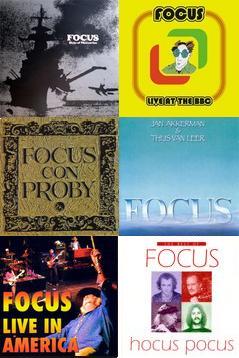
Main Album: Focus Live In America
Track number: 9
Genre: Live Progressive Rock Instrumental
Venue: Patriots Theater, 1 Memorial Drive, Trenton, New Jersey, USA
Length: 12' 57”
Composer: Thijs van Leer
Musicians: Thijs van Leer – Hammond organ, Flute, Voice, Whistling; Jan Dumee – Guitar; Bobby Jacobs - Bass; Bert Smaak - Drums
Producer: Gavin Bott/Bob Carruthers
Engineer: Mike Potter (Orion Sound) Mix (Total audio)
Label: Classical Rock Legends Limited
Date of recording/release: October 2002 (part of a two day Uriah Heep led classic rock legend festival that also featured Nektar, Mostly Autumn and Asia). Released on DVD and CD (edited) in 2003.
Alternative version: One of the most famous and oft repeated Focus tracks, it appeared first on the Moving Waves album.
Notes: On the DVD the flute improvisation that precedes it is separately credited. Beginning with organ too, the flute is mostly solo. This takes us to 02:35 when the organ comes in and van Leer begins on a sort of priestly singing in tongues. This then transmutes (to a loud cheer from the audience) into the famous yodel. Unable to get the high notes these days van Leer switches to a harsh whistling sound, supplemented by Dumee's voice. We are then into the main riff, complete with high volume (sometimes squealing) guitar. This is broken up twice by the yodel and scream, then the strange voice and scream. Third time round we have the low (Van Leer) and high (Dumee) voices. Next time it's the flute then the extended yodel (not quite as long as it used to be). The guitar is frenetic by this point but things cool down for the intros – Bobby Jacobs, Bertie Smaak, Jan Dumee and the man himself on organ and flute. We come out of that with a great driving bass and one more blast from the band ending in unison at 09:13. The crowd then cheer (one man's "Oh yeah" is very distinct), van Leer says thank you very much for the final time and that is the end – though on the CD we have edited in the intro for what is there the final track (Focus 3).
20090219
Track by track 84 Who's calling?
Archive number: 84
Title: Who's calling?
Main Album: Focus (1985). Also a single b/w Beethoven's Revenge.
Track number: 7
Genre: Progressive Rock Instrumental
Studio: Studio Spitsbergen, Zuidbroek, Groningen, The Netherlands (mixed at Dureco Studios, Weesp, The Netherlands)
Length: 16' 14” (7:30)
Composer: Jan Akkerman, Thijs van Leer
Musicians: Jan Akkerman - Synthesiser Guitar, drum machine; Thijs van Leer – Keyboards inc synthesisers, Flute, Vocals; Tato Gomez - Bass
Producer: Ruud Jacobs with Jan Akkerman, Thijs van Leer and Theo Balijon
Engineer: Emile Elsen, Jan Akkerman and Theo Balijon
Label: Mercury (Phonogram)/Vertigo
Date of recording/release: Recorded 1985 Released LP/CD -1985 CD – 1989.
Alternative version: There is a later version on Focus 11
Notes: There are longer and shorter versions of this piece. The edited version (more than 8 minutes shorter) appeared on the original vinyl version.
In typically prog rock fashion the closer is a slow march. This is briefly introduced by a dreamy flute and guitar with a synthesised background (00:00-00:29). The march is led first (00:30-01:44) by a synthesised guitar. The flute then takes up the lead (1:45-03:01) backed by guitar and the synthesised beat. At 03:02 there is a break down to a slower, pleasant guitar-led section (until 04:10 on the longer version). The longer version has a transitional section (04:11-04:16) before coming back to the main guitar led theme (04:17-05:31). This too breaks down again at 05:32 and goes on to 06:30 with guitar and a little flute. In 06:31-06:49 the guitar becomes more raucous and the flute more eastern in style. It's then back to the main flute theme again (06:50-08:03) followed by the main guitar theme (08:04-08:46). At 08:47 the flute joins in again and takes things up to another climax at 09:19. At 09:20-10:33 the longer version has a unique section exploring the theme further on more acoustic then more rock like guitars before eventually coming back to the main theme. In 10:33-11:17 the flute leads (in the longer version) in a different key. There is also a section (11:18-11:36) led by the high guitar sound. From 11:37-11:50 the flute takes up the lead again. From 11:51-13:06 (on the longer version; 05:34-06:50 on the shorter one) a choir like chant comes in (van Leer's synthesised and choired voice). The flute brings this section to its climax. The shorter version ends with the keyboards playing out until the fade. The longer version allows the keyboard section to become rather tedious (13:07-14:23) until it is finally rescued by the pleasant addition (14:24-16:08) of the flute (Akkerman has presumably left early). The piece then fades.
20080712
Track by track 68 Hocus Pocus (Live) BBC
Archive number: 68
Title: Hocus Pocus (Live)
ain Album: Live at the BBC
Track number: 9
Genre: Live Progressive Rock Instrumental
Venue: New Victoria Theatre, 17 Wilton Road, London SW1V 1LL (now Apollo Victoria)
Length: 5' 45”
Composer: Thijs van Leer/Jan Akkerman
Musicians: Philip Catherine - Electric guitars; Thijs van Leer – Electric piano, Mellotron, Vocal, Voice; Bert Ruiter – Bass; David Kemper – Drums
Producer: BBC
Engineer: BBC
Label: Hux Records
Date of recording/release: Recorded March 21 1976 but only released (on CD) June 1 2004
Alternative versions: There are many of these
Notes: This somewhat unusual rendition of Hocus Pocus is an encore. Philip Catherine had only been playing it around a month at the time so all the emphasis is on van Leer's antics. All the changes are rung, beginning, unusually, with a yodel and scream (00:00-00:16) then interleaving frenetic band work outs, followed by drum breaks, with a second yodel and scream (00:38-00:51), the strange voice and scream (01:14-01:26), a slightly extended yodel with a low then high voice (01:47-02:08), the flute (02:30-02:38), an extended yodel and scream (03:01-03:26), some whistling (03:47-04:08) and introductions (04:30-05:02) ending with “Thijs van Leeeeeeeer”. Then we have the final riff and close (05:03-05:34) with applause to close the album (05:35-05:45).
20080607
Track by track 58 My Sweetheart
Archive number: 58
Title: My Sweetheart
Main Album: Mother Focus
Track number: 11
Genre: Funky Pop Instrumental
Studio: Decca Studios, Hollywood, Los Angeles, California (later Studio 55)
Length: 3' 28”
Composer: Thijs van Leer, Jan Akkerman
Musicians: Jan Akkerman - Electric sitars; Thijs van Leer – Piano, Mellotron, Flute; Bert Ruiter – Bass; David Kemper – Drums, Congas
Producer: Hubert Terheggen/Focus
Engineer: Eric Prestidge
Label: LP – Polydor, Atco, Philips, EMI
Date of recording/release: Recorded 1975, released October 1975. LP – 1975, 1977, CD - 1988
Alternative version: Van Leer repeated this track on his solo album Nice to have met you.
Notes: This bass driven piece of disco-influenced pop music begins with the whole band grooving (00:00-00:15) before the electric sitar strikes out a melody (00:16-02:04). It is the sitar that carries the load for most of the time though the flute (possibly synthesised at first) can also be heard in the background (01:17-01:33). A flute-led bridge then takes us on (02:05-02:16) until the sitar leads again (02:17-02:30). The flute is heard again (02:31-02:43) and things break down (02:44-02:49) until a bass-led break (02:50-03:07) some more flute (03:08-03:20) and a fade (03:21-03:28).
20080530
Track by track 48a Red sky at night
Archive number: 48a
Title: Red sky at night
Main Album: Ship of Memories
Track number: 6
Genre: Progressive Rock Instrumental
Studio: Decca Studios, Hollywood, Los Angeles, California (later Studio 55)
Length: 5' 48"
Composer: Thijs van Leer, Jan Akkerman, Jules Deelder
Musicians: Jan Akkerman - Electric guitars, Vocals; Thijs van Leer – Vocals, Bass Moog, Hammond organ, Mellotrons, Piano, Electric Piano, Wind machine; David Kemper - Drums
Producer: Focus
Engineer: Mike Butcher or Eric Prestidge?
Label: LP – EMI, Harvest, Sire CD – EMI-Bovema, IRS, Red Bullet, JVC
Date of recording/release: 1975 but not released in this form until 1977 (LP). CD – 1988,1993, 2001, 2006.
Alternative version: This is the instrumental backing track for the vocal track Avondrood [48b], presumably laid down like this before the vocals were added.
Notes: A wind machine is heard at the beginning and end (00:00-00:13/05:29-05:48) and in the background throughout. The band comes in together (at 00:14) led by Akkerman's guitar soaring over a slow march featuring van Leer on pianos and bass Moog. There is a beautiful guitar-led bridge (01:53-02:14) before the earlier theme is repeated. The second time the flute leads taking up the bridge part and developing it (02:47-03:51). It is later interspersed with varied fretwork on guitar until a ritartando descends. Things then take off again, led by the piano-backed rising then soaring guitar (03:52-04:18). The section closes with a decisive cymbal crash (04:18) a note from the electric piano (04:19) and a wind machine-backed caesura (04:20-04:22) before the drums and a strong piano chord (04:23-04:26) announce the final section, where the organ is heard with the piano while the guitar (now more horn-like) still leads. A flute is heard at 04:52-04:57 as the piece slowly fades away (04:27-05:28).
20080527
Track by track 44a Hamburger Concerto Part 1 (Starter)
Archive number: 44a
Title: Hamburger Concerto (Part 1 Starter)
Main Album: Hamburger Concerto
Track number: 5a
Genre: Progressive Rock Instrumental (Symphonic)
Studio: Olympic Studios 'B', 117 Church Road, Barnes, London SW13 9HL
Length: 1' 59” (20' 15” the whole)
Composer: Thijs van Leer (Based on Brahms/Haydn)
Musicians: Jan Akkerman – Electric Guitars (Fenders), Timpani; Thijs van Leer – Hammond organ, Piano, ARP Synthesiser; Bert Ruiter - Bass; Colin Allen – Drums, Timpani
Producer: Mike Vernon
Engineer: Bob Hall
Label: Polydor, Atco, EMI, Red Bullet, JVC, JVC Victor
Date of recording/release: January/March 1974; April 1974. CD – 1998, 2001, 2001, 2002, 2006
Alternative version: Van Leer first made use of the Haydn piece back in the Ramses Shaffy days. It can be heard twice on the album Sunset Sunkiss.
Notes: The opening part draws on the St Anthony Chorale by Haydn later taken up by Brahms who wrote variations on it. We begin with the organ, backed by the guitar acting as a drone and with a timpani roll (00:00-00:14). This leads into a statement of the Haydn theme by 'violined' guitar, backed by a meandering bass (00:15-00:29). The timpani come in again along with a jangling piano (00:30-00:36) before reverting to the guitar and bass alone with the organ in the background and distant timpani (00:37-00:55). The synthesiser then leads (from 00:56). A cymbal is tapped (01:01) and the synthesiser part is repeated, then a guitar with an effect pedal on (used often in the piece) comes in too. At 01:21 the guitar leads the band for the first dramatic statement of Akkerman's main 13-note riff, which is played twice. Next we revert to the earlier theme on 'violined' guitar and bass, first with jangling piano then a drum roll (01:34-01:46) and the riff is again played twice.
Note on Variations on a Theme by Joseph Haydn (from Wikipedia):
Consisting of a theme in B-flat major, eight variations and a finale, it was composed in summer 1873 by Johannes Brahms and published in two versions: variations for two pianos, written first (Op 56b) and the same piece for orchestra (Op 56a). The piece is usually about 18 minutes in length. The first performance of the orchestral version was given November 2, 1873 by the Vienna Philharmonic under Brahms's baton.
Origin of the theme
Recent scholarship has revealed that, despite the title of the work, the theme is very unlikely to be by Haydn. In 1870, Brahms's friend Carl Ferdinand Pohl, librarian for the Vienna Philharmonic, was working on a Haydn biography and showed Brahms a transcription he had made of a piece attributed to Haydn (Divertimento No 1). The second movement bore the heading St Anthony Chorale. While current usage still prefers the original title, Variations on the St Anthony Chorale is the name favoured by those who object to perpetuating a misattribution. Even that name, however, tells us very little. To date, no other mention of the so-called "St Anthony Chorale" has been found.
Form
The theme begins with a repeated ten-measure passage which itself consists of two intriguing five-measure phrases, a quirk that is likely to have caught Brahms's attention. Almost without exception, the eight variations follow the phrasal structure of the theme and, though less strictly, the harmonic structure as well. Each has a distinctive character.
20080306
Track by track 37 Focus 5
Archive number: 37
Title: Focus 5
Title: Focus 5
Main Album: Ship of Memories. Also a single in 1975 b/w P's March.
Track number: 3
Genre: Jazz Rock Instrumental
Studio: Chipping Norton Recording Studio, 26-32 New Street, Chipping Norton, Oxon, OX7 5LJ
Length: 2' 57”
Composer: Thijs van Leer
Musicians: Jan Akkerman - Electric guitars; Thijs van Leer – Mellotrons, Flute; Bert Ruiter – Bass; Pierre Van Der Linden – Drums
Producer: Mike Vernon
Engineer: Barry Hammond and Dave Grinsted
Label: LP – EMI, Harvest, Sire CD – EMI-Bovema, IRS, Red Bullet, JVC
Date of recording/release: Final weeks of May 1973. Not released until 1977 (LP). CD – 1988, 1993, 2001, 2006.
Notes: This fourth salvaged track is a slow, subtle, laid back 'Focus' number and is beautiful. It is chiefly led by a double tracked lounge jazz electric guitar, though there is an alto flute passage in the middle at 01:37-02:06. Classically composed it is really jazz rock. Apparently the basic track was laid down first and it was only days later that, late one night, Akkerman finally added the guitars. Although composed and recorded prior to Focus IV it gets the name Focus V as it was only published after Focus IV had been released. Van Leer has a classical version on Introspection 3. Comparisons have been drawn with Akkerman's Javeh (Tabernakel) and Beyond the Loneliest Sea performed with Peter Banks (Two Sides of Peter Banks).
Track number: 3
Genre: Jazz Rock Instrumental
Studio: Chipping Norton Recording Studio, 26-32 New Street, Chipping Norton, Oxon, OX7 5LJ
Length: 2' 57”
Composer: Thijs van Leer
Musicians: Jan Akkerman - Electric guitars; Thijs van Leer – Mellotrons, Flute; Bert Ruiter – Bass; Pierre Van Der Linden – Drums
Producer: Mike Vernon
Engineer: Barry Hammond and Dave Grinsted
Label: LP – EMI, Harvest, Sire CD – EMI-Bovema, IRS, Red Bullet, JVC
Date of recording/release: Final weeks of May 1973. Not released until 1977 (LP). CD – 1988, 1993, 2001, 2006.
Notes: This fourth salvaged track is a slow, subtle, laid back 'Focus' number and is beautiful. It is chiefly led by a double tracked lounge jazz electric guitar, though there is an alto flute passage in the middle at 01:37-02:06. Classically composed it is really jazz rock. Apparently the basic track was laid down first and it was only days later that, late one night, Akkerman finally added the guitars. Although composed and recorded prior to Focus IV it gets the name Focus V as it was only published after Focus IV had been released. Van Leer has a classical version on Introspection 3. Comparisons have been drawn with Akkerman's Javeh (Tabernakel) and Beyond the Loneliest Sea performed with Peter Banks (Two Sides of Peter Banks).
Track by track 36 Out of Vesuvius
Archive number: 36
Title: Out of Vesuvius
Main Album: Ship of Memories
Track number: 4
Genre: Progressive Rock Instrumental
Studio: Chipping Norton Recording Studio, 26-32 New Street, Chipping Norton, Oxon, OX7 5LJ
Length: 5' 43”
Composer: Thijs van Leer
Musicians: Jan Akkerman - Electric guitars; Thijs van Leer – Electric piano; Bert Ruiter – Bass; Pierre van der Linden – Drums
Producer: Mike Vernon
Engineer: Barry Hammond and Dave Grinsted
Label: LP – EMI, Harvest, Sire CD – EMI-Bovema, IRS, Red Bullet, JVC
Date of recording/release: Final weeks of May 1973. Not released until 1977 (LP). CD – 1988, 1993, 2001, 2006.
Notes: This third offering from the Chipping Norton sessions is an extract from music recorded as a follow up to Eruption that would later transmute into part of the Hamburger Concerto (Medium 1?). (Vesuvius is a volcano near Naples, Italy, that has erupted many times - 1944 was the last. Most famously it destroyed Pompei in 79 AD). It has a very live feel to it with little evidence of over dubbing. We begin with some atmospheric tinkling on electric piano, guitar, bass and drums [tom toms and cymbals] (00:00-00:45). After a 3 second caesura (00:46-00:48) Akkerman breaks in with a wailing guitar and then leads a slightly lumbering band through the first part of the number (00:49-03:44). Overlapping with the end of Akkerman's lead van Leer then takes things up on electric piano (03:45-05:43) to the fade. The electric piano is not an instrument used elsewhere by Focus.
A note on the electric piano (from Wikipedia)
An electric piano is an electric musical instrument. They began to be popular in the late sixties and were at the height of their popularity in the seventies but are still used today. Many models were designed for home or school use or to replace a (heavy) and un-amplified piano on stage, while others were originally conceived for use in school or college piano labs for the simultaneous tuition of several students using headphones. Unlike a synthesiser, the electric piano is not an electronic instrument, but electro-mechanical. Electric pianos produce sounds mechanically and the sounds are turned into electronic signals by pickups.
The earliest electric pianos were invented in the late twenties; the 1929 Neo-Bechstein electric grand piano was among the first. Probably the earliest stringless model was Lloyd-Loar's Vivi-Tone Clavier.
Van Leer's preferred instrument was the distinctive Fender Rhodes model. The first one was produced in 1965. The Rhodes' action is quite different from that of a conventional piano. Whereas in a conventional piano each key causes the hammers to strike sets of strings, in a Rhodes piano the hammers strike tines instead. The result is a unique, fat sound with a bellish attack and good sustain. Since 1974 the Fender name has been dropped and just Rhodes has been used.
20080209
Track by track 32 Hocus Pocus Reprise
Archive number: 32
Title: Hocus Pocus (reprise)
Main Album: Focus at the Rainbow
Track number: 7
Genre: Live Progressive Rock Instrumental
Venue: Rainbow Theatre, Finsbury Park, 232 Seven Sisters Road, N4 3NX (recorded using Pye Studios Mobile Unit and edited from the two performances)
Length: 2' 43” (or 03' 03” as originally played)
Composer: Thijs van Leer, Jan Akkerman
Musicians: Jan Akkerman – Electric guitar (Gibson Les Paul Custom); Thijs van Leer – Hammond organ, Voice; Bert Ruiter - Bass; Pierre van der Linden – Drums
Producer: Mike Vernon
Engineer: Phil Dunne
Label: LP – Polydor, Sire CD – EMI-Bovema, IRS, Red Bullet, JVC Victor
Date of recording/release: May 4, 5 1973/October 1973 (May 4 concert televised UK July 1973) CD 1988, 1993, 2001, 2002, 2004, 2006
Alternative version: The original is on Moving Waves
Notes: This reprise of Hocus Pocus immediately follows Sylvia. It begins with Akkerman's chopped guitar (00:00-00:03) playing the opening part from the US single. The guitar is joined by strong bass (00:04) then drums (00:11) then the whole band (00:28). This is followed, after a very brief caesura, by the main theme (00:35-00:58). The break features van Leer's voice singing operatically high at first then very low, before breaking into a chanting style, accompanied by the audience's claps. This gets faster and faster until the 'scream' breaks in and (01:43) the band returns with the theme (01:49) at break neck speed. The whole is then brought to a dramatic, climactic and unified end at 02:09. Clapping, cheers and whistles follow and fade. The track has been subject to an edit around 02:17. On the orginal some 20 seconds of Akkerman playfully sliding his hand down the guitar neck to a halt have been excised to make for a more satisfying audio experience.
20080208
Track by track 29 Hocus Pocus (Live)
Archive number: 29
Title: Hocus Pocus (Live)
Main Album: Focus at the Rainbow
Track number: 5
Genre: Live Progressive Rock Instrumental
Venue: Rainbow Theatre, Finsbury Park, 232 Seven Sisters Road, N4 3NX (recorded using Pye Studios Mobile Unit and edited from the two performances)
Length: 8' 29"
Composer: Thijs van Leer, Jan Akkerman
Musicians: Jan Akkerman – Electric guitar (Gibson Les Paul Custom); Thijs van Leer – Hammond organ, Voice; Bert Ruiter - Bass; Pierre van der Linden – Drums
Producer: Mike Vernon
Engineer: Phil Dunne
Label: LP – Polydor, Sire CD – EMI-Bovema, IRS, Red Bullet, JVC Victor
Date of recording/release: May 4, 5 1973/October 1973 (May 4 concert televised UK July 1973) CD 1988, 1993, 2001, 2002, 2004, 2006
Alternative version: The original is on Moving Waves
Notes: This live version is based more on the US single rather than the album version. The pace is certainly hot. Akkerman begins it with just his guitar (00:00-00:13). The snare comes in at 00:14 and then the full drum kit at 00:34, followed by the full band at 00:46 as they run through the main riff for the first time. At 01:09-01:24 the yodelling and scream come in for the first time and this alternating pattern continues fairly predictably to the four minute mark - Full band (01:25-01:48) Yodelling, etc (01:49-02:04) Full band (02:05-02:27) Strange voice (02:28-02:40) Full band (02:41-03:03) Yodelling, including the low voice then the high voice (03:04-03:27) Full band (03:28-03:50) Flute (helped by guitar) (03:51-04:00). We then have the full band again (04:01-04:23) followed by another yodelling section (04:24-04:58) that includes an extended piece of yodelling (26 seconds altogether!) followed by a big breath at 04:50. After the full band (04:59-05:20) we have whistling with the organ and some guitar (05:21-05:42) the full band again (05:43-06:05) and then the famous introduction sequence (06:06-06:54). The words are 'On the bass guitar Bert Ruiter ... and on the drums Pierre van der Linden ... Guitar Jan Akkerman ... organ the flute Thijs van Leeeeeeeeeeeeeeeeeeer!' Then it is once more for the full band (06:55-07:16) and the guitar-led ending – first comic, then dramatic (07:17-07:48). Applause follows with whistles and claps for an encore and a cheer (08:16). Some young men can be heard shouting 'House of the King' as the band returns and prepares to play Sylvia (07:49-08:29).
20080117
Track by track 24 Hocus Pocus 2

Title: Hocus Pocus 2 (US Single)
Main Album: Ship of Memories (first released as a single in the US, it is also on Masters of Rock 1974, Dutch Masters 1975, Best of Focus 1993, etc)
Track number: 10
Genre: Progressive Rock Instrumental
Studio: Chipping Norton Recording Studio, 26-32 New Street, Chipping Norton, Oxon, OX7 5LJ?
Length: 03' 22”
Composer: Jan Akkerman, Thijs van Leer
Musicians: Jan Akkerman – Electric guitar (Gibson Les Paul Customs?); Thijs van Leer – Hammond organ, Flute; Bert Ruiter - Bass; Pierre van der Linden – Drums
Producer: Mike Vernon
Engineer: ?
Label: Single – Sire LP – Imperial, Polydor, Sire CD – EMI-Bovema, IRS, Red Bullet, JVC Victor
Date of recording/release: Single, April 1973. Ship of Memories – LP 1974, 1976, CD – 1998, 2001, 2002, 2006
Notes: Also known as the fast version, this remake was designed for the US market at the request of the record company head. It eventually reached number 9 on the Billboard Hot 100 staying in the charts for around 19 weeks. This practically live version begins with a new bass riff accompanied by the band (00:00-00:07) before breaking into a more familiar guitar-led riff (00:08-00:23) and the even more familiar classic theme (00:24-00:45). At 00:46 the drums come in alone, followed by the yodel and a sort of scream. The band then come back in with the main theme (01:09-01:25) to be followed by the strange voice with yodel sequence (01:26-01:43). The band come in again (01:44-01:54) to be followed by the drums, yodel, scream sequence (01:55-00:00) this time with a low voice (02:13-02:16) high voice (02:17-02:20) contrast before a mad guitar-led frenzy (02:21-02:43). The final drum break follows (02:44-02:48) before closing with the bass riff from the beginning, this time featuring lead guitar licks before fading from 03:12.
20071130
Track by track 10 Hocus Pocus
Archive number: 10
Title: Hocus Pocus
Main Album: Moving Waves (Focus 2 in Holland) (Also a single in edited form in 1971, 1972, 1973 and 1977)
Track number: 1
Genre: Progressive Rock Instrumental
Title: Hocus Pocus
Main Album: Moving Waves (Focus 2 in Holland) (Also a single in edited form in 1971, 1972, 1973 and 1977)
Track number: 1
Genre: Progressive Rock Instrumental
Studio: Sound Techniques Studio, 46a Old Church Street, Chelsea, London SW3 (also Morgan Studios, London)
Length: 6' 40”
Composer: Jan Akkerman, Thijs van Leer
Musicians: Jan Akkerman – Electric guitars (Gibson Les Paul Customs), Bass; Thijs van Leer – Hammond organ, Yodelling, Whistles, Shouts, Claps, Flute, Harmonium; Cyriel Havermans - Bass; Pierre van der Linden - Drums
Producer: Mike Vernon
Engineer: Jerry Boys
Label: LP - Imperial, Blue Horizon CD – EMI Bovema, IRS, Red Bullet
Date of recording/release: April 13 - May 14 1971/October 1971. CD - 1988, 1993, 2001
Length: 6' 40”
Composer: Jan Akkerman, Thijs van Leer
Musicians: Jan Akkerman – Electric guitars (Gibson Les Paul Customs), Bass; Thijs van Leer – Hammond organ, Yodelling, Whistles, Shouts, Claps, Flute, Harmonium; Cyriel Havermans - Bass; Pierre van der Linden - Drums
Producer: Mike Vernon
Engineer: Jerry Boys
Label: LP - Imperial, Blue Horizon CD – EMI Bovema, IRS, Red Bullet
Date of recording/release: April 13 - May 14 1971/October 1971. CD - 1988, 1993, 2001
Alternative versions: Among the many other versions of this piece are the single edit mentioned above, the US single version, a version by van Leer (Nice to have met you) and several live versions by Focus and Akkerman. There are also a number of covers by various bands. In 2010 a new mix (the Darius Syrossian & Nyra Mix) appeared in connection with a Nike advert for the 2010 football world cup. A further lease of fame came in 2017 with its use in the film Baby Driver.
Notes: When edited, this track was the single that later propelled Focus to fame. It was first seen on mainstream television in the UK on The Old Grey Whistle Test in November 1972. For the next 10 days Polydor had to devote its entire vinyl pressing plant to servicing the unexpected demand for Moving Waves.
Analysis of the self-mocking track reveals that it can be split into 15 constituent parts, beginning and ending with the full band but alternating with van Leer and his tricks all the way. We begin with electric guitars (first a single strummed guitar [00:00-00:09] with a single note from elsewhere at 00:05 before more guitars join in with the riff after first the drums then the whole band come in for the first run through of the riff (00:00-00:47). At 00:48 we have break 1 - the drums come in alone, followed by van Leer's yodel and a sort of scream. The band then come back in with the main theme (01:14-01:39) to be followed by break 2 - a repeat of the drums, yodel, scream sequence (1:40-02:04). The band come in again (02:05-02:32) but at the third break van Leer uses a strange unintelligible gnome-like gibberish (02:33-02:53). The order established, the band alternate with van Leer to the end. The yodel and scream come another twice. Between these breaks two other alternatives are used – break 4, a breathy flute (04:10-04:30) then break 5 - whistles, claps and a studio harmonium (04:56-05:12). Each time the band comes in, Akkerman's guitar grows wilder and more frenetic. The final yodel break (break 7) is at 05:43-06:03 and the band finale, introduced by screams or shouts, is at 06:04-06:40. The band end in unison. There is also an unconnected 1930s jazz number with the same title.
Notes: When edited, this track was the single that later propelled Focus to fame. It was first seen on mainstream television in the UK on The Old Grey Whistle Test in November 1972. For the next 10 days Polydor had to devote its entire vinyl pressing plant to servicing the unexpected demand for Moving Waves.
Analysis of the self-mocking track reveals that it can be split into 15 constituent parts, beginning and ending with the full band but alternating with van Leer and his tricks all the way. We begin with electric guitars (first a single strummed guitar [00:00-00:09] with a single note from elsewhere at 00:05 before more guitars join in with the riff after first the drums then the whole band come in for the first run through of the riff (00:00-00:47). At 00:48 we have break 1 - the drums come in alone, followed by van Leer's yodel and a sort of scream. The band then come back in with the main theme (01:14-01:39) to be followed by break 2 - a repeat of the drums, yodel, scream sequence (1:40-02:04). The band come in again (02:05-02:32) but at the third break van Leer uses a strange unintelligible gnome-like gibberish (02:33-02:53). The order established, the band alternate with van Leer to the end. The yodel and scream come another twice. Between these breaks two other alternatives are used – break 4, a breathy flute (04:10-04:30) then break 5 - whistles, claps and a studio harmonium (04:56-05:12). Each time the band comes in, Akkerman's guitar grows wilder and more frenetic. The final yodel break (break 7) is at 05:43-06:03 and the band finale, introduced by screams or shouts, is at 06:04-06:40. The band end in unison. There is also an unconnected 1930s jazz number with the same title.
A note on Hocus Pocus (from Wikipedia)
Van Leer has said that the track has everything to do with rhyming with Focus and nothing to do with magic, however
Van Leer has said that the track has everything to do with rhyming with Focus and nothing to do with magic, however
Hocus Pocus is a generic term used by magicians, usually the magic words spoken when bringing about some sort of change. It was once a common term for a magician, juggler or other similar entertainer. In British English its most prevalent modern meaning is contrived nonsense, as in, "It was all a load of hocus pocus". The origins of the term remain obscure. Some believe it originates from a parody of the Roman Catholic liturgy of the eucharist, which contains the phrase Hoc est enim corpus meus (This is my body). This explanation goes back to speculations by Anglican Prelate John Tillotson who wrote (1694) "In all probability those common juggling words of hocus pocus are nothing else but a corruption of hoc est corpus, by way of ridiculous imitation of the priests of the Church of Rome in their trick of Transubstantiation." Others believe that it is an appeal to the Norse folklore magician Ochus Bochus. The Welsh hwca pwca (a "goblin's trick" or hoax) could also be the source. It may simply be imitation Latin with no meaning, made up to impress people: "I will speak of one man ... that went about in King James his time ... who called himself, The Kings Majesties most excellent Hocus Pocus, and so was he called, because that at the playing of every Trick, he used to say, Hocus pocus, tontus talontus, vade celeriter jubeo, a dark composure of words, to blinde the eyes of the beholders, to make his Trick pass the more currently without discovery, because when the eye and the ear of the beholder are both earnestly busied, the Trick is not so easily discovered, nor the Imposture discerned." Thomas Ady, A Candle in the Dark, 1656.
Subscribe to:
Posts (Atom)