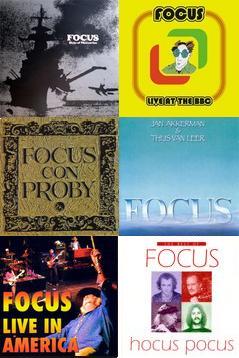
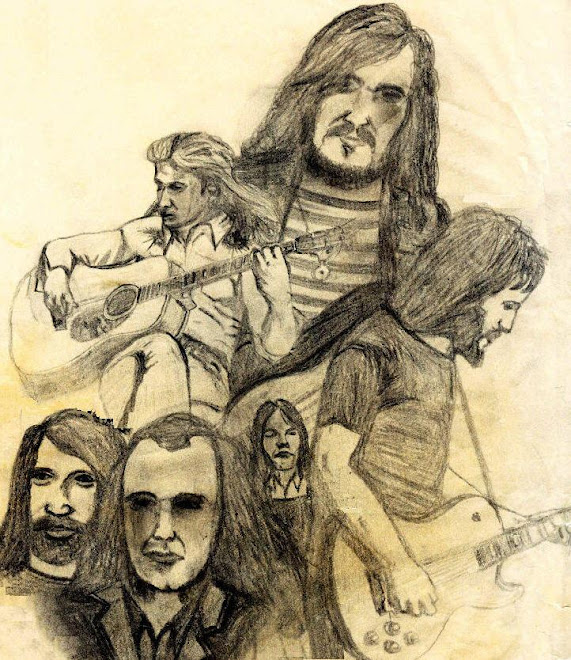
Looking at the music of Dutch rock band Focus, started in the late sixties by Thijs van Leer (b /31/03/48) with Jan Akkerman (b 24/12/46). Van Leer still performs and records under the name today (official site here). Akkerman's site here.

.

.
Showing posts with label Focus X. Show all posts

20200926

Track by track 135 Crossroads

Archive number: 135
Title: Crossroads
Main Album: Focus X 
Track number: 10
Genre: Jazz Rock with vocal 
Studio: Fieldwork Studios, Schoten, Belgium 
Length: 5:38
Composer: van Leer, Peters
Musicians: Thijs van Leer – Piano, organ, flute, vocal; Menno Gootjes – Guitars; Bobby Jacobs – Bass; Pierre van der Linden – Drums; Berenice van Leer - vocal 
Producer: Bobby Jacobs 
Label: Eastworld Recordings
Date of recording/release: November, 2012
Alternative version: This is a version of Brazil Love
The track begins with rhythmic drums. After five seconds the bass and jazz piano come in then electric guitar. A piano trill at 34 seconds announces a rising choral and guitar part. Then at 1:05 a new driving guitar theme begins and is joined by the flute from 1:44 to 2:13. We then revert to the choral and guitar theme - the guitar perhaps a little wilder. At 2:28 the flute is back, though further back in the mix. At 2:40 to 3:44 van Leer comes in with a spoken style vocal (see below). The vocal continues until the flute and other instruments come back to the fore, the guitar leading latterly. At 4:17 the guitar announces the final part, a brief drum break until 4:43 when the bass adds its own contribution, which goes on until the fade. Apparently there was more but it had to be cut.

Lyrics
I don't want to know just how I feel
Cannot bear to know just how I feel - crossroads ahead
I don't want to think in terms of tears
There's no time to lose you're here
At the crossroads we part.
Love is far ahead and far behind. - the crossroads are here.

How can we still look back at the past, it doesn't last
We cannot change the good and bad times we remember
Here we meet and here we part my friend
And I will love you 'til the end ...
Just like the tide that keep on rolling.

20191122

Track by track 134 Message Magique

Archive number: 134
Title: Message Magique
Main Album: Focus X 
Track number: 9
Genre: Progressive Rock with vocal 
Studio: Fieldwork Studios, Schoten, Belgium 
Length: 3:53
Composer: Ben van der Linden
Musicians: Thijs van Leer – Piano, organ, flute; Menno Gootjes – Guitars; Bobby Jacobs – Bass; Pierre van der Linden – Drums 
Producer: Bobby Jacobs 
Label: Eastworld Recordings
Date of recording/release: November, 2012
Alternative version: An earlier flute version of this track can be found on Thijs's solo album Renaissance
Notes: The track is introduced by nine seconds of drums then a piano and bass come in for another nine seconds before the lead guitar takes up the main theme in that rising Focus style that is so familiar. This continues until 1:46 when it is the turn of the flute to lead for several bars. From 2:27, it is flute and guitar that synchronise to lead the band. Around 3:15 the descent to the close begins, chiefly led by the flute but concluding with a satisfying sigh from the lead guitar.
Note on Ben van der Linden. 
Van der Linden (no relation) is a pianist and composer. He learned to play the organ as a child in church. He also studied piano with Jaap Callenbach at the Rotterdam Conservatory. He became pianist with the Rotterdam Philharmonic Orchestra for two and a half years then studied electronic music with CEM and jazz with Chick Corea.
He also led the 
Ben van der Linden Trio and was a student of jazz pianist Louis van Dijk.
Over the years he has worked with van Leer and many others including the singer Della Bosiers, the Peter Blanker Consort, Liselore Gerritsen, Fons Jansen, violinist Christiaan Bor, Conny Vandenbos, filmmaker Bob Rooijens, Henk van Ulsen, Ramses Shaffy, Willem Wilmink, Jan Boer Chair, Audrey Hepburn and Huub Oosterhuis. He was musical leader with Paul van Vliet for nine years and has composed hundreds of songs for different people. His work can be heard on around 80 commercial recordings.

20191121

Track by track 133 Talk of the Clown

Archive number: 133
Title: Talk of the Clown
Main Album: Focus X 
Track number: 8
Genre: Progressive Rock with vocal 
Studio: Fieldwork Studios, Schoten, Belgium 
Length: 2:59
Composer: Thijs van Leer (based on James Hook)
Musicians: Thijs van Leer – Flute; Menno Gootjes – Acoustic guitar; Bobby Jacobs – Bass; Pierre Van der Linden – Drums 
Producer: Bobby Jacobs 
Label: Eastworld Recordings
Date of recording/release: November, 2012
Alternative version: A briefer version of the same track is on Thijs's solo album Renaissance entitled Pierrot
Notes: This playful little acoustic instrumental piece has a renaissance feel about it with Thijs's flute and Menno's guitar leading things with a bass and marching drum backing. A joyful little gem.

Note on James Hook (1746-1827).
Born in Norwich, England, Hook was the son of a razor-grinder and cutler and a musical child prodigy. Some time around 1764 he moved to London to become organist at White Conduit House, Pentonville, a tea garden, a popular venue in 18th-century London. He worked as an organist, teacher and composer and gained a reputation for composing vocal music. He married artist and writer Elizabeth Jane Madden in 1766. They had two son. In 1768 he became organist and composer to Marylebone Gardens. In addition to performances on organ, and occasionally on harpsichord, he was now invited to perform concertos between the main works in theatres, and his short musical entertainments and comic operas were being produced for pleasure gardens and in London theatres. In 1776 he became organist at St Johns Horselydown, Bermondsey, and frequently played concerts on newly built organs, in London and beyond, often playing his own compositions. He was highly successful as a keyboard teacher. He later worked at Vauxhall Gardens. His pupil Margaret Thornton (after marriage Martyr) often sang his songs there. Over the years Hook composed operas and other works, most of which were produced at Drury Lane and Covent Garden Theatres. He frequently collaborated with family members. His wife wrote the libretto for opera The Double Disguise (1784); his son James librettos for Jack of Newbury (1795) and Diamond Cut Diamond (1797) and his other son Thomas Edward librettos for at least eight operas. In 1805 his first wife died and the next year he married Harriet Horncastle James. It was at this time that he produced his best work, Tekeli, or the Siege of Montgatz, the life and adventure of Imre Thököly. In 1820 he unexpectedly left his position at Vauxhall, after almost a half century of service. He died seven years later in Boulogne.

20191025

Track by track 132 Hoeratio

Archive number: 132
Title: Hoeratio
Main Album: Focus X
Track number: 7
Genre: Progressive Rock with vocal
Studio: Fieldwork Studios, Schoten, Belgium
Length: 5:38
Composer: Bobby Jacobs
Musicians: Thijs van Leer – Hammond organ, piano, flute, vocal; Menno Gootjes – Guitars; Bobby Jacobs – Bass; Pierre van der Linden – Drums
Producer: Bobby Jacobs
Label: Eastworld Recordings
Date of recording/release: November, 2012

Alternative version: None
Notes: The band play an atmospheric but languid tune throughout. From 01:12-02:24 van Leer does a voice over reciting from Horace's Ars Poetica the lines below. After this section the guitar leads with a thorough exploration of the fretboard for the next little while before getting back to the march at 04:01 and then van Leer's now more dramatic an unidentified vocal from 04:14. This takes us right to the end where there is a fade.
The words are

Tibia non ut nunc orichalco uincta tubaeque 
aemula, sed tenuis simplexque foramine pauco 
adspirare et adesse choris erat utilis atque 
nondum spissa nimis complere sedilia flatu: 
quo sane populus numerabilis, utpote paruus, 
et frugi castusque uerecundusque coibat. 
Postquam coepit agros extendere uictor et urbem 
latior amplecti murus uinoque diuino 
placari Genius festis impune diebus, 
accessit numerisque modisque licentia maior. 
Indoctus quid enim saperet liberque laborum 
rusticus urbano confusus, turpis honesto?

The meaning

The Flute – not, as now, bound in brass and a rival of the trumpet,
but slight and simple with few stops – was once of use to lead
and aid the chorus and fill with its breath benches not too
crowded, where, to be sure, folk gathered, easy to count because
few sober folk, too, and chaste and modest.
But when a conquering race began to widen its domain and an
ampler wall embraced its cities and when, on festive days,
appeasing the Genius by daylight drinking brought no penalty,
but then both time and tune won greater licence.
For what taste would you expect of an unlettered throng just freed
from toil rustic mixed up with city folk, vulgar with nobly born?

Note on Horace or Horatio (Hoe ratio is a word play - how rational)
Quintus Horatius Flaccus (65–8 BC), known in the English-speaking world as Horace, was the leading Roman lyric poet during the time of Augustus (Octavian). The rhetorician Quintilian regarded his Odes as just about the only Latin lyrics worth reading: "He can be lofty sometimes, yet he is also full of charm and grace, versatile in his figures, and felicitously daring in his choice of words."
Horace also crafted elegant hexameter verses (Satires and Epistles) and caustic iambic poetry (Epodes). The hexameters are amusing yet serious works, friendly in tone, leading the ancient satirist Persius to comment: "as his friend laughs, Horace slyly puts his finger on his every fault; once let in, he plays about the heartstrings".
His career coincided with Rome's momentous change from a republic to an empire. An officer in the republican army defeated at the Battle of Philippi in 42 BC, he was befriended by Octavian's right-hand man in civil affairs, Maecenas, and became a spokesman for the new regime. For some commentators, his association with the regime was a delicate balance in which he maintained a strong measure of independence (he was "a master of the graceful sidestep") but for others he was, in John Dryden's phrase, "a well-mannered court slave.
The Ars poetica  or "The Art of Poetry" is a poem written by him about 19 BC. In it he advises poets on the art of writing poetry and drama. It has "exercised a great influence in later ages on European literature, notably on French drama" and has inspired poets and authors since it was written. Although it had been familiar since the Middle Ages, it was used in literary criticism only since the Renaissance.
It includes several famous phrases including quandoque bonus dormitat Homerus (l. 359) or "sometimes even good Homer nods off". Today this expression is used to indicate that even the most skilled poet can make continuity errors and that long works, usually epics may have their faults without that detracting significantly from their general quality. In context, however, Horace censures Homer for such lapses. I mention it as perhaps Homer nodded here too.

20191010

Track by track 131 Birds Come Fly Over (Le Tango)

Archive number: 131
Title: Birds Come Fly Over (Le Tango)
Main Album: Focus X
Track number: 6
Genre: Jazz Pop Vocal
Studio: Fieldwork Studios, Schoten, Belgium
Length: 5:21
Composer: Thijs van Leer, Roselie Peters
Musicians: Thijs van Leer – Hammond organ, piano, flute, melodica; Menno Gootjes – Guitars; Bobby Jacobs – Bass; Pierre van der Linden – Drums; Ivan Lins - vocals. 
Producer: Bobby Jacobs, Geert Scheijgrond
Label: Eastworld Recordings
Date of recording/release: November, 2012
Alternative version: The same track is on The Focus Family album. Versions of  Le Tango appear on the Focus album with Jan Akkerman, on Introspection 4 and in other places.
Notes: We begin with drums then acoustic guitar, organ, flute and eventually a chugging electric guitar in tango time. At 0:54 the vocal begins. The words are

I'm always watching sunrise,
I have at least a life
And for my heart's desire, I can die.

And you my love, my good love,
I see you live your life,
But in my heart I've often seen you cry.

I'm only waiting for the time to pass,
How can I raise my voice or my hand?
Birds come fly over to the sun.

Out of a million lovers,
One only could be mine,
Oh there's a million others passing by

From sun up until sundown
This life is such a strife
And if you lose your love you lose your life.

I'm only waiting for the time to pass,
How can I raise my voice or my hand?
Birds come fly over to the sun.

There is a brief instrumental section announced by a beat from 2:02-02:21 after verse 3. In the subsequent part van Leer's melodica is heard. From 3:28-04:01 the band comes in more strongly again before the final vocal section which features the second three verses repeated. A piano is heard in the mix this time.

20191003

Track by Track 130 All Hens On Deck

Archive number: 130 
Title: All Hens On Deck 
Main Album: Focus X 
Track number: 5 
Genre: Progressive Rock Instrumental 
Studio: Fieldwork Studios, Schoten, Belgium 
Length: 5:44 
Composer: Thijs van Leer 
Musicians: Thijs van Leer – Hammond organ, piano, flute, vocals; Menno Gootjes – Guitars; Bobby Jacobs – Bass; Pierre van der Linden – Drums 
Producer: Bobby Jacobs, Geert Scheijgrond
Label: Eastworld Recordings 
Date of recording/release: November 2012
Notes: The track begins full pelt with drums then the band led by percussive guitar, the flute coming in from 00:06. This goes on until at 00:23 we have the breakdown with a series of three strokes, lasting until 00:44 when the Hammond led band takes up the theme. The flute then leads until 01:01 and the second break down. At 01:16 it is van Leer's scat vocal that comes in echoing the guitar with the band until 01:43. Menno's bluesy guitar then goes on until 02:28 when the scat section is repeated until 02:56. Next comes a radical slow down and a majestic, classical section led by the vocal and guitar. At 04:13 the earliest section is repeated, leading into the scat section (from 04:40). A final six strokes brings us almost to the end (05:25) before a long drawn out cat moan vocal contribution by a finally breathless van Leer.

20190511

Track by track 129 Amok in Kindergarten

Archive number: 129
Title: Amok in Kindergarten
Main Album: Focus X
Track number: 4
Genre: Jazz Instrumental
Studio: Fieldwork Studios, Schoten, Belgium (Mixed at B-Spot Studio; mastered at Tube Mastering)
Length: 5' 00"
Composer: Thijs van Leer
Musicians: Thijs van Leer – Hammond organ, piano; Menno Gootjes – Guitars; Bobby Jacobs – Bass; Pierre van der Linden – Drums
Producer: Bobby Jacobs, Geert Scheijgrond
Mastered: Andy Jackson
Mixed: Bram Bol
Label: Eastworld Recordings 
Date of recording/release: November 2012
Alternative version: Two early versions appear on a rare van Leer solo album called Home Concert. The first is a short piano piece and the second long piece features flute and piano.
Notes: First a sombre mood is set by the cymbals and drums with piano, organ and bass (00:00-00:52) before the guitar comes in too with the jazz melody that meanders along until 02:02 when the guitar takes more of a lead. This continues until 03:49 when something more like the earlier theme is taken up. This is a demanding piece on a demanding theme.
A note on the Dunblane School Massacre (from Wikipedia)
The Dunblane school massacre took place at Dunblane Primary School in Scotland, on 13 March 1996, when Thomas Hamilton, who lived five miles from the school, shot 16 children and one teacher dead before killing himself. The massacre occurred in the school gym where 28 children had been gathered for a PE lesson. Several staff were present. He also fired shots into a nearby classroom where the pupils had been instructed to lie on the floor. A total of 32 people sustained gunshot wounds inflicted by Hamilton over a 3 or 4 minute period, 16 of whom were fatally wounded in the gymnasium, which included Gwen Mayor and 15 of her pupils. One other child died later en route to hospital. It remains the deadliest mass shooting in British history.
Following the massacre two new Firearms Acts were passed, outlawing private ownership of most handguns in Great Britain. The gymnasium at the school was demolished on 11 April 1996 and replaced by a memorial garden. Two years after the massacre on 14 March 1998, a memorial garden was opened at Dunblane Cemetery, where Gwen Mayor and twelve of the slain children are buried.
Van Leer's piece is one of several musical responses to the event.

Track by track 128 Victoria

Archive number: 128
Title: Victoria
Main Album: Focus X
Track number: 3
Genre: Progressive Rock Instrumental
Studio: Fieldwork Studios, Schoten, Belgium (Mixed at B-Spot Studio; mastered at Tube Mastering)
Length: 5' 28"
Composer: Thijs van Leer
Musicians: Thijs van Leer – Hammond organ, piano, flute; Menno Gootjes – Guitars, Vocals; Bobby Jacobs – Bass; Pierre van der Linden – Drums
Producer: Bobby Jacobs, Geert Scheijgrond
Mastered: Andy Jackson
Mixed: Bram Bol
Label: Eastworld Recordings 
Date of recording/release: November 2012
Alternative version: This track was originally recorded in 1970 with a vocal in Dutch penned by Lennaert Herman Nijgh. The lyric tells the story of a man accused of rape who is knifed by the girl's father! An edited version of the instrumental appears on The Focus Family Album
Notes: The track begins with a solo piano intro. At 00:10 the drums break in and then the guitar led band when the chorus comes (00:52-01:16). The chorus features a background vocal repeating the name Victoria. The verse (to 01:55) and chorus (to 02:18) are then repeated. The break down then comes, featuring organ, flute and a little muted flute before returning to the theme just before the three minute mark. A verse and some chorus work follow until 03:56 when a jam comes in with real jazz flute and some guitar. This plays out to the end of the track.

20190510

Track by track 127 Focus 10

Archive number: 127
Title: Focus 10
Main Album: Focus X
Track number: 2
Genre: Jazz Rock Instrumental
Studio: Fieldwork Studios, Schoten, Belgium (Mixed at B-Spot Studio; mastered at Tube Mastering)
Length: 5' 28"
Composer: Thijs van Leer
Musicians: Thijs van Leer – Hammond organ, piano, flute; Menno Gootjes – Guitars, Vocals; Bobby Jacobs – Bass; Pierre van der Linden – Drums
Producer: Bobby Jacobs
Mastered: Andy Jackson
Mixed: Bram Bol
Label: Eastworld Recordings 
Date of recording/release: November 2012
Alternative version: None
Notes: This is the title track and the tenth in the eponymous series. The drums again briefly introduce the guitar led band. The tune is a playful jazzy, even at times a quirky and teasing, one. The tune has something of a French feel to it. Beginning at 00:02 it goes on to 02:28 before the flute joins in. This flute section then goes on until around 03:40 before being chiefly superseded by the guitar although it does make some brief comebacks. At 05:02 the piece breaks down and first only piano and organ play and then for the final 33 seconds just solo jazz piano to close the track.

20180314

Focus X Pie Chart


Chart showing the proportion of the album taken up by each track

20170918

Track by Track 126 Father Bacchus

Archive number: 126
Title: Father Bacchus
Main Album: Focus X 
Track number: 1
Genre: Progressive Rock Instrumental
Studio: Fieldwork Studios, Schoten, Belgium  
(Mixed at B-Spot Studio; mastered at Tube Mastering)
Length: 4:03
Composer: Menno Gootjes
Musicians: Thijs van Leer – Hammond organ, piano, flute, spoken word; Menno Gootjes – Guitar; Bobby Jacobs – Bass; Pierre van der Linden – Drums
Producer: Bobby Jacobs, Geert Scheijgrond
Mastered: Andy Jackson
Mixed: Bram Bol
Label: Eastworld Recordings
Date of release: November 2012
Alternative version: None
Notes: The track begins with drums, then the whole band give a Hocus Pocus style riff at frenetic pace before (00:12) a flute led section slows things slightly until things kick off again with the band (00:23). At this point van Leer gives a voice over as follows

"And ladies and gentlemen proudly we present Focus
Fo- cus F O C U S
Hahaa! Beautiful!"

At 00:33 the band riff comes in for another 11 seconds and then the flute section follows, this time extended as far as 01:23, where the guitar takes up the lead. At 01:42 the flute returns to interweave with the guitar until 01:55 where there is a brief drum break backed up by the repeated flute riff. At 02:12 a new bassy band Hocus Pocus type riff begins. The guitar leads for a while over this until the flute returns at 02:42, becoming playful ten seconds in as a flute-led acoustic ensemble plays out to a slow fade.
NB This title echoes the earlier instrumental Father Bach (on Mother Focus) by way of reference to the Roman god Bacchus, the equivalent of the Greek god Dionysius, who Wikipedia says is the god of the grape harvest, winemaking and wine, of ritual madness, fertility, theatre and religious ecstasy in ancient Greek religion and myth.

20121126

Focus X Review

So amazingly Focus reach double figures with their tenth album. I have held back from writing about it until now as I know by experience that initial impressions can be wrong. Certainly the presence of familiar titles was offputting – a nod backwards in the opening title Father Bacchus (good joke though), yet another Focus track, Le Tango in its umpteenth incarnation, Message Maqique was on a solo album (that also featured Talk of the Clown, there called Pierrot). Van Leer insiders also know that the curiously titled Amok in Kindergarten was directly inspired by the Dunblane incident way back in 1996. Even the title All hens on deck made me nervous as I feared a re-hash of Hurkey Turkey. It turns out to be one of the most attractive numbers on the album.
In fact this is as good a post-Akkerman album as Focus have come up with so far. The only real problem is an over-dependence on Van Leer for the writing and performance, a Van Leer almost shorn of one of his attributes, his voice (his keyboard and flute work are better than ever). Van Der Linden's drumming is of a high order throughout but good drumming though important is a relatively small component in a rock album's make-up.
The opening track is a fine effort from the new guitarist Menno Gootjes, spoiled only by Van Leer announcing the band's name as if in a live setting. The track Focus 10 is fine, though since Focus 5 I feel that particular strand has not been working so well somehow. The third track is currently my favourite. Quite what inspired Victoria I don't know but the result is quintessential Focus. Superb! Amok in Kindergarten is contemplative and an adequate track for inclusion. After the up tempo All hens full of Van Leer scat we have an interesting version of Le Tango that justifies its inclusion by being re-titled Birds come fly over and featuring the veteran Brazilian musician Ivan Lins singing lyrics by Van Leer's ex-wife Roselie Peters (she also provides the spoken lyrics for Crossroads). The decision to hand over the mike to Lins was wise. Presumably there was a similar plan with Van Leer's daughter Berenice for the last track (she is credited but I do not hear her unless she is doing backing vocals). Hoeratio is better known as Horace in the English speaking world. Someone has spotted his reference to the flute in his ars poetica. Van Leer reads this in Latin over a slow Bobby Jacobs written piece that is again only adequate as far as I can see. May be it will grow on me. We then have the two tracks lifted from the 1986 solo album Renaissance. The use of acoustic guitar on the first of these tracks and on Le Tango is refreshing. So there it is a rock album with a lot of jazz or Latin influences but no obviously classical ones. Great guitar work from Gootjes and a solid rhythm section, Van Leer at the height of his powers for the most part.
The CD comes as a little book with artwork from Roger Dean, which adds to the overall enjoyment.

20121112

Focus X

You will all know that Focus have a new album, Focus X. I am slowly digesting this mostly brand new material and will no doubt have something to say here in the near future. I am also hoping to see them on the last date of their current short tour of the UK.