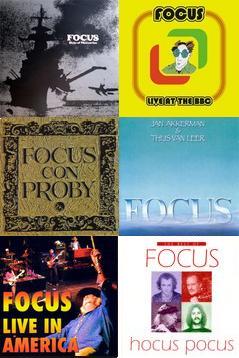
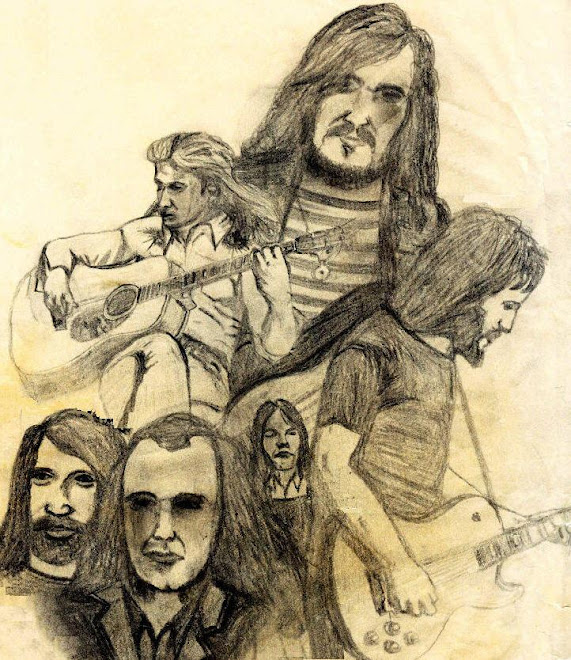
Looking at the music of Dutch rock band Focus, started in the late sixties by Thijs van Leer (b /31/03/48) with Jan Akkerman (b 24/12/46). Van Leer still performs and records under the name today (official site here). Akkerman's site here.

.

.
Showing posts with label P J Proby. Show all posts

20130306

A rugby team out of Focus


There are actually now at least 15 men who have been part of the official Focus line up but are no longer in the band.
There are five guitarists and three bassists who can form the forwards, while the six drummers can be the backs with PJ Proby at full back.
They are
 
Jan Akkerman – guitar (1969–1976, [1985, 1990])
Hans Cleuver – drums (1969–1970, 1999)
Martijn Dresden – bass (1969–1970)
Cyriel Havermans – bass (1970–1971)
Bert Ruiter – bass (1971–1978, 1990, 1999)

Colin Allen – drums (1973–1975)
David Kemper – drums (1975–1978)
Philip Catherine – guitar (1977–1978)
Steve Smith – drums (1978)
Eef Albers – guitar (1978)
P J Proby – vocals (1978)
Jan Dumée – guitar (2001–2006)
Ruben van Roon – drums (2001)
Bert Smaak – drums (2001–2004)
Niels van der Steenhoven – guitar, vocals (2006–2010)

20081201

Focus Vocalists


Surprisingly, perhaps, there are over 20 Focus vocal tracks of various sorts. Most of these feature Thijs Van Leer but there are a number of P J Proby vocals, of course, on the Focus Con Proby album and Bert Ruiter sang I need a bathroom on Mother Focus (though it is sometimes said that it is Akkerman). Akkerman can certainly be heard with Van Leer on Avondrood. Cyriel Havermans's voice is heard on Moving Waves. Jan Dumee sings briefly on Focus 8. On Focus 9 Jo de Roeck sings Just like Eddy.

20081128

Track by track 77 How Long

Archive number: 77
Title: How Long
Main Album: Focus Con Proby
Track number: 9
Genre: Jazz Rock Vocal
Studio: EMI Studios, Hilversum, The Netherlands
Length: 05' 16”
Composer: Roselie van Leer, Thijs van Leer
Musicians: Philip Catherine - Electric guitars; Thijs van Leer – Synthesisers, Hammond organ; Bert Ruiter – Bass; Steve Smith - Drums
Producer: Yde de Jong
Engineer: Jan van Vrijaldenhoven/Mike Stavron
Label: LP – EMI
Date of recording/release: Recorded/released 1978 LP – 1978 CD - 1998
Notes: We begin with a fast paced synthesiser-led introduction (00:00-00:55). Proby then comes in with the lyric (00:56-02:49). The lyrics are

How long
Lasts a love
When does a smile begin?
How far Is a dream
From remembering?
And how fast is a train of thought?
And I know how long a moment can last.

How high
Can you see in the sky?
And does it never end?
And I think that the world was meant to be
Much better than we've ever seen or hoped for
And I say that each time you can be
Kind or mild you'll know the joy to make it better
And I think we must, and why don't we start now?

How white
How clear and how bright
Is an angel's light?
And how fast is a train of thought
And I know how long a moment can last.

The backing is quite uniformly fast but occasionally begins to break down. There is then an instrumental break at 02:50-03:21 then Proby resumes (03:22-03:58) with the following:

And I think that the world was meant to be
Much better than we've ever seen or hoped for
And I say that each time you can be
Kind or mild you'll know the joy to make it better
And I think we must, and why don't we start now?
Hear, hear
The best of all, I think love never dies

The final upbeat section (03:59-05:16) is shared by the synthesiser and guitar.

20081124

Track by track 75 Tokyo Rose

Archive number: 75
Title: Tokyo Rose
Main Album: Focus Con Proby
Track number: 7
Genre: Jazz Rock Vocal
Studio: EMI Studios, Hilversum, The Netherlands
Length: 5' 05"
Composer: Roselie van Leer, Thijs van Leer
Musicians: P J Proby – Vocals; Eef Albers- Electric Guitars; Thijs van Leer – Flute, Piano, Hammond organ; Bert Ruiter – Bass; Steve Smith - Drums
Producer: Yde de Jong
Engineer: Jan van Vrijaldenhoven/Mike Stavron
Label: LP – EMI
Date of recording/release: Recorded/released 1978 LP – 1978 CD – 1998
Alternative versions: None
Notes: As with the previous track, we begin with a classical introduction possibly stolen from Brahms. This time the flute joins the piano. (00:00-00:44). The band then kicks in at marching pace and Proby (sounding very like Presley at times) begins to half sing half speak the lyric. The vocal is then punctuated by the guitar-led instrumental as indicated.

Hahaha, hey you know something?
World War II wasn't all that much fun, 
Specially if you didn't even have a gun.
Well, you know you gotta go through it if you wanna get to it,
and I can tell you I did,
but no thanks to a little lady.
She was, uh, she, she kept us up all hours of the night.
Hell, half the time we didn't have time to fight.
But I don't think I would have to expound much further
 'cause everyone knows 'bout Tokyo Rose.
(Instrumental break at 01:32-02:31)
Hehaha, lemme tell you a little more. Scared?
Christ, I was so damned scared I could crawl under a snake's belly,
with a top hat on, without even touching it.
That's how scared I was.
Shit, who wants your ass blown off when you don't even know if it's kosher.
You know, kind of like when you went to school.
Always breakin' the rules, thinkin' nobody knows.
Haha, but don't kid yourself, baby, the lady in the classroom knows, 
nd her name? You got it - Tokyo Rose.
(Instrumental break at 03:20-04:18)
Lord, have mercy. Ha, I feel like I'm teaching class.
I gotta go through it all over again,
'cause you haven't learned your lessons now.
I don't want to give you a bad report card,
so I say, do you know that World War II wasn't fun.
Have you got that down, Jim? Right on,
especially if you didn't have a gun.
Well, you know you gotta go through it
if you wanna get to it.
And I can tell you I did, but no thanks to a little lady,
yeah, she kept us up all hours of the night.
Hell, half the time, we never had time to fight.
And, uh, yeah, there's no sense of me expounding any further.

The end is again quite sudden.
Note on Tokyo Rose (from Wikipedia)
Tokyo Rose (or Tokio Rose) was a generic name given by Allied forces in the South Pacific during World War II to any of approximately a dozen English-speaking female broadcasters of Japanese propaganda. Their intent was to disrupt the morale of Allied forces listening to the broadcast near the Japanese mainland. The name is most strongly associated withIva Toguri D'Aquino, who broadcast under the pseudonym "Orphan Ann" during the 15-20 minute DJ segment of the 75-minute The Zero Hour programme on Radio Tokyo (NHK). Other women who, separately or together, may have warranted the title include American Ruth Hayakawa (who substituted for Iva on weekends) and Canadian June Suyama ("The Nightingale of Nanking"), who also broadcast on Radio Tokyo, and Myrtle Lipton ("Little Margie"), who broadcast from Japan-controlled Radio Manila.
Tokyo Rose has been the subject of two movies and four documentaries. Both in 1969 and 1976 CBS broadcast documentaires on the subject. 1969: The Story of "Tokyo Rose", CBS-TV and WGN radio documentary written and produced by Bill Kurtis. 1976: Tokyo Rose, CBS-TV documentary segment on 60 Minutes by Morley Safer, produced by Imrel Harvath.

Track by track 74 Brother

Archive number: 74
Title: Brother
Main Album: Focus Con Proby
Track number: 6
Genre: Jazz Rock Vocal
Studio: EMI Studios, Hilversum, The Netherlands
Length: 05' 16”
Composer: Roselie van Leer, Thijs van Leer
Musicians: P J Proby – Vocals; Eef Albers- Electric Guitars; Thijs van Leer – Piano, Mellotron, Hammond organ; Bert Ruiter – Bass; Steve Smith - Drums
Producer: Yde de Jong
Engineer: Jan van Vrijaldenhoven/Mike Stavron
Label: LP – EMI
Date of recording/release: Recorded/released 1978 LP – 1978 CD – 1998
Alternative versions: An instrumental version can be found on van Leer's solo album Introspection 3. Also see the later Focus 8.
Notes: The piece begins with a beautiful, classically informed, piano introduction with some slight mellotron backing (00:00-00:48) possibly stolen from Brahms. After five seconds silence (00:49-00:54) heavy drum beats are heard and the band comes in with a slow march led by Proby's rock ballad vocal (0051-03:35). The angst ridden verses and 1920s American depression influenced chorus are as follows:

I've never been unhappy or alone
Each day daylight came back
I always watched the stars
Not thinking space big and dark
Rains always were my friend
The wind knew all my secrets
Brother do you know that the times are hard
Do you wanna see my eyes
Better Make a start
Cause brother do you see that the times are hard
I need love
Hey yeah (Repeat chorus)
I did not fear the shadows of trees
But city shadows don't move
I saw a child of God. He was
Someday to grow into the world.
Brother do you know that the times are hard
Do you wanna see my eyes
You'd better make a start
Cause brother ...
do you see that the times are hard
I need love (Repeat chorus)

A horn-like guitar leads the band as the music rises (03:36-04:12) until the vocal comes back in very high (04:13-05:01) with the opening six lines. A triumphant classical style piano, organ and cymbals close the piece (05:02-05:16).

Track by track 72 Eddy

Archive number: 72
Title: Eddy
Main Album: Focus Con Proby. Also a single in 1977 b/w Sneezing Bull.
Track number: 4
Genre: Rock Vocal
Studio: EMI Studios, Hilversum, The Netherlands
Length: 5' 49"
Composer: Eef Albers
Musicians: P J Proby - Vocals; Eef Albers - Electric guitars; Thijs van Leer – Hammond, Bass Synthesiser; Bert Ruiter – Bass; Steve Smith - Drums
Producer: Yde de Jong
Engineer: Jan van Vrijaldenhoven/Mike Stavron
Label: EMI
Date of recording/release: Recorded 1977 Released 1978 LP – 1978 CD – 1998
Alternative versions: Roselie van Leer (Peters) sings an earlier version on van Leer's solo O my love and Jo De Roeck sings on a later version on Focus 9
Notes: The band open with bass and drums and 'violined' guitar and organ (00:00-00:09) then Proby comes in pleasantly crooning the lyric as follows

Just like Eddy in the morning
He never said, although he could
I know someone who would, but
He never woke to have an ear

Yes I think of things unnoticed
Like what happens in the egg
As it lies without motion
Just like Eddie's sleeping head

When I come home in the morning
Softly as I tread the dawn
I know things that are important
That have only just begun

I'm gonna fly away
Here I go here I go here I go
I'm gonna fly away
Here I go here I go here I go

Seeing you across the table
Smiles are dying on your face
Being here with my heart open
Seems a little out of place

I'm gonna fly away
Here I go here I go here I go
I'm gonna fly away
Here I go here I go here I go (repeated twice)

All the way, the guitar plays some fine licks against the vocal, which finally becomes breathless, insistent then indistinct, dying with a scream at 4:33, when the band takes over. The vocal is lost a little in the mix.
Note on Eddy
Eddy van Leer is Thijs van Leer's father. He plays with Thijs on the track Hommage (Song for pa) on the Thijs van Leer solo album Reflections. Van Leer senior, a competent classical flautist himself, bought his son a flute and gave him his first lessons when Thijs was around 11 or 12.

20081111

Track by track 69 Wingless

Archive number: 69
Title: Wingless
Main Album: Focus Con Proby
Track number: 1
Genre: Rock Vocal
Studio: EMI Studios, Hilversum, The Netherlands
Length: 5' 32”
Composer: Thijs van Leer, Roselie van Leer
Musicians: P J Proby – Vocals; Eef Albers - Electric guitars; Thijs van Leer – Hammond organ, Electric piano; Bert Ruiter – Bass; Steve Smith - Drums
Producer: Yde de Jong
Engineer: Jan van Vrijaldenhoven/Mike Stavron
Label: EMI
Date of recording/release: Recorded 1977 Released 1978 LP – 1978 CD – 1998
Alternative versions: None
Notes: This vocal track is bookended by a short reverbed instrumental introduction (00:00-00:37) quite dreamy and a heavier, wilder and longer reverbed instrumental conclusion (03:08-05:32) that eventually fades. There is also a reverbed guitar-led instrumental break at 01:33-02:08 between the second and third verses. The words are as follows

I'm a bird but I am wingless
On a treetop way up high
Springtime's coming green and reckless
How I long and long to fly
But my love I get so restless
Thinking of you all the time
While my heart moves free
I'm solid 
Wish that I could move around
While my heart was fixed forever
Fixed in love without the fear
That one day I'll be without you Is it true, and is it near?
Sunlight starlight love your laughter
And the love of gentle hearts
And beyond the face of the loved one
There you'll find the face of God

The words are sung well in a yearning rock ballad style but are slightly overwhelmed by the band until the final line, where everything slows and dies down before taking off again for the final section.
A note on P J Proby (from Wikipedia)
Born James Marcus Smith, November 6, 1938, Houston, Texas, this singer, songwriter and actor is noted for theatrical portrayals of Presley and Orbison and interpretations of old standards in the vein of Nat king Cole or Tony Bennett. His stage name was suggested by friend and songwriter Sharon Sheeley who remembered an old boyfriend with the name.
His father was VP of a big bank. He was educated at various military academies and later moved to California to be a movie actor. As Jett Powers he had minor roles and 2 singles on an independent label went unnoticed. In 1962 he began writing and recording demos for artists such as Elvis and Johnny Cash. Sheeley took him to audition at Liberty Records. He soon created his fashion image of a pony-tail tied back with a ribbon, swashbuckling pirate shirts and buckled shoes. In addition, he wore skin-tight suits of velvet in different colours. London based from 1964 he began to have hits but a royalty dispute broke his run of UK successes.
His career was also affected by controversy. His trousers split during a concert. Women in the audience went wild. Somehow, they split again at the next venue. Critics, and the audience, were divided on whether it was a gimmick or eccentricism. During a 1967 concert they split again and he was dropped from the rest of the tour.
Back in the US he had a hit but poor managerial advice led to him briefly declaring himself bankrupt. He took some rest then but in September '68 recorded Three Week Hero. Released in '69 The Yardbirds (later Led Zeppelin) were his backing band.
In 1971 he had a successful West End run as Casio in a rock musical version of Othello (Catch My Soul). He continued to perform mostly in cabarets and nightclubs, singing 1960s ballads and rhythm 'n' blues material. In 1977, he portrayed Elvis in Elvis - The Musical, which received rave reviews and awards. It was following this that he recorded with Focus, the result chiefly of manager Yde de Jong being a fan.
He then returned to singing in clubs. By 1990 he was suffering from alcoholism, living in Bolton but did produce an album Thanks. He enjoyed minor success with covers of Anarchy in the UK and other unexpected material but was neglected by the media. Following his return to the public eye, in 1991, he suffered a heart attack, curtailing activities until 1993, when he appeared in a Jack Good biomusical Good Rockin' Tonite as himself. In 1995 he was in a Roy Orbison tribute show Only the Lonely. By 1996 he was again doing the Elvis musical. In 1997, he toured with The Who, performing as "The Godfather" in the road production of Quadrophenia. Now into his seventies, he continues to tour. In 2007 he was accused of benefit fraud, something he strongly denies.