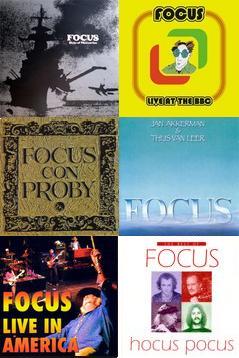
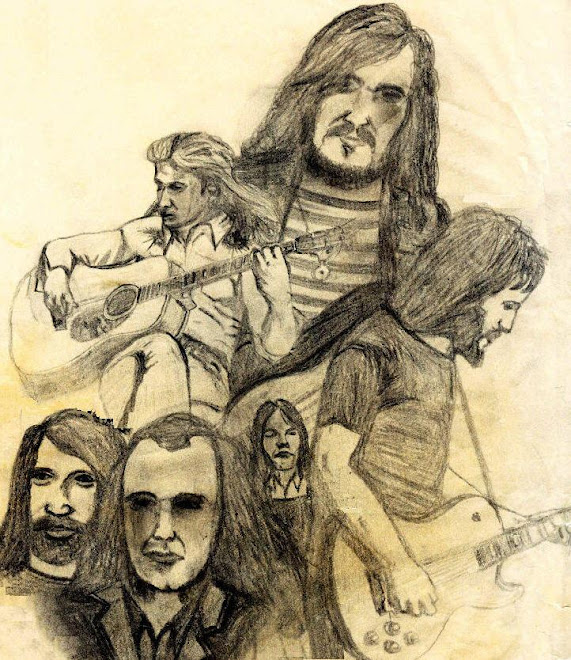
Looking at the music of Dutch rock band Focus, started in the late sixties by Thijs van Leer (b /31/03/48) with Jan Akkerman (b 24/12/46). Van Leer still performs and records under the name today (official site here). Akkerman's site here.

.

.
Showing posts with label Akkerman. Show all posts

20200926

Track by track 138 House of the King GO

Archive number: 138
Title: House of the King GO
Main Album: Golden Oldies
Track number: 3
Genre: Progressive rock Instrumental
Studio: WedgeView Studios, Verlaat, The NetherlandsLength: 6:51
Composer: Jan Akkerman
Musicians: Thijs van Leer - Hammond organ, Menno Gootjes - Guitars, Bobby Jacobs - Bass, Pierre van der Linden - Drums
Producer: Bobby Jacobs
Engineer: Budy Mokoginta and Bram Boll
Label: Focus Music Ltd
Date of recording/release: 2014 CD also produced in vinyl format
Notes: This is a great version of this staple track

20090406

Track by track 86 House of the King Live (FLIA)

Archive number: 86
Title: House of the King (Live)
Main Album: Focus Live In America
Track number: 2
Genre: Progressive Rock Instrumental
Venue: Patriots Theater, 1 Memorial Drive, Trenton, New Jersey, USA
Length: 02' 53”
Composer: Jan Akkerman
Musicians: Thijs van Leer – Hammond organ, Flute; Jan Dumee – Gibson Marauder Guitar; Bobby Jacobs - Bass; Bert Smaak - Drums
Producer: Gavin Bott/Bob Carruthers
Engineer: Mike Potter (Orion Sound) Mix (Total audio)
Label: Classical Rock Legends Limited
Date of recording/release: October 2002 (part of a two day Uriah Heep led classic rock legend festival that also featured Nektar, Mostly Autumn and Asia). Released on DVD and CD (edited) in 2003.
Alternative version: The oldest and most performed Focus song, this has many versions
Notes: Another competent live version. We go straight into the track (the announcement being on the previous track). It is played in the usual live style, although the Hammond is more prominent than the guitar in the middle eight. We end at 02:35 and amid applause van Leer says thank you and announces “Next piece is called Focus number two”.

20090224

Akkerman: the humorous element

Most British audiences sat listening to Focus very soberly and the humour was perhaps overlooked. My tendency was certainly to be a little over earnest in my devotion. For example, I always listened to Focus 2 (Moving Waves) with a certain awe, oblivious to any echo of the 007 theme. On hearing for the first time the version on Akkerman's live album 10,000 Clowns (1997), where he slips in a brief quotation of the Bond theme, I burst out laughing. A similar musical joke appears on Live at Alexander’s (1999) on Pietons. This time we briefly hear the Flintstones theme (to the momentary alarm of the other musicians, as I recall). This, it turns out, is a widely known joke among Jazz musicians.
Hocus Pocus was not Akkerman's first foray into novelty. In 1969 The Hunters were number one in Holland with a cold war inspired vocal number The Russian spy and I, featuring hot guitar work, in balalaika style, from Akkerman, then an up and coming 18 year old. Some may say ‘Niet’ but I would argue that it bears hearing today both as artifact of social and political history and attractive guitar virtuoso pop.
We have written of van Leer's humour but with Akkerman the humorous element is, if anything, more pronounced. In 1981 he made a solo album that is pure fun throughout. Apparently Oil in the Family was produced, perhaps uniquely, in just 48 hours in response to a Dutch radio producer’s challenge. Jan came up with what can best be described as a Middle Eastern disco record (one track is Disc-o-asis!) that is pure jest throughout. You may feel the joke is wearing thin by now but it still stands up as a good fun album. There are plenty of other fun tracks too. It is difficult to listen without smiling to Green Onions (Guitar for Sale), Kemp’s jig and Minstrel/farmer’s dance (Profile), Crackers (available in several versions) or Quiet Storm (Art of Noise). There is even a track simply called Having Fun (also on Art of Noise). Until Flower Shower the Mother Focus track, I need the bathroom, (featuring a rare vocal from Akkerman himself?), was the wackiest item ever released by Focus.
Clearly in the making of most of Akkerman’s albums there has been plenty of laughter. Can’t stand noise originally had a closing track (Who knows) that ended rather abruptly. The story goes that the beautiful summer weather of 1983 prompted an attempt at outdoor recording. No sooner was everything set up for Akkerman to perform than a thunderclap announced a pending storm and everyone rushed back inside. The track Status Quo (From the Basement) ends with Dino Walcott breaking into fits of uncontrollable laughter. Jan explains in part "We were all standing together in the control room, while Dino was standing in the studio with his mouth organ. We were laughing our heads off, while the drum machine kept on going, and then Dino also started to laugh."
Akkerman loves punning (as in his trade mark ‘Thank you very Dutch’) and humour of a more unusual sort. His sense of fun comes out in several ways on albums. Even on a pretty serious album like Live at the Priory there are amusing remarks between songs (eg in response to the plea for more, ‘People. I’m dying for a fag!’). Occasionally, there has been jocund art work. The album cover where Jan shares his bed with an amorous guitar comes to mind as does the carefully conceived Noise of art jacket. I also like the two perspiring plastic pieces on the Transparental album with Kaz Luz and the In and out of Focus gatefold sleeve edition where the word Focus literally goes in and out of focus. Word play often features. On Puccini’s Café, produced after a serious road accident, we find for the first time song writing credits to M Muleta. Who is Mr Muleta? Ask Jan and he will tell you it is his old lady or that it is the Spanish for a bull fighter’s cloak. Try saying ‘em-mue-later’ however and you might see the joke. It is a little like A. Rab credited on some Oil in the Family tracks. It’s Jan again, this time acknowledging an unknown Middle Eastern writer from whom he borrowed. Some track and album titles are puns or jokes. The come back album Art of noise is a neat inversion. It includes the whimsical track title, You can’t keep a bad man up. Among bonus tracks released on three albums in 1998 we note, When I was a cocktail in a waitress bar, 39 seconds (that’s enough for that pilgrim), Akkermani and A town near Odessa (inspired by a town called Akkerman!). Think too of Ab-so-rocking-lutely, D.Jan.go and Knight of the lute on Passion. Akkerman loves to rework tracks. This gives opportunity for droll punning. Heavy pleasure, Heavy treasure; Primadonna, Pre Madonna; Streetwalker, Weedstalker; Milestones, Akkerstones; not to mention Sylvia’s grandmother and Soft Focus or Birth and Early birth. Again like elements pinpointed in other articles, humour is an important element in Akkerman’s music and a further part of what makes his body of work the phenomenon it is.

20090219

Jan Akkerman: the eastern element


In an interview in Odessa, Ukraine, in 2005 Jan Akkerman said “I think I have Russian roots. My aunt told me that one of my great-grandmothers was from the Akkerman region (a nearby fortress does have the name Akkerman) where were then living the Dutch merchantmen who traded between South Russia and Holland. My last name seems to be very eloquent in this respect, though sometimes I think I can't be completely certain in that. All in all, I don't have a wish to delve into my genealogy, but I believe my ancestors were from here.” No doubt he was not wholly serious but if you listen to Akkerman's music you will see that there is something in what he says. Eastern music is notoriously difficult to define but something definitely happens to harmony and rhythm east of a point somewhere in line with Vienna that is quite distinct. This eastern element can be found in several places throughout Akkerman's work. In recent years Akkerman and his band have played live in Mumbai, in Japan, in the middle east and other places east of Vienna and he has sometimes deliberately brought out this eastern element in these places. The current very eastern version of
House of the King (Palace of the King) typifies it. If truth be told, however, House of the King always did have something eastern about it, something first declared unequivocally in the electric sitar version found on the solo album Tabernakel. Like many others in the UK my first introduction to Akkerman's music was the album Moving Waves with Focus. One feature of that album was its unique sound. It was quite different to much of the rock music around at the time. Its European sound was often referred to. However, not only did it sound pretty European but in certain places there was an undoubtedly eastern feel to it. Think of a track like Janis for example, with its distinctly eastern flutes or certain parts of the long track Eruption, especially Dayglow. Hocus Pocus and the title track also share this eastern feel. (Vanessa Mae's version of Hocus Pocus brings out the eastern element very well). This was the early seventies, of course. The Beatles and others had already blazed a trail to India and back so this element was a very contemporary one. Jan appears on the original cover, if you remember, wearing a state of the art khaftan. A similar phenomenon is faintly recognisable on the first and third Focus albums (although to be fair, both albums contain tracks firmly in the Caribbean tradition and so no corner of the globe is entirely neglected). Check out Black Beauty or Love Remembered for example. Harem Scarem and parts of Hamburger Concerto (especially Medium 1) also contain quite eastern elements. Akkerman's eastern credentials go back a long way. His art was cradled in the very beginnings of Dutch rock in the fifties, when the Tielman brothers from Indonesia and their Indo-rock style dominated the Dutch scene. In a recent interview Akkerman has said that there were “a lot of Indonesian kids in the area where I grew up, and we played blues and rock & roll”. That surf rock sound always did have an eastern leaning and the influence can be detected in the early music of Akkerman and others. (The eastern influence on Dick Dale for example is widely acknowledged). Akkerman also admits freely to other early eastern influences from gypsies and from Balkan music. Before his Focus days the eastern element can also be detected in the Jewish traditional, Hineimatov, on the first solo album, on the Russian styled hits with The Hunters The Russian spy and I and Janosh (revisited on Russian Roulette with Van Leer in 1985) and quite obviously on the Brainbox track Dark Rose. By the time we come to the solo album Tabernakel Akkerman is featuring, at certain points, both the electric and the acoustic sitar. For some reason the sitars are not credited on the original album but it is an open secret that in the seventies and eighties Jan often used a Coral electronic sitar. This sitar also apparently features on the later Focus track Glider (on Ship of Memories). Jan also played it in public at the end of 1974 at a Brainbox reunion concert, later shown on Dutch television. With regard to the early solo albums Profile and Tabernakel, it is interesting that Akkerman plays the oudh-like lute rather than, say, a banjo! In the seventies Akkerman played and recorded a lot with Neppie Noya the Indonesian born percussionist and son of Japanese Taiko drummer Fusao Nakato San. Later on, the legendary 1981 album Oil in the family features a very eastern style cover, reflecting the strong presence of eastern style melodies on most tracks. Jan actually credits A. Rab (!) as composer on certain tracks in an effort to acknowledge his borrowings from unknown middle-eastern musicians. Some live performances of this material actually featured the use of a belly dancer. The album apparently went down very well in Turkey. With subsequent albums the eastern element is perhaps excluded, though in 1985 on the track Indian Summer with Thijs Van Leer an Indian tabla player based in Holland (Ustad Zamir Ahmad Khan) is brought in and some have detected it, for example, on some of the percussion for The noise of art (1990), the track Saudade on Focus in time (1996) and the opening track See you! on CU (2003). How much direct Akkerman influence there may be in the Forcefield tracks Year of the Dragon and Tokyo (on their second and third albums of 1988 and 1989) we do not know. The more one is aware of this eastern element, however, the more one can hear it perhaps.

Akkerman Solo


Before joining Focus Jan Akkerman had produced a solo album - the 1969 instrumental album Guitar for sale. While still with Focus he produced Profile and Tabernakel and the collaboration with Peter Banks (Two sides of Peter Banks 1973). Between the break up of Focus and the 1985 reunion with Van Leer in 1985 he produced several diverse albums, including a self-titled album (1977) and a live album with similar content the following year (Live in Montreux). The very classically oriented Aranjuez with Claus Ogerman also appeared in 1978. In 1980 the funky Jan Akkerman 3 appeared and in 1981 the Arab disco influenced Oil in the family. The 1982 album Pleasure Point covered diverse but more familiar territory as did It could happen to you (1985). Between these came the ZZ Top inspired From the basement. Alongside these albums came collaborations with jazz clarinettist Tony Scott (1977) singer Kaz Lux and drummer Pierre Van der Linden (1977 and 1980) and German keyboard maestro Joachim Kuhn (1978 and 1979) as well as others.

Since 1985 the albums have continued to come from time to time - Can't stand noise (1986) Heartware (1987) The noise of art (1990) Puccini's Cafe (1993) Blues Hearts (1994) Focus in time (1996) Blues Roots with Curtis Knight (1999) the acoustic Passion (1999) plus a number of live albums of various sorts. In 1989 Akkerman was on two albums from the heavy rock band Forcefield. He has been involved in several other collaborations and made many, many guest appearances. In 2003 the last studio album CU was produced, making use of then current techno or house production technique. Since 2003 several "unreleased albums" have appeared on the internet and in April 2011 the studio album Minor Details was released.

20090218

Track by track 82 Beethoven's Revenge

Archive number: 82
Title: Beethoven's Revenge (Bach-One-Turbo-Overdrive)
Main Album: Focus (1985). Also a single b/w Who's Calling?
Track number: 5
Genre: Progressive Rock Instrumental
Studio: Studio Spitsbergen, Zuidbroek, Groningen, The Netherlands (mixed at Dureco Studios, Weesp, The Netherlands)
Length: 18' 40" (10' 43")
Composer: Jan Akkerman
Musicians: Jan Akkerman - Synthesiser Guitar, drum machine, Acoustic Guitar; Thijs van Leer – Keyboards inc synthesisers, Flute; Ruud Jacobs – Acoustic Bass; Fairlight programmed by Ed Staring
Producer: Ruud Jacobs with Jan Akkerman, Thijs van Leer and Theo Balijon
Engineer: Emile Elsen, Jan Akkerman and Theo Balijon
Label: Mercury (Phonogram)/Vertigo
Date of recording/release: Recorded 1985 Released LP/CD -1985 CD – 1989.
Alternative version: My Pleasure on Akkerman's solo album Heartware provides the core of this piece
Notes: This track appears in its fullest form on the CD. The original vinyl had an edited version that lacked around 8 minutes of the original. The title references both the 19th Century Romantic composer Beethoven and the 1970s Canadian rock band Bachman Turner Overdrive. Focus had produced long tracks previously but they were mostly composite tracks. This track has several elements but is really more akin to a long jam session based around Akkerman's My Pleasure than anything symphonic.
The introduction (00:00-00:32) uses a strong beat and a scattered keyboard effect before a choppy guitar takes up the lead (00:33-01:02). A wistful, synthesised flute sound comes in next (01:03-01:37) before a new rhythm is introduced led by harp like sounds (probably from the keyboard but possibly the guitar) in 01:38-02:13. The flute like melody then recurs (02:14-02:45) before we break into the very catchy guitar riff that carries the piece (02:44-03:29). Another catchy section follows – probably on the keyboard this time (03:27-03:41). It is then the turn of the guitar again (03:42-04:10) before the original catchy guitar riff and succeeding section are repeated (04:10-04:25; 04:25-04:39). We then move in to a more minor key for the next section (4:40-05:09) before the flute-like, romantic style returns (05:10-05:39). A percussive guitar with bell-like sounds breaks across this for another fresh section (05:40-06:13). A section from 06:14-07:33 first harp-like then flute-like comes next on the extended version, edited out on the shorter one. In 07:34-08:10 the percussive guitar with bells returns and is followed by the catchy guitar, etc (08:11-08:23) then a quieter section with an organ sound (08:23-09:51) and the catchy guitar again (09:52-10:06). In 10:07-10:19 the catchy piece is repeated with a flute sound before another fresher section (10:20-11:26) with a struck harp sound (at 10:40, 41 and 10:49) plus a Spanish guitar. In 11:27-11:54 the synthesiser's pitch fluctuates rather. At 11:55 the double bass comes in as the main theme is attacked at length with an oddly pitched guitar. A large chunk of this final section is (helpfully) cut from the final guitar-led jam (from about 13:22). The band are still going as the music fades.

20090126

Track by track 81 Indian Summer

Archive number: 81
Title: Indian Summer
Main Album: Focus (1985)
Track number: 4
Genre: Progressive Rock Instrumental
Studio: Studio Spitsbergen, Zuidbroek, Groningen, The Netherlands (mixed at Dureco Studios, Weesp, The Netherlands)
Length: 05' 49”
Composer: Jan Akkerman
Musicians: Jan Akkerman - Synthesiser Guitar, drum machine, Acoustic guitar; Thijs van Leer – Keyboards inc synthesisers, Flute; Tato Gomez – Bass; Ustad Zamir Ahmad Khan - Tabla; Fairlight programmed by Ed Staring.
Producer: Ruud Jacobs with Jan Akkerman, Thijs van Leer and Theo Balijon
Engineer: Emile Elsen, Jan Akkerman and Theo Balijon
Label: Mercury (Phonogram)/Vertigo
Date of recording/release: Recorded 1985 Released LP/CD -1985 CD – 1989
Alternative version: None
Notes: Van Leer took us to Russia and Argentina and here Akkerman turns to India for inspiration. First, we hear a sitar-like lead guitar backed by synthesised drums and electric bass (00:00-00:51). From 00:51 van Leer's keyboards join in with brass and flute sounds of a grand, more western sort. From 01:29 things get very eastern with an energetic flute-led, tabla-backed sound. An Indian-sounding guitar or keyboard also features. From 02:00 a Spanish guitar can also be heard as can other more conventional guitar sounds as the piece moves on. At 02:53 the tablas become more prominent again as the previous themes continue. There is a distinct slowing down from 03:34 in keeping with the flute style. However, just when the music is about to die things revive again with brassy keyboards and later guitar (eg at 05:06). Eventually, we come to the final melt down, the end of which is punctuated by a final strong synthesised drumbeat (05:47-05:49).
Note on tabla (from Wikipedia)
The tabla is a popular Indian percussion instrument used in classical, popular and religious music of the Indian subcontinent and in Hindustani classical music. The instrument consists of a pair of hand drums of contrasting sizes and timbres. The term tabla is derived from an Arabic word, tabl, which simply means "drum".
The instrument's history is uncertain and has been the subject of sometimes heated debate. The most common historical account credits the 13th century Indian poet Amir Khusrau with its invention when he split a single Pakhawaj drum into two parts. However, none of his writings on music mention the drum. Another common history suggests that the tabla is thousands of years old, yet critics assert this is mere conjecture, based on slipshod interpretations of iconography. The most reliable historical evidence places its invention in the 18th century. The first verifiable player of tabla was Ustad Sudhar Khan of Delhi. The smaller drum, played with the dominant hand, sometimes called dayan ("right") but correctly the "tabla" is made from a conical piece of mostly shesham or teak and rose wood hollowed out to approximately half its total depth. One of the primary tones on the drum is tuned to a specific note, thus contributing to and complementing the melody. The tuning range is limited though different dāyāñs are produced in different sizes, each with a different range. For a given dāyāñ, to achieve harmony with the soloist, it will usually be necessary to tune to either the tonic, dominant or subdominant of the soloist's key. The larger drum, played with the other hand, is called bāyāñ ("left"). The bāyāñ has a much deeper bass tone. It may be made of brass (most common) or copper (more expensive but generally held to be best) while aluminium and steel are often found in inexpensive models. One sometimes finds wood used (especially old bāyāñs from the Punjab). Clay is also used, although not favoured for durability (generally found in the North-East region of Bengal). The playing technique for both drums involves extensive use of fingers and palms in various configurations to create a wide variety of sounds. On the bāyāñ the heel of the hand is also used to apply pressure, or in a sliding motion, so that the pitch is changed during the sound's decay. This "modulating" effect on the bass drum and the wide range of sounds possible on the instrument as a whole are the main characteristics that make tabla unique among percussion instruments. Both drum shells are covered with a head (puri) constructed from goat or cow skin. An outer ring of skin (keenar) overlays the main skin and serves to suppress some of the natural overtones. The two skins are bound together with a complex woven braid that also gives the entire assembly enough strength to be tensioned onto the shell. The completed head construction is affixed to the drum shell with a single continuous piece of cow or camel hide strap laced between the braid of the head assembly and another ring (made from the same strap material) placed on the drum's bottom. The strap is tensioned to achieve the desired pitch of the drum. Additionally, cylindrical wood blocks (ghatta) are inserted between the strap and the shell allowing the tension to be adjusted by their vertical positioning. Fine tuning is achieved by striking vertically on the braided portion of the head with a small hammer. The skins of both drums also have an inner circle on the head, the syahi ("ink"). This is constructed using multiple layers of a paste made from starch (rice or wheat) mixed with a black powder. The precise construction and shaping of this area allows modification of the drum's natural overtones, resulting in a clarity of pitch and a variety of tonal possibilities unique to this instrument. The skill required for the proper construction of this area is great and is where the quality of a particular instrument is most likely to differ. For stability, each drum is positioned on a toroidal bundle called chutta or guddi, consisting of plant fibre or other malleable material wrapped in cloth.

20090119

Track by track 79 King Kong

Archive number: 79
Title: King Kong
Main Album: Focus (1985)
Track number: 2
Genre: Progressive Rock Instrumental
Studio: Studio Spitsbergen, Zuidbroek, Groningen, The Netherlands (mixed at Dureco Studios, Weesp, The Netherlands)
Length: 03' 47”
Composer: Jan Akkerman
Musicians: Jan Akkerman - Synthesiser Guitar, Acoustic guitar; Thijs van Leer – Synthesisers, Flute; Fairlight programmed by Ed Staring
Producer: Ruud Jacobs with Jan Akkerman, Thijs van Leer and Theo Balijon Engineer: Emile Elsen, Jan Akkerman and Theo Balijon
Label: Mercury (Phonogram)/Vertigo
Date of recording/release: Recorded 1985 Released LP/CD -1985 CD – 1989
Alternative version: Akkerman incorporates a version into a suite on Live at the Priory
Notes: In the House of the King tradition, this track begins briefly with harp-like synthesiser (guitar?), 00:00-00:05, before breaking into first a more soaring (00:06-00:38) then a more jazzy flute-led element, backed by synthesised and acoustic strummed guitar with percussive sounds (00:39-01:45). When this breaks down we are back with the more soaring (01:46-02:18) then the more jazzy flute parts again (02:19-02:34). Next comes a guitar and (slapped-thigh-like) percussion section with guitar harmonics (02:35-02:49) and a brief drum fill (02:50). Finally, we head back to the soaring flute lead (02:51-03:40) and end with the flute backed by bubbling synthesisers.
Note on King Kong (from Wikipedia)
King Kong is the name of a fictional giant gorilla from the fictional Skull Island, who has appeared in several works since 1933. These include the groundbreaking 1933 film, the film remakes of 1976 (and then 2005) and numerous sequels. His role in the different narratives varies from source to source, ranging from mindless monster to tragic antihero. The rights to the character are currently held by Universal Studios, with limited rights held by the estate of Merian C Cooper (the originator of the character).

20081201

Focus Vocalists


Surprisingly, perhaps, there are over 20 Focus vocal tracks of various sorts. Most of these feature Thijs Van Leer but there are a number of P J Proby vocals, of course, on the Focus Con Proby album and Bert Ruiter sang I need a bathroom on Mother Focus (though it is sometimes said that it is Akkerman). Akkerman can certainly be heard with Van Leer on Avondrood. Cyriel Havermans's voice is heard on Moving Waves. Jan Dumee sings briefly on Focus 8. On Focus 9 Jo de Roeck sings Just like Eddy.

Focus Guitarists


Down the years there have been just five Focus guitarists. Head and shoulders above the rest is the best and the original - Jan Akkerman. Since his departure following the Mother Focus album four others have sought to fill the role - Philip Catherine, Eef Albers, Jan Dumée (Focus 8) and Niels Van Der Steenhoven (Focus 9). In 1998 there was an abortive attempt to relaunch Focus with Menno Gootjes.
There has never been a problem with the technical compentency of such guitarists, they simply lack the flair and individuality of an Akkerman. In Catherine's case he was much more a jazz player than a rock axeman. Catherine is the only non-Dutchman, being a Belgian. Akkerman had quite a history before Focus (in various groups including Brainbox) and also after Focus as a solo artist.


20080626

Track by track 65 House of the King (Live) BBC

Archive number: 65
Title: House of the King (Live)
Main Album: Live at the BBC
Track number: 6
Genre: Live Progressive Rock Instrumental
Venue: New Victoria Theatre, 17 Wilton Road, London SW1V 1LL (now Apollo Victoria)
Length: 03' 10”
Composer: Jan Akkerman
Musicians: Philip Catherine - Electric guitars; Thijs Van Leer – Flute, Hammond organ; Bert Ruiter – Bass; David Kemper – Drums
Producer: BBC
Engineer: BBC
Label: Hux Records
Date of recording/release: Recorded March 21 1976 but only released (on CD) June 1 2004
Alternative versions: Several other versions of this early Focus favourite exist
Notes: This is a fairly brisk run through beginning with Catherine's strummed electric guitar (00:00-00:07) and continuing with the band in unison. The slow movement (01:18-01:56) features a pretty jazz oriented effort from Catherine. The band end on a triumphant note (02:47). This is followed by applause, sounds of tuning up for the next track and the obligatory 'thank you' (02:49-03:10).

20080607

Track by track 57 All together ... Oh That!

Archive number: 57
Title: All Together ... Oh That!
Main Album: Mother Focus
Track number: 9
Genre: Progressive Rock Instrumental
Studio: Decca Studios, Hollywood, Los Angeles, California (later Studio 55)
Length: 3' 36”
Composer: Jan Akkerman
Musicians: Jan Akkerman – Acoustic guitars, Electric guitars; Thijs van Leer – Piano; Bert Ruiter – Bass; David Kemper - Drums
Producer: Hubert Terheggen/Focus
Engineer: Eric Prestidge
Label: LP – Polydor, Atco, Philips, EMI
Date of recording/release: Recorded 1975, released October 1975. LP – 1975, 1977, CD - 1988
Notes: As with Ruiter's pair of 'Vanilla' tracks so with these Akkerman tracks we again have a matching title and a livelier second piece. This one is possibly the most commercially accessible track in the whole Focus catalogue. Rather countrified, it begins with double-tracked acoustic guitars (00:00-00:18) supplemented by drums, bass and wandering piano (00:19-01:02) before a very bright and playful electric guitar takes things up at 01:03. The piece then plays out with electric guitar beautifully leading the other guitars and the rest of the band breaking down a little from time to time but then rising again (01:03-03:10) until the piano becomes more insistent and we reach a final fade (03:11-03:36).

Track by track 56 Someone's Crying ... What!

Archive number: 56
Title: Someone's Crying ... What!
Main Album: Mother Focus
Track number: 8
Genre: Progressive Rock Instrumental
Studio: Decca Studios, Hollywood, Los Angeles, California (later Studio 55)
Length: 3' 16”
Composer: Jan Akkerman
Musicians: Jan Akkerman – Acoustic Guitars, Electric guitars; Thijs van Leer – Mellotron, Flute; Bert Ruiter – Bass
Producer: Hubert Terheggen/Focus
Engineer: Eric Prestidge
Label: LP – Polydor, Atco, Philips, EMI Date of recording/release: Recorded 1975, released October 1975. LP – 1975, 1977, CD - 1988
Notes: This slow and highly atmospheric piece has a simple structure with alternating main sections. First two highly reverbed guitars (one plucked, one mostly 'violined') play over the bass (00:00-00:27). A string mellotron then backs the guitars (00:28-00:52) until an alto flute-led section succeeds (00:53-01:33). After the breakdown and a caesura at 01:32-34 the pattern from 00:28 is more or less repeated (01:34-02:00 and 02:01-02:41) including the caesura (02:39-02:41). A final guitar-led section (02:42-03:06) concludes with extended notes on flute and 'violined' guitar (03:07-03:16).

20080531

Track by track 49 Crackers

Archive number: 49
Title: Crackers
Main Album: Ship of Memories
Track number: 8
Genre: Jazz Funk Instrumental Studio: Decca Studios, Hollywood, Los Angeles, California (later Studio 55)
Length: 2' 38”
Composer: Jan Akkerman
Musicians: Jan Akkerman – Electric and acoustic guitars; Thijs van Leer – Flute; Bert Ruiter – Bass; David Kemper – Drums
Producer: Focus
Engineer: Eric Prestidge?
Label: LP – EMI, Harvest, Sire CD – EMI-Bovema, IRS, Red Bullet, JVC Date of recording/release: 1975. Not released until 1977 (LP). CD – 1988, 1993, 2001, 2006
Alternative version: Other longer fluteless versions appear on Akkerman's self-titled 1977 solo album and his live album of the following year. He also brought it out as a single.
Notes: This jazz funk piece by Akkerman features first his acoustic and electric guitars (with some pedal effect employed) then van Leer's flute leading the band (00:00-00:30; 00:31-00:45). This pattern is repeated (00:46-01:13; 01:14-01:29). The electric guitar then leads off on a riff (01:20-01:45) before returning to the original funky style with acoustic and electric guitars (01:46-02:12). A final all electric coda, which then fades, brings the piece to a close (02:13-02:38).
A note on Funk (from Wikipedia)
Funk is an American music style that originated in the mid- to late-1960s when African American musicians blended soul, jazz and R&B into arhythmic, danceable new form of music. Funk de-emphasises melody and harmony and brings a strong rhythmic groove of electric bass and drums to the foreground. Unlike R&B and soul, which have many chord changes, funk songs are often based on an extended vamp on a single chord. Like much African inspired music, funk typically consists of a complex groove with rhythm instruments such as electric guitar, bass, Hammond organ and drums playing interlocking rhythms. Funk bands also usually have a horn section, which plays rhythmic "hits". In funk bands, guitarists typically play in a percussive style, often using the wah-wah sound effect and muting the notes in their riffs to create a percussive sound. Influential funk performers include James Brown, George Clinton, Curtis Mayfield, etc. The 1970s was probably the era of highest mainstream visibility for funk music. Notable 1970s funk bands include Earth Wind and Fire, The Commodores and Kool and the Gang, though many of these most famous bands in the genre also played disco and soul extensively. Funk music was a major influence on the development of 1970s disco. In the 1970s, jazz music drew upon funk to create a new subgenre of jazz-funk, which can be heard in 1970s recordings by Miles Davis and Herbie Hancock.

20080530

Track by track 47 Glider

Archive number: 47
Title: Glider
Main Album: Ship of Memories
Track number: 5
Genre: Progressive Rock Instrumental Studio: Decca Studios, Hollywood, Los Angeles, California (later Studio 55)
Length: 4' 34”
Composer: Jan Akkerman
Musicians: Jan Akkerman - Electric Sitar, Drum machine; Thijs van Leer – Piano, Mellotron, Voice; Bert Ruiter – Bass; David Kemper – Drums
Producer: Focus
Engineer: Mike Butcher or Eric Prestidge?
Label: LP – EMI, Harvest, Sire CD – EMI-Bovema, IRS, Red Bullet, JVC
Alternative version: This is an earlier abandoned version of the track Mother Focus
Date of recording/release: 1975. Not released until 1977 (LP). CD – 1988, 1993, 2001, 2006.
Notes: Using the basic elements found in Sylvia and other tracks an attempt is made here (the title and sound would suggest) to create an atmosphere and even a particular scenario. First we have the early morning arrival at an airfield and preparations for a flight (00:00-00:51). No doubt the use of the drum machine was intended to create a mechanical atmosphere. Akkerman's sitar early on also reminds one of some sort of crankshaft or winch. There are shouts and sneezes from van Leer too. A croaking sound from van Leer announces lift off and eventually the glider is set free (01:22) to joyfully glide through the air. This is represented by van Leer's voice at first but from 01:49 Akkerman's sitar takes up the representative role, including rolling falls (eg 02:15-02:19). At 02:49 van Leer's voice comes in again. The sitar comes back in though and at 03:32-03:35 we have another rolling fall before the fade.
A note on the electric sitar (from Wikipedia)
A kind of electric guitar designed to mimic the sound of the traditional South Asian instrument. Depending on manufacturer and model, these instruments bear varying degrees of resemblance to the traditional sitar. Most, in fact, resemble the guitar in the style of the body and headstock, though some have a body shaped to resemble that of a sitar. The instrument was developed in the late sixties when many western musical groups began to use sitar. The sitar is generally considered a difficult instrument to learn. By contrast, the electric sitar, with its standard guitar fretboard and tuning, is easy for a guitarist to play. In addition to the six playing strings, most electric sitars have sympathetic strings, typically located on the left side of the instrument (though some do not have these). These strings have their own pickups and are usually tuned with a harp wrench (a difficult process). A unique type of bridge, a "buzz bridge" (developed by session musician Vincent Bell), helps give the instrument its distinctive sound. Some electric sitars have drone strings in lieu of sympathetic strings. A few models, such as the Jerry Jones "Baby" sitar, lack both, while still retaining the distinctive buzz bridge. Vinnie Bell used the instrument on several songs, including "Green Tambourine" (the Lemon Pipers) and "Band of Gold" (Freda Payne). Because the tone quality and playing technique differ significantly from that of the sitar, it is not used by classical musicians, but typically by rock, jazz, fusion, progressive rock and other pop music groups. Eg Santana, Rory Gallagher, etc. Versions of electric sitar were also developed both in India and Pakistan. These are smaller, look like a sitar and are tuned the same way as the original classical sitar. Akkerman bought a Coral electric sitar, manufactured by the Danelectro company, in the USA in 1973. (These first appeared in stores at the end of 1967. Danelectro ceased trading the following year. Consequently, prices of second-hand examples began to spiral).

20080529

Track by track 44f Hamburger Concerto Part 6 (One for the road)

Archive number: 44f
Title: Hamburger Concerto (Part 6 One for the road)
Main Album: Hamburger Concerto
Track number: 5f
Genre: Progressive Rock Instrumental (Symphonic)
Studio: Olympic Studios 'B', 117 Church Road, Barnes, London SW13 9HL
Length: 1' 20” (20' 15” the whole)
Composer: Jan Akkerman
Musicians: Jan Akkerman – Electric Guitars (Fenders); Thijs van Leer – Hammond organ, ARP Synthesiser, Voices; Bert Ruiter - Bass; Colin Allen – Drums
Producer: Mike Vernon
Engineer: Bob Hall 
Label: Polydor, Atco, EMI, Red Bullet, JVC, JVC Victor Date of recording/release: January/March 1974; April 1974. CD – 1998, 2001, 2001, 2002, 2006
Alternative version: The briefest snatch of the main melody here can be heard on the Ramses Shaffy album Sunset Sunkiss.
Notes: The piece now comes to its climax first with the synthesiser-led crescendo backed by piano and the rest of the band (18:58-19:31) then a triple repetition of the original 13-note Akkerman riff heard at the beginning (19:32-20:15). On the last hearing, the mellotron choir is added for a triumphant ritartando ending that closes with cymbals, guitar and majestic piano chords in two groups of four.

Track by track 44d Hamburger Concerto Part 4 (Medium 2)

Archive number: 44d
Title: Hamburger Concerto (Part 4 Medium 2)
Main Album: Hamburger Concerto
Track number: 5d
Genre: Progressive Rock Instrumental (Symphonic)
Studio: Olympic Studios 'B', 117 Church Road, Barnes, London SW13 9HL
Length: 6' 03” (20' 15” the whole)
Composer: Jan Akkerman
Musicians: Jan Akkerman – Electric Guitars (Fenders); Thijs van Leer – Hammond organ, ARP Synthesiser, Flute, Voices; Bert Ruiter - Bass; Colin Allen – Drums, Castanets, Percussion
Producer: Mike Vernon
Engineer: Bob Hall
Label: Polydor, Atco, EMI, Red Bullet, JVC, JVC Victor
Date of recording/release: January/March 1974; April 1974. CD – 1998, 2001, 2001, 2002, 2006
Notes: We begin with just Akkerman's guitar playing very simply, backed by organ and cymbals (09:29-09:56). Next comes a hauntingly beautiful continuation of that backed this time by synthesiser and rhythm section (09:57-10:22). This leads into a guitar-led section featuring horn-like 'violined' then plucked and sometimes very jazzy guitar (10:23-13:09). A second guitar is then overdubbed and the organ slowly becomes more prominent (13:10-14:13). The effects pedal is again depressed next and handclaps are heard as things slow a little (14:14-14:39). This gives way to guitar, keyboards and finger cymbals (14:40-14:53). This sequence is more or less repeated (14:54-15:05/15:06-15:30) until things slow down to a silence.

20080527

Track by track 44b Hamburger Concerto Part 2 (Rare)

Archive number: 44b
Title: Hamburger Concerto (Part 2 Rare)
Main Album: Hamburger Concerto
Track number: 5b Genre: Progressive Rock Instrumental (Symphonic)
Studio: Olympic Studios 'B', 117 Church Road, Barnes, London SW13 9HL Length: 3' 24” (20' 15” the whole)
Composer: Jan Akkerman
Musicians: Jan Akkerman – Electric Guitars (Fenders); Thijs van Leer – Hammond organ, Electric piano, Mellotron, Vibes, ARP Synthesiser; Bert Ruiter - Bass, autoharp, triangles, Chinese finger cymbals, Swiss bells; Colin Allen – Drums, percussion
Producer: Mike Vernon
Engineer: Bob Hall
Label: Polydor, Atco, EMI, Red Bullet, JVC, JVC Victor Date of recording/release: January/March 1974; April 1974. CD – 1998, 2001, 2001, 2002, 2006
Notes: The piece carries on with the band in unison, alternating the 'rare' theme with the repeated riff (02:00-02:11; 02:12-02:22; 02:23-02:46; 02:47-02:59; 03:00-03:22; 03:23-03:34). Guitar and synthesiser led, the organ is more prominent on the second statement of the theme and extra percussion is heard the first and third time. In 03:35-04:21 we have the final statement of the theme, which now builds then takes off with a mellotron choir, a brief piano phrase and a rising synthesiser part, breaking only to, yet again, give the riff twice over (04:22-04:33). In the next section there is a slowing down as synthesisers, organ and mellotron meld with the vibes and percussion then the guitar with effects too (04:34-05:23) the section ending with the sound of the cymbals.
Note on the ARP 2600 (from Wikipedia)
Monophonic 49-key analogue subtractive audio synthesiser, designed by Alan R Pearlman and manufactured by his company 1971-1981. On initial release it was heavily marketed to educational facilities. Pearlman also provided synthesisers to famous musicians (eg Townshend, Stevie Wonder) for celebrity endorsements. Unlike other modular systems of the time, which required modules to be purchased individually and wired by the user, it was semi-modular with a fixed selection of basic synthesiser components internally pre-wired. Three basic versions were built. 1. "Blue Marvin" (after engineer Marvin Cohen) housed in a light blue/grey metal case, was assembled in a garage during ARP's infancy. 2. Later models were built in a vinyl covered wood case and contained an imitation of Bob Moog's infamous 4-pole "ladder" VCF (later subject of an infamous, threatened lawsuit). Mid-production grey models (the Van Leer era) featured many changes amongst themselves. Various panel lettering and circuitry changes provided at least three different grey panel models. 3. Later models had orange labels over a black aluminum panel. An ARP 2600 was used to create the voice of R2-D2 in the Star Wars movies.