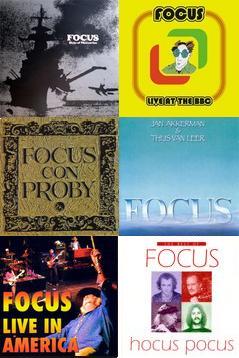
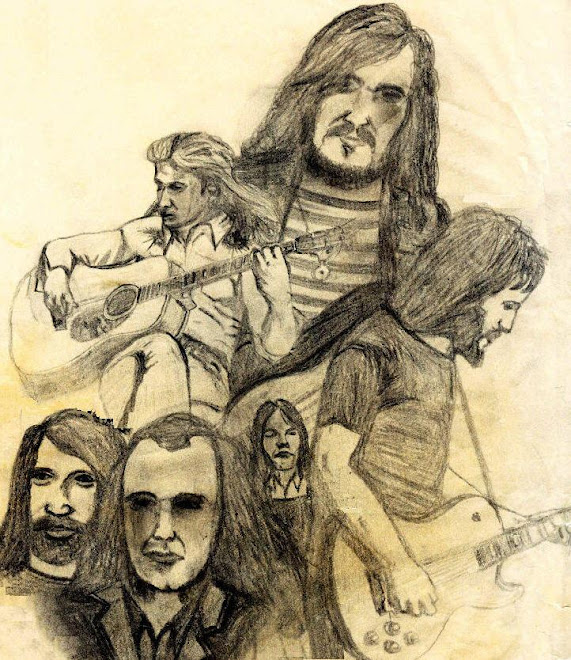
Looking at the music of Dutch rock band Focus, started in the late sixties by Thijs van Leer (b /31/03/48) with Jan Akkerman (b 24/12/46). Van Leer still performs and records under the name today (official site here). Akkerman's site here.

.

.
Showing posts with label Ship of Memories. Show all posts

20240330

Sound effects


A sound effect (or audio effect) is an artificially created or enhanced sound, or sound process used to emphasise artistic or other content of films and music or other media. Here we are thinking mainly of a sound recorded and presented to make a specific storytelling or creative point. Such effects are found on some few Focus tracks.
1. Elspeth of Nottingham. The sounds of birds and cows can be heard towards the end of the track and this is the first example of such a thing on a Focus recording.
2. Ship of memories. This track closes with wind and seagull sounds.
3. Red sky at night. This track begins and ends with the sound of a wind machine that appears to go on throughout the track.
4. Blizu Tébe. Seagulls are again heard both at the beginning and the end.
5. Flower shower. This strange track includes the sound of a bathroom shower.
6. Aya-yuppie-hippie-hee. At the beginning of this track van Leer blows a clay bird whistle.
7. Nature is our friend. The sound of ducks in the water and then various birds in a wood are heard throughout this track.
8. Let us wander. This track has a similar but different set of nature sounds near water and in woods.

20230201

Liner Notes 3 Ship of Memories


These appeared on the reverse of Ship of Memories when it came out in 1976

The key to success for any rock or music band lies not only in their individual skills but in their ability to mould those special talents into a formula of sound and substance which will be, by nature of those merits, sought out by the mass audience. Undeniably, the two founder members of FOCUS, Thijs van Leer and Jan Akkeman, along with the varying other members from Hans Cleuver and Martin Dresden through to Bert Ruiter and Colin Allen, have achieved just this goal - with flying colours. But it was the magical mixture of van Leer, Akkerman, Pierre van der Linden and Cyril Havermans (later replaced by the redoubtable Ruiter) which produced both on stage and on record the greatest moments of FOCUS' musical pageants. "SHIP OF MEMORIES" contains much of the magic from this prolific period as well as other items of equal importance from other stages in the carrer of this unique band.
My first encounter with the band, other than a quick glance at their first album "In And Out of Focus", was in Holland. At the suggestion of Seymour Stein I visited a small farming town in the north of Holland - the town had one of those unpronounceable names - during the last months of l97O. The original drummer and bassist - Hans Cleuver and Martin Dresden respectively - had just been replaced by Pierre van der Linden and Cyril Havermans. The performance that night was formidable - although I doubt the greater part of the crowd present were in much of a state to appreciate it. The beer flows heavy and fast in that part of the world ! A few months later all was ready to record. Sound Techniques and engineer Jerry Boys were booked and "Moving Waves" was set to Ampex 8 track. It was in this same studio and with the same engineer and equipment that "In And Out of Focus" had been made during the preceeding year. "SPOKE THE LORD CREATOR" comes from this period. Produced by Hubert Terheggen, the Sound Techniques legend states the recording date as 26th January 1970. The main melody part is stated by Thijs and Jan is left to solo - it serves well to show the direction in which the unit was heading even at this early stage, as did "House Of The King", still one of their best compositions.
The success of "Moving Waves" far surpassed all our wildest dreams. It also spawned a huge single hit in the shape of the bizarre "Hocus Pocus". Sadly, time - a little too much time - elapsed before we could get back into the studio again. It was not until mid-1972 that we embarked on "Focus 3" at Olympic Studios with engineer George Chkiantz. You know, this was only supposed to be a single album, but so much material was recorded in a three week period we decided to make it a double album project. Once again the album was successful and another single, "Sylvia" proved to be a chart entry. Incidentally, the recording of this material marked the arrival of Bert Ruiter and the departure of Cyril Havermans, who went his way to follow a solo career.
A further year was to pass until we were able to get back into the studios again - and as the saying goes, this is where the story really starts! The twelve month period between May'72 and May'73 had been filled to the brim with work for the band. Tours of Europe and the like left little ar no time to put together new material for another record project. An appearance at London's Rainbow Theatre on May 5th 1973 was recorded and subsequently released as the "Live At The Rainbow" set. It was only released as a stop-gag in view of the fact that there was disagreement with regard to the new material we had recorded in the last two weeks of that month of May. Those two weeks - almost immediately following on the tale end of a British tour - were booked at Chipping Norton in the heart of The Cotswold Hills. There had been not time for Preparation but it was essential to try and get something down on tape toward a new album. It was not a very fruitful period - at least that is how it appeared at the time, but on reflection ...
Musical ideas within the band were scarce and fatigue was fast setting in as too were certain discontents, of which I was to learn more as the two week period wore on. The first two days were spent working on the sounds of the various instruments until everyone was happy. Engineer Dave Grinsted had a very hard time with Pierre's drum sound - he had just purchased a Ludwig transparent framed kit and in terms of recorded sound it was disappointing - at least to Dave and I it was. Pierre was over the moon about it. And so the business of making music got under way. Of the items recorded about half are included here. "P'S March" is in true Focus style and was recorded as a single although it has not seen the light of day until now. This was about the only item completely finished to the satisfaction of Thijs and Jan - completed in fact, as I recall, during the very first few days of our sojourn in Chippy. Thijs is featured here on organ, Mellotron, clavinet, flute, alto flute and piccolo. The band took the tapes to New York some months later where they remixed it but I have remixed again for the reason of continuity. "Can't Believe My Eyes" was one of the first items we recorded and according to the tape box was called "Can't Believe My Ears" and subtitled "Dance Macabre". I have no idea how it got changed although I doubt it matters much.
As I recall, "Focus 5" was recorded without Jan being present in the Studio. Indeed, a certain amount of the material used here was initially committed to tape whilst Jan was in his bedroom resting. It was his apparent unwillingness to work on this project at this particular time that caused a great Ideal of soul searching in the hearts of the other members of the band. I suffered those "pin-jabs" too for it was my job, amongst others, to get an album out of these sessions. Proceedings were not going according to plan - it really looked as if we were about to lose everything. I talked to Jan but could get nothing out of him. Thijs talked to him with similar results. Bert just looked on - he was ready to work. Pierre wouldn't speak to anyone and grew the "long face" look which he wore for most of the two week period. Dave Grinsted, laconic as ever, just stood by - what could he do anyway ? It was in this kind of atmosphere that we recorded almost forty minutes worth of music - most of which we subsequently decided was not good enough to keep. Strange how one's outlook can change over the years. Anyway, back to "Focus 5". Jan's quitar part was added days after the track had been laid down - very late one night when all we really wanted to do was to rest.
Despite all these factors, the results are magical. There is a quality about the guitar lines - I find it hart to put it into words. Meanwhile ... Thijs had been working on a sequel to "Eruption", which had appeared on the "Moving Waves" album. He admitted freely to not having had enough time to work the piece through thoroughly but he would attempt to get something of it down on tape. "Vesuvius" was the piece and it sounded good - even in its very raw state. We recorded a fair amount of the work, but not having Jan present for the greater part of it, proved too much of a handicap and it was shelved. However, a section from the improvisation which did feature Jan is included here under the title "Out Of Vesuvius". What happened to "Vesuvius" you may ask. It was re-written and appears on record as "Hamburger Concerto". And so we come to "Ship Of Memories" which features Pierre van der Linden on drums and harmonium. Pierre's uneasiness during this time may have been related to his apparent insecurity within the band. Remember that he was subsequently replaced by ex-Stone the Crows drummer, Colin Allen. The inactivity during the fourteen days in Chipping Norton, gave Pierre the change to write this item, which in its full form is over five minutes long. In a sense it was his way of saying to the others in the band: "I too can offer something in the way of composition". Being in a free position to do this lifted the gloom from his face, at least. The day following the recording of this song the sessions came to an end. Our next sessions were some nine months later - at Olympic again.
The remaining titles which make up this set were made in different parts of the world with the band themselves handling the production. "Glider" for instance was made in Brussels at Morgan Studios with Pierre on drums. This is full of interest. Jan is featured on electric sitar as well as guitar-the only time I can remember him using one on record and there is the phantom "rhythm machine" to the forefront. I wonder how Pierre felt about this. In any event, the tune was shelved - later re-written and re-recorded in Los Angeles with Colin Allen and appears on the "Mother Focus" album under that title. "Red Sky At Night" is another odd item. Recorded again at Morgan in Brussels it features Thijs and Jan. Thijs makes use here of the Moog bass, thus substituting the bass guitar of Bert. David Kemper on drums. And finally, "Crackers", which would appear to have been made between the U.S., Belgium and Holland. Jan features acoustic guitars on this number, an instrument missing from much of the band's material since "House of The King".
Working with and alongside the members of Focus, their manager Yde de Jong, and Production manager Hubert Terheggen, has been a rewarding experience. We have had a great deal of fun and there have also been times not so fun-filled. It must be that way with any relationship. But no one can take away the beauty and power of the music. Nor can they take away the memories of how it all happened. I for my part, am grateful to have had the chance to be involved with such talent. "Ship of Memories" will become a prized possession.
Mike Vernon
October 1976

20081203

Shortest Focus Tracks


Though famed for their many longer tracks, Focus have plenty of shorter ones, many under 3 minutes. These are the top 10 stand alone tracks:

1 Delitae Musicae (1:12)
2 Father Bach (1:30)
3 Ship Of Memories (1:48)
4 Le Clochard ("Bread") (1:55)
5 House of the King (2:20)
6 Spoke The Lord Creator (2:28)
7 Moving Waves (2:30)
8 Hard Vanilla (2:36)
9 Tropic Bird/Crackers (both 2:38)

Also note: Focus vocal (2.43) Love Remembered (2:45) Sylvia Live (2:47) No Hang Ups, Early Birth (both 2:54) Janis, Soft Vanilla (both 3:00).

20080531

Track by track 49 Crackers

Archive number: 49
Title: Crackers
Main Album: Ship of Memories
Track number: 8
Genre: Jazz Funk Instrumental Studio: Decca Studios, Hollywood, Los Angeles, California (later Studio 55)
Length: 2' 38”
Composer: Jan Akkerman
Musicians: Jan Akkerman – Electric and acoustic guitars; Thijs van Leer – Flute; Bert Ruiter – Bass; David Kemper – Drums
Producer: Focus
Engineer: Eric Prestidge?
Label: LP – EMI, Harvest, Sire CD – EMI-Bovema, IRS, Red Bullet, JVC Date of recording/release: 1975. Not released until 1977 (LP). CD – 1988, 1993, 2001, 2006
Alternative version: Other longer fluteless versions appear on Akkerman's self-titled 1977 solo album and his live album of the following year. He also brought it out as a single.
Notes: This jazz funk piece by Akkerman features first his acoustic and electric guitars (with some pedal effect employed) then van Leer's flute leading the band (00:00-00:30; 00:31-00:45). This pattern is repeated (00:46-01:13; 01:14-01:29). The electric guitar then leads off on a riff (01:20-01:45) before returning to the original funky style with acoustic and electric guitars (01:46-02:12). A final all electric coda, which then fades, brings the piece to a close (02:13-02:38).
A note on Funk (from Wikipedia)
Funk is an American music style that originated in the mid- to late-1960s when African American musicians blended soul, jazz and R&B into arhythmic, danceable new form of music. Funk de-emphasises melody and harmony and brings a strong rhythmic groove of electric bass and drums to the foreground. Unlike R&B and soul, which have many chord changes, funk songs are often based on an extended vamp on a single chord. Like much African inspired music, funk typically consists of a complex groove with rhythm instruments such as electric guitar, bass, Hammond organ and drums playing interlocking rhythms. Funk bands also usually have a horn section, which plays rhythmic "hits". In funk bands, guitarists typically play in a percussive style, often using the wah-wah sound effect and muting the notes in their riffs to create a percussive sound. Influential funk performers include James Brown, George Clinton, Curtis Mayfield, etc. The 1970s was probably the era of highest mainstream visibility for funk music. Notable 1970s funk bands include Earth Wind and Fire, The Commodores and Kool and the Gang, though many of these most famous bands in the genre also played disco and soul extensively. Funk music was a major influence on the development of 1970s disco. In the 1970s, jazz music drew upon funk to create a new subgenre of jazz-funk, which can be heard in 1970s recordings by Miles Davis and Herbie Hancock.

20080530

Track by track 48b Avondrood


Archive number: 48b
Title: Avondrood
Main Album: Zing je moerstaal (a compilation). It also appeared with House of the King as a single in 1976.
Track number: 10 (of 12)
Genre: Progressive Rock Vocal
Studio: Decca Studios, Hollywood, Los Angeles, California (later Studio 55)
Length: 5' 48"
Composer: Thijs van Leer, Jules Deelder
Musicians: Jan Akkerman - Electric guitars, Vocals; Thijs van Leer – Vocals, Bass Moog, Hammond organ, Mellotrons, Piano, Electric Piano, Wind machine; David Kemper - Drums
Producer: Focus
Engineer: Mike Butcher or Eric Prestidge?
Label: LP – EMI, Harvest, Sire CD – EMI-Bovema, IRS, Red Bullet, JVC
Date of recording/release: 1975. Released 1976 (LP)
Alternative version: The instrumental version (Red sky at night [48a])
Notes: Avondrood consists of the backing track Red Sky at Night with chiefly van Leer, but also Akkerman, singing over it. The words are

O avondrood
vlammengloed
O bloedbad in het westen

O late roos
lege doos
O stoffelijke resten

O medemensch
moederschoot
O onvervulde wensen

O bete broodskind
des doods
O verte

[O evening glow, glow of flames, O massacre in the west
O late rose, empty box, O mortal remains
O fellow-man, mother's lap, O unfulfilled desires
O bite of bread, child of death, O distance]

A note on Zing je moerstaal
Zing je moerstaal (Sing your mother tongue) was a compilation album. The cover shows a Dutch symbol, the frog with the wooden shoes, sitting in a singing mouth with a pen in his hand: the combination of music and poetry. In the word "moers" you can see the colours of the Dutch national flag: red, white and blue. The album was released in Holland by CPNB (Commissie voor de Collectieve Propaganda van het Nederlandse Boek - Commission for the Collective Propaganda of the Dutch Book) on the occasion of the Week of books 1976. On the album various Dutch pop musicians (Focus, Kayak, Maggie MacNeal, Fungus, Bots, Robert Long, etc) recorded works by different Dutch authors (Jules Deelder, Harry Mulisch, Theun de Winter, Wim de Vries, Bert Schierbeek, Simon Carmiggelt, etc). Focus knew of the works of the writer and poet Jules Deelder (from Rotterdam) before this recording was done. "Avondrood" was taken from his poetry collection De zwarte jager (The black hunter). It was chosen because of its regular structure and its positive sometimes unusual perspective.

Track by track 48a Red sky at night

Archive number: 48a
Title: Red sky at night
Main Album: Ship of Memories
Track number: 6
Genre: Progressive Rock Instrumental
Studio: Decca Studios, Hollywood, Los Angeles, California (later Studio 55)
Length: 5' 48"
Composer: Thijs van Leer, Jan Akkerman, Jules Deelder
Musicians: Jan Akkerman - Electric guitars, Vocals; Thijs van Leer – Vocals, Bass Moog, Hammond organ, Mellotrons, Piano, Electric Piano, Wind machine; David Kemper - Drums
Producer: Focus
Engineer: Mike Butcher or Eric Prestidge?
Label: LP – EMI, Harvest, Sire CD – EMI-Bovema, IRS, Red Bullet, JVC
Date of recording/release: 1975 but not released in this form until 1977 (LP). CD – 1988,1993, 2001, 2006.
Alternative version: This is the instrumental backing track for the vocal track Avondrood [48b], presumably laid down like this before the vocals were added.
Notes: A wind machine is heard at the beginning and end (00:00-00:13/05:29-05:48) and in the background throughout. The band comes in together (at 00:14) led by Akkerman's guitar soaring over a slow march featuring van Leer on pianos and bass Moog. There is a beautiful guitar-led bridge (01:53-02:14) before the earlier theme is repeated. The second time the flute leads taking up the bridge part and developing it (02:47-03:51). It is later interspersed with varied fretwork on guitar until a ritartando descends. Things then take off again, led by the piano-backed rising then soaring guitar (03:52-04:18). The section closes with a decisive cymbal crash (04:18) a note from the electric piano (04:19) and a wind machine-backed caesura (04:20-04:22) before the drums and a strong piano chord (04:23-04:26) announce the final section, where the organ is heard with the piano while the guitar (now more horn-like) still leads. A flute is heard at 04:52-04:57 as the piece slowly fades away (04:27-05:28).

Track by track 47 Glider

Archive number: 47
Title: Glider
Main Album: Ship of Memories
Track number: 5
Genre: Progressive Rock Instrumental Studio: Decca Studios, Hollywood, Los Angeles, California (later Studio 55)
Length: 4' 34”
Composer: Jan Akkerman
Musicians: Jan Akkerman - Electric Sitar, Drum machine; Thijs van Leer – Piano, Mellotron, Voice; Bert Ruiter – Bass; David Kemper – Drums
Producer: Focus
Engineer: Mike Butcher or Eric Prestidge?
Label: LP – EMI, Harvest, Sire CD – EMI-Bovema, IRS, Red Bullet, JVC
Alternative version: This is an earlier abandoned version of the track Mother Focus
Date of recording/release: 1975. Not released until 1977 (LP). CD – 1988, 1993, 2001, 2006.
Notes: Using the basic elements found in Sylvia and other tracks an attempt is made here (the title and sound would suggest) to create an atmosphere and even a particular scenario. First we have the early morning arrival at an airfield and preparations for a flight (00:00-00:51). No doubt the use of the drum machine was intended to create a mechanical atmosphere. Akkerman's sitar early on also reminds one of some sort of crankshaft or winch. There are shouts and sneezes from van Leer too. A croaking sound from van Leer announces lift off and eventually the glider is set free (01:22) to joyfully glide through the air. This is represented by van Leer's voice at first but from 01:49 Akkerman's sitar takes up the representative role, including rolling falls (eg 02:15-02:19). At 02:49 van Leer's voice comes in again. The sitar comes back in though and at 03:32-03:35 we have another rolling fall before the fade.
A note on the electric sitar (from Wikipedia)
A kind of electric guitar designed to mimic the sound of the traditional South Asian instrument. Depending on manufacturer and model, these instruments bear varying degrees of resemblance to the traditional sitar. Most, in fact, resemble the guitar in the style of the body and headstock, though some have a body shaped to resemble that of a sitar. The instrument was developed in the late sixties when many western musical groups began to use sitar. The sitar is generally considered a difficult instrument to learn. By contrast, the electric sitar, with its standard guitar fretboard and tuning, is easy for a guitarist to play. In addition to the six playing strings, most electric sitars have sympathetic strings, typically located on the left side of the instrument (though some do not have these). These strings have their own pickups and are usually tuned with a harp wrench (a difficult process). A unique type of bridge, a "buzz bridge" (developed by session musician Vincent Bell), helps give the instrument its distinctive sound. Some electric sitars have drone strings in lieu of sympathetic strings. A few models, such as the Jerry Jones "Baby" sitar, lack both, while still retaining the distinctive buzz bridge. Vinnie Bell used the instrument on several songs, including "Green Tambourine" (the Lemon Pipers) and "Band of Gold" (Freda Payne). Because the tone quality and playing technique differ significantly from that of the sitar, it is not used by classical musicians, but typically by rock, jazz, fusion, progressive rock and other pop music groups. Eg Santana, Rory Gallagher, etc. Versions of electric sitar were also developed both in India and Pakistan. These are smaller, look like a sitar and are tuned the same way as the original classical sitar. Akkerman bought a Coral electric sitar, manufactured by the Danelectro company, in the USA in 1973. (These first appeared in stores at the end of 1967. Danelectro ceased trading the following year. Consequently, prices of second-hand examples began to spiral).

20080306

Track by track 38 Ship of Memories

Archive number: 38
Title: Ship of Memories
Main Album: Ship of Memories
Track number: 9
Genre: Instrumental
Studio: Chipping Norton Recording Studio, 26-32 New Street, Chipping Norton, Oxon, OX7 5LJ
Length: 1' 42”
Composer: Pierre van derLinden
Musicians: Pierre van der Linden – Drums, Harmonium
Producer: Mike Vernon
Engineer: Barry Hammond and David Grinsted
Label: LP – EMI, Harvest, Sire CD – EMI-Bovema, IRS, Red Bullet, JVC Date of recording/release: Final weeks of May 1973. Not released until 1977 (LP). CD – 1988,1993, 2001, 2006.
Notes: Again quite atmospheric this track, the last of the Chipping Norton remnants, would originally have begun with a lengthy drum break, perhaps something like The Lost Past on the self-titled album by Trace. We break in at the point where there is a loud crash on the drums and a drum roll ending with cymbals and leading (00:19) into the main part played on harmonium (an instrument also used briefly on Hocus Pocus). The cymbals carry on until 00:45 when sound effects of wind then seagulls begin. The harmonium slowly fades until only the sound of the wind remains. As what was expected to be the last published track from a great band it is a good choice.
A note on the harmonium (from Wikipedia)
A harmonium is a free-standing musical keyboard instrument similar to a reed organ or pipe organ. It consists of free reeds and sound is produced by air being blown through reeds resulting in a sound similar to that of an accordion. The air is supplied by foot-operated (or, as with the type of harmonium used in Indian music, hand-operated) bellows alternately depressed by the player. The harmonium was invented in Paris in 1842 by Alexandre Debain, though there was concurrent development of similar instruments. Christian Gottlieb Kratzenstein (1723-1795), Professor of Physiology at Copenhagen, was credited with the first free reed to be made in the western world after winning the annual prize in 1780 from the Imperial Academy of St Petersburg. Harmoniums reached the height of their popularity in the West in the late 19th and early 20th Centuries. They were especially popular in small churches where a pipe organ would be too large or too expensive. Dvorak, Franck, Schoenberg and Rossini are among classical composers who have written for the instrument. The Beatles and others have also made use of it.

Track by track 37 Focus 5

Archive number: 37
Title: Focus 5
Main Album: Ship of Memories. Also a single in 1975 b/w P's March.
Track number: 3
Genre: Jazz Rock Instrumental
Studio: Chipping Norton Recording Studio, 26-32 New Street, Chipping Norton, Oxon, OX7 5LJ
Length: 2' 57”
Composer: Thijs van Leer
Musicians: Jan Akkerman - Electric guitars; Thijs van Leer – Mellotrons, Flute; Bert Ruiter – Bass; Pierre Van Der Linden – Drums
Producer: Mike Vernon
Engineer: Barry Hammond and Dave Grinsted
Label: LP – EMI, Harvest, Sire CD – EMI-Bovema, IRS, Red Bullet, JVC
Date of recording/release: Final weeks of May 1973. Not released until 1977 (LP). CD – 1988, 1993, 2001, 2006.
Notes: This fourth salvaged track is a slow, subtle, laid back 'Focus' number and is beautiful. It is chiefly led by a double tracked lounge jazz electric guitar, though there is an alto flute passage in the middle at 01:37-02:06. Classically composed it is really jazz rock. Apparently the basic track was laid down first and it was only days later that, late one night, Akkerman finally added the guitars. Although composed and recorded prior to Focus IV it gets the name Focus V as it was only published after Focus IV had been released. Van Leer has a classical version on Introspection 3. Comparisons have been drawn with Akkerman's Javeh (Tabernakel) and Beyond the Loneliest Sea performed with Peter Banks (Two Sides of Peter Banks).

Track by track 36 Out of Vesuvius

Archive number: 36
Title: Out of Vesuvius
Main Album: Ship of Memories
Track number: 4
Genre: Progressive Rock Instrumental
Studio: Chipping Norton Recording Studio, 26-32 New Street, Chipping Norton, Oxon, OX7 5LJ
Length: 5' 43”
Composer: Thijs van Leer
Musicians: Jan Akkerman - Electric guitars; Thijs van Leer – Electric piano; Bert Ruiter – Bass; Pierre van der  Linden – Drums
Producer: Mike Vernon
Engineer: Barry Hammond and Dave Grinsted
Label: LP – EMI, Harvest, Sire CD – EMI-Bovema, IRS, Red Bullet, JVC Date of recording/release: Final weeks of May 1973. Not released until 1977 (LP). CD – 1988, 1993, 2001, 2006.
Notes: This third offering from the Chipping Norton sessions is an extract from music recorded as a follow up to Eruption that would later transmute into part of the Hamburger Concerto (Medium 1?). (Vesuvius is a volcano near Naples, Italy, that has erupted many times - 1944 was the last. Most famously it destroyed Pompei in 79 AD). It has a very live feel to it with little evidence of over dubbing. We begin with some atmospheric tinkling on electric piano, guitar, bass and drums [tom toms and cymbals] (00:00-00:45). After a 3 second caesura (00:46-00:48) Akkerman breaks in with a wailing guitar and then leads a slightly lumbering band through the first part of the number (00:49-03:44). Overlapping with the end of Akkerman's lead van Leer then takes things up on electric piano (03:45-05:43) to the fade. The electric piano is not an instrument used elsewhere by Focus.
A note on the electric piano (from Wikipedia)
An electric piano is an electric musical instrument. They began to be popular in the late sixties and were at the height of their popularity in the seventies but are still used today. Many models were designed for home or school use or to replace a (heavy) and un-amplified piano on stage, while others were originally conceived for use in school or college piano labs for the simultaneous tuition of several students using headphones. Unlike a synthesiser, the electric piano is not an electronic instrument, but electro-mechanical. Electric pianos produce sounds mechanically and the sounds are turned into electronic signals by pickups. The earliest electric pianos were invented in the late twenties; the 1929 Neo-Bechstein electric grand piano was among the first. Probably the earliest stringless model was Lloyd-Loar's Vivi-Tone Clavier.
Van Leer's preferred instrument was the distinctive Fender Rhodes model. The first one was produced in 1965. The Rhodes' action is quite different from that of a conventional piano. Whereas in a conventional piano each key causes the hammers to strike sets of strings, in a Rhodes piano the hammers strike tines instead. The result is a unique, fat sound with a bellish attack and good sustain. Since 1974 the Fender name has been dropped and just Rhodes has been used.

20080305

Track by track 35 P's March

Archive number: 35
Title: P's March
Main Album: Ship of Memories. Also a single in 1976 b/w Focus 5.
Track number: 1
Genre: Progressive Rock Instrumental
Studio: Chipping Norton Recording Studio, 26-32 New Street, Chipping Norton, Oxon, OX7 5LJ Length: 4' 45”
Composer: Thijs van Leer
Musicians: Jan Akkerman - Electric guitars; Thijs van Leer – Flute, Piccolo, Hammond organ, Clavinet, Mellotron; Bert Ruiter – Bass; Pierre van der Linden – Drums
Producer: Mike Vernon
Engineer: Barry Hammond and Dave Grinsted
Label: LP – EMI, Harvest, Sire CD – EMI-Bovema, IRS, Red Bullet, JVC
Date of recording/release: Final weeks of May 1973. Intended as a single but not released until 1976 (single) 1977 (LP). CD – 1988,1993, 2001, 2006
Alternative version: Van Leer used the track as the basis for his later Carmen Elysium on Introspection 2.
Notes: This, another track from the ill-fated trip to Oxfordshire, is really two alternating and perhaps too disparate pieces, each played twice over. The number begins with drums and two power chords on guitar then the whole band comes in with a repeated flute and piccolo-led jig with a bridge (00:00-01:23). It is followed by a lugubrious, dreamy-like guitar-led section that ends on a drawn out note (01:24-02:19). The sequence is repeated (02:20-02:56; 02:57-04:45) the guitar 'weeping' more the second time and becoming aggressive and insistent for a while (03:49-04:05), while the backing remains ballad-like. The whole ends with a distinct bass drum beat.

Track by track 34 Can't believe my eyes

Archive number: 34
Title: Can't believe my eyes
Main Album: Ship of Memories
Track number: 2
Genre: Rock Instrumental
Studio: Chipping Norton Recording Studio, 26-32 New Street, Chipping Norton, Oxon, OX7 5LJ
Length: 5' 19”
Composer: Jan Akkerman
Musicians: Jan Akkerman - Electric guitars; Thijs van Leer – Clavinet, Mellotrons; Bert Ruiter – Bass; Pierre van der Linden – Drums
Producer: Mike Vernon
Engineer: Barry Hammond and Dave Grinsted
Label: LP – EMI, Harvest, Sire CD – EMI-Bovema, IRS, Red Bullet, JVC Date of recording/release: Final weeks of May 1973. Not released until 1977 (LP). CD – 1988, 1993, 2001, 2006.
Notes: The first of five tracks rescued from 40 minutes of recording laid down during an abortive fortnight following the recording of Live at the Rainbow. This atmospheric, slightly disquieting piece was originally called "Can't Believe My Ears" but changed (one presumes) for obvious reasons. It was originally subtitled "Dance Macabre" the title of a Mediaeval allegory about the dance of death and a popular theme in art and classical music. The piece begins slowly with Akkerman double-tracked on guitars, one being distorted. Van Leer provides interesting 'howls' and other sounds on the Mellotron. Around the minute mark we settle into a rhythm that breaks down then recovers several times. The pace of the band remains fairly slow throughout while the lead guitar is quite jaunty and animated at certain points. This goes on until a final break down at around 04:50. A coda features a clavinet, mellotron, 'violined' guitar and some final drum beats.
A note on Dance Macabre (From Wikipedia)
Dance of Death (Danse Macabre, Danza Macabra, Totentanz) is a late-mediaeval allegory on the universality of death. No matter one's station in life, the dance of death unites all. It consists of death personified leading a row of dancing figures from all walks of life to the grave - typically an emperor, king, pope, monk, youngster, beautiful girl, all skeletal. It served to remind people of the fragility of life and how vain its glories. Its origins are postulated from illustrated sermon texts. The earliest artistic examples are in a cemetery in Paris from 1424. Paintings usually show a round dance headed by Death. From the highest ranks of the medieval hierarchy (the pope and the emperor) descending to its lowest (beggar, peasant, child) each mortal’s hand is taken by a skeleton or an extremely decayed body. The earliest known printed depiction is from 1499 Lyon by Mattias Huss. It depicts a compositor at his station, which is raised to facilitate his work; and a person running the press. To the right of the print shop an early book store is shown. Early print shops were gathering places for the literati. Pre-1973 musical versions include the following:
Normiger 1598; Liszt 1849; Saint-Saens 1874; Mussorgsky 1875-77; Woyrsch 1905; Schoenberg 1914; A ballet by Jooss 1932; Britten 1939; Shostokovitch, Ullmann 1944; 'Zombie Jamboree' by the Kingston Trio, which they say is based on Goethe, 1958; John Fahey (a finger style guitar solo in G minor tuning used in the film Zabriskie Point) 1964; Andrew Hill 1968; George Crumb 1971; 'Dancing with Mr D' by the Rolling Stones 1973. Also note, the use of the idea in two films - at the end of Ingmar Bergman's Seventh Seal (1957) the surviving members of the cast watch Death lead all of the others over a hill in a slow Danse Macabre. A particularly sarcastic danse macabre fashion show appears in Frederico Fellini's film Roma (1972)

20080117

Track by track 24 Hocus Pocus 2

Archive number: 24
Title: Hocus Pocus 2 (US Single)
Main Album: Ship of Memories (first released as a single in the US, it is also on Masters of Rock 1974, Dutch Masters 1975, Best of Focus 1993, etc)
Track number: 10
Genre: Progressive Rock Instrumental
Studio: Chipping Norton Recording Studio, 26-32 New Street, Chipping Norton, Oxon, OX7 5LJ?
Length: 03' 22”
Composer: Jan Akkerman, Thijs van Leer
Musicians: Jan Akkerman – Electric guitar (Gibson Les Paul Customs?); Thijs van Leer – Hammond organ, Flute; Bert Ruiter - Bass; Pierre van der Linden – Drums
Producer: Mike Vernon
Engineer: ?
Label: Single – Sire LP – Imperial, Polydor, Sire CD – EMI-Bovema, IRS, Red Bullet, JVC Victor
Date of recording/release: Single, April 1973. Ship of Memories – LP 1974, 1976, CD – 1998, 2001, 2002, 2006
Notes: Also known as the fast version, this remake was designed for the US market at the request of the record company head. It eventually reached number 9 on the Billboard Hot 100 staying in the charts for around 19 weeks. This practically live version begins with a new bass riff accompanied by the band (00:00-00:07) before breaking into a more familiar guitar-led riff (00:08-00:23) and the even more familiar classic theme (00:24-00:45). At 00:46 the drums come in alone, followed by the yodel and a sort of scream. The band then come back in with the main theme (01:09-01:25) to be followed by the strange voice with yodel sequence (01:26-01:43). The band come in again (01:44-01:54) to be followed by the drums, yodel, scream sequence (01:55-00:00) this time with a low voice (02:13-02:16) high voice (02:17-02:20) contrast before a mad guitar-led frenzy (02:21-02:43). The final drum break follows (02:44-02:48) before closing with the bass riff from the beginning, this time featuring lead guitar licks before fading from 03:12.

20071128

Track by track 8 Spoke the Lord Creator

Archive number: 8
Title: Spoke the Lord Creator
Main Album: Ship of Memories
Track number: 7
Genre: Progressive Rock Instrumental
Studio: Sound Techniques Studio, 46a Old Church Street, Chelsea, London SW3
Length: 2' 28”
Composer: Thijs van Leer, Hans Cleuver
Musicians: Jan Akkerman - Electric guitars (Fender telecasters); Thijs van Leer - Hammond organ; Martijn Dresden – Bass; Hans Cleuver – Drums
Producer: Hubert Terheggen (RTM)
Engineer: Jerry Boys
Label: LP – EMI, Harvest, Sire CD – EMI-Bovema, IRS, Red Bullet, JVC
Date of recording/release: Sunday, January 26, 1970. Abandoned and not released until 1976 (LP). CD – 1988, 1993, 2001, 2006.
Alternative version: 1971 single with vocals by Teach-in
Notes: This incomplete (?) track from the In and out of Focus sessions eventually appeared on the “cutting room floor” collection Ship of Memories in 1976. It is perhaps the earliest attempt by Focus at what later became the beginning of Hamburger Concerto, using Haydn's variations on Brahms. The opening 11 seconds of van Leer organ has a classical feel but this gives way to the main theme (00:12-01:33) which involves the whole group, Akkerman leading on a countrified electric guitar (as heard at the end of Focus 1) and leading into screaming guitar (as heard on Why Dream). From 01:34 there is a change and chopped guitar chords predominate in a section with a long fade as the piece fails to gain real momentum.
The track was eventually recorded by Teach-in in 1971 with these lyrics by Eric Cleuver:

Spoke the Lord Creator
"Hear me, I'm the Lord your Maker,
you're my creatures hear me, hear me,
stay for ever near me."
But satanic laughter sounded
and a voice said "No no no!
God is dead, the earth is yours,
live now, there's nothing later.
Go my joy behaviour,
listen, there's no judgement, Saviour"

"There is no solution,
pilgrim, take the road of evolution
but in his creation
find him in man's inspiration".
Then a child its laughter broke,
the press of human vanity,
giving hope wherever voices
cry in desperation.
Hear his voice above, pilgrim,
on your search for love."

Note on Teach-in (from Wikipedia)
Teach-In was a Dutch band, best known for winning the Eurovision Song Contest in 1975 with "Ding-a-Dong". The band was founded in 1969 and broke up in 1980. There were several line up changes. Formed in Enschede, the first line up was Hilda Felix (vocals), Henk Westendorp (vocals), John Snuverink (vocals, guitar), Frans Schaddelee (bass), leader Koos Versteeg (vocals & keys) and Rudi Nijhuis (drums). One of the first songs the group ever recorded (on CBS) was "Spoke the Lord Creator". In 1972, only Koos and Rudi remained, the rest of the band comprised Getty Kaspers (vocals, left 1976), John Gaasbeek (bass, left 1976), Chris de Wolde (guitar) and Ard Weeink (left 1976). New members in 1976 were Hans Nijland (bass, replaced by Nick de Vos 1977), Betty Vermeulen (vocals), Marianne Wolsink (vocals). In 1971 they got their first recording contract with producer and composer Eddy Ouwens (CNR records). In 1974 they had three top 15 hits, after which their Eurovision entry was recorded. They toured Europe for the next two years but success took its toll and they split up in 1978. In 1979 Ruud Nijhuis and Koos Versteeg reformed the band with two new female singers. After three more hits they split again. In 1997, news came that the original line up (with Getty Kaspers) had re-recorded some of their old hits and had plans to tour. Kaspers vocals can be heard on Rick van der Linden's Cum Laude album. The band reunited to sing "Ding-a-Dong" at a show in Maastricht in 2007.