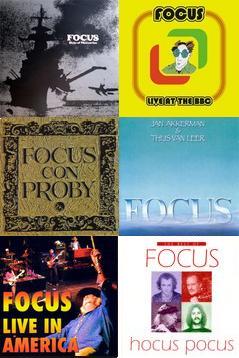
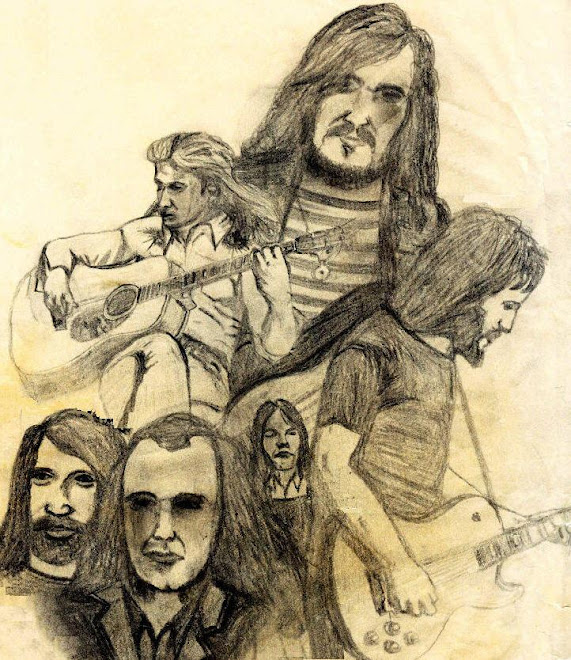
Looking at the music of Dutch rock band Focus, started in the late sixties by Thijs van Leer (b /31/03/48) with Jan Akkerman (b 24/12/46). Van Leer still performs and records under the name today (official site here). Akkerman's site here.

.

.
Showing posts with label 1973. Show all posts

20230202

Liner notes 5 Cyril


These liner notes appear on the 1973 album Cyril by Cyriel Havermans

In the beginning five musicians* gathered in Holland and formed a new group. They captured the ears of the Continent and England. They became the hottest and most progressive group in America.
The group is Focus.
The members of Focus are all individual and extremely accomplished musicians. One of the members was particularly interested in vocals and the fuller use of the voice, not only in lyrics, but as an additional instrument. Since FOCUS was primarily instrumental in approach, he decided to leave the group and explore on his own. The parting was amicable. The man is Cyril Havermans and he's out of Focus.
When MGM Records Senior Vice President Toni Scotti first heard Cyril's demos, he recognised a new force in music.
On his debut LP, Cyril is fully backed by his friends from Focus and presents a selection of his own material. He employs basic and primitive sounds with modern progressive forms and combines them into a completely fresh experience. Flute and full throttle guitars mingle with strings and an assortment of percussion instruments. The harmonic structure and polyrhythmic approach paints an aural picture. It is the work of a man who thinks individually about his music.

*It is unclear why the number five is given. Probably whoever wrote this was rhinking of Focus, a four man band, plus Cyril.

20230201

Liner Notes 1 In and Out

Seymour Stein

These liner notes appeared on a release of the first Focus album that came out in 1973. They are written by Seymour Stein, CEO of Sire Records.

Slightly over three years ago, I saw a group perform in Holland. Without a doubt they were the most original band I had ever seen. Their music, a unique blend of classical, jazz and rock was a refreshing change from the hard driving rock, extremely popular in England and the United States at that time. I was equally, if not more so impressed with the personalities, depth of musical knowledge, ability and drive of the group's motivating forces, Jan Akkerman, guitarist and Thijs van Leer, the band's organist, flutist and vocalist.
The group was Focus and had been formed in mid 1969 as a trio by Thijs van Leer with bass guitarist Martin Dresden and drummer Hans Cleuver. Guitarist Jan Akkerman, then with Brainbox, one of the top Dutch pop groups, joined to make it a quartet in November 1969.
After several months, two trips to Holland and some heavy meetings with Hubert Terheggen, the head of the Focus management team, Focus was signed to Sire Records and shortly thereafter, this record "In and out of Focus" was released. The record received the critical acclaim of both FM radio and record reviewers, but strong sales never materialized.
That was three years ago and the group has undergone many changes. After a year of moderate success, Jan Akkerman decided to rejoin drummer Pierre van der Linden also ex-Brainbox. They formed a new band and asked Thijs van Leer to come with them. Cyril Havermans joined on bass guitar and they continued to call the band Focus. Bert Ruiter replaced Cyril Havermans in September, 1971.
In the past year, Focus has emerged as the first truly progressive band from continental Europe to achieve prominence in Great Britain and the United States. Why they succeeded, where countless other groups failed, was because of their totally original sound both on records and in personal appearances. Their music is far removed from the rock cliche we have been used to for the past six years. This is the key to their success.
Their more recent albums, "Moving waves" and "Focus 3" and their three triumphant tours of Britain resulted in Focus winning both the Melody Maker Brightest hope 1972 and New Musical Express "Best talent of 1972" awards. Focus is fast being recognized as super-stars here in the United States and American audiences are anxiously awaiting the first Focus tour scheduled for early spring of this year. This, their first album, is important because it traces the current success of Focus, back to the inception and early roots of the group and should not be overlooked. It is for just this reason that we have repackaged and made available again "In and Out of Focus".

20090615

Focus Live 06

A good number of recordings have surfaced from the very busy period that the second half of 1973 was, some of them quite interesting.
Focus were supposed to begin touring America and Canada in early July 1973 but Van Leer went down with appendicitis and so the tour was delayed. They did do San Francisco (Friday June 29) and Passaic NJ (Friday July 13). Eventually they did over 20 more dates in the period October 30-December 1. While in America Akkerman hired an electric sitar, which he also used on his solo album Tabernakel recorded in between gigs in New York, July 14-25.
The sitar can be heard on Anonymous 2 in a gig recorded at the Hollywood Sportatorium in Hollywood, Florida on August 25. Either side of Anonymous 2 they play Focus 3/AQQA/Focus 2 and Hocus Pocus/Sylvia/House of the King/Hocus Pocus (reprise). That same month Focus also played back in Holland, in de Veermarkthallen in Leeuwarden. In this concert Anonymous 2 does not appear but a long version of Eruption does and this features not just the electric sitar but Akkerman playing the recently composed Hamburger Concerto riff on it.
Recordings exist from some time in Arlington, University of Texas, where Van Leer distinguished himself with quite an amazing operatic riff. In late September the band were in Europe, appearing at Alkmaar in Holland (Friday September 14) and the Turnhout Festival in Belgium (with Kayak, etc) on Sunday September 30. Rehearsals then began in Kasteel Groengueid, Holland for Hamburger Concerto. It is at this time that Van Der Linden left the band to be replaced by Colin Allen, who played his first gig with them in Toronto on October 29. This gig is notable for the first version of Hamburger Concerto, a 27:11 work out complete with drum break. They also played Focus 1 and the Rainbow material on this occasion.
On Friday November 2 they were in Bloomington, Indiana. It is during this concert that Van Leer mistakenly announced Pierre Van Der Linden on the drums and has to apologise and correct himself. A classic moment!

20090611

Focus Live 05

In 1973 Focus began to break in America. A broadcast recording exists from that year. It was recorded in the Philharmonic Hall in New York on Friday March 23. This was one of about 24 venues played in this period between March 2 (Miami) and April 7 (San Francisco). It has many similarites with the released recordings at the Rainbow Theatre, London of May 4 and 5 beginning with Focus 3/AQQA/Focus 2 as it does. The other tracks are similar, though we also get Anonymous 2 and the two versions of Hocus Pocus are slightly differently apportioned.
There is also a poor recording, probably from the same period, at The Sunshine Inn, Asbury Park, New Jersey (Friday March 16) and similar recordings from the first half of 1973 at The National Stadium, Dublin, Ireland on Wednesday May 9 and in Edinburgh on Friday May 11. This was part of a 13 date tour of England, Scotland and Ireland between May 4 and 17, beginning at the Rainbow. The year had begun with a 21 date tour of English cities, January 7-31 (the last date in Manchester being an extra).

20090610

Focus Live 04

An early recording for the BBC exists from the end of 1972 (November or December 12) or the beginning of 1973 (some time in January). It is sometimes known as The sky will fall on London tonight.
The compere is Bob Harris who introduces the band by saying "Hello, welcome again to another concert programme. My name's Bob Harris and, uh, tonight really does promise to be a special programme I think. It's, uh, the time of the season for saying about various bands, well, this is going to be their year and, uh, I think that statement really does apply to our guest band tonight. I've, uh, not been so much excited about a band, hearing them for the first time, as I was when I heard Moving Waves a little while ago, for a very, very long time and, uh, it's gonna be a special evening tonight, I think. Having said all that, please welcome Focus." The crowd cheer and we are straight into a 21 minute version of Anonymous 2 complete with bass and drum breaks and featuring Van Leer not only on the organ and flute but also on the electric piano.
"Remarkable playing" comments Harris, names the track and then introduces the band. He refers to their "brightest hope" award and that two albums are in the charts by this time and gives thanks on the band's behalf. he then says thank you to those who sent him eight different copies of the first album when he mentioned on air some weeks before that he did not have it. This leads into a version of Focus 1. On the recording this is immediately followed by the by now familiar trio of Focus 3, AQQA and Focus 2.
"It really is a joy to sit and listen and to watch them play" says Harris naming the track and their sources.
We finish off with a storming Hocus Pocus, very similar in style to the Rainbow version with yodelling antics and introductions, etc. It clocks in at around 7:23.

20080306

Track by track 38 Ship of Memories

Archive number: 38
Title: Ship of Memories
Main Album: Ship of Memories
Track number: 9
Genre: Instrumental
Studio: Chipping Norton Recording Studio, 26-32 New Street, Chipping Norton, Oxon, OX7 5LJ
Length: 1' 42”
Composer: Pierre van derLinden
Musicians: Pierre van der Linden – Drums, Harmonium
Producer: Mike Vernon
Engineer: Barry Hammond and David Grinsted
Label: LP – EMI, Harvest, Sire CD – EMI-Bovema, IRS, Red Bullet, JVC Date of recording/release: Final weeks of May 1973. Not released until 1977 (LP). CD – 1988,1993, 2001, 2006.
Notes: Again quite atmospheric this track, the last of the Chipping Norton remnants, would originally have begun with a lengthy drum break, perhaps something like The Lost Past on the self-titled album by Trace. We break in at the point where there is a loud crash on the drums and a drum roll ending with cymbals and leading (00:19) into the main part played on harmonium (an instrument also used briefly on Hocus Pocus). The cymbals carry on until 00:45 when sound effects of wind then seagulls begin. The harmonium slowly fades until only the sound of the wind remains. As what was expected to be the last published track from a great band it is a good choice.
A note on the harmonium (from Wikipedia)
A harmonium is a free-standing musical keyboard instrument similar to a reed organ or pipe organ. It consists of free reeds and sound is produced by air being blown through reeds resulting in a sound similar to that of an accordion. The air is supplied by foot-operated (or, as with the type of harmonium used in Indian music, hand-operated) bellows alternately depressed by the player. The harmonium was invented in Paris in 1842 by Alexandre Debain, though there was concurrent development of similar instruments. Christian Gottlieb Kratzenstein (1723-1795), Professor of Physiology at Copenhagen, was credited with the first free reed to be made in the western world after winning the annual prize in 1780 from the Imperial Academy of St Petersburg. Harmoniums reached the height of their popularity in the West in the late 19th and early 20th Centuries. They were especially popular in small churches where a pipe organ would be too large or too expensive. Dvorak, Franck, Schoenberg and Rossini are among classical composers who have written for the instrument. The Beatles and others have also made use of it.

Track by track 37 Focus 5

Archive number: 37
Title: Focus 5
Main Album: Ship of Memories. Also a single in 1975 b/w P's March.
Track number: 3
Genre: Jazz Rock Instrumental
Studio: Chipping Norton Recording Studio, 26-32 New Street, Chipping Norton, Oxon, OX7 5LJ
Length: 2' 57”
Composer: Thijs van Leer
Musicians: Jan Akkerman - Electric guitars; Thijs van Leer – Mellotrons, Flute; Bert Ruiter – Bass; Pierre Van Der Linden – Drums
Producer: Mike Vernon
Engineer: Barry Hammond and Dave Grinsted
Label: LP – EMI, Harvest, Sire CD – EMI-Bovema, IRS, Red Bullet, JVC
Date of recording/release: Final weeks of May 1973. Not released until 1977 (LP). CD – 1988, 1993, 2001, 2006.
Notes: This fourth salvaged track is a slow, subtle, laid back 'Focus' number and is beautiful. It is chiefly led by a double tracked lounge jazz electric guitar, though there is an alto flute passage in the middle at 01:37-02:06. Classically composed it is really jazz rock. Apparently the basic track was laid down first and it was only days later that, late one night, Akkerman finally added the guitars. Although composed and recorded prior to Focus IV it gets the name Focus V as it was only published after Focus IV had been released. Van Leer has a classical version on Introspection 3. Comparisons have been drawn with Akkerman's Javeh (Tabernakel) and Beyond the Loneliest Sea performed with Peter Banks (Two Sides of Peter Banks).

Track by track 36 Out of Vesuvius

Archive number: 36
Title: Out of Vesuvius
Main Album: Ship of Memories
Track number: 4
Genre: Progressive Rock Instrumental
Studio: Chipping Norton Recording Studio, 26-32 New Street, Chipping Norton, Oxon, OX7 5LJ
Length: 5' 43”
Composer: Thijs van Leer
Musicians: Jan Akkerman - Electric guitars; Thijs van Leer – Electric piano; Bert Ruiter – Bass; Pierre van der  Linden – Drums
Producer: Mike Vernon
Engineer: Barry Hammond and Dave Grinsted
Label: LP – EMI, Harvest, Sire CD – EMI-Bovema, IRS, Red Bullet, JVC Date of recording/release: Final weeks of May 1973. Not released until 1977 (LP). CD – 1988, 1993, 2001, 2006.
Notes: This third offering from the Chipping Norton sessions is an extract from music recorded as a follow up to Eruption that would later transmute into part of the Hamburger Concerto (Medium 1?). (Vesuvius is a volcano near Naples, Italy, that has erupted many times - 1944 was the last. Most famously it destroyed Pompei in 79 AD). It has a very live feel to it with little evidence of over dubbing. We begin with some atmospheric tinkling on electric piano, guitar, bass and drums [tom toms and cymbals] (00:00-00:45). After a 3 second caesura (00:46-00:48) Akkerman breaks in with a wailing guitar and then leads a slightly lumbering band through the first part of the number (00:49-03:44). Overlapping with the end of Akkerman's lead van Leer then takes things up on electric piano (03:45-05:43) to the fade. The electric piano is not an instrument used elsewhere by Focus.
A note on the electric piano (from Wikipedia)
An electric piano is an electric musical instrument. They began to be popular in the late sixties and were at the height of their popularity in the seventies but are still used today. Many models were designed for home or school use or to replace a (heavy) and un-amplified piano on stage, while others were originally conceived for use in school or college piano labs for the simultaneous tuition of several students using headphones. Unlike a synthesiser, the electric piano is not an electronic instrument, but electro-mechanical. Electric pianos produce sounds mechanically and the sounds are turned into electronic signals by pickups. The earliest electric pianos were invented in the late twenties; the 1929 Neo-Bechstein electric grand piano was among the first. Probably the earliest stringless model was Lloyd-Loar's Vivi-Tone Clavier.
Van Leer's preferred instrument was the distinctive Fender Rhodes model. The first one was produced in 1965. The Rhodes' action is quite different from that of a conventional piano. Whereas in a conventional piano each key causes the hammers to strike sets of strings, in a Rhodes piano the hammers strike tines instead. The result is a unique, fat sound with a bellish attack and good sustain. Since 1974 the Fender name has been dropped and just Rhodes has been used.

20080305

Track by track 35 P's March

Archive number: 35
Title: P's March
Main Album: Ship of Memories. Also a single in 1976 b/w Focus 5.
Track number: 1
Genre: Progressive Rock Instrumental
Studio: Chipping Norton Recording Studio, 26-32 New Street, Chipping Norton, Oxon, OX7 5LJ Length: 4' 45”
Composer: Thijs van Leer
Musicians: Jan Akkerman - Electric guitars; Thijs van Leer – Flute, Piccolo, Hammond organ, Clavinet, Mellotron; Bert Ruiter – Bass; Pierre van der Linden – Drums
Producer: Mike Vernon
Engineer: Barry Hammond and Dave Grinsted
Label: LP – EMI, Harvest, Sire CD – EMI-Bovema, IRS, Red Bullet, JVC
Date of recording/release: Final weeks of May 1973. Intended as a single but not released until 1976 (single) 1977 (LP). CD – 1988,1993, 2001, 2006
Alternative version: Van Leer used the track as the basis for his later Carmen Elysium on Introspection 2.
Notes: This, another track from the ill-fated trip to Oxfordshire, is really two alternating and perhaps too disparate pieces, each played twice over. The number begins with drums and two power chords on guitar then the whole band comes in with a repeated flute and piccolo-led jig with a bridge (00:00-01:23). It is followed by a lugubrious, dreamy-like guitar-led section that ends on a drawn out note (01:24-02:19). The sequence is repeated (02:20-02:56; 02:57-04:45) the guitar 'weeping' more the second time and becoming aggressive and insistent for a while (03:49-04:05), while the backing remains ballad-like. The whole ends with a distinct bass drum beat.

Track by track 34 Can't believe my eyes

Archive number: 34
Title: Can't believe my eyes
Main Album: Ship of Memories
Track number: 2
Genre: Rock Instrumental
Studio: Chipping Norton Recording Studio, 26-32 New Street, Chipping Norton, Oxon, OX7 5LJ
Length: 5' 19”
Composer: Jan Akkerman
Musicians: Jan Akkerman - Electric guitars; Thijs van Leer – Clavinet, Mellotrons; Bert Ruiter – Bass; Pierre van der Linden – Drums
Producer: Mike Vernon
Engineer: Barry Hammond and Dave Grinsted
Label: LP – EMI, Harvest, Sire CD – EMI-Bovema, IRS, Red Bullet, JVC Date of recording/release: Final weeks of May 1973. Not released until 1977 (LP). CD – 1988, 1993, 2001, 2006.
Notes: The first of five tracks rescued from 40 minutes of recording laid down during an abortive fortnight following the recording of Live at the Rainbow. This atmospheric, slightly disquieting piece was originally called "Can't Believe My Ears" but changed (one presumes) for obvious reasons. It was originally subtitled "Dance Macabre" the title of a Mediaeval allegory about the dance of death and a popular theme in art and classical music. The piece begins slowly with Akkerman double-tracked on guitars, one being distorted. Van Leer provides interesting 'howls' and other sounds on the Mellotron. Around the minute mark we settle into a rhythm that breaks down then recovers several times. The pace of the band remains fairly slow throughout while the lead guitar is quite jaunty and animated at certain points. This goes on until a final break down at around 04:50. A coda features a clavinet, mellotron, 'violined' guitar and some final drum beats.
A note on Dance Macabre (From Wikipedia)
Dance of Death (Danse Macabre, Danza Macabra, Totentanz) is a late-mediaeval allegory on the universality of death. No matter one's station in life, the dance of death unites all. It consists of death personified leading a row of dancing figures from all walks of life to the grave - typically an emperor, king, pope, monk, youngster, beautiful girl, all skeletal. It served to remind people of the fragility of life and how vain its glories. Its origins are postulated from illustrated sermon texts. The earliest artistic examples are in a cemetery in Paris from 1424. Paintings usually show a round dance headed by Death. From the highest ranks of the medieval hierarchy (the pope and the emperor) descending to its lowest (beggar, peasant, child) each mortal’s hand is taken by a skeleton or an extremely decayed body. The earliest known printed depiction is from 1499 Lyon by Mattias Huss. It depicts a compositor at his station, which is raised to facilitate his work; and a person running the press. To the right of the print shop an early book store is shown. Early print shops were gathering places for the literati. Pre-1973 musical versions include the following:
Normiger 1598; Liszt 1849; Saint-Saens 1874; Mussorgsky 1875-77; Woyrsch 1905; Schoenberg 1914; A ballet by Jooss 1932; Britten 1939; Shostokovitch, Ullmann 1944; 'Zombie Jamboree' by the Kingston Trio, which they say is based on Goethe, 1958; John Fahey (a finger style guitar solo in G minor tuning used in the film Zabriskie Point) 1964; Andrew Hill 1968; George Crumb 1971; 'Dancing with Mr D' by the Rolling Stones 1973. Also note, the use of the idea in two films - at the end of Ingmar Bergman's Seventh Seal (1957) the surviving members of the cast watch Death lead all of the others over a hill in a slow Danse Macabre. A particularly sarcastic danse macabre fashion show appears in Frederico Fellini's film Roma (1972)

20080209

Track by track 33[U] Britannia (Live)

Archive number: 33[U]
Title: Britannia
Genre: Live Elizabethan Instrumental
Venue: Rainbow Theatre, Finsbury Park, 232 Seven Sisters Road, N4 3NX (recorded using Pye Studios Mobile Unit and edited from the two performances)
Length: 3' 56”
Composer: John Dowland
Musicians: Jan Akkerman – Lute
Producer: Mike Vernon
Engineer: Phil Dunne Date of recording/release: May 4, 5 1973/unreleased
Alternative version: A concerto version appears on Akkerman's solo album Tabernakel. He did it much later live and just on guitar (Live at the Priory).
Notes: This was the very final encore and featured only Akkerman. It was apparently an afterthought (though tuning a lute is no quick task) and some had left the theatre by this point. It features Akkerman unaccompanied for 3' 40" with clapping and cheering either side. After the initial enthusiasm Akkerman seems in danger of losing his audience but fights manfully on and eventually wins them.
A note on John Dowland (From Wikipedia)
John Dowland (1563-1626) English composer, singer and lutenist, best known today for his melancholy songs such as "Come, heavy sleep", "Come again", "Flow my tears", etc. His instrumental music has undergone a major revival and has been a source of repertoire for classical guitarists during the 20th Century.
Very little is known of his early life, but it is generally thought he was born in London. He went to Paris, 1580 where he was in service to the ambassador to the French court. He became a Roman Catholic at this time, which he claimed led to his not being offered a post at Elizabeth I's court. However, his conversion was unpublicised and being Catholic did not prevent other important musicians such as Byrd having a court career. Dowland worked instead for many years at the court of Christian IV of Denmark. He returned to England, 1606 and in 1612 secured a post as one of James I's lutenists. Interestingly there are no compositions dating from this time until his death. Most of his music is for his own instrument, the lute. It includes several books of solo lute works, lute songs (for one voice and lute), part-songs with lute accompaniment and several pieces for viol consort with lute. Poet Richard Barnfield wrote that Dowland's "heavenly touch upon the lute doth ravish human sense." He wrote what is probably his best known instrumental work, Lachrimae or Seaven Teares Figured in Seaven Passionate Pavans, a set of seven for five viols and lute, each based on Flow My Tears. It became one of the best known pieces of consort music in his own time. His pavane Lachrymae antiquae was also one of the big hits of the 17th Century. Dowland's music often displays the melancholia so fashionable in music at that time. He wrote a consort piece with the punning title Semper Dowland, semper dolens (always Dowland, always doleful), which may be said to sum up much of his work. His Come Heavy Sleepe, the Image of True Death, was the inspiration for Britten's Nocturnal after John Dowland for guitar, written in 1964 for guitarist Julian Bream. His music became part of the repertoire of the early music revival with Chrisopher Hogwood and David Munrow and the Early Music Consort in the late 1960s and later with the Academy of Ancient Music from the early 1970s.

Track by track 32 Hocus Pocus Reprise

Archive number: 32
Title: Hocus Pocus (reprise)
Main Album: Focus at the Rainbow
Track number: 7
Genre: Live Progressive Rock Instrumental
Venue: Rainbow Theatre, Finsbury Park, 232 Seven Sisters Road, N4 3NX (recorded using Pye Studios Mobile Unit and edited from the two performances)
Length: 2' 43” (or 03' 03” as originally played)
Composer: Thijs van Leer, Jan Akkerman
Musicians: Jan Akkerman – Electric guitar (Gibson Les Paul Custom); Thijs van Leer – Hammond organ, Voice; Bert Ruiter - Bass; Pierre van der Linden – Drums
Producer: Mike Vernon
Engineer: Phil Dunne Label: LP – Polydor, Sire CD – EMI-Bovema, IRS, Red Bullet, JVC Victor Date of recording/release: May 4, 5 1973/October 1973 (May 4 concert televised UK July 1973) CD 1988, 1993, 2001, 2002, 2004, 2006
Alternative version: The original is on Moving Waves
Notes: This reprise of Hocus Pocus immediately follows Sylvia. It begins with Akkerman's chopped guitar (00:00-00:03) playing the opening part from the US single. The guitar is joined by strong bass (00:04) then drums (00:11) then the whole band (00:28). This is followed, after a very brief caesura, by the main theme (00:35-00:58). The break features van Leer's voice singing operatically high at first then very low, before breaking into a chanting style, accompanied by the audience's claps. This gets faster and faster until the 'scream' breaks in and (01:43) the band returns with the theme (01:49) at break neck speed. The whole is then brought to a dramatic, climactic and unified end at 02:09. Clapping, cheers and whistles follow and fade. The track has been subject to an edit around 02:17. On the orginal some 20 seconds of Akkerman playfully sliding his hand down the guitar neck to a halt have been excised to make for a more satisfying audio experience.

Track by track 31 Sylvia (Live)

Archive number: 31
Title: Sylvia (Live)
Main Album: Focus at the Rainbow
Track number: 6
Genre: Live Progressive Rock Instrumental
Venue: Rainbow Theatre, Finsbury Park, 232 Seven Sisters Road, N4 3NX (recorded using Pye Studios Mobile Unit and edited from the two performances)
Length: 2' 47”
Composer: Thijs van Leer, Jan Akkerman
Musicians: Jan Akkerman – Electric guitar (Gibson Les Paul Custom); Thijs van Leer – Hammond organ, Voice; Bert Ruiter - Bass; Pierre van der Linden – Drums
Producer: Mike Vernon
Engineer: Phil Dunne
Label: LP – Polydor, Sire CD – EMI-Bovema, IRS, Red Bullet, JVC Victor Date of recording/release: May 4, 5 1973/October 1973 (May 4 concert televised UK July 1973) CD 1988, 1993, 2001, 2002, 2004, 2006
Alternative version: The original of this is on Focus 3
Notes: A shortened version of the original, this live version is slightly quicker in tempo. Akkerman's guitar begins it with very fast chopped guitar chords and some bass accompaniment (00:00-00:14). Some sort of hum is heard early on. The organ comes in at 00:14, then drums (00:17) and at 00:35 we break into the lead theme. At 00:51 the chopped chords return to be followed once again by the guitar-led theme (00:58-01:14). At 01:15-01:18 there is a brief bridge that features again at 01:51-02:02 where it is repeated three times accompanied (unlike the original) both times by van Leer's vibrato voice. In 01:16-01:50 we revisit the main theme. The track plays out (02:03-02:47) with the ritartando from 02:36. The next track immediately follows.

Track by track 30[U] House of the King (Live)

Archive number: 30[U]
Title: House of the King (Live)
Genre: Live Progressive Rock Instrumental
Venue: Rainbow Theatre, Finsbury Park, 232 Seven Sisters Road, N4 3NX (recorded using Pye Studios Mobile Unit and edited from the two performances).
Length: 02' 45”
Composer: Jan Akkerman
Musicians: Jan Akkerman – Electric guitar (Gibson Les Paul Custom); Thijs van Leer – Flute, Hammond organ; Bert Ruiter - Bass; Pierre van der  Linden – Drums
Producer: Mike Vernon
Engineer: Phil Dunne
Date of recording/release: May 4, 5 1973, unreleased
Alternative version: This track was originally a single and appeared on In and out and Focus 3
Notes: ("Anonymous 2" was also played but not recorded). This track appears to have followed Hocus Pocus but may have come later. Van Leer stands away from the organ at the beginning, playing the flute. The track begins with Akkerman's strummed guitar (00:00-00:09) then the whole band join in at a slightly faster rate than on the original. At 01:11 van Leer moves to the organ for a guitar-led 'middle eight' that is slightly different to the original (to 01:48). Van Leer then stands behind the organ with his flute again for the final main theme, which begins with Akkerman's strummed guitar (01:49-01:51) followed by a caesura at 01:52 and the flute-led finale (01:53-02:40) with its ritartando ending. This is followed by applause and cheering (02:41-02:45).

20080208

Track by track 29 Hocus Pocus (Live)

Archive number: 29
Title: Hocus Pocus (Live)
Main Album: Focus at the Rainbow
Track number: 5
Genre: Live Progressive Rock Instrumental
Venue: Rainbow Theatre, Finsbury Park, 232 Seven Sisters Road, N4 3NX (recorded using Pye Studios Mobile Unit and edited from the two performances)
Length: 8' 29"
Composer: Thijs van Leer, Jan Akkerman
Musicians: Jan Akkerman – Electric guitar (Gibson Les Paul Custom); Thijs van Leer – Hammond organ, Voice; Bert Ruiter - Bass; Pierre van der Linden – Drums
Producer: Mike Vernon
Engineer: Phil Dunne Label: LP – Polydor, Sire CD – EMI-Bovema, IRS, Red Bullet, JVC Victor Date of recording/release: May 4, 5 1973/October 1973 (May 4 concert televised UK July 1973) CD 1988, 1993, 2001, 2002, 2004, 2006
Alternative version: The original is on Moving Waves
Notes: This live version is based more on the US single rather than the album version. The pace is certainly hot. Akkerman begins it with just his guitar (00:00-00:13). The snare comes in at 00:14 and then the full drum kit at 00:34, followed by the full band at 00:46 as they run through the main riff for the first time. At 01:09-01:24 the yodelling and scream come in for the first time and this alternating pattern continues fairly predictably to the four minute mark - Full band (01:25-01:48) Yodelling, etc (01:49-02:04) Full band (02:05-02:27) Strange voice (02:28-02:40) Full band (02:41-03:03) Yodelling, including the low voice then the high voice (03:04-03:27) Full band (03:28-03:50) Flute (helped by guitar) (03:51-04:00). We then have the full band again (04:01-04:23) followed by another yodelling section (04:24-04:58) that includes an extended piece of yodelling (26 seconds altogether!) followed by a big breath at 04:50. After the full band (04:59-05:20) we have whistling with the organ and some guitar (05:21-05:42) the full band again (05:43-06:05) and then the famous introduction sequence (06:06-06:54). The words are 'On the bass guitar Bert Ruiter ... and on the drums Pierre van der Linden ... Guitar Jan Akkerman ... organ the flute Thijs van Leeeeeeeeeeeeeeeeeeer!' Then it is once more for the full band (06:55-07:16) and the guitar-led ending – first comic, then dramatic (07:17-07:48). Applause follows with whistles and claps for an encore and a cheer (08:16). Some young men can be heard shouting 'House of the King' as the band returns and prepares to play Sylvia (07:49-08:29).

20080131

Track by track 28 Eruption (Live)

Archive number: 28
Title: Eruption (Live)
Main Album: Focus at the Rainbow
Track number: 4
Genre: Live Progressive Rock Instrumental
Venue: Rainbow Theatre, Finsbury Park, 232 Seven Sisters Road, N4 3NX (recorded using Pye Studios Mobile Unit and edited from the two performances)
Length: 08' 28”
Composer: Thijs van Leer, Tom Barlage
Musicians: Jan Akkerman – Electric guitar (Gibson Les Paul Custom); Thijs van Leer – Hammond organ, Voice; Bert Ruiter - Bass; Pierre van der Linden – Drums
Producer: Mike Vernon
Engineer: Phil Dunne
Label: LP – Polydor, Sire CD – EMI-Bovema, IRS, Red Bullet, JVC Victor Date of recording/release: May 4, 5 1973/October 1973 (May 4 concert televised UK July 1973) CD 1988, 1993, 2001, 2002, 2004, 2006
Alternative version: The original is on Moving Waves
Notes: Van Leer continues his announcement about the set list with 'We'd like to do now a bit of a number called Eruption' which is greeted with applause (00:00-00:13). The piece begins with the slow and stately Orfeus on organ, 'violined' guitar and bass (00:14-01:52). The organ plays alone at 01:33-01:40 then with the guitar at 01:41-01:52 as tension builds. The whole band then burst in with the allegro Answer (00:53-02:57). Next it is the contrasting Orfeus again (02:58-03:50) with the guitar quite prominent. We then have a brief snatch of Pupilla, featuring van Leer's voice (03:51-04:19) and the Answer (04:20-04:38) before the main Pupilla movement, 04:39-05:49. The way is now open for Akkerman and a magnificent guitar-led rendition of Tommy (05:50-07:44). Having been lifted high, a final segment of Pupilla gently brings us back to earth (07:45-08:25). Applause follows.

Track by track 27 Focus 2 (Live)

Archive number: 27
Title: Focus 2 (Live)
Main Album: Focus at the Rainbow
Track number: 3
Genre: Live Progressive Jazz Rock Instrumental
Venue: Rainbow Theatre, Finsbury Park, 232 Seven Sisters Road, N4 3NX (recorded using Pye Studios Mobile Unit and edited from the two performances).
Length: 04' 36”
Composer: Thijs van Leer
Musicians: Jan Akkerman – Electric guitar (Gibson Les Paul Custom); Thijs van Leer – Hammond organ; Bert Ruiter - Bass; Pierre van der Linden – Drums
Producer: Mike Vernon
Engineer: Phil Dunne
Label: LP – Polydor, Sire CD – EMI-Bovema, IRS, Red Bullet, JVC Victor Date of recording/release: May 4, 5 1973/October 1973 (May 4 concert televised UK July 1973) CD 1988, 1993, 2001, 2002, 2004, 2006
Alternative version: The original of this is on Moving Waves
Notes: The piece opens with an unfamiliar organ solo which eventually turns, to the crowd's delight, into the familiar strains of Focus 2 (00:00-00:41). The organ is joined by 'Violined' guitar (00:42) then drums (00:52) and bass. As in the original, the band then plays and the high soaring guitar of 00:52-01:15 is followed by the jazz break (01:16-01:39) with only drums heard at 01:24-01:28. In 01:29-02:40 the sequence is repeated (Jazz [01:29-01:38], high soaring part [01:39-02:03], Jazz [02:04-02:40 including just drums at 02:10-02:15]). As in the original, a second movement follows (02:16-04:15). This slowly builds, beginning with 'James Bond' guitar and some harmonics. The whole comes to a satisfying climax and then a diminuendo. Finally, we have the sound of the audience and van Leer saying “That we played for you was called Focus 3 and Answers Questions Questions Answers and Focus 2”.

20080128

Track by track 26 Answers? Questions! Questions? Answers! (Live)

Archive number: 26 
Title: Answers? Questions! Questions? Answers! (Live)
Main Album: Focus at the Rainbow
Track number: 2
Genre: Live Progressive Rock Instrumental
Venue: Rainbow Theatre, Finsbury Park, 232 Seven Sisters Road, N4 3NX (recorded using Pye Studios Mobile Unit and edited from the two performances).
Length: 11' 28”
Composer: Bert Ruiter, Jan Akkerman
Musicians: Jan Akkerman – Electric guitar (Gibson Les Paul Custom); Thijs van Leer – Hammond organ, Voice, Flute; Bert Ruiter - Bass; Pierre van der Linden – Drums
Producer: Mike Vernon
Engineer: Phil Dunne
Label: LP – Polydor, Sire CD – EMI-Bovema, IRS, Red Bullet, JVC Victor Date of recording/release: May 4, 5 1973/October 1973 (May 4 concert televised UK July 1973) CD 1988, 1993, 2001, 2002, 2004, 2006
Alternative version: The original of this is on Focus 3
Notes: The opening section begins with Ruiter's bass riff alongside guitar, drums, organ and (unlike the original) van Leer's voice. (00:00-00:31). At 00:31 the guitar cuts in to give the bridge (with a little help from the organ) to the point where the Hammond leads (00:41) until replaced again by a jazzy chopped guitar (00:54). The section is brought to a close (01:09) by four decisive chords. This first section is then partly repeated, van Leer's voice sounding a little more manic (01:10-01:43). After the bridge (01:44-01:53) it is the guitar that briefly leads (01:54-02:32) beginning with ascending chords and ending with the thrice-repeated riff or scale. The third section (02:33-03:47) is led, after the slightest caesura, first by the guitar, now in plaintive mood and partly 'violined'. Then (from about 03:10) by the organ (apparently Akkerman's guitar string snapped at 3:02 but he continues on five strings for a while). Just before 03:47 the sombre and mysterious mood is introduced and we come to the lengthy flute-led section (03:47-06:19). The guitar joins in at 05:53 (string replaced) and the flute stops at 06:19, the whole thing then slowing right down until only organ and drums are heard until at 6:40 sparse guitar lines begin to come in. Akkerman, backed by the band, then leads, slowly building things up with some great fretwork, until at 10:29 with a distinctive final riff he leads into the final very slow section and the last long drawn-out chord from the band which then fades (ending at 11:19). Applause follows and the opening organ chord for the next track (Focus 2) is heard.

20080126

Track by track 25 Focus 3 (Live)


Archive number: 25
Title: Focus 3 (Live)
Main Album: Focus at the Rainbow
Track number: 1
Genre: Live Progressive Rock Instrumental
Venue: Rainbow Theatre, Finsbury Park, 232 Seven Sisters Road, N4 3NX (recorded using Pye Studios Mobile Unit and edited from the two performances)
Length: 03' 55”
Composer: Thijs van Leer
Musicians: Jan Akkerman – Electric guitar (Gibson Les Paul Custom); Thijs van Leer – Hammond organ, Voice; Bert Ruiter - Bass; Pierre van der Linden – Drums
Producer: Mike Vernon
Engineer: Phil Dunne
Label: LP – Polydor, Sire CD – EMI-Bovema, IRS, Red Bullet, JVC Victor
Date of recording/release: May 4, 5 1973/October 1973 (May 4 concert televised UK July 1973) CD 1988, 1993, 2001, 2002, 2004, 2006
Alternative version: The original of this is on Focus 3
Notes: The track itself is preceded by introductory material (00:00-00:36) - the crowd clapping and whistling then cheering the announcement 'Welcome on stage now Focus' and the sounds of the band settling into their positions (the bass drum and sticks are heard). The track itself is a quite faithful but edited version of the much longer studio original, beginning with just organ (00:37-00:54), bass and guitar joining at 00:55 and the brushes on the drums at 01:15, from which point the guitar is 'violined'. One difference is that van Leer's voice can be heard from around 01:22. The 'Petula Clark' part comes in at 02:42. The early quieter part is not repeated as on the original but we come straight to the final sections - the soaring guitar-led part (03:00-03:30) and its reprise (03:31-03:54).
A note on Live Albums (From Wikipedia):
A live album – commonly contrasted with a studio album – is a recording consisting of material (usually music) recorded during stage performances. Live albums may be recorded at a single concert or combine recordings made at multiple concerts. They usually have a less "finished" character than a studio album and are intended to reproduce some of the experience of attending a concert performance. As such, they may include applause and other noise from the audience, comments by the performers between pieces, etc. They often employ multi-track recording direct from the stage sound system (rather than microphones placed among the audience) and can employ additional manipulation and effects during post-production to enhance the quality of the recording. Many successful recording artists release at least one live album at some point during their career. Some live albums are seen as expendable parts of an artist's catalogue, often failing to sell as well as studio albums though some acts are known for live albums that rival or exceed sales of studio albums.