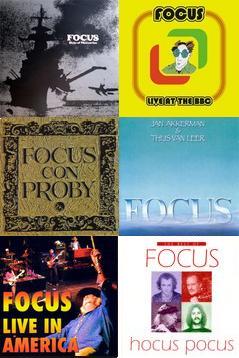
Looking at the music of Dutch rock band Focus, started in the late sixties by Thijs van Leer (b /31/03/48) with Jan Akkerman (b 24/12/46). Van Leer still performs and records under the name today (official site here). Akkerman's site here.

.

.

20111124

Chipping Norton and Decca Studios

Focus have used a limited number of recording studios over the years.

The first two studio albums were recorded mostly at Sound Techniques (Moving Waves partly at Morgan Studios) and the third and fourth at Olympic B, both in London.

The core tracks that appear on the album Ship of Memories were recorded at Mike Vernon's studio in Chipping Norton. For Mother Focus the band recorded in Los Angeles. Since that time studio recordings have been made in Holland and Belgium at EMI Hilversum, Studio Spitsbergen in Zuidbroek, Peptide Studio in Vuren and for the last two albums at Fieldwork Studios at Schoten in Belgium.
Chipping Norton Between 1972 and 1999, Chipping Norton Recording Studios existed in the old British School on New Street in the Oxfordshire market town. The studios were set up by Mike Vernon with his brother Richard and Dave Grinsted. Focus were one of the earliest bands to record there.
Los Angeles What became known as Studio 55 was originally Decca Studios (White Xmas was recorded there) and was known in the sixties as Nashville West. It had two studios and was on the Paramount Studios lot. Owned by Howard Steele it was taken over in 1975 by Richard Perry. The building is apparently long gone.

Olympic B Sound Studios

Focus have used a limited number of recording studios over the years.
The first two studio albums were recorded mostly at Sound Techniques (Moving Waves partly at Morgan Studios) and the third and fourth at Olympic B, both in London.
The core tracks that appear on the album Ship of Memories were recorded at Mike Vernon's studio in Chipping Norton. For Mother Focus the band recorded in Los Angeles. Since that time studio recordings have been made in Holland and Belgium at EMI Hilversum, Studio Spitsbergen in Zuidbroek, Peptide Studio in Vuren and for the last two albums at Fieldwork Studios at Schoten in Belgium.
Olympic Studios was a renowned independent commercial recording studio located at 117 Church Road, Barnes, South West London. The studio is best known for the huge number of famous rock and pop recordings made there from the late 1960s onward.
The building which housed the studio was constructed in 1906 as a theatre for the Barnes Repertory Company, and later became a cinema. Guild TV purchased the building in the late 1950s and converted it into a film studio. In 1965 it was purchased by Olympic Sound Studios. The conversion from film to recording studio was undertaken by architect Robertson Grant and the acoustics were completed by Keith Grant and Russel Pettinger.
Olympic's sound mixing desks were a creation of the maintenance staff and built specially for the studios. They became famous as Olympic desks and were developed by Dick Swettenham, Keith Grant and later, Jim McBride in conjunction with Jim Dowler. Swettenham later started to manufacture the consoles commercially as Helios desks.
Amongst other accolades, the studios won Music Week Magazine Best Recording Studio, five times. However, after 40 years of renowned recording history and a succession of owners, the studio facilities were closed down by the merged EMI and Virign group in 2009.
The original Olympic Sound Studios was established in central London in the late 1950s and was owned by Angus McKenzie who had bought Larry Lyons Olympia Studio in Fulham. McKenzie then took a lease on a derelict synagogue in London's West End.
In conjunction with Swettenham, McKenzie opened Olympic's Studio One with the tube desk from Olympia. Grant joined the company in 1958 as music engineer. Swettenham designed the first professional transsistorised desk in the world, which was installed into Studio One during 1960, along with the first four track recorder in England.
When the lease expired in 1965, the studio was bought from McKenzie by Cliff Adams and Keith Grant and they moved it to Barnes, a year later. Among artists who worked at the studio were the Rolling Stones, the Beatles, Jimi Hendrix, the Who, Traffic and Led Zeppelin. Procul Harum recorded Whiter Shade of Pale there.
Over the 1970s, Grant commissioned his father Robertson Grant to re-design Studio Two, as the now working and successful studio was causing problems with sound transmission to Studio One. Robertson Grant successfully innovated a completely floating space weighing seventeen tonnes, which was supported by rubber pads.
At this time Mick Jagger became involved with the charge of decor and furnishing and produced a contemporary design. Later, Grant added probably the first Instant acoustic change using rough sawn wooden slats, to cover or reveal absorptive panel behind, thus changing the acoustics. This made the room suitable for the recording of both rock and orchestral music, at the pull of a cord.
In 1987, Virgin Music bought the studios. Barbara Jefferies, then Studio manager for virgin at Olympic Studios, instructed that the master tapes of the studio's vast, historic library of recording sessions be discarded. The disposal of these tapes was unsecured as they were put into skips outside the building, and left for days; they were subsequently pillaged by hordes of freeloaders, and some are thought to have been sold for large sums of money as bootlegs.

20111123

Sound Techniques

Focus have used a limited number of recording studios over the years.
The first two studio albums were recorded mostly at Sound Techniques (Moving Waves partly at Morgan Studios) and the third and fourth at Olympic B, both in London.
The core tracks that appear on the album Ship of Memories were recorded at Mike Vernon's studio in Chipping Norton. For Mother Focus the band recorded in Los Angeles. Since that time studio recordings have been made in Holland and Belgium at EMI Hilversum, Studio Spitsbergen in Zuidbroek, Peptide Studio in Vuren and for the last two albums at Fieldwork Studios at Schoten in Belgium.
Sound Techniques began its life as a recording studio at 46a Old Church Street, Chelsea, London, SW3 in December 1964, when it was set-up by Geoff Frost and John Wood as one of the early independent sound recording studios in the UK.
Previously a milking parlour, the Studio was on three floors. Entry was by a small door within a rusty steel roller shutter. At ground level was something resembling a garage with a cobbled floor. At the far end was a manually operated lift. To the right of this lift was a narrow entrance leading to a set of quite wide white concrete stairs. These led to a small, again, concrete landing, with an entrance to the studio on the first floor. The floor had a gentle slope towards the lift access at the far end. The slope was there so that when the cows were hosed down, the slope would drain off the water. There were two stairways up to the second floor.
One led to the control room, the other to the office. This, second staircase was handmade from Dexion angle iron.
Over the next decade some of the best UK folk and folk rock artists recorded at Sound Techniques, and undoubtedly produced some of the best records of the era. Artists that recorded there included: Pink Floyd, Fairport Convention, Jethro Tull, Steeleye Span, Incredible String Band, The Pentangle, Judy Collins, John Cale, The Yardbirds and The Who.
During the '60's and '70's, the Sound Techniques studio enjoyed unqualified success at the top-end of the music business as did STL's manufacturing division. The company produced a pioneering range of audio recording desks including the System 12 mixer which was one of the first ever compact desks in production, and was exported all over the world.
The studios closed their doors in 1976 and over the past 39 years, Sound Techniques has diversified into both Television Production and Information Technology.

20111122

Track by track 117 Niels Skin

Archive number: 117
Title: Niels' skin
Main Album: Focus 9 (New Skin)
Track number: 5
Genre: Progressive Rock Instrumental
Studio: Fieldwork Studios, Schoten, Belgium
Length: 06:02
Composer: Niels van der Steenhoven
Musicians: Thijs van Leer – Hammond organ, piano; Niels van der Steenhoven – Guitars; Bobby Jacobs – Bass; Pierre van der Linden - Drums
Producer: Bobby Jacobs and Thijs van Leer
Engineer: Han Nuijten
Label: Red Bullet
Date of recording/release: Summer 2006
Alternative version: None
Notes: The introduction is played on drums (00:00-00:18) and is followed by a series of alternating sections. The first is a choppy guitar riff led section backed by the organ and speeding up at the end (00:18-00:46 and 00:51-01:19). The second is a pleasant guitar led theme (00:46-00:51 and 01:20-01:44) that begins to yearn second time around. When the choppy riff comes in the third time it leads into an organ solo with the band still backing (01:45-02:58). This third time the guitar has a dreamy quality when the theme is played, 02:59-03:43. At 03:44 we return pronouncedly to the choppy section again beginning a little slower with lots of bass and leading into a heavy and fairly wild guitar-led segment. This goes on until 05:15 where the choppy section comes in seamlessly for the final time and the piece comes to a united close at 06:02.

20111117

Track by track 116 Sylvia's Stepson UbaTuba

Archive number: 116
Title: Sylvia's stepson Ubatuba
Main Album: Focus 9 (New Skin)
Track number: 4
Genre: Progressive Rock Instrumental
Studio: Fieldwork Studios, Schoten, Belgium
Length: 04:46
Composer: Bobby Jacobs
Musicians: Thijs van Leer – Hammond organ, voice; Niels van der Steenhoven – Guitars; Bobby Jacobs - Bass; Pierre van der Linden - Drums
Producer: Bobby Jacobs and Thijs van Leer
Engineer: Han Nuijten
Label: Red Bullet
Date of recording/release: Summer 2006
Alternative version: None
Notes: Organ and guitar begin together, backed by bass and cymbals, as this beautiful piece is introduced (00:00-00:31). The drums announce the main theme, a typical piece of Focus guitar - slow, yearning and thoughtful - with occasional volume swells or violining (00:32-02:00) before quiet (02:01-02:10) then louder (02:11-02:24) guitar-led sections. At 02:25-02:56 we have the “ubatuba” section featuring guitar and “ubatubing” from van Leer's voice. A caesura at 02:57 announces the return of the yearning guitar lead with some exquisite finger work from van der Steenhoven, especially towards the end (02:58-04:14). Finally, we have a quieter section (04:15-04:35) that is rounded off with a coda of 10 violined harmonics (04:36-04:46).

Track by track 115 Remember Mozart/Hurkey Turkey

Archive number: 115
Title: Remember Mozart/Hurkey Turkey
Main Album: Focus 9 (New Skin)
Track number: 3
Genre: Progressive Rock Instrumental
Studio: Fieldwork Studios, Schoten, Belgium
Length: 04:02
Composer: van Leer
Musicians: Thijs van Leer – Hammond organ, piano, keyboard, flute, voice; Niels van der Steenhoven – Guitars; Bobby Jacobs - Bass; Pierre van der Linden - Drums
Producer: Bobby Jacobs and Thijs van Leer
Engineer: Han Nuijten
Label: Red Bullet
Date of recording/release: Summer 2006
Alternative version: None
Notes: Following a drum beat there is a slow, deliberate introduction led by a five note guitar, bass and piano riff, more or less repeated eight or nine times (01:00-0024). Next comes a more tuneful section, hailed by a Mozartian trill and featuring the flute along with the band and harpsichord-like keyboards (from 00:25). This goes on until 01:12 when first the guitar then the keyboard (01:13-01:17) re-introduce the opening theme backed this time by van Leer's improvised flute (01:18-01:40). This leads to the central motif, van Leer's piano and band backed voice, based on the famous Mozart piece Alla Turca (hence the titles). That sections ends at 02:16 (slowing down before speeding up again from 02:02). At 02:17 the opening intro is played in slightly lengthened form for the third and last time, backed this time by squealing and wild electric guitars. At 02:52 we come out again with the tuneful and flute dominated second section broken up only by two brief sections on what sounds like acoustic guitar and keyboard (03:12 03:23) and keyboard with flute (03:41-03:46). The piece ends with a note from the flute.
The third movement of Wolfgang Amadeus Mozart's Piano Sonata No. 11 in A major, K 331 (300i) (from WIkipedia) is a sonata in three movements:
1. Andante grazioso — a theme with six variations 2. Menuetto — a minuet and trio 3. Alla Turca: Allegretto in A minor and major.
All the movements are in the key of A major or A minor; therefore, the work is homotonal. A typical performance of the entire sonata takes about 20 minutes.
It is uncertain where and when Mozart composed it; however, Vienna or Salzburg around 1783 is currently thought to be most likely.
The last movement, Alla Turca, popularly known as the Turkish Rondo or Turkish March, is often heard on its own and is one of Mozart's best-known piano pieces. It imitates the sound of Turkish Janissary bands, the music of which was much in vogue at that time. Various other works of the time imitate this music, including Mozart's own opera The Abduction from the Seraglio.
Repeated notes, repeated ornaments, and loud/soft passages are characteristic of the Alla turca style. The imitation probably came closer with the piano of Mozart's day, whose bass strings made something of a rattle when played loudly, than is possible on modern pianos.
In Mozart's time, the last movement was sometimes performed on pianos built with a "Turkish stop", allowing it to be embellished with extra percussion effects.
Moreover, this third movement is implicitly related to the first one, because the beginning of the "Rondo" can be seen as an additional variation of the "Tema" of the first movement, varied in the Janissary style.

20111116

Track by track 114 Focus 7

Archive number: 114
Title: Focus 7
Main Album: Focus 9 (New Skin)
Track number: 2
Genre: Progressive Rock Instrumental
Studio: Fieldwork Studios, Schoten, Belgium
Length: 05:18
Composer: van Leer
Musicians: Thijs van Leer – Hammond organ, piano; Niels van der Steenhoven – Guitars; Bobby Jacobs - Bass; Pierre van der Linden - Drums
Producer: Bobby Jacobs and Thijs van Leer
Engineer: Han Nuijten
Label: Red Bullet
Date of recording/release: Summer 2006
Alternative version: Later on Completely Focussed album
Notes: We begin with an introduction just on the Hammond organ until at 00:37 a bass note brings in the guitar led band with an exquisite statement of the main theme (00:38-01:10). The theme is restated slightly more stridently (01:11-01:47) before the typically more yearning and heavier version of it comes in (01:48-02:25). It then reverts to something more like the first statement, but helped in due time by the flute (02:26-03:11), which also features in the following stormy version of the more strident element (03:12-03:48). From 03:49 it is quiet again, rising a little before more or less repeating from about 04:27. The piano is quite prominent in these final sections alongside the organ. A live sounding end comes around 05:18, the Hammond going on for at least 10 seconds after the close.

20101216

Track by track 113 Black Beauty (Instrumental)

Archive number: 113
Title: Black Beauty (instrumental)
Main Album: Focus 9 (New Skin)
Track number: 1
Genre: Progressive Rock Instrumental
Studio: Fieldwork Studios, Schoten, Belgium
Length: 04:10
Composer: van Leer
Musicians: Thijs van Leer – Hammond organ, piano, whistling; Niels van der Steenhoven – Guitars; Bobby Jacobs - Bass; Pierre van der Linden - Drums
Producer: Bobby Jacobs and Thijs van Leer
Engineer: Han Nuijten
Label: Red Bullet
Date of recording/release: Summer 2006
Alternative version: The original vocal version appears on the first Focus album
Notes: We begin with a mincing organ, accompanied by bass and drums to introduce the piece (00:00-00:16). The electric guitar joins in with a twice stated riff in slightly muted pizzicato style (00:17-00:32). The organ then swells and the band build up (00:33-00:48) to a first guitar led “vocal” section (00:49-01:04) followed by a more tempestuous yearning section (01:05-01:16). This pattern is repeated (01:17-01:32; 01:33-01:59) the yearning section more wistful, less tempestuous at first. The “vocal” section is repeated a third time (02:00-02:31). A piano trill is heard quite distinctly at 02:15 before the yearning section comes in and the “vocal” part is repeated yet again (02:32-02:55). There is then a break down where first van Leer leads with whistling (02:56-03:10) then van der Steenhoven very pleasantly on guitar (03:11-03:42). We play out with a whistle led “vocal” section with a final ritartando (03:43-04:10).

20101024

Love Remembered

Round goes the gossip

Focus Live @ Jazz Cafe 2

Track by track 112 Drum Solo (Old Skin)

Archive number: 112 [u]
Title: Drum solo
Main Album: Unreleased
Track number: 4
Genre: Live Drum solo
Venue: Unknown
Length: 03' 33”
Composer: Pierre van der Linden
Musicians: Pierre van der Linden – Drums.
Producer: Bobby Jacobs and Thijs van Leer
Engineer: Unknown
Label: None
Date of recording/release: This track was recorded in 2006 and appears on the Old Skin collection
Note: The track appears to be a live recording of van der Linden doing what he does best.

Track by track 111 Hello

Archive number: 111 [u]
Title: Hello
Main Album: Unreleased
Track number: 5
Genre: Progressive Rock Instrumental
Studio: Fieldwork Studios, Schoten, Belgium
Length: 06' 30”
Composer: Jan Dumee
Musicians: Thijs van Leer – Hammond organ, Voice; Jan Dumee – Electric Guitar; Bobby Jacobs – Bass, Voice; Pierre van der Linden – Drums.
Producer: Bobby Jacobs and Thijs van Leer
Engineer: Han Nuijten
Label: None
Date of recording/release: This track was recorded in 2006 at the start of preparations for the album Focus 9 – after the departure of Bert Smaak but before the departure of Jan Dumee. It is in the Old Skin collection and has been made available on Jan Dumee's website.
Alternative version: A vocal version by John Lawton with Dumee
Note: The track announces its presence with the sound of a cymbal and two lots of four notes on electric guitar with organ, bass and drums backing (00:01-00:18). We then move into a plaintive guitar led section (00:19-01:09) that becomes perhaps a little more brilliant (01:10) then more quiet (01:33). Dumee seems to be groping for a melody that does not really develop much. At 2:12 a sudden spark of life appears as van Leer adds an onomatapoeic voice. This continues to 2:30 where the plaintive guitar returns. The voice returns for a longer run, 03:52-06:16. In this section the guitar and band get a little wilder. The piece then tails off with a drawn out voice and organ ending.

20101021

Focus live @ Jazz Cafe 2010


These clips show Focus at a recent gig in the Jazz Cafe, London. This was the last gig of the tour. Unusually, the guitarist is Menno Gootjes, the regular guitarist having had to drop out. Here we have House of the King followed by bit of flute and scat from Thijs, a little Cathedrale and the repeated Sylvia finale. Thanks guys! Menno has subsequently become the regular guitarist.

20100602

Track by track 110 Face to face

Archive number: 110 [u]
Title: Face to face
Main Album: Unreleased
Track number: 3
Genre: Progressive Rock Instrumental
Studio: Fieldwork Studios, Schoten, Belgium
Length: 06' 00”
Composer: Jan Dumee
Musicians: Thijs van Leer – Flute, Hammond organ; Jan Dumee – Acoustic Guitar (slide), Electric Guitar; Bobby Jacobs – Bass; Pierre van der Linden – Drums.
Producer: Bobby Jacobs and Thijs van Leer
Engineer: Han Nuijten
Label: None
Date of recording/release: This track was recorded in 2006 at the start of preparations for the album Focus 9 – after the departure of Bert Smaak but before the departure of Jan Dumee. It has been made available on Jan Dumee's website.
Alternative version: A vocal version by John Lawton with Dumee
Note: This track is very much a Focus track though it sounds slightly strange at the beginning due to a singular use of acoustic slide guitar. We start with a signal from the high hat before the slide guitar and electric guitar set up a riff (00:00-00:05) that is later supplemented by the Hammond organ (00:06) and the band. The bass (with drums) sets up a new riff from 00:13, supplemented first by electric guitar (00:23) then organ with a drum fill (00:30). This leads into a full band performance, with the flute coming in at 00:44 with three clear blasts then more. The main band backed ten note flute riff begins at 01:04 and is repeated four times before reverting briefly to the starting riff (01:25-01:34). This pattern is then repeated (01:35-01:55/01:56-02:08). At 02:09 we return to the beginning but this time we enter a good old fashioned bass and drums section at 02:20. This goes on until 03:33 when the organ begins to come in again. At 03:51-04:03 we have the earlier electric guitar riff. From 04:04 Dumee solos on band backed electric guitar. The ten note flute riff, again repeated four times, comes in again at 04:23-04:42 and 04:54-05:14. Meanwhile, the electric guitar-led band plays out until 05:39 where a punctuated ritartando conclusion begins, closing with the band all on one unified note.

20100531

Track by track 109 Holy Graal

Archive number: 109 [u]
Title: Holy Graal
Main Album: Unreleased
Track number: 2
Genre: Mediaeval
Studio: Bolinha Studio
Length: 02' 28”
Composer: Jan Dumee, Thijs van Leer
Musicians: Thijs van Leer – Flutes; Jan Dumee – Vocals, acoustic Guitars, Drum, Tambourine Producer: Thijs van Leer
Engineer: Unknown
Label: None
Date of recording/release: This track was recorded in 2006 at the start of preparations for the album Focus 9 – after the departure of Bert Smaak but before the departure of Jan Dumee. It has been made available on Jan Dumee's website.
Alternative version: None
Note: We begin with a slow percussion backed flute section (00:00-00:21). The vocal, backed by guitar and some flute begins at 00:22 and ends at 01:57. At 01:04-01:15 a short choir-like non-verbal section comes in backed only by guitar, the flute returning at 01:44. The final instrumental section features guitar, flute and percussion (01:58-02:28). The words appear to be in Old French or something similar.
Note on Holy Graal (From Wikipedia)
The word graal, as it is earliest spelled, appears to be an Old French adaptation of the Latin gradalis or gradale, meaning 'by degree', 'by stages', applied to a dish brought to the table in different stages or services during a meal. After the cycle of Grail romances was well established, late medieval writers came up with a false etymology for sangréal, an alternative name for "Holy Grail." In Old French, san graal or san gréal means "Holy Grail" and sang réal means "royal blood"; later writers played on this pun. Since then, "Sangreal" is sometimes employed to lend a medievalising air in referring to the Holy Grail. This connection with royal blood bore fruit in a modern bestseller linking many historical conspiracy theories. The Holy Grail is a sacred object figuring in literature and in certain Christian traditions, most often identified with the dish, plate, or cup used by Jesus at the Last Supper and said to possess miraculous powers. The connection of Jospeh of Arimathea with the Grail legend dates from Robert de Boron's Joseph d'Arimathie (late 12th century) in which Joseph receives the Grail from an apparition of Jesus and sends it with his followers to Great Britain. Building on this theme, later writers recounted how Joseph used the Grail to catch Christ's blood while interring him and that in Britain he founded a line of guardians to keep it safe. The quest for the Holy Grail makes up an important segment of the Arthurian cycle, appearing first in works by Chrétien de Troyes. The legend may combine Christian lore with a Celtic myth of a cauldron endowed with special powers. The development of the Grail legend has been traced in detail by cultural historians: It is a legend which first came together in the form of written romances, deriving perhaps from some pre-Christian folklore hints, in the later 12th and early 13th centuries. The early Grail romances centered on Percival and were woven into the more general Arthurian fabric. Some of the Grail legend is interwoven with legends of the Holy Chalice. The Grail plays a different role everywhere it appears, but in most versions of the legend the hero must prove himself worthy to be in its presence. In the early tales, Percival's immaturity prevents him fulfilling his destiny when he first encounters the Grail, and he must grow spiritually and mentally before he can locate it again. In later tellings the Grail is a symbol of God's grace, available to all but only fully realised by those who prepare themselves spiritually, like the saintly Galahad. There are two veins of thought concerning the Grail's origin. The first, holds that it derived from early Celtic myth and folklore. Meanwhile, other scholars believe it began as a purely Christian symbol. Another recent theory holds that the earliest stories casting the Grail in a Christian light were meant to promote the Roman Mass. It was around the time of the appearance of the first Christianised Grail literature that the Roman church was beginning to add more ceremony and mysticism to this particular sacrament. This theory has some basis in the fact that the Grail legends are a phenomenon of the Western church. Most scholars today accept that both Christian and Celtic traditions contributed to the legend's development, though many of the early Celtic-based arguments are largely discredited. The general view is that the central theme of the Grail is Christian, even when not explicitly religious, but that much of the setting and imagery of the early romances is drawn from Celtic material. The Grail is first featured in Perceval, le Contedu Graal (The Story of the Grail) by Chrétien de Troyes, who claims he was working from a source book given to him by his patron, Count Philip of Flanders. In this incomplete poem (from some time between 1180 and 1191), the object has not yet acquired the implications of holiness it would have in later works. Though the earliest and most influential account, it was in the work of Robert de Boron that the Grail truly became "Holy" and assumed the form most familiar to modern readers - in the verse romance Joseph d’Arimathie (composed between 1191 and 1202).

20100528

Track by track 108 Brazil Love

Archive number: 108[dl]
Title: Brazil Love
Main Album: Focus 9/New Skin
Track number: 14
Genre: Progressive Rock Instrumental
Studio: Fieldwork Studios, Schoten, Belgium
Length: 06' 10”
Composer: Jan Dumee
Musicians: Thijs van Leer – Hammond organ, Flute, Voice; Jan Dumee – Guitars; Bass - Bobby Jacobs; Drums – Pierre Van Der Linden
Producer: Bobby Jacobs and Thijs van Leer
Engineer: Han Nuijten
Label: None
Date of recording/release: This track was recorded in 2006 at the start of preparations for the album Focus 9 – after the departure of Bert Smaak but before that of Jan Dumee. It was available as a download on itunes with Focus 9 but was not on the CD version.
Alternative version: Opening track on an unofficial release called Old skin
Notes: The track begins with bass and drums (00:00-00:07). First the guitar then the organ dabble in putting a pattern over it (00:08-01:09) until the dreamy voice and flute of van Leer come in for the first of three sections where that dominates (01:10-01:47). We then revert briefly to the bass and drums alone (01:48-01:57) the guitar and flute coming back in (01:58-02:21) before a second flute and voice section (02:22-02:56). From 02:57-03:44 we have a section led by Dumee's guitar, the voice and flute kicking in again at 03:45-04:50. At 04:51-05:24 it's back to bass and drums before the flute comes in alone (05:25-06:07) until the final seconds where the voice is heard to die away.

20100504

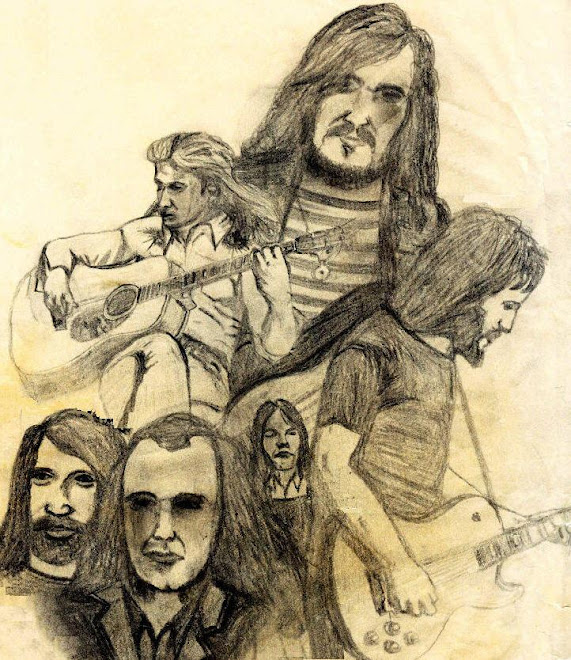
Akkerman by Hogg

As mentioned, the boy who really got me into Focus all those years ago was called Robert Hogg. I found this and the other one looking for something the other day. We all agreed that he gets Akkerman better than van Leer. On reflection, I may have only paid 50p or 60p for the pair (both are on one large sheet of drawing room paper). Scandalously cheap. Thanks again!

Van Leer by Hogg

The boy who really got me into Focus all those years ago was called Robert Hogg. He knew about Focus through his older brother. A talented fellow (unlike myself - my efforts can be seen elsewhere) he took artistic commissions. I think I paid 50p for this. We lost touch once school was over. He served in the RAF. Thanks!

20100503

Track by track 107 Flower Shower

Archive number: 107
Title: Flower Shower
Main Album: Focus 8
Track number: 11
Genre: Jolly Song
Studio: Peptide Studio, Vuren
Length: 05:37
Composer: Jan Dumée, Bobby Jacobs, Bert Smaak, Thijs van Leer
Musicians: Thijs van Leer – Hammond organ, Vocal; Jan Dumee – Guitars, Vocal; Bass - Bobby Jacobs; Drums - Bert Smaak
Producer: Geert Scheijgrond & Focus
Engineer: Geert Scheijgrond & Dick Kemper
Label: Musea/Red Bullet
Date of recording/release: A limited run of 500 of the album appeared in August 2002 to be followed by a general release on CD later that year. Also later on Paras and JVC Victor
Alternative version: None
Notes: Flower Shower is declared to be a bonus track. Clearly it is a joke but quite what is going on and the story behind it is unclear. Weird and surreal is how van Leer describes it. From the beginning the sound of a garden sprinkler or of a shower is heard. Five seconds in van Leer and Dumee (or is it Jacobs?) using a falsetto voice sing several verses in a rather silly way in Dutch. There is a little flute led break 00:58-01:06 and a later one at 02:30-02:46. It is not clear what they are singing exactly although they close with a brief rendition of a traditional Dutch birthday greeting - "Lang zal je leven, lang zal je leven, lang zal je leven in de gloria. In de gloria." (This means let him live long in the glory [ie in heaven]).

Track by track 106 Blizu Tébe

Archive number: 106
Title: Blizu Tébe
Main Album: Focus 8
Track number: 10
Genre: Progressive Rock Instrumental
Studio: Peptide Studio, Vuren
Length: 06' 30”
Composer: Jan Dumee
Musicians: Thijs van Leer – Hammond organ, Piano; Jan Dumee – Guitars; Bass - Bobby Jacobs; Drums - Bert Smaak
Producer: Geert Scheijgrond & Focus
Engineer: Geert Scheijgrond & Dick Kemper
Label: Musea/Red Bullet
Date of recording/release: A limited run of 500 of the album appeared in August 2002 to be followed by a general release on CD later that year. Also later on Paras and JVC Victor
Alternative version: None
Notes: Blizu Tebe is a second title in Bosnian-Serbian-Croatian. Meaning “closer to you” we are away from any political overtones. A slow, romantic number for the most part, it begins (00:00-00:12) and ends with the sound of seabirds, suggesting music for a TV series based by the sea. A drum beat (00:13) introduces drums, bass and keyboards as the sound effects fade (00:14-00:30). An electric guitar (00:31) takes up the first gentle and haunting theme (as far as 01:04). A more strident or yearning guitar theme comes next (01:05-01:30) before going back to something less so (01:31-01:51) then the original quiet theme (01:52-02:47). Next comes the soaring theme again (02:48-03:12). The quieter and more strident or yearning themes alternate once more (03:13-03:26/03:27-04:45) then the quieter theme comes in again (04:46-04:59) and at 05:12 to the end, being briefly interrupted for the final time by the other theme (05:00-05:11). The piano comes out at times, the organ at others, violined guitar and brushed drums too. The seabirds are heard again from 05:39 to the end at 06:30, the actual music coming to an end at 06:26.

20100302

Track by track 105 Brother

Archive number: 105
Title: Brother
Main Album: Focus 8
Track number: 9
Genre: Progressive Rock Instrumental
Studio: Peptide Studio, Vuren
Length: 05' 33”
Composer: Thijs van Leer, Roselie Peters
Musicians: Thijs van Leer – Hammond organ; Jan Dumee – Guitars; Bobby Jacobs - Bass; Bert Smaak - Drums
Producer: Geert Scheijgrond & Focus
Engineer: Geert Scheijgrond & Dick Kemper
Label: Musea/Red Bullet
Date of recording/release: A limited run of 500 of the album appeared in August 2002 to be followed by a general release on CD later that year. Also later on Paras and JVC Victor
Alternative version: Several including on Focus Con Proby
Notes: This is an instrumental version of a Focus track that first appeared on Focus Con Proby with P J Proby singing. It begins with the beautiful, classically informed (from Brahms?) but now bluesified, introduction this time on Hammond organ (00:00-00:59) and slightly extended. A drum beat (01:00) brings the band in with the slow march led this time by Dumee's electric guitar (01:01-01:56) and, for the chorus, Van Leer's flute and organ (01:57- 02:26). The pattern is repeated (02:27-03:21 and 03:22-03:56). A final Dumee-led section wrings a good deal of emotion out of the tune before a dramatic end (03:57-05:20) that ends with a 13 second quotation from Eruption to conclude.

Track by track 104 Sto Ces Raditi Ostatac Zivota?

Archive number: 103
Title: Sto Ces Raditi Ostatac Zivota?
Main Album: Focus 8
Track number: 7
Genre: Progressive Rock Instrumental
Studio: Peptide Studio, Vuren
Length: 05' 23”
Composer: Jan Dumee
Musicians: Thijs van Leer – Flute, Hammond organ, Voices; Jan Dumee – Guitars, inc Acoustic, Voices; Bobby Jacobs - Bass; Bert Smaak - Drums
Producer: Geert Scheijgrond & Focus
Engineer: Geert Scheijgrond & Dick Kemper
Label: Musea/Red Bullet
Date of recording/release: A limited run of 500 of the album appeared in August 2002 to be followed by a general release on CD later that year. Also later on Paras and JVC Victor Alternative version: None Notes: The title is Bosnian-Serbo-Croatian and means something like What will you do with the rest of your life? The title is presumably a comment on the recent politics of the region, which has known great upheaval. If so, this would be a second political or protest song for Focus (Sugar Isalnd back at the beginning being the first). The opening introduction features flute and acoustic guitar which ends with the sound of tom toms (synthesised?) (00:00-00:30). The drums then introduce a further melodic introduction (00:31-01:23) featuring the band on acoustic guitar, organ, bass and drums with distant vocal backing of a scat variety. A flute is heard near the end of this. From 01:24 the electric guitar gives some strong notes to lead the organ, some flute coming in too (with a distinctive guitar sound briefly at 02:38-02:42). This goes on rising pretty much (though not really progressing much) until 04:16. A voice comes in at 04:17, 18 as the guitar grows more passionate. From 05:10 a fade begins featuring acoustic guitar that ends with just the voice at 05:23.

Track by track 103 Focus 8

Archive number: 103
Title: Focus 8
Main Album: Focus 8
Track number: 6
Genre: Progressive Rock Instrumental
Studio: Peptide Studio, Vuren
Length: 06' 13”
Composer: Thijs van Leer
Musicians: Thijs van Leer – Hammond organ, piano, synthesiser; Jan Dumee – Guitars; Bobby Jacobs - Bass; Bert Smaak - Drums, Timpani
Producer: Geert Scheijgrond & Focus
Engineer: Geert Scheijgrond & Dick Kemper
Label: Musea/Red Bullet
Date of recording/release: A limited run of 500 of the album appeared in August 2002 to be followed by a general release on CD later that year. Also later on Paras and JVC Victor.
Alternative version: See the fiftieth anniversary CD
Notes: The title track begins with drums, then a rhythmic piano with bass and drums (00:00-00:08). An electric guitar then picks out a descending tune over the band (00:09-00:38). The main heroic guitar led theme kicks in for the first time at 00:39. Backed by piano, timpani and band, it is played several times altogether. At 01:09 there is something of a change of pace and at 01:20 something of a ritartando or slowing down only to pick up again after almost pausing at 01:21, 22. The main theme comes in a second time (01:23-02:00), closing this time with a more staccato slowing down until a piano bridge at 02:12-14. A third assault on the main theme follows (02:15-02:42). This also breaks down at 02:43-48 before a fourth round and break down (02:49-02:42/43-47). The fifth attempt follows from 02:48. This goes on until an organ dominated dip ending at 03:46. The guitar then soars more and the piano is almost lost as we head for the home strait and a final timpani/piano driven assault from 04:31 followed by a descent echoing the earlier guitar led theme with strong Hammond chords at times. The band end in unison around 06:13.