Chart showing the proportion of the album taken up by each track
.

20080829


20080718

20080713


20080712


Track by track 68 Hocus Pocus (Live) BBC
Archive number: 68
Title: Hocus Pocus (Live)
ain Album: Live at the BBC
Track number: 9
Genre: Live Progressive Rock Instrumental
Venue: New Victoria Theatre, 17 Wilton Road, London SW1V 1LL (now Apollo Victoria)
Length: 5' 45”
Composer: Thijs van Leer/Jan Akkerman
Musicians: Philip Catherine - Electric guitars; Thijs van Leer – Electric piano, Mellotron, Vocal, Voice; Bert Ruiter – Bass; David Kemper – Drums
Producer: BBC
Engineer: BBC
Label: Hux Records
Date of recording/release: Recorded March 21 1976 but only released (on CD) June 1 2004
Alternative versions: There are many of these
Notes: This somewhat unusual rendition of Hocus Pocus is an encore. Philip Catherine had only been playing it around a month at the time so all the emphasis is on van Leer's antics. All the changes are rung, beginning, unusually, with a yodel and scream (00:00-00:16) then interleaving frenetic band work outs, followed by drum breaks, with a second yodel and scream (00:38-00:51), the strange voice and scream (01:14-01:26), a slightly extended yodel with a low then high voice (01:47-02:08), the flute (02:30-02:38), an extended yodel and scream (03:01-03:26), some whistling (03:47-04:08) and introductions (04:30-05:02) ending with “Thijs van Leeeeeeeer”. Then we have the final riff and close (05:03-05:34) with applause to close the album (05:35-05:45).
20080707
Track by track 67 Little Sister/What you see (Live)
Archive number: 67
Title: Little Sister/What you see (Live)
Main Album: Live at the BBC
Track number: 8
Genre: Live Cabaret Jazz Vocal/Live Jazz Funk Instrumental
Venue: New Victoria Theatre, 17 Wilton Road, London SW1V 1LL (now Apollo Victoria)
Length: 08' 18”
Composer: Thijs Van Leer/Roselie Peters
Musicians: Philip Catherine - Electric guitars; Thijs van Leer – Electric piano, Mellotron, Vocal, Voice; Bert Ruiter – Bass; David Kemper – Drums
Producer: BBC
Engineer: BBC
Label: Hux Records
Date of recording/release: Recorded March 21 1976 but only released (on CD) June 1 2004
Alternative versions: This track first appeared on van Leer's solo album O my love!
Notes: The quiet, wistful and undemanding vocal track is segued with the up tempo jazz funk instrumental. The vocal track is bounded by an introduction (00:00-01:04) and conclusion (03:11-03:36) the highly laid back vocal section taking up the rest of the time (1:05-03:10). The intro is very quiet, with keyboards and guitar only. After a brief silence (01:00-01:02) the high hat takes us into the slow and sparse band-backed vocal. The minimalist words are
Title: Little Sister/What you see (Live)
Main Album: Live at the BBC
Track number: 8
Genre: Live Cabaret Jazz Vocal/Live Jazz Funk Instrumental
Venue: New Victoria Theatre, 17 Wilton Road, London SW1V 1LL (now Apollo Victoria)
Length: 08' 18”
Composer: Thijs Van Leer/Roselie Peters
Musicians: Philip Catherine - Electric guitars; Thijs van Leer – Electric piano, Mellotron, Vocal, Voice; Bert Ruiter – Bass; David Kemper – Drums
Producer: BBC
Engineer: BBC
Label: Hux Records
Date of recording/release: Recorded March 21 1976 but only released (on CD) June 1 2004
Alternative versions: This track first appeared on van Leer's solo album O my love!
Notes: The quiet, wistful and undemanding vocal track is segued with the up tempo jazz funk instrumental. The vocal track is bounded by an introduction (00:00-01:04) and conclusion (03:11-03:36) the highly laid back vocal section taking up the rest of the time (1:05-03:10). The intro is very quiet, with keyboards and guitar only. After a brief silence (01:00-01:02) the high hat takes us into the slow and sparse band-backed vocal. The minimalist words are
I'll carry you, I'll carry you
Out into the land,
Go before dusk
Out into the land,
Go before dusk
My tears are made of diamond,
They are yours
They are yours
Little sister, do you know?
I have seen into the sky,
Oh how, how I am moved!
Oh how, how I am moved!
We end (03:11-03:36) with an atmospheric signing off on keyboards and guitar before the rumbling thunder of the following track begins. The bass and drums lead the build up on this next track (03:37-04:28). After a few funky false starts. the guitar then takes up the lead as the band continue the funk backing (04:29-05:25). Next van Leer, almost comically, uses his uncanny voice to take things on (05:27-05:53) breaking down briefly to give space to the piano (05:54-06:01) but taking things up again briefly (06:02-00:20). Finally Catherine's guitar comes in again to give a jazzy lead that suddenly crashes (06:43-06:47) and we have a reprise of Little Sister (using the second part) as the coda, dying out with the sound that introduced the second track (06:48-07:50). We then have half a minute of audience applause and a 'thank you very much' from van Leer yet again (07:51-08:18). During this time the band presumably leave the stage then quickly return for the encore.
Segue (from Wikipedia)
A segue is a transition from one topic or section to the next. The term is derived from Italian segue, which literally means "follows". In music, segue is a direction to the performer. It means continue (the next section) without a pause. The term attacca is used synonymously. For written music, it implies a transition from one section to the next without any break. In improvisation, it is often used for transitions created as a part of the performance, leading from one section to another.
In recorded music, a segue sometimes means a seamless change between one song and another, sometimes achieved through beatmatching, especially on dance and disco recordings. However, as noted by composer John Williams in the liner notes for his Star Wars soundtrack album, a series of musical ideas can be juxtaposed with no transitions whatsoever. Arrangements that involve or create the effect of a classical musical suite, may be used in many pieces or progressive rock recordings, but by definition, a segue does not involve a bridging transition - it is an abrupt change of musical idea. With breakless joins of the elements in his albums Frank Zappa made extensive use of the segue technique. This was first used in 1966 on Zappa's Freak Out! and a year later on the Beatles' Sgt Pepper's Lonely Hearts Club Band. Some album notations distinguish track listings through the use of symbols, such as a >, →, or / to indicate songs that flow seamlessly. The alternative rock band Failure separates these musical transitions into individual tracks, which are simply given numerical distinctions such as Segue 1. This system began with their 1996 album Fantastic Planet.
In live performance, a segue can occur during a jam session, where the improvisation of the end of one song progresses into a new song. Segues can even occur between groups of musicians during live performance. For example, as one band finishes its set, members of the following act replace members of the first band one by one, until a complete band swap occurs.
In audio/visual media, a segue is transition from a song, scene or topic to another one. A segue allows the disc jockey, director or show host to naturally proceed from one song or scene or topic to another without jarring the audience. A good segue makes the transition look natural and effortless.
Track by track 66 Angel WIngs (Live)
Archive number: 66
Title: Angel wings (Live)
Main Album: Live at the BBC
Track number: 7
Genre: Live Jazz Rock Instrumental
Venue: New Victoria Theatre, 17 Wilton Road, London SW1V 1LL (now Apollo Victoria)
Length: 05' 38”
Composer: Philip Catherine
Musicians: Philip Catherine - Electric guitars; Thijs van Leer – Electric piano Bert Ruiter – Bass; David Kemper – Drums
Producer: BBC
Engineer: BBC
Label: Hux Records
Date of recording/release: Recorded March 21 1976 but only released (on CD) June 1 2004
Alternative versions: This track first appeared on Catherine's effort with Jasper Van't Hof and Charlie Mariano Transitory by Pork Pie. An acoustic version can be found on his Moods Vol 1. A live Focus version appears on a later greatest hits album.
Notes: All begin together (00:00-00:07) except the drums, which come in a little later, as a melodic atmosphere of mystery is created. This is very much Catherine's track. He breaks in with his guitar to take up the lead at 00:48 and we are then treated to a feast of jazz rock guitar mastery (00:49-05:32) as he rings the changes on his own composition, ably backed by the band. Applause follows (05:33-05:38).
Title: Angel wings (Live)
Main Album: Live at the BBC
Track number: 7
Genre: Live Jazz Rock Instrumental
Venue: New Victoria Theatre, 17 Wilton Road, London SW1V 1LL (now Apollo Victoria)
Length: 05' 38”
Composer: Philip Catherine
Musicians: Philip Catherine - Electric guitars; Thijs van Leer – Electric piano Bert Ruiter – Bass; David Kemper – Drums
Producer: BBC
Engineer: BBC
Label: Hux Records
Date of recording/release: Recorded March 21 1976 but only released (on CD) June 1 2004
Alternative versions: This track first appeared on Catherine's effort with Jasper Van't Hof and Charlie Mariano Transitory by Pork Pie. An acoustic version can be found on his Moods Vol 1. A live Focus version appears on a later greatest hits album.
Notes: All begin together (00:00-00:07) except the drums, which come in a little later, as a melodic atmosphere of mystery is created. This is very much Catherine's track. He breaks in with his guitar to take up the lead at 00:48 and we are then treated to a feast of jazz rock guitar mastery (00:49-05:32) as he rings the changes on his own composition, ably backed by the band. Applause follows (05:33-05:38).
20080626
Track by track 65 House of the King (Live) BBC
Archive number: 65
Title: House of the King (Live)
Main Album: Live at the BBC
Track number: 6
Genre: Live Progressive Rock Instrumental
Venue: New Victoria Theatre, 17 Wilton Road, London SW1V 1LL (now Apollo Victoria)
Length: 03' 10”
Composer: Jan Akkerman
Title: House of the King (Live)
Main Album: Live at the BBC
Track number: 6
Genre: Live Progressive Rock Instrumental
Venue: New Victoria Theatre, 17 Wilton Road, London SW1V 1LL (now Apollo Victoria)
Length: 03' 10”
Composer: Jan Akkerman
Musicians: Philip Catherine - Electric guitars; Thijs Van Leer – Flute, Hammond organ; Bert Ruiter – Bass; David Kemper – Drums
Producer: BBC
Producer: BBC
Engineer: BBC
Label: Hux Records
Date of recording/release: Recorded March 21 1976 but only released (on CD) June 1 2004
Alternative versions: Several other versions of this early Focus favourite exist
Notes: This is a fairly brisk run through beginning with Catherine's strummed electric guitar (00:00-00:07) and continuing with the band in unison. The slow movement (01:18-01:56) features a pretty jazz oriented effort from Catherine. The band end on a triumphant note (02:47). This is followed by applause, sounds of tuning up for the next track and the obligatory 'thank you' (02:49-03:10).
Alternative versions: Several other versions of this early Focus favourite exist
Notes: This is a fairly brisk run through beginning with Catherine's strummed electric guitar (00:00-00:07) and continuing with the band in unison. The slow movement (01:18-01:56) features a pretty jazz oriented effort from Catherine. The band end on a triumphant note (02:47). This is followed by applause, sounds of tuning up for the next track and the obligatory 'thank you' (02:49-03:10).
Track by track 64 Sonata for Flute (Live)
Archive number: 64
Title: Sonata for Flute (Live)
Main Album: Live at the BBC
Track number: 5
Genre: Live Classical Instrumental
Venue: New Victoria Theatre, 17 Wilton Road, London SW1V 1LL (now Apollo Victoria)
Length: 02' 45”
Composer: J S Bach (Arranged van Leer)
Musicians: Thijs van Leer – Flute
Producer: BBC
Title: Sonata for Flute (Live)
Main Album: Live at the BBC
Track number: 5
Genre: Live Classical Instrumental
Venue: New Victoria Theatre, 17 Wilton Road, London SW1V 1LL (now Apollo Victoria)
Length: 02' 45”
Composer: J S Bach (Arranged van Leer)
Musicians: Thijs van Leer – Flute
Producer: BBC
Engineer: BBC
Label: Hux Records
Date of recording/release: Recorded March 21 1976 but only released (on CD) June 1 2004
Alternative versions: A quite different fully orchestrated version can be found on Introspection 2 and a new age setting opens Bach for a New Age
Notes: This is a then rare solo effort from van Leer on flute that now often features in the live act. Bach wrote a number of three movement sonatas for flute and keyboard. This appears to be the siciliano from J S Bach's Sonata for Flute or Recorder and Harpsichord in E flat Major (BWV 1030). Brief applause can be heard at the end.
Notes: This is a then rare solo effort from van Leer on flute that now often features in the live act. Bach wrote a number of three movement sonatas for flute and keyboard. This appears to be the siciliano from J S Bach's Sonata for Flute or Recorder and Harpsichord in E flat Major (BWV 1030). Brief applause can be heard at the end.
A note on the Sonata form (from Wikipedia)
Sonata (from Latin/Italian sonare, to sound), in music, literally means a piece played not sung as a cantata (Latin/Italian cantare, to sing). The term, being vague, naturally evolved over time, designating a variety of forms prior to the Classical era. The term took on increasing importance in the Classical period, and by the early 19th Century came to represent a principle of composing large scale works. It was applied to most instrumental genres and regarded alongside fugue as one of two fundamental methods of organising, interpreting and analysing concert music. Though the sound of sonatas have changed since the Classical Era, 20th Century sonatas still maintain the same structure and build.
The Baroque period (when Bach flourished) applied the term to a variety of works, though most works then were fugues and toccatas, including works for solo instrument or groups of instruments. In the transition from Baroque to Classical, the term underwent a change in usage, from being applied to many different kinds of small instrumental work to being more specifically applied to chamber music genres with either a solo instrument, or a solo instrument with piano. Increasingly after 1800, the term applies to a form of large-scale musical argument, and it is generally used in this sense in musicology and musical analysis. Most of the time if some more specific usage is meant, then the particular body of work will be noted: eg Beethoven's sonatas refers to works specifically labelled sonata, whereas Beethoven and sonata form applies to all of his large-scale instrumental works, concert or chamber. In the 20th Century, sonatas in this sense would continue to be composed by influential and famous composers, though many works which do not meet the strict criterion of "sonata" in the formal sense would also be created and performed.
The Baroque period (when Bach flourished) applied the term to a variety of works, though most works then were fugues and toccatas, including works for solo instrument or groups of instruments. In the transition from Baroque to Classical, the term underwent a change in usage, from being applied to many different kinds of small instrumental work to being more specifically applied to chamber music genres with either a solo instrument, or a solo instrument with piano. Increasingly after 1800, the term applies to a form of large-scale musical argument, and it is generally used in this sense in musicology and musical analysis. Most of the time if some more specific usage is meant, then the particular body of work will be noted: eg Beethoven's sonatas refers to works specifically labelled sonata, whereas Beethoven and sonata form applies to all of his large-scale instrumental works, concert or chamber. In the 20th Century, sonatas in this sense would continue to be composed by influential and famous composers, though many works which do not meet the strict criterion of "sonata" in the formal sense would also be created and performed.
In the Baroque period, a sonata was for one or more instruments almost always with continuo. Later, most works designated as sonatas specifically are performed by a solo instrument, most often a keyboard, or by a solo instrument with a keyboard. In the late Baroque/early Classical period, a work with instrument and keyboard was referred to as having an obbligato part, in order to distinguish this from use of an instrument as a continuo, though this fell out of usage by the early 1800s. Beginning in the early 19th Century, works were termed sonata if, according to the understanding of that time, they were part of the genre, even if they were not designated sonata when originally published, or by the composer.
By the time of Corelli, two polyphonic types of sonata were established: sonata da chiesa(church sonata) and sonata de camera ("ordinary" sonata, literally chamber sonata). The sonata da chiesa, generally for one or more violins and bass, consisted normally of a slow introduction, a loosely fugued allegro and a cantabile slow movement, and a lively finale in somebinary form suggesting affinity with the dance-tunes of the suite. This scheme, however, was not very clearly defined, until Bach and Handel, when it became the essential sonata and persisted as a tradition of Italian violin music – even into the early 19th Century, in the works of Boccherini.
The sonata da camera had consisted almost entirely of idealised dance-tunes, but by the time of Bach and Handel such a composition drew apart from the sonata, and came to be called a suite, a partita, an ordre, or, when it had a prelude in the form of a French opera-overture, an overture. On the other hand, the features of sonata da chiesa and sonata da camera then tended to be freely intermixed. Bach, however, while not using the titles themselves, nevertheless keeps the two types so distinct that they can be recognized by style and form. Thus, in his 6 violin sonatas, Nos 1, 3, and 5 are recognisably sonate de chiesa; and Nos 2, 4, and 6 are explicitly called partitas, but are admissible among the sonatas as being sonate da camera. Bach is also cited as being among the first composers to have the keyboard and solo instrument share a melodic line, whereas previously most sonatas for keyboard and instrument had kept the melody exclusively in the solo instrument.
The genre – particularly for solo instruments with just the continuo or ripieno – eventually influenced the solo movements of suites or concerti that occurred between movements with the full orchestra playing, eg Bach's Brandenburg concertos. The trio sonatas of Vivaldi, too, show parallels with the concertos he was writing at the same time.
The sonata da camera had consisted almost entirely of idealised dance-tunes, but by the time of Bach and Handel such a composition drew apart from the sonata, and came to be called a suite, a partita, an ordre, or, when it had a prelude in the form of a French opera-overture, an overture. On the other hand, the features of sonata da chiesa and sonata da camera then tended to be freely intermixed. Bach, however, while not using the titles themselves, nevertheless keeps the two types so distinct that they can be recognized by style and form. Thus, in his 6 violin sonatas, Nos 1, 3, and 5 are recognisably sonate de chiesa; and Nos 2, 4, and 6 are explicitly called partitas, but are admissible among the sonatas as being sonate da camera. Bach is also cited as being among the first composers to have the keyboard and solo instrument share a melodic line, whereas previously most sonatas for keyboard and instrument had kept the melody exclusively in the solo instrument.
The genre – particularly for solo instruments with just the continuo or ripieno – eventually influenced the solo movements of suites or concerti that occurred between movements with the full orchestra playing, eg Bach's Brandenburg concertos. The trio sonatas of Vivaldi, too, show parallels with the concertos he was writing at the same time.
20080621
Track by track 63 Sneezing Bull (Live)
Archive number: 63
Title: Sneezing Bull (Live)
Main Album: Live at the BBC
Track number: 4
Genre: Progressive Rock Instrumental
Venue: New Victoria Theatre, 17 Wilton Road, London SW1V 1LL (now Apollo Victoria)
Title: Sneezing Bull (Live)
Main Album: Live at the BBC
Track number: 4
Genre: Progressive Rock Instrumental
Venue: New Victoria Theatre, 17 Wilton Road, London SW1V 1LL (now Apollo Victoria)
Length: 07' 45”
Composer: Philip Catherine
Musicians: Philip Catherine - Electric guitars (Taped acoustic guitars accompanied by soprano saxophone); Thijs van Leer – Flute; Bert Ruiter – Bass, cabasa; David Kemper – Cabasa, Cymbals, Gong
Producer: BBC
Composer: Philip Catherine
Musicians: Philip Catherine - Electric guitars (Taped acoustic guitars accompanied by soprano saxophone); Thijs van Leer – Flute; Bert Ruiter – Bass, cabasa; David Kemper – Cabasa, Cymbals, Gong
Producer: BBC
Engineer: BBC
Label: Hux Records
Date of recording/release: Recorded March 21 1976 but only released (on CD) June 1 2004
Alternative versions: Catherine's version on Guitars and the later studio recording found on Focus Con Proby. Another short live recording appears on some collections.
Date of recording/release: Recorded 19, released 1978 LP – 1978 CD - 19
Notes: Though a previously recorded Philip Catherine number this track fits well into the Focus style and obviously recalls House of the King. This version retains the building up of an atmosphere present on the original Catherine track (on Guitars) but later abandoned. Ostensibly live, Catherine make use of a backing tape featuring acoustic guitars and soprano sax which he and Ruiter play over in the first part (00:00-02:07) where the atmosphere is built up. We then swing into a jazzy main section (02:08-05:33) where Catherine strums (still accompanied by his taped acoustic guitar), Kemper and Ruiter accompanying on cabasas and van Leer plays his distinctive flute in varying styles. Besides the main riff there are various bridges in and out, some quite jazzy and others quite plaintive or wild, in what is a quite joyous piece. Kemper crashes his cymbals from time to time. Then for a longish stretch it is just the guitars and percussion (05:34-06:15) but the flute comes back in as the riff continues to come in and lead out (06:16-07:15). At last a final gong is struck accompanied by wild flute sounds (07:16-07:20). Finally (07:21-07:45) we have the audience appreciation and yet another grateful 'thank you' from van Leer.
Date of recording/release: Recorded 19, released 1978 LP – 1978 CD - 19
Notes: Though a previously recorded Philip Catherine number this track fits well into the Focus style and obviously recalls House of the King. This version retains the building up of an atmosphere present on the original Catherine track (on Guitars) but later abandoned. Ostensibly live, Catherine make use of a backing tape featuring acoustic guitars and soprano sax which he and Ruiter play over in the first part (00:00-02:07) where the atmosphere is built up. We then swing into a jazzy main section (02:08-05:33) where Catherine strums (still accompanied by his taped acoustic guitar), Kemper and Ruiter accompanying on cabasas and van Leer plays his distinctive flute in varying styles. Besides the main riff there are various bridges in and out, some quite jazzy and others quite plaintive or wild, in what is a quite joyous piece. Kemper crashes his cymbals from time to time. Then for a longish stretch it is just the guitars and percussion (05:34-06:15) but the flute comes back in as the riff continues to come in and lead out (06:16-07:15). At last a final gong is struck accompanied by wild flute sounds (07:16-07:20). Finally (07:21-07:45) we have the audience appreciation and yet another grateful 'thank you' from van Leer.
20080617
Track by track 62 Maximum (Live)
Archive number: 62
Title: Maximum (Live)
Main Album: Live at the BBC
Track number: 3
Genre: Live Funk Instrumental
Venue: New Victoria Theatre, 17 Wilton Road, London SW1V 1LL (now Apollo Victoria)
Length: 13' 58”
Composer: Thijs van Leer
Musicians: Philip Catherine - Electric guitar; Thijs van Leer – Electric Piano, Mellotron, Hammond organ; Voice; Bert Ruiter – Bass; David Kemper - Drums
Producer: BBC
Engineer: BBC
Label: Hux Records
Date of recording/release: Recorded March 21 1976 but only released (on CD) June 1 2004
Alternative version: A shorter version can be found on Focus Con Proby
Notes: This is a number said to date back to Akkerman days. (Some claim to be able to hear its strains on a much later Akkerman solo album). The band begin together (00:00-00:24) with an introductory groove that is followed by a drum-announced electric piano-led burst (00:25-00:29) and a slower groove (00:30-00:52). Another funkier riff (00:53-01:08) then precedes a similarly slow keyboard-led section (01:09-01:37) ended by the guitar. The guitar then leads us into more funky stuff (01:38-02:10) before the main funky riff breaks in again (02:11-02:17) and another slower meandering section follows (02:18-03:26). Here the mellotron is more prominent. The guitar and keyboard lead off on familiar lines (03:27-03:36) but is then more distinctive and percussive (03:37-03:57). At 03:58 a brand new Bach-influenced keyboard section enters. This is punctuated first by a screaming guitar (at 04:09ff) then van Leer's screaming voice (04:31ff). At 04:45 we break down with first the more staccato-style guitar then (04:56) the Bach-influenced keyboards. At 05:07 the screaming guitar is backed by distinctive drumming and we move on via screams from the guitar (05:10-05:18) and van Leer (05:30-05:40) to yet another breakdown (at 05:44). The rises, falls and breaks continue until 07:40-08:27 where there is a decided slowing of pace that eventually picks up in a different vein, led by the guitar (08:28-12:09). Catherine uses pedal effects here and plays some beautiful lines now backed by van Leer's organ as well as other keyboards. We finally break back into the funky groove again at the end, which alternates with the established tune to the end (12:10-13:49). Applause follows and van Leer can again be heard – this time saying 'thank you very much' (13:50-13:58)
20080613
Track by track 61 Blues in D (Live)
Archive number: 61
Title: Blues in D (Live)
Main Album: Live at the BBC
Track number: 2
Genre: Live Jazz Rock Instrumental
Venue: New Victoria Theatre, 17 Wilton Road, London SW1V 1LL (now Apollo Victoria)
Length: 3' 46”
Composer: Bert Ruiter
Musicians: Philip Catherine - Electric guitar; Thijs van Leer – Mellotron, Electric Piano; Bert Ruiter – Bass; David Kemper - Drums
Producer: BBC
Engineer: BBC
Label: Hux Records
Date of recording/release: Recorded March 21 1976 but only released (on CD) June 1 2004
Notes: We begin with the drums and straight away the band is into a keyboard led (electric piano over mellotron) groove as strummed guitar, bass and drums accompany (00:00-00:51). A guitar chord then breaks in and proceedings hang a little as the riff is repeated until the original groove is re-established (00:52-01:30). A crisp guitar next takes up the lead role in a similar jazzy exploratory style (01:31-03:00) the rhythm never failing all the while. At the three minute mark the electric piano briefly comes back in (03:01-03:11) but the guitar is soon back and leads the descent into the close of the piece (03:12-03:35). Applause follows and van Leer can be heard saying 'thank you' (00:36-03:46).
A note on the Blues (from Wikipedia)
Blues is a vocal and instrumental music form based on the use of the blue notes. It emerged in African-American communities of the USA from spirituals, work songs, field hollers, shouts and chants and rhymed simple narrative ballads. The use of blue notes and the prominence of call and response patterns in the music and lyrics are indicative of African influence. The blues influenced later American and Western popular music, as it became the roots of jazz, R& B, rock, etc, etc.
The phrase "the blues" is a reference to the blue devils, meaning 'down' spirits, depression and sadness. An early reference to "the blues" can be found in George Colman's farce Blue devils, a farce in one act (1798). Later during the 19th Century, the phrase was used as a euphemism for delirium tremens and the police and was not uncommon in letters from homesick Civil War soldiers.
Though the use of the phrase in African-American music may be older, it has been attested to since 1912, when Hart Wand's Dallas Blues became the first copyrighted Blues composition. In lyrics the phrase is often used to describe a depressed mood.
There are few characteristics common to all blues, because the genre takes its shape from the idiosyncrasies of individual performances. However, there are some characteristics that were present long before the creation of the modern blues.
An early form of blues-like music were call-and-response shouts, which were a "functional expression ... style without accompaniment or harmony and unbounded by the formality of any particular musical structure." A form of this pre-blues was heard in slave field shouts and hollers, expanded into "simple solo songs laden with emotional content". The blues, as now known, can be seen as a musical style based on both European harmonic structure and the African call-and-response tradition, transformed into an interplay of voice and guitar.
Many blues elements, such as the call-and-response format and the use of blue notes, can be traced back to the music of Africa. The Diddley bow, a homemade one-stringed instrument found in parts of the American South in the early 20th Century and the banjo are African-derived instruments that may have helped in the transfer of African performance techniques into the early blues instrumental vocabulary.
During the first decades of the 20th Century blues music was not clearly defined in terms of a chord progression. There were many blues in 8-bar form, such as "How Long Blues", "Trouble in Mind" and Big Bill Broonzy's "Key to the Highway." Idiosyncratic numbers of bars are also encountered occasionally, as with the 9 bar progression in Howlin Wolf's's "Sitting on top of the world". The basic 12-bar lyric framework of a blues composition is reflected by a standard harmonic progression of 12 bars, in 4/4 or (rarely) 2/4 time. Slow blues are often played in 12/8 (4 beats per measure with 3 subdivisions per beat). By the 1930s, 12-bar blues became the standard. There would also be 16 bar blues, as in Ray Charles's instrumental "Sweet 16 Bars", and in Herbie Hancock's "Watermelon Man".
20080610
Track by track 60 Virtuous Woman (Live)
Archive number: 60
Title: Virtuous Woman (Live)
Main Album: Live at the BBC
Track number: 1
Genre: Live Progressive Rock Instrumental
Venue: New Victoria Theatre, 17 Wilton Road, London SW1V 1LL (now Apollo Victoria)
Length: 10' 57”
Composer: Thijs van Leer
Musicians: Philip Catherine - Electric guitars; Thijs van Leer – Hammond organ, Electric Piano, Synthesiser, Voice; Bert Ruiter – Bass; David Kemper - Drums
Producer: BBC
Engineer: BBC
Label: Hux Records
Date of recording/release: Recorded March 21 1976 but only released (on CD) June 1 2004
Notes: The applause dies down (00:00-00:13) and we hear van Leer intoning something like an ancient monk, backed chiefly by organ and some percussive sounds (from the guitarists?). He then becomes more operatic (00:09-02:02). After a further brief section dominated by bass (02:03-02:08) Catherine's guitar takes up the lead in jazz style, the organ and bass playing but still nothing from Kemper (02:09-03:15). His cymbals come in near the start of another atmospheric section that follows, featuring also the voice, electric piano and bass (03:16-03:30) then guitar too (03:31-04:06). This becomes more melodic in time (04:07-04:42), the guitar eventually sounding more clearly in a fairly long exploratory and meandering passage (04:43-07:05). An abrupt change announced by drums comes next with the electric piano and guitar leading at first (07:06-07:29) but being superseded by a jazzy scat section from van Leer (07:30-08:12). The previous groove then reasserts itself (08:13-08:40) before another abrupt increase of pace and a further more aggressive passage on guitar (08:41-09:56). Yet another final change of pace sees a reversion to something more sedate (09:57-10:44) and it is in this mood that the piece is played out except for three final fast and loud jazz chords in unison (10:45-10:47). The crowd show their appreciation (10:48-10:57).

The Best Focus Track

This is debatable. Surely Sylvia, Hocus Pocus and House of the King must be in the top three. Anonymous 2, Eruption and Hamburger Concerto must be discounted as they are suites rather than individual tracks. How about
1. Sylvia
2. Hocus Pocus
3. House of the King
4. Focus 2
5. Tommy
6. Birth
7. Focus 1
8. Focus 3
9. All together ... Oh that!
10. No hang ups
11. Anonymus
12. Focus 4
20080607
The Best Focus Album
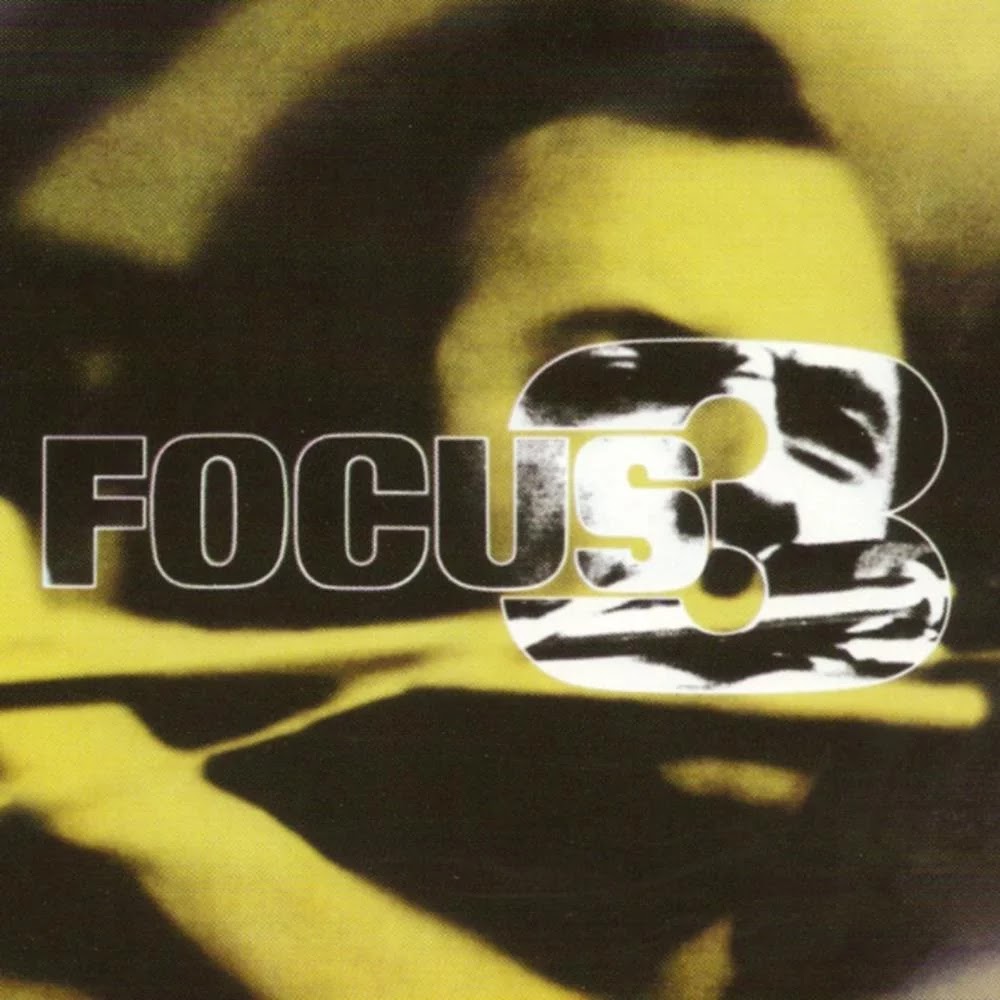
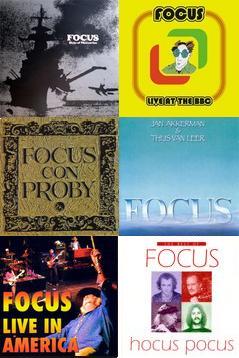
There are now around 17 Focus albums all told (if we include the three live albums - there is a fourth [Live in South America] not widely available).
In chronological order:
1. In and out
2. Moving Waves
3. Three
4. At the Rainbow (Live)
5. Hamburger Concerto
6. Mother Focus
7. Ship of Memories
8. Live at the BBC (Live)
9. Con Proby
10. Focus (1985)
11. Live in America (Live)
12. Eight
13. Focus 9/New skin
14. Focus X
15. Golden Oldies
16. Focus 8.5/Beyond the Horizon
17. Focus 11
Putting these in order of merit is not easy in some respects. Undoubtedly 2, 3 and 5 should be in the top three - but in what order? We all agree that Con Proby and Golden Oldies must come near the bottom. Here are two personal lists, the first only including studio albums, the second the live ones too.
14. Focus X
15. Golden Oldies
16. Focus 8.5/Beyond the Horizon
17. Focus 11
Putting these in order of merit is not easy in some respects. Undoubtedly 2, 3 and 5 should be in the top three - but in what order? We all agree that Con Proby and Golden Oldies must come near the bottom. Here are two personal lists, the first only including studio albums, the second the live ones too.
1. Three
2. Hamburger
3. Waves
4. Ship
5. In & Out
6. 1985
7. Mother
8. New Skin
9. X
10. 11
11. Eight
12. 8.5
13. Proby
14. Oldies
11. Eight
12. 8.5
13. Proby
14. Oldies
1. Three
2. Hamburger
3. Waves
4. Rainbow
2. Hamburger
3. Waves
4. Rainbow
5. Ship
6. In & Out
7. 1985
8. Mother
9. New Skin
10. X
7. 1985
8. Mother
9. New Skin
10. X
11. 11
12. 8.5
12. 8.5
13. BBC
14. Eight
15. America
16. Proby
17. Oldies
14. Eight
15. America
16. Proby
17. Oldies
Track by track 59 Father Bach
Archive number: 59
Title: Father Bach
Title: Father Bach
Main Album: Mother Focus
Track number: 12
Genre: Progressive Rock Instrumental
Studio: Decca Studios, Hollywood, Los Angeles, California (later Studio 55)
Length: 1' 32”
Composer: J S Bach arranged Van Leer
Musicians: Jan Akkerman - Electric guitars; Thijs Van Leer – Hammond organ; Bert Ruiter – Bass
Producer: Hubert Terheggen/Focus
Engineer: Eric Prestidge
Label: LP – Polydor, Atco, Philips, EMI
Date of recording/release: Recorded 1975, released October 1975. LP – 1975, 1977, CD – 1988
Notes: The title is a nice joke here as it not only balances the track Mother Focus but also acknowledges the debt to the master Focus owe. Van Leer's organ, Akkerman's mostly 'violined' guitar and Ruiter's bass run through a short piece from the opening chorale of J S Bach's St Matthew Passion of 1729 (BWV 244). Van Leer turns to the piece more than once on his Introspection albums.
Track number: 12
Genre: Progressive Rock Instrumental
Studio: Decca Studios, Hollywood, Los Angeles, California (later Studio 55)
Length: 1' 32”
Composer: J S Bach arranged Van Leer
Musicians: Jan Akkerman - Electric guitars; Thijs Van Leer – Hammond organ; Bert Ruiter – Bass
Producer: Hubert Terheggen/Focus
Engineer: Eric Prestidge
Label: LP – Polydor, Atco, Philips, EMI
Date of recording/release: Recorded 1975, released October 1975. LP – 1975, 1977, CD – 1988
Notes: The title is a nice joke here as it not only balances the track Mother Focus but also acknowledges the debt to the master Focus owe. Van Leer's organ, Akkerman's mostly 'violined' guitar and Ruiter's bass run through a short piece from the opening chorale of J S Bach's St Matthew Passion of 1729 (BWV 244). Van Leer turns to the piece more than once on his Introspection albums.
A note on the St Matthew passion by J S Bach (from Wikipedia)
J S Bach (185-1750) was a German composer and organist whose sacred and secular works for choir, orchestra and solo instruments drew together the strands of the Baroque period and brought it to its ultimate maturity. Although he introduced no new forms, he enriched the prevailing German style with a robust contrapuntal technique, an unrivalled control of harmonic and motivic organisation in composition for diverse musical forces, and the adaptation of rhythms and textures from abroad, particularly Italy and France. Revered for their intellectual depth and technical and artistic beauty, Bach's works are many. While his fame as an organist was great during his lifetime, he was not particularly well-known as a composer. His adherence to Baroque forms and contrapuntal style was considered "old-fashioned" by his contemporaries, especially late in his career when the musical fashion tended towards Rococco and later Classical styles. A revival of interest and performances of his music began early in the 19th Century, and he is now widely considered to be one of the greatest composers in the Western tradition.
The St. Matthew Passion (Matthäuspassion) (also, Matthæus Passion), BWV 244, is a musical composition written by Bach for solo voices, double choir and double orchestra, with a libretto by Picander (Christian Friedrich Henrici). It sets chapters 26 and 27 of Matthew's Gospel to music, with interspersedchorales and arias.
Written in 1727. Only two of the four (or five) settings which Bach wrote have survived; the other is the St John. The St Matthew was probably first performed on Good Friday (April 11) 1727 in the Thomas Kirche in Leipzig, where Bach was Kapellmeister. He later revised it, performing it again on March 30, 1736, this time including two organs in the instrumentation. The St Matthew was not heard outside of Leipzig until 1829, when Felix Mendelssohn performed an abbreviated and modified version in Berlin to great acclaim. Mendelssohn's revival of the St Matthew brought Bach's music, particularly the large-scale works, to a public and scholarly attention that has persisted into the present era.
Track by track 58 My Sweetheart
Archive number: 58
Title: My Sweetheart
Main Album: Mother Focus
Track number: 11
Genre: Funky Pop Instrumental
Studio: Decca Studios, Hollywood, Los Angeles, California (later Studio 55)
Length: 3' 28”
Composer: Thijs van Leer, Jan Akkerman
Musicians: Jan Akkerman - Electric sitars; Thijs van Leer – Piano, Mellotron, Flute; Bert Ruiter – Bass; David Kemper – Drums, Congas
Producer: Hubert Terheggen/Focus
Engineer: Eric Prestidge
Label: LP – Polydor, Atco, Philips, EMI
Date of recording/release: Recorded 1975, released October 1975. LP – 1975, 1977, CD - 1988
Alternative version: Van Leer repeated this track on his solo album Nice to have met you.
Notes: This bass driven piece of disco-influenced pop music begins with the whole band grooving (00:00-00:15) before the electric sitar strikes out a melody (00:16-02:04). It is the sitar that carries the load for most of the time though the flute (possibly synthesised at first) can also be heard in the background (01:17-01:33). A flute-led bridge then takes us on (02:05-02:16) until the sitar leads again (02:17-02:30). The flute is heard again (02:31-02:43) and things break down (02:44-02:49) until a bass-led break (02:50-03:07) some more flute (03:08-03:20) and a fade (03:21-03:28).
Track by track 57 All together ... Oh That!
Archive number: 57
Title: All Together ... Oh That!
Title: All Together ... Oh That!
Main Album: Mother Focus
Track number: 9
Genre: Progressive Rock Instrumental
Studio: Decca Studios, Hollywood, Los Angeles, California (later Studio 55)
Length: 3' 36”
Composer: Jan Akkerman
Musicians: Jan Akkerman – Acoustic guitars, Electric guitars; Thijs van Leer – Piano; Bert Ruiter – Bass; David Kemper - Drums
Producer: Hubert Terheggen/Focus
Engineer: Eric Prestidge
Label: LP – Polydor, Atco, Philips, EMI
Date of recording/release: Recorded 1975, released October 1975. LP – 1975, 1977, CD - 1988
Notes: As with Ruiter's pair of 'Vanilla' tracks so with these Akkerman tracks we again have a matching title and a livelier second piece. This one is possibly the most commercially accessible track in the whole Focus catalogue. Rather countrified, it begins with double-tracked acoustic guitars (00:00-00:18) supplemented by drums, bass and wandering piano (00:19-01:02) before a very bright and playful electric guitar takes things up at 01:03. The piece then plays out with electric guitar beautifully leading the other guitars and the rest of the band breaking down a little from time to time but then rising again (01:03-03:10) until the piano becomes more insistent and we reach a final fade (03:11-03:36).
Track number: 9
Genre: Progressive Rock Instrumental
Studio: Decca Studios, Hollywood, Los Angeles, California (later Studio 55)
Length: 3' 36”
Composer: Jan Akkerman
Musicians: Jan Akkerman – Acoustic guitars, Electric guitars; Thijs van Leer – Piano; Bert Ruiter – Bass; David Kemper - Drums
Producer: Hubert Terheggen/Focus
Engineer: Eric Prestidge
Label: LP – Polydor, Atco, Philips, EMI
Date of recording/release: Recorded 1975, released October 1975. LP – 1975, 1977, CD - 1988
Notes: As with Ruiter's pair of 'Vanilla' tracks so with these Akkerman tracks we again have a matching title and a livelier second piece. This one is possibly the most commercially accessible track in the whole Focus catalogue. Rather countrified, it begins with double-tracked acoustic guitars (00:00-00:18) supplemented by drums, bass and wandering piano (00:19-01:02) before a very bright and playful electric guitar takes things up at 01:03. The piece then plays out with electric guitar beautifully leading the other guitars and the rest of the band breaking down a little from time to time but then rising again (01:03-03:10) until the piano becomes more insistent and we reach a final fade (03:11-03:36).
Track by track 56 Someone's Crying ... What!
Archive number: 56
Title: Someone's Crying ... What!
Main Album: Mother Focus
Track number: 8
Genre: Progressive Rock Instrumental
Studio: Decca Studios, Hollywood, Los Angeles, California (later Studio 55)
Length: 3' 16”
Composer: Jan Akkerman
Musicians: Jan Akkerman – Acoustic Guitars, Electric guitars; Thijs van Leer – Mellotron, Flute; Bert Ruiter – Bass
Producer: Hubert Terheggen/Focus
Engineer: Eric Prestidge
Label: LP – Polydor, Atco, Philips, EMI
Date of recording/release: Recorded 1975, released October 1975. LP – 1975, 1977, CD - 1988
Notes: This slow and highly atmospheric piece has a simple structure with alternating main sections. First two highly reverbed guitars (one plucked, one mostly 'violined') play over the bass (00:00-00:27). A string mellotron then backs the guitars (00:28-00:52) until an alto flute-led section succeeds (00:53-01:33). After the breakdown and a caesura at 01:32-34 the pattern from 00:28 is more or less repeated (01:34-02:00 and 02:01-02:41) including the caesura (02:39-02:41). A final guitar-led section (02:42-03:06) concludes with extended notes on flute and 'violined' guitar (03:07-03:16).
20080605
Track by track 55 Focus IV
Archive number: 55
Title: Focus IV
Main Album: Mother Focus
Track number: 7
Genre: Progressive Rock Instrumental
Studio: Decca Studios, Hollywood, Los Angeles, California (later Studio 55)
Length: 3' 54”
Composer: Thijs van Leer
Musicians: Jan Akkerman - Electric guitars; Thijs van Leer – Piano, Mellotron, Synthesiser; Bert Ruiter – Bass; David Kemper - Drums
Producer: Hubert Terheggen/Focus
Engineer: Eric Prestidge
Label: LP – Polydor, Atco, Philips, EMI
Date of recording/release: Recorded 1975, released October 1975. LP – 1975, 1977, CD - 1988
Alternative version: A variation on the track was later recorded by Akkerman as Soft Focus (on Blues Hearts).
Notes: Perhaps the most quintessentially Focus track on the Mother Focus album, this fifth use of the Focus title (the previous attempt was not issued until 1977 and so is called Focus V) showcases both Akkerman and van Leer. Van Leer begins with a somewhat lengthy introduction first on classically oriented piano and flute (00:00-00:21) then on piano accompanied by bass (00:22-00:46). Akkerman comes in next with a rich lead guitar backed by drums, bass and piano, which comes to something of a climax (00:47-01:37) before the guitar leads again (01:38-01:55). A bird-like piano and flute section breaks in next then flies with a mellotron backing but reverting to piano at the break down (01:56-02:28). Next it is the turn of Akkerman's guitar to lead again but with plenty of piano backing (02:29-02:52). A rather egregious and harsh synthesiser break twice cuts in then (02:53-02:57/03:06-03:21) separated by the aspiring piano-backed flute (02:58-03:05) – conflict and resolution is a big theme in van Leer's writing. The final guitar-led section brings us nearly to the end (03:22-00:3:31). The final notes feature an again classically styled piano, this time alone (03:32-03:54).
Track by track 54 Tropic Bird
Archive number: 54
Title: Tropic Bird
Main Album: Mother Focus
Track number: 6
Genre: Laid back Jazz Instrumental
Studio: Decca Studios, Hollywood, Los Angeles, California (later Studio 55)
Length: 2' 38”
Composer: Bert Ruiter
Musicians: Thijs van Leer – Electric piano, Flute, Mellotron; Bert Ruiter – Bass; David Kemper - Drums
Producer: Hubert Terheggen/Focus
Engineer: Eric Prestidge
Label: LP – Polydor, Atco, Philips, EMI
Date of recording/release: Recorded 1975, released October 1975. LP – 1975, 1977, CD - 1988
Notes: This extremely laid back mood piece features van Leer's keyboards and flute backed by brushed drums and bass. Akkerman appears to be absent.
Title: Tropic Bird
Main Album: Mother Focus
Track number: 6
Genre: Laid back Jazz Instrumental
Studio: Decca Studios, Hollywood, Los Angeles, California (later Studio 55)
Length: 2' 38”
Composer: Bert Ruiter
Musicians: Thijs van Leer – Electric piano, Flute, Mellotron; Bert Ruiter – Bass; David Kemper - Drums
Producer: Hubert Terheggen/Focus
Engineer: Eric Prestidge
Label: LP – Polydor, Atco, Philips, EMI
Date of recording/release: Recorded 1975, released October 1975. LP – 1975, 1977, CD - 1988
Notes: This extremely laid back mood piece features van Leer's keyboards and flute backed by brushed drums and bass. Akkerman appears to be absent.
Track by track 53 Hard Vanilla
Archive number: 53
Title: Hard Vanilla
Main Album: Mother Focus
Track number: 5
Genre: Progressive Rock Instrumental
Studio: Decca Studios, Hollywood, Los Angeles, California (later Studio 55)
Length: 2' 36”
Composer: Bert Ruiter
Musicians: Jan Akkerman – Acoustic guitars, Electric guitars with talkbox; Thijs van Leer – Electric piano?; Bert Ruiter – Bass; David Kemper - Drums
Producer: Hubert Terheggen/Focus
Engineer: Eric Prestidge
Label: LP – Polydor, Atco, Philips, EMI
Date of recording/release: Recorded 1975, released October 1975. LP – 1975, 1977, CD - 1988
Notes: This harder edged counterpart to the previous track has the band dominated by guitars – acoustic guitars and especially the talkbox. The main theme is repeated several times until we reach a coda that winds down before going a little wild then fading (02:10-02:31).
20080604
Track by track 52 Soft Vanilla
Archive number: 52
Title: Soft Vanilla
Main Album: Mother Focus
Track number: 4
Genre: Light Jazz Instrumental
Studio: Decca Studios, Hollywood, Los Angeles, California (later Studio 55)
Length: 3' 01”
Composer: Bert Ruiter
Musicians: Jan Akkerman - Electric guitars; Thijs van Leer – Electric piano, Synthesiser, Mellotron; Bert Ruiter – Bass; David Kemper - Drums
Producer: Hubert Terheggen/Focus
Engineer: Eric Prestidge
Label: LP – Polydor, Atco, Philips, EMI
Date of recording/release: Recorded 1975, released October 1975. LP – 1975, 1977, CD - 1988
Notes: This gentle song begins with van Leer's synthesiser (00:00-00:25) but is succeeded by his flute (00:26-01:30). Gentle chopped guitar joins the rhythm section as backing. A harder edged keyboard section comes in (01:31-01:55) to be succeeded by the flute again and then coming to a halt (01:56-03:01). Like the name it is all very light and sweet.
Subscribe to:
Posts (Atom)