Looking at the music of Dutch rock band Focus, started in the late sixties by Thijs van Leer (b /31/03/48) with Jan Akkerman (b 24/12/46). Van Leer still performs and records under the name today (official site here). Akkerman's site here.

.

.

20100302

Track by track 105 Brother

Archive number: 105
Title: Brother
Main Album: Focus 8
Track number: 9
Genre: Progressive Rock Instrumental
Studio: Peptide Studio, Vuren
Length: 05' 33”
Composer: Thijs van Leer, Roselie Peters
Musicians: Thijs van Leer – Hammond organ; Jan Dumee – Guitars; Bobby Jacobs - Bass; Bert Smaak - Drums
Producer: Geert Scheijgrond & Focus
Engineer: Geert Scheijgrond & Dick Kemper
Label: Musea/Red Bullet
Date of recording/release: A limited run of 500 of the album appeared in August 2002 to be followed by a general release on CD later that year. Also later on Paras and JVC Victor
Alternative version: Several including on Focus Con Proby
Notes: This is an instrumental version of a Focus track that first appeared on Focus Con Proby with P J Proby singing. It begins with the beautiful, classically informed (from Brahms?) but now bluesified, introduction this time on Hammond organ (00:00-00:59) and slightly extended. A drum beat (01:00) brings the band in with the slow march led this time by Dumee's electric guitar (01:01-01:56) and, for the chorus, Van Leer's flute and organ (01:57- 02:26). The pattern is repeated (02:27-03:21 and 03:22-03:56). A final Dumee-led section wrings a good deal of emotion out of the tune before a dramatic end (03:57-05:20) that ends with a 13 second quotation from Eruption to conclude.

Track by track 104 Sto Ces Raditi Ostatac Zivota?

Archive number: 103
Title: Sto Ces Raditi Ostatac Zivota?
Main Album: Focus 8
Track number: 7
Genre: Progressive Rock Instrumental
Studio: Peptide Studio, Vuren
Length: 05' 23”
Composer: Jan Dumee
Musicians: Thijs van Leer – Flute, Hammond organ, Voices; Jan Dumee – Guitars, inc Acoustic, Voices; Bobby Jacobs - Bass; Bert Smaak - Drums
Producer: Geert Scheijgrond & Focus
Engineer: Geert Scheijgrond & Dick Kemper
Label: Musea/Red Bullet
Date of recording/release: A limited run of 500 of the album appeared in August 2002 to be followed by a general release on CD later that year. Also later on Paras and JVC Victor Alternative version: None Notes: The title is Bosnian-Serbo-Croatian and means something like What will you do with the rest of your life? The title is presumably a comment on the recent politics of the region, which has known great upheaval. If so, this would be a second political or protest song for Focus (Sugar Isalnd back at the beginning being the first). The opening introduction features flute and acoustic guitar which ends with the sound of tom toms (synthesised?) (00:00-00:30). The drums then introduce a further melodic introduction (00:31-01:23) featuring the band on acoustic guitar, organ, bass and drums with distant vocal backing of a scat variety. A flute is heard near the end of this. From 01:24 the electric guitar gives some strong notes to lead the organ, some flute coming in too (with a distinctive guitar sound briefly at 02:38-02:42). This goes on rising pretty much (though not really progressing much) until 04:16. A voice comes in at 04:17, 18 as the guitar grows more passionate. From 05:10 a fade begins featuring acoustic guitar that ends with just the voice at 05:23.

Track by track 103 Focus 8

Archive number: 103
Title: Focus 8
Main Album: Focus 8
Track number: 6
Genre: Progressive Rock Instrumental
Studio: Peptide Studio, Vuren
Length: 06' 13”
Composer: Thijs van Leer
Musicians: Thijs van Leer – Hammond organ, piano, synthesiser; Jan Dumee – Guitars; Bobby Jacobs - Bass; Bert Smaak - Drums, Timpani
Producer: Geert Scheijgrond & Focus
Engineer: Geert Scheijgrond & Dick Kemper
Label: Musea/Red Bullet
Date of recording/release: A limited run of 500 of the album appeared in August 2002 to be followed by a general release on CD later that year. Also later on Paras and JVC Victor.
Alternative version: See the fiftieth anniversary CD
Notes: The title track begins with drums, then a rhythmic piano with bass and drums (00:00-00:08). An electric guitar then picks out a descending tune over the band (00:09-00:38). The main heroic guitar led theme kicks in for the first time at 00:39. Backed by piano, timpani and band, it is played several times altogether. At 01:09 there is something of a change of pace and at 01:20 something of a ritartando or slowing down only to pick up again after almost pausing at 01:21, 22. The main theme comes in a second time (01:23-02:00), closing this time with a more staccato slowing down until a piano bridge at 02:12-14. A third assault on the main theme follows (02:15-02:42). This also breaks down at 02:43-48 before a fourth round and break down (02:49-02:42/43-47). The fifth attempt follows from 02:48. This goes on until an organ dominated dip ending at 03:46. The guitar then soars more and the piano is almost lost as we head for the home strait and a final timpani/piano driven assault from 04:31 followed by a descent echoing the earlier guitar led theme with strong Hammond chords at times. The band end in unison around 06:13.

20100220

Track by track 102 De Ti O De Mi

Archive number: 102
Title: De Ti O De Mi
Main Album: Focus 8
Track number: 5
Genre: Progressive Rock Instrumental
Studio: Peptide Studio, Vuren Length: 06' 22”
Composer: Bobby Jacobs
Musicians: Thijs van Leer – Hammond organ; Jan Dumee – Guitars; Bobby Jacobs - Bass; Bert Smaak - Drums
Producer: Geert Scheijgrond & Focus
Engineer: Geert Scheijgrond & Dick Kemper Label: Musea/Red Bullet
Date of recording/release: A limited run of 500 of the album appeared in August 2002 to be followed by a general release on CD later that year. Also later on Paras and JVC Victor Alternative version: None Notes: We begin with a dark bass riff backed by drums then organ (from about 00:26). At 00:46 an electric guitar takes up the lead with a yearning jazz melody that when eventually about to build at 01:21 reverts to the sparse bass riff. At 01:39 drums re-introduce the organ and a cleaner electric guitar sound and (from 02:01) the jazz guitar melody. It builds a little more this time until panning out with an organ backed development leading to a caesura at 02:59 and 03:00. For the remainder of the track the guitar-led melody is allowed to develop further, this time eventually taking off to some extent, though still meandering a little and later getting quite earnest. The section eventually begins to fade at 05:55 and ends around 06' 22”.

20100219

Track by track 101 Hurkey Turkey

Archive number: 101
Title: Hurkey Turkey
Main Album: Focus 8
Track number: 4
Genre: Progressive Rock Instrumental
Studio: Peptide Studio, Vuren
Length: 4' 07”
Composer: T van der Kaaij, Thijs van Leer
Musicians: Thijs van Leer – Hammond organ, Voices; Jan Dumee – Guitars; Bobby Jacobs - Bass; Bert Smaak - Drums; Geert Scheigrond - Additional guitars.
Producer: Geert Scheijgrond & Focus
Engineer: Geert Scheijgrond & Dick Kemper Label: Musea/Red Bullet
Date of recording/release: A limited run of 500 of the album appeared in August 2002 to be followed by a general release on CD later that year. Also later on Paras and JVC Victor Alternative version: None
Notes: The studio version of Hurkey Turkey starts very distinctively with 8 slightly odd notes on electric guitars followed by a longer ninth one that also features a crash cymbal (00:00-00:08). We then get another two and one then one and one twice and the drums crash in before one of two main themes starts at 00:15 - a bassy riff thing. This is played several times with van Leer's voice in the background and Dumee going up and down the fretboard. At 01:00 there is a slight change of pace announced by the guitar which then takes up more of a lead with the other contrasting theme. This ends at 01:32 when the first theme returns led this time by the Hammond organ (01:33-02:03). We then go back to the guitar-led second theme (02:04-02:34) before the original theme returns with van Leer's voice more prominent at first. This section slows down around 02:44 and from 02:51-03:12 we have a 'scat' section where van Leer's voice is multi-tracked over just drums, one voice providing a jazzy “danga danga danga dang dumdiddy” style and the other a rather crazy turkey voice! The band then come back, with the guitar getting pretty wild and ending with a fade around 04:07.

Track by track 100 Fretless Love

Archive number: 100
Title: Fretless Love
Main Album: Focus 8
Track number: 3
Genre: Progressive Rock Instrumental
Studio: Peptide Studio, Vuren
Length: 6'05”
Composer: Thijs van Leer
Musicians: Thijs van Leer – Hammond organ, Flute, Voice; Jan Dumee – Guitars; Bobby Jacobs - Bass; Bert Smaak - Drums, Timpani
Producer: Geert Scheijgrond & Focus
Engineer: Geert Scheijgrond & Dick Kemper
Label: Musea/Red Bullet
Date of recording/release: A limited run of 500 of the album appeared in August 2002 to be followed by a general release on CD later that year. Also later on Paras and JVC Victor Alternative version: None
Notes: The track begins in quiet and relaxed style with acoustic guitar (possibly synthesised) and a beautiful and melodic flute, backed by the Hammond (from 00:24). At 00:46 we move to a new yearning electric guitar-led section with Hammond and rhythm section. This itself is succeeded (at 01:30) by a funky guitar and organ part (with van Leer's voice giving oompahs at first - again possibly synthesised) and led by a hard blown flute. This is in turn is repeated and developed (from 02:19). Another break in tempo comes at 03:08 and we go into a section led by melodic flute but backed by the band with a riffing style and a distinct underlying guitar motif. Another break comes at 04:09 with a timpani marked halt (almost a caesura). We then return to the yearning electric guitar of the second section but slightly more staccato, until 04:50 where it all gets pretty funky again, this time with a heavier bass and more earnest guitar work from Dumee. This then heads relentlessly for the fade, volume disappearing around 06:05”

Track by track 99 Tamara's Move

Archive number: 99
Title: Tamara's move (Allegro-adagio-allegro)
Main Album: Focus 8
Track number: 2
Genre: Progressive Rock Instrumental
Studio: Peptide Studio, Vuren
Length: 5' 14”
Composer: Jan Dumee
Musicians: Thijs van Leer – Hammond organ, Flute, synthesisers, hanclaps; Jan Dumee –Guitars including Spanish guitar, Vocal; Guitar; Bobby Jacobs - Bass; Bert Smaak - Drums
Producer: Geert Scheijgrond & Focus
Engineer: Geert Scheijgrond & Dick Kemper
Label: Musea/Red Bullet
Date of recording/release: A limited run of 500 of the album appeared in August 2002 to be followed by a general release on CD later that year. Also later on Paras and JVC Victor
Alternative version: None
Notes: The piece is in three sections – allegro, adagio, allegro. The first allegro section is from 00:00-02:12. It begins with double tracked acoustic guitars (00:00-00:07) soon accompanied by the rhythm section, which includes a distinctive synthesised mouth tom tom sound at certain points (00:08-00:00:18). The flute (multi-tracked at certain points) then takes up the lead in joyful style as far as 02:12, with a note held around 01:08 and handclaps from both speakers from 01:36.
The adagio section (02:13-03:34) has two parts. First, a mournful organ and synthesiser backed vocal section that ends at 02:49 with a timpani sound. The words are indistinct but appear to be

Don't let a thing respond,
No breath for you too.
Just signs of trying to forget you,
To exorcise you.
Leave me in your thoughts
But don't you miss the sight.

A drum roll immediately follows (02:50-02:57) and we are into a rather grand instrumental version of the same tune led by guitar with organ that ends at 03:34.
The third section is the flute-led allegro again. The handclaps begin at 04:03, the mouth tom toms are there and the Spanish guitar has a much more prominent role from 04:24.

20091221

Track by track 98 Rock and Rio

Archive number: 98
Title: Rock and Rio
Main Album: Focus 8
Track number: 1
Genre: Progressive Rock Instrumental
Studio: Peptide Studio, Vuren
Length: 3' 24”
Composer: Thijs van Leer
Musicians: Thijs van Leer – Hammond organ, pizzicato synthesiser, voice; Jan Dumee – Guitar; Bobby Jacobs - Bass; Bert Smaak - Drums
Producer: Geert Scheijgrond & Focus
Engineer: Geert Scheijgrond & Dick Kemper
Label: Musea/Red Bullet
Date of recording/release: A limited run of 500 of the album appeared in August 2002 to be followed by a general release on CD later that year. Also later on Paras and JVC Victor
Alternative version: None
Notes: The track begins with a clicking voice from van Leer soon joined by drums then a distinctive bassy groove with Hammond organ (00:00-00:14). This bassy groove hook alternates with van Leer leading in a yodelling voice (backed by a pizzicato synthesiser early on) and the band (00:15-00:24; 00:25-00:34; 00:35-00:45). At 00:46 Dumee takes up the lead, this part punctuated by staccato beats from the band at 00:56-58 and 01:01-02. Then it's back to the bass groove (01:04-01:13) followed by the yodelling again (01:14-01:23). Dumee leads once more (01:24-00:33) with the staccato punchline (01:34-01:36) and a little improvisation until 01:45 and a new guitar led rising section (to 01:54) followed by a fresh allegro part that includes a Russian like halt at 02:08. At 02:10 we return to the guitar-led style with the punctuation more to the background this time (02:21,22 and 02:26, 02:27). At 02:31 we go back to alternating the distinctive bassy groove and yodelling sections (02:31-02:40; 02:41-51; 02:52-03:06; 03:07-03:11; 03:12-03:24)

Track by track 97 Neurotika

Archive number: 97
Title: Neurotika
Main Album: Focus 8
Track number: 8
Genre: Progressive Rock Instrumental
Studio: Peptide Studio, Vuren
Length: 3' 42”
Composer: Thijs van Leer
Musicians: Thijs van Leer – Hammond organ, flute, voice; Jan Dumee – Guitar; Bobby Jacobs - Bass; Ruben Van Roon - Drums Producer: Geert Scheijgrond & Focus
Engineer: Geert Scheijgrond & Dick Kemper Label: Musea/Red Bullet
Date of recording/release: This track was recorded early in 2002. The presence of van Roon on drums makes it a unique release. As for the eventual album - a limited run of 500 appeared in August to be followed by a general release on CD later that year. Also later on Paras and JVC Victor
Alternative version: None
Notes: This is the earliest recorded track by the Focus reincarnation that came about when the CONXI line up that had come together as a Focus tribute band was joined by van Leer himself. Called a rehearsal track on the album listing, it is counted in by van Roon (00:00-00:02) and is a mostly fast paced piece driven mainly by bass, drums, organ and guitar but being bolstered by van Leer's voice mainly yodelling (00:18-00:28; 00:44-00:51; 01:07-01:12; 02:29-02:35, etc) and the flute (00:52-01:06; 01:36-01:45, 02:45-02:55) then with a guitar-led middle section (01:46-02:28). The guitar also leads twice with a slower, typically Focus, section at 01:13-01:35, and repeated at 02:56-03:19. We end with a ritartando or slowing down from 03:24 and a live finish.

On first listening to Moving Waves

The first Focus album I ever heard was their second. Moving Waves, as it was called in the UK, appeared towards the end of 1971. It was initially on the Blue Horizon label (the label my first copy bore). I must have first listened to it in 1973, the year I turned 14. I had heard the single version of Hocus Pocus on TV but the rest of the album was unknown to me. Before buying it I borrowed a copy from my friend Gwilym Evans, already a fan. The cover looked good for the time with a nice purple colour and a small picture of the group on the front and a mainly red, black and yellow set up on the back. There were quite a few words on the back but not much information.
I guess I started with Hocus Pocus knowing I liked that already. At 6' 42" the album version is quite a bit longer than the single version and it was amazing to have it there pumping into the room, this really wild rock music and yet with these weird, sometimes quite primitive, bits and that crazy yodelling. Then after the blistering opening track it goes quiet and you get a Rodrigo style classical guitar and what sounds like an orchestra and I know we have gone really classical. Nice though. The third track is Janis and we're off somewhere else this time - somewhere very eastern. I like it but it's difficult to compare it with anything. The track after that is Moving Waves and now I really don't know which way is which. This weird piano and vocal piece sounds like something in a Dutch eisteddfod or something. The last track on the first side of the vinyl album is Focus 2. It is at this point that I am hooked. This is jazz - the sort of thing Michael Parkinson would come on stage to - and yet it's a rock band playing. What have I got here?
So I flip the thing over and now I'm anxious. Here is a piece that takes up the whole of one side. It is broken up into sections according to the cover but you can see by looking that there are no gaps between tracks. This is 23 solid minutes of music! So we listen and it is mostly jazz again, although at one point the guitarist does go quite wild (the Bridge, etc) and I like the ethereal voices that remind you of something from Holst. Eruption really did take several listens to get into and I would often get lost in one passage or another. I knew instinctively that this was good stuff though and worth persevering with. As soon as I had the money I trundled off to the shops (can't remember if it was the local independent retailer Sounds or the chain store Boots) and bought my own copy.

20091113

Sugar Island

Black Beauty

Focus (Vocal)

Focus Live 10

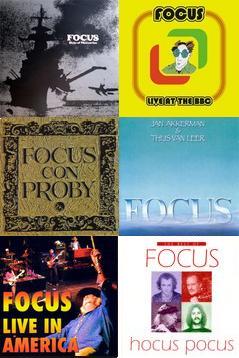
The last time Akkerman and Van Leer performed together was in 1993. In 1999 and since 2000 Van Leer has revived the band under the name of Focus. There have not only been studio albums but many, many concerts. Since the 1990s things have changed exponentially as far as live recordings are concerned. The story of the bootleg has turned to a new and perhaps less exciting chapter. The new Focus have themselves produced a number of official live albums in various formats including - Live in South America (2002), Live in America (2003), Live in England, Live in Europe (both 2009). No doubt trips to the far east and Australia, not to mention the Arctic (!), will lead to further albums.
Meanwhile a plethora of good and bad recordings have become available from the past ancient and more recent. Youtube alone has an abundance of material. Available recordings today include concerts in Brazil, Canada, England, Holland, Mexico (2002), Brazil, Chile, France, Holland, Japan, Mexico, Scotland, Wales (2003) England, Scotland (2004) Holland (2006) England, Mexico, Holland (2007) Germany, Holland, Wales (2008).